


More news on this day
Rail passengers traveling between Perth and Stirling faced major disruption after an emergency incident led to the suspension of services on the busy intercity route, prompting delays, diversions and a rapid shift to alternative transport options.
Get the latest news straight to your inbox!
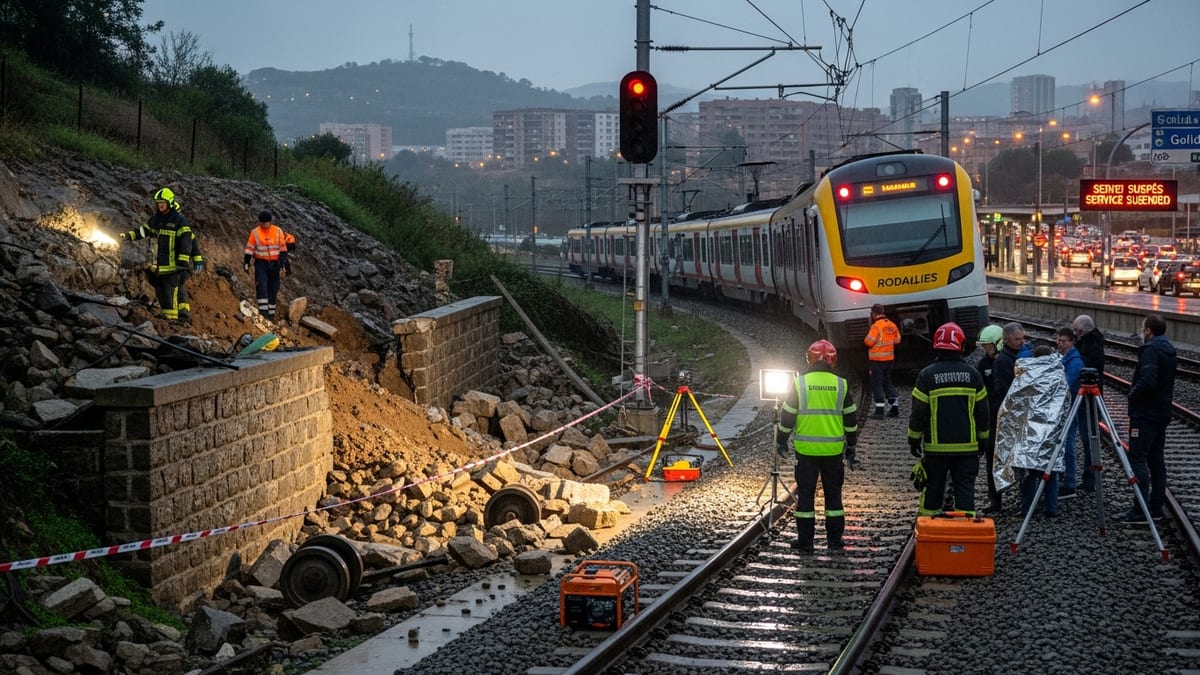
Services Suspended as Emergency Response Triggers Line Closure
Reports indicate that rail traffic between Perth and Stirling was brought to a standstill when an emergency incident occurred on the line, forcing rail operators to halt trains in both directions. Initial information from live service updates and local coverage pointed to a blockage on the route, requiring services to be held outside affected sections while emergency and technical teams assessed the situation.
The line, which links the city of Perth with Stirling and onward connections to other parts of the network, typically carries a mix of commuter, regional and long-distance services. The disruption quickly created a backlog of trains on approach to the affected stretch, with some services reportedly being turned back short of their normal destinations and others held at intermediate stations to prevent further congestion.
Published coverage suggests that control teams initiated emergency procedures that prioritize passenger safety and protection of the rail infrastructure. This included stopping all movements through the incident area, instructing drivers to await further directions and coordinating with on-site responders to determine when it would be safe to restore limited operations.
Early indications were that the incident would affect travel for several hours, with operators warning passengers of extended journey times and potential cancellations as the situation unfolded.
Replacement Transport and Travel Advice for Affected Passengers
As trains were halted between Perth and Stirling, rail providers moved to implement replacement transport to keep passengers moving. Publicly available information from rail and local transport operators shows that bus shuttles are typically deployed when a key corridor is blocked, operating between major stations on either side of the disruption. Similar arrangements have been used previously during unplanned incidents and planned engineering works on this route.
Passengers were advised through online service updates, station announcements and social media feeds to allow significant extra time for travel, particularly during peak commuting periods. Guidance commonly emphasizes checking journey planners before setting out, as replacement buses usually run less frequently than trains and may take longer due to road congestion around city centers and key interchanges.
Reports from recent disruptions on comparable Scottish and Australian suburban routes highlight that operators often adjust bus routes on short notice as the scale of an incident becomes clearer. In practice, this can mean initial shuttle services between the nearest unaffected stations, followed by wider coverage once more vehicles and drivers are available.
Travel information sources also note that accessibility can be a concern when rail replacement buses are used. Some stops may not be directly adjacent to station entrances, and step-free boarding can vary between vehicles, prompting disability advocates and passenger groups to urge travelers with mobility needs to seek assistance from staff on site.
Impact on Commuters, Regional Links and Wider Network
The Perth to Stirling corridor functions as a critical link for both local commuters and longer-distance passengers heading toward northern and central destinations. A full block of the line quickly reverberates across the wider network, according to transport analysis of previous incidents in the region. Trains scheduled to continue beyond Stirling may be curtailed or start from alternative stations, while services heading into Perth can be rescheduled or combined to manage capacity once the line reopens.
For daily commuters, the immediate effect is extended journey times, crowded replacement buses and uncertainty over arrival times. Those traveling to work or education often face last-minute changes to their plans, and some may opt to divert to road routes or adjust their schedules. Business travelers and tourists connecting with longer-distance services may also be forced to rebook or reroute, particularly if timetabled connections are missed.
Rail operations experts cited in earlier case studies of line blockages note that incidents on a main artery like this can reduce network resilience for the rest of the day. Even after the initial emergency is resolved, trains and crew may be out of position, prompting a rolling pattern of delays and short-notice alterations while timetables are gradually brought back into alignment.
In addition, freight operations that share parts of the corridor can be affected, with some services held in sidings or rerouted where alternative paths exist. This can have knock-on effects for logistics schedules and supply chains, particularly on busy weekday timetables.
Safety Protocols and Investigation Procedures
According to publicly available railway safety guidelines, any emergency incident that blocks a main line triggers a structured response centered on safeguarding passengers, staff and surrounding communities. Standard procedure is to stop all train movements through the affected section, secure the area, and ensure that power and signaling are managed to prevent further risks.
Once the immediate emergency response is complete, rail operators and infrastructure managers typically begin a technical and operational review to establish the sequence of events. This can involve site inspections, analysis of train data recorders and signal logs, and examination of track and equipment. Where required, findings are later shared with regulators or independent investigators, a process that can lead to recommendations for changes in procedures, maintenance regimes or staff training.
Past incidents published in official reports for the Perth to Stirling axis and similar corridors show that outcomes can range from relatively minor repairs and procedural updates to more extensive infrastructure works. These may include modifications to signalling, additional monitoring equipment or changes to how trains are routed and turned back during disruptions.
While full details of the latest incident are still emerging, industry practice suggests that operators will review both the technical cause and the effectiveness of the disruption response, including communication with passengers and the speed at which replacement services were deployed.
Ongoing Disruption and What Passengers Should Expect Next
At the time of the latest updates, rail services between Perth and Stirling were expected to remain disrupted until the incident site could be fully cleared, inspected and handed back for normal operations. Even after trains resume, journey planners indicate that a period of residual delays and altered stopping patterns is likely as operators work through the backlog.
Passengers are being encouraged, through publicly accessible transport alerts and news reports, to continue checking for live information before commencing their journeys. Experience from previous disruptions on the route suggests that off-peak services are often restored first, with peak-hour timetables rebuilt more cautiously to avoid sudden overcrowding or knock-on delays.
Longer term, attention is likely to focus on how quickly the line can return to its usual level of reliability and whether any additional resilience measures are introduced. Transport commentators frequently highlight options such as enhanced turnback facilities, better integration of bus-rail contingency plans and improved real-time communication tools for passengers when unforeseen incidents occur.
For now, travelers between Perth and Stirling face a period of uncertainty while the emergency response and subsequent recovery continue. Those able to work flexibly or adjust their schedules may find their journeys easier, while others are likely to encounter extended travel times and busier conditions until normal services are fully re-established.