


More news on this day
A minor freight train derailment in Mesa has led to traffic restrictions on a busy east Valley corridor, with transportation data and local reports indicating road closures and detours while crews work to clear rail cars and inspect nearby infrastructure.
Get the latest news straight to your inbox!
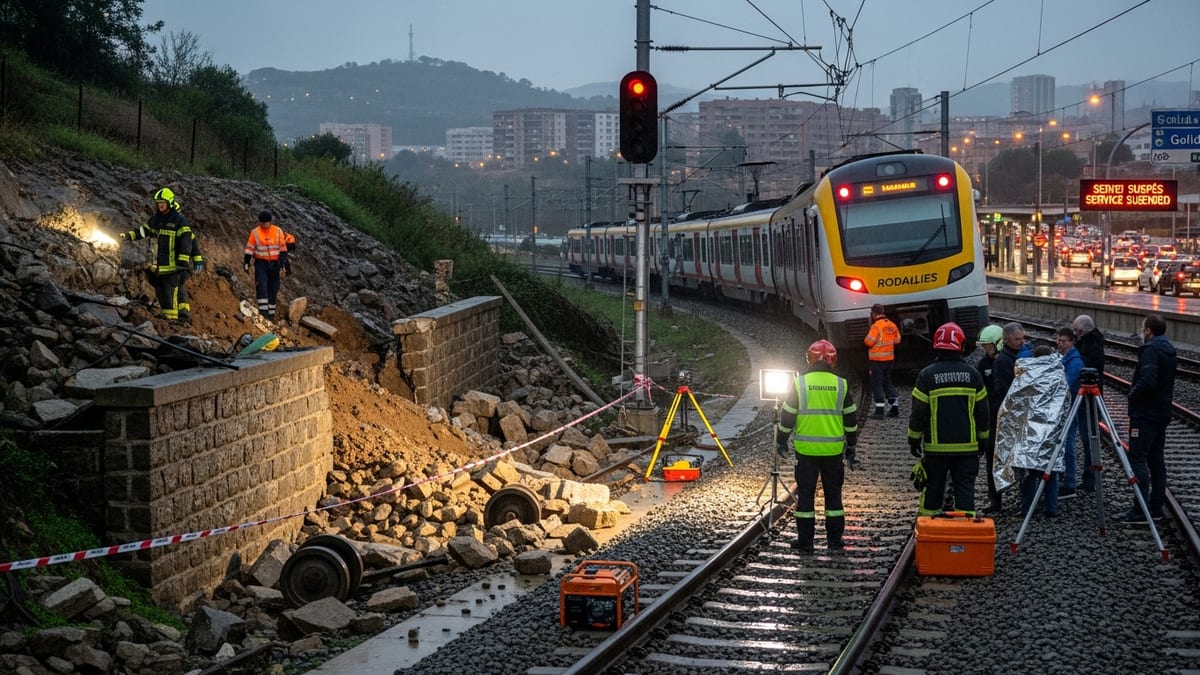
Freight train derails on key Mesa corridor
Reports from local media and transportation dashboards indicate that a freight train derailed early Tuesday along a rail line intersecting a heavily used roadway in Mesa, disrupting both vehicle and rail traffic. Coverage from Phoenix-area outlets describes several rail cars leaving the tracks near a grade crossing, prompting an immediate traffic response in the surrounding area.
Initial information characterizes the incident as a minor derailment, with the affected train remaining largely upright and contained within the rail corridor. Early coverage notes no significant fire or large-scale structural damage in the surrounding neighborhood, setting this event apart from higher-impact rail crashes that have occurred elsewhere in the country in recent years.
Even with limited physical damage, the derailment occurred at a location where freight tracks intersect a busy surface street network in Mesa. Publicly available mapping tools maintained by the city show that nearby routes already carry elevated traffic volumes, which increases the impact of any unplanned closure or lane restriction.
Road closures and lane restrictions reshape morning commute
Following the derailment, Mesa traffic maps and regional traffic alerts reflected a series of closures and lane restrictions around the impacted crossing. Local television coverage described barricades going up on approaches to the tracks, with officers directing drivers away from the scene and detouring vehicles to parallel north-south and east-west routes.
City transportation data services, which routinely publish current and planned restrictions, show that when an unplanned obstruction occurs on a key arterial, engineers typically shift signal timing and recommend alternate corridors to absorb diverted traffic. On Tuesday, drivers in parts of Mesa experienced slower travel times as vehicles were redirected from the blocked crossing to adjacent arterials already affected by summer construction and maintenance activity.
For several hours, the disruption added to a broader pattern of restrictions across the East Valley, where freeway crashes, construction zones and utility projects have periodically narrowed lanes or closed ramps in recent weeks. Regional traffic advisories from state transportation officials for nearby freeways underscored how a single additional bottleneck on a surface street network can quickly cascade into longer delays for commute and delivery traffic.
Railroad and city crews work to clear cars and inspect track
According to published coverage, railroad response teams moved in to stabilize the derailed cars, evaluate any mechanical damage and begin the process of rerailing equipment. Specialized heavy machinery is typically brought in to lift or nudge cars back onto the rails, a process that can require lane closures or shoulder restrictions on adjacent roads if equipment or support vehicles need extra space.
Publicly available federal rail safety guidance indicates that even minor derailments trigger a standard series of inspections, including checks of track geometry, the rail bed and nearby switches or signals. When incidents occur within city limits and near public roads, coordination with local transportation and public works departments is also necessary to ensure that pavement, crossing panels and traffic-control devices remain safe before normal traffic resumes.
Mesa’s own traffic-control manuals outline procedures for temporary closures when work crews occupy part of a roadway or shoulder. In circumstances like a derailment, temporary traffic control plans are often adjusted in real time as rail and road crews progress through staging, lifting operations and site cleanup, which in turn influences how long restrictions remain in place for drivers.
Public impact limited, but travel delays and detours persist
Based on the available reports, no widespread injuries or hazardous-material releases have been linked to the Mesa derailment, significantly limiting public health impacts. The primary effect has instead fallen on travelers and nearby businesses, many of whom faced longer routes as they navigated around the restricted area during morning and midday hours.
For commuters, the disruption added time to already congested routines in a city where drivers have recently expressed frustration about ongoing construction and lane closures across multiple corridors. Social media discussions in local forums have highlighted a sense that “the entire city” is under construction, and the sudden loss of another key crossing reinforced that perception for many residents heading to work or school.
Delivery services and freight haulers that rely on predictable timing also likely encountered delays as trucks adjusted to alternate arterials and neighborhood streets. Transportation planners typically track these short-term shocks to the network, using available traffic data to refine detour patterns and determine where additional signage or signal adjustments may be needed during similar incidents in the future.
Ongoing rail safety focus in a busy growth corridor
The Mesa derailment comes at a time when rail safety has been under heightened scrutiny nationwide, following a series of higher-profile incidents involving freight trains in both urban and rural settings. National rail safety databases show that even minor derailments are logged and reviewed, in part so that regulators and operators can identify patterns related to track conditions, equipment performance or operating practices.
Within the Phoenix metro area, rapid population growth and continued development have brought more homes, businesses and roadways closer to active freight corridors. Planning documents for the region identify grade crossings as sensitive interfaces between rail and road networks, where even non-catastrophic events can have outsized effects on mobility and community perception of safety.
In Mesa and neighboring cities, transportation agencies have pursued a mix of strategies to manage these risks, ranging from upgraded crossing signals to long-term plans for grade separations at the busiest junctions. While the latest derailment appears to have produced limited physical damage, the resulting traffic restrictions underline how closely daily travel patterns are tied to the reliable operation of both road and rail infrastructure in the East Valley.