


More news on this day
After a day of severe weather, flooding concerns and hundreds of flight disruptions across South Florida on Wednesday 25 November, operations at Fort Lauderdale-Hollywood International Airport began to normalize by Thanksgiving Day as storms moved offshore, runways stayed open and many stranded travelers were finally able to depart.
Get the latest news straight to your inbox!
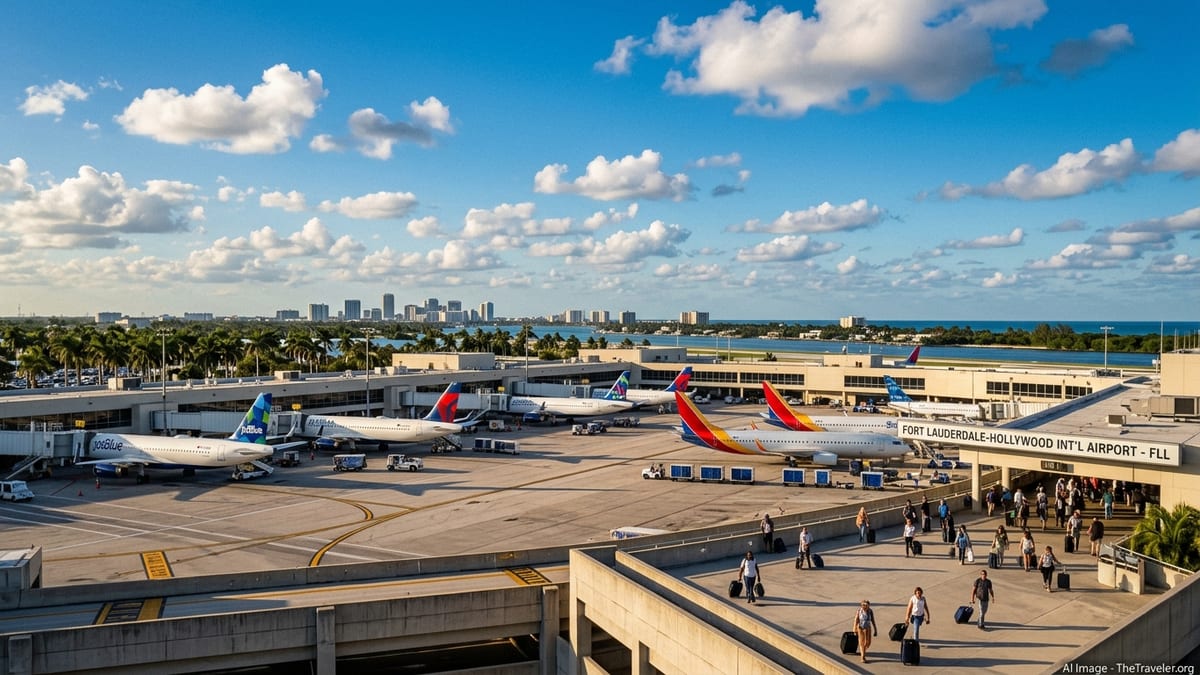
Stormy Thanksgiving Eve gives way to clearer skies
South Florida’s Thanksgiving travel rush was hit hard on Wednesday 25 November by bands of heavy rain and thunderstorms that swept across the region, affecting Miami-Dade, Broward and Palm Beach counties during one of the busiest flying days of the year. Forecasters had warned earlier in the week that a strong system would bring periods of intense rainfall, gusty winds and a risk of isolated severe storms at midweek, coinciding with peak departures ahead of the holiday.
By Wednesday morning, local forecasters and emergency managers were already flagging the potential for travel disruption, noting saturated ground from earlier November storms and the added complication of seasonal king tides in coastal neighborhoods. The National Weather Service office in Miami reported widespread rain and thunderstorms across the metro area on Wednesday, with conditions gradually improving overnight into Thursday and a trend toward drier, cooler air on Thanksgiving Day itself.
At Fort Lauderdale-Hollywood International Airport, the midweek weather system translated into a wave of delays and scattered cancellations as airlines slowed arrivals and departures during the heaviest downpours. Airport and county officials urged passengers to build in extra time, monitor flight status closely and consider using parking areas and shuttles west of the airport’s main terminals while roadways near the coast dealt with ponding and localized flooding.
Disruptions ease across South Florida’s big three airports
Although final tallies varied throughout the day, data compiled by flight tracking services showed that South Florida’s major airports saw several hundred delays combined on Wednesday 25 November, with Miami International bearing the brunt of the impact and Fort Lauderdale and West Palm Beach also experiencing significant knock-on effects. Local media reports citing FlightAware data indicated that Miami logged the region’s highest number of delayed flights, alongside a smaller number of outright cancellations, while Fort Lauderdale and Palm Beach recorded lower, but still notable, disruption totals.
By early afternoon on Thursday 26 November, the picture had shifted markedly. With the worst of the weather having passed and visibility and winds improving, the volume of new delays at Fort Lauderdale-Hollywood decreased and cancellations fell into the low double digits. Miami and Palm Beach also reported fewer fresh disruptions than on Wednesday, even as they continued to work through aircraft and crew rotations affected by the prior day’s storms.
The improving conditions aligned with earlier forecasts from the National Weather Service calling for rain chances to diminish from late Wednesday night into Thanksgiving Day, with partly sunny skies and temperatures in the 70s expected by Thursday afternoon. For many travelers who had slept in terminal seating or nearby hotels after missed connections, the clearing skies translated into what they most wanted: confirmed departure times and aircraft ready at the gate.
Runway excursion in Miami ripples across the region
While most of Wednesday’s delays stemmed from weather-related air traffic control restrictions, one operational incident in Miami added another layer of complexity to the evening rush. On Wednesday night, a FedEx McDonnell Douglas MD-11 freighter operating as flight 910 from Memphis overran the end of runway 26R while landing at Miami International Airport. The aircraft came to a stop beyond the paved surface near the airport perimeter fence. Initial reports from airport officials and the Federal Aviation Administration indicated that there were no injuries and no fire, but the disabled aircraft blocked part of the airfield.
In response, the FAA issued a temporary ground stop for flights bound for Miami, and airport authorities closed affected runways while emergency crews secured the freighter and assessed the runway surface and lighting. For a period on Wednesday night, only one runway remained available for arrivals and departures, constraining capacity and compounding delays that had already built up through the afternoon due to storms.
The Miami incident also had indirect effects on nearby airports, including Fort Lauderdale-Hollywood and Palm Beach, as airlines and air traffic controllers rerouted some flights and adjusted schedules. At least one long-haul international service, an Air France Boeing 777-300ER from Paris originally scheduled to land in Miami on Wednesday, diverted to Fort Lauderdale instead, according to live flight status data. After refueling and coordination on the ground in Broward County, the aircraft later repositioned to Miami, effectively turning Fort Lauderdale into a temporary international gateway for passengers who had not expected to land there.
At Fort Lauderdale’s terminals, a mix of setbacks and small wins
Inside Fort Lauderdale-Hollywood’s four terminals, the travel experience on Wednesday swung between long waits and occasional strokes of luck. Some passengers arriving from the Northeast, where the same sprawling weather pattern brought low clouds and showers, landed to find their connections delayed but not cancelled, allowing them to complete holiday journeys to South Florida by late Wednesday or early Thursday.
Others were less fortunate and were forced to seek overnight accommodation when their flights were scrubbed. Local hotels in Broward County reported a bump in last-minute bookings from stranded travelers, particularly at properties near the airport and along the Interstate 95 corridor. For some, proximity to attractions like casino resorts turned an unplanned layover into an impromptu mini-break that softened the inconvenience of an extra travel day.
By Thursday morning, terminal seating and concourses at Fort Lauderdale were noticeably less crowded than during Wednesday’s peak disruption. Electronic departure boards still showed pockets of delay, especially on routes intersecting with other weather-affected parts of the country, but large clusters of overnight campers had thinned as airlines worked through their backlogs. With security queues moving steadily and ground transportation flowing more smoothly, many Thanksgiving Day departures resembled a busy but manageable weekend morning, rather than the gridlock some had feared earlier in the week.
What Thanksgiving travelers should know for the rest of the holiday period
For passengers flying into or out of Fort Lauderdale-Hollywood International Airport over the coming days, airport and airline guidance remains focused on preparation and flexibility rather than alarm. Forecasts from the National Weather Service indicate that the immediate post-Thanksgiving period in South Florida should feature comparatively calmer weather than Wednesday’s stormy conditions, although scattered showers and typical seasonal variability remain possible.
Given the lingering effects of aircraft and crew repositioning from Wednesday’s disruptions, travelers are being advised to keep a close eye on departure and arrival times across the weekend. Even after local weather improves, the national aviation network can take time to fully recover from a major disturbance, especially one that coincides with a peak holiday period. Airlines may adjust equipment types, swap flights between airports or combine services in order to restore normal patterns, which can alter seat assignments and departure times, even on flights that remain scheduled to operate.
Passengers heading to Fort Lauderdale are encouraged to verify parking availability and consider extra time for ground transport, as the airport expects sustained high volumes through Monday. Those connecting through Miami should be aware that residual impacts from the FedEx runway excursion may continue into Thursday as the aircraft is removed and inspections are completed, potentially influencing departure slots and arrival sequencing. Across all three major South Florida airports, the most consistent advice is to check flight status frequently on airline apps or websites before leaving for the airport and to allow additional buffer time at security and boarding during the balance of the Thanksgiving travel window.