


More news on this day
A powerful Thanksgiving Day storm sweeping from the Midwest to the Eastern Seaboard has disrupted one of the busiest U.S. travel days of the year, delaying or canceling thousands of flights and cutting electricity to hundreds of thousands of homes and businesses from Virginia to New England.
Get the latest news straight to your inbox!
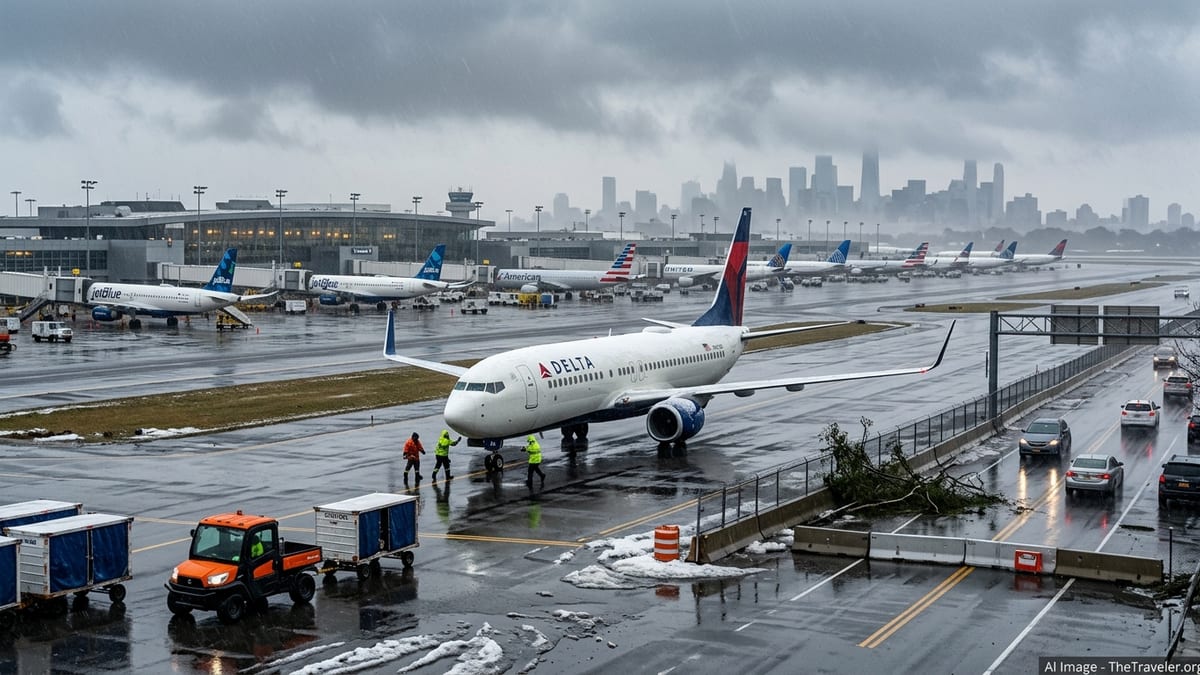
Storm track, timing and the hardest‑hit regions
The storm system intensified late on Wednesday, November 25, before pushing up the Eastern Seaboard through Thanksgiving Day on Thursday, November 26, bringing wind-driven rain, coastal flooding and pockets of snow and ice from the Mid-Atlantic into New England. Forecasters described it as a powerful coastal storm or early-season nor’easter, with a separate winter system affecting parts of the Midwest.
Heavy rain and strong onshore winds battered coastal areas from Virginia and Maryland through New Jersey and New York, with the National Weather Service warning of widespread coastal flood issues and gusts frequently topping 40 miles per hour in exposed locations. Inland, the combination of saturated ground and strong gusts raised the risk of downed trees and power lines, while higher elevations in the interior Northeast and some Midwestern states saw a wintry mix that made driving hazardous on key highway corridors.
Weather services and emergency management agencies had been flagging the potential for serious impacts since at least Monday, but the most disruptive conditions were concentrated on Thanksgiving Day itself. Federal emergency briefings highlighted the likelihood of scattered to widespread power outages, difficult driving conditions and significant disruptions to air travel at major hubs along the I‑95 corridor as the storm reached peak intensity.
Flight delays, cancellations and airline responses
By early afternoon on Thanksgiving Day, data from flight-tracking service FlightAware showed well over 1,000 flights to, from or within the United States canceled and several thousand more delayed, as strong winds and low visibility slowed operations at major East Coast airports. Earlier in the day, wire services citing the same data reported around 1,700 flight delays and more than 400 cancellations nationwide, figures that continued to climb through the holiday as the storm pushed north.
New York–area airports, including LaGuardia, John F. Kennedy and Newark Liberty, were among the most affected, reflecting both the severity of the weather and their role as critical national and international hubs. Delays also mounted at Washington-area airports, Boston Logan and Philadelphia, with ground delays, reduced arrival rates and temporary runway configuration changes compounding weather-related slowdowns. In Florida, operations at Miami International Airport had already been under strain after a FedEx cargo aircraft overran a runway on Wednesday night, temporarily limiting capacity as the pre-holiday rush peaked.
Several major U.S. carriers issued flexible travel waivers ahead of the storm, allowing passengers scheduled to fly through affected airports on November 26 and, in some cases, November 27 to change to alternate flights without change fees or fare differences within specified date and routing windows. While details varied by airline, the waivers generally covered large swaths of the Mid-Atlantic and Northeast, including New York, New Jersey, Pennsylvania and New England, and were framed explicitly as a response to the coastal storm and associated forecast of damaging winds and flooding rain.
Widespread power outages and local emergency measures
The same winds and heavy precipitation that disrupted flights also cut electricity to large areas along the storm track. By Thursday morning, November 26, outage monitoring service PowerOutage.us was reporting more than a million customers without power nationwide, with the worst impacts concentrated in East Coast states. Around midday, that total was still in the hundreds of thousands, fluctuating as utilities restored some lines while new outages developed in areas experiencing the strongest gusts and most saturated ground.
States from the Carolinas through the Mid-Atlantic into the Northeast reported downed trees, flooded roadways and scattered infrastructure damage as the storm moved north. In Maryland, intermittent power disruptions triggered a water-conservation request for roughly 2 million customers in Montgomery and Prince George’s counties as local authorities worked to maintain water system stability while backup power systems cycled and line crews responded to outages.
In New York, Governor Kathy Hochul declared a state of emergency in the New York City area and other downstate regions in anticipation of severe coastal flooding, potentially damaging winds and heavy rainfall. Officials cited concerns about both power reliability and public safety in low-lying neighborhoods facing unusually high tides, locally described as king tides, coinciding with the storm surge. Across multiple states, emergency management agencies advised residents to avoid unnecessary travel during peak conditions, to report downed lines to utilities and to prepare for outages that could last through at least part of the holiday weekend in the hardest-hit communities.
Impact on holiday events and broader travel patterns
The storm’s disruption extended beyond transportation and utilities to Thanksgiving traditions that draw domestic and international visitors. For the first time in the event’s century-long history, Macy’s Thanksgiving Day Parade in New York City was postponed because of weather. Organizers, working with city officials and the New York Police Department, rescheduled the parade from Thursday morning to Saturday, November 28, at 8:30 a.m., citing concerns about high winds, heavy rain and public safety along the route.
The decision affected thousands of out-of-town participants and spectators who had traveled specifically for the parade, including school marching bands and performance groups that typically spend months preparing and fundraising for the trip. While some visitors indicated they would extend their stays to attend the Saturday event, others with fixed return flights or limited budgets faced the prospect of missing the rescheduled parade entirely or trying to adjust travel plans at short notice amid the broader disruption.
On the ground, intercity road travel also became more difficult in regions under heavy rain and strong wind warnings. Forecasts and live traffic reports on Thanksgiving morning showed periods of slow-moving traffic and localized closures on stretches of major highways including portions of Interstate 95 and connecting routes, driven by water on roadways, poor visibility and incidents involving downed trees or minor collisions. In contrast, parts of the interior Southeast and some western states saw relatively typical holiday traffic, highlighting how geographically concentrated but still nationally significant the storm’s travel effects have been.
What Thanksgiving travelers should do next
Airlines and regulators continued to advise passengers to monitor flight status closely and to allow extra time at airports through at least Friday, November 27, even in regions where skies might appear clear. Because large hub delays can have knock-on effects across the national network, travelers departing from unaffected airports may still face aircraft or crew arriving late from storm-struck cities, leading to rolling delays or aircraft swaps throughout the day.
Passengers with non-essential or flexible plans who are scheduled to travel into or out of the Mid-Atlantic and Northeast through Friday are being encouraged by airlines and travel advisers to consider rebooking to later in the weekend where waiver policies permit, or to look at alternative routings that avoid the most affected hubs. Those whose flights are canceled are generally eligible for refunds under U.S. Department of Transportation rules if they choose not to travel, but travelers must request these directly from the airline rather than assuming they will be automatic.
On the power and safety side, utilities and local authorities are warning that some outage restoration work may extend into Friday or beyond in areas with extensive line damage or difficult access conditions. Travelers staying with friends or family in affected regions should confirm accommodation arrangements, heating options and local road conditions before setting out, particularly if arriving late at night when fewer services are available. As the storm lifts north and weakens into the weekend, forecasters expect travel conditions to improve steadily, but anyone with upcoming trips through impacted states is advised to keep checking updated weather forecasts, airline communications and local advisories, since residual delays and cleanup operations can continue to affect transportation systems after the heaviest rain and wind have passed.