


More news on this day
A powerful Thanksgiving storm is sweeping across large parts of the United States on Thursday 26 November 2026, cutting electricity to more than 800,000 customers and disrupting one of the year’s busiest travel days with flight cancellations, hazardous driving conditions and rail delays from the Midwest to the East Coast.
Get the latest news straight to your inbox!
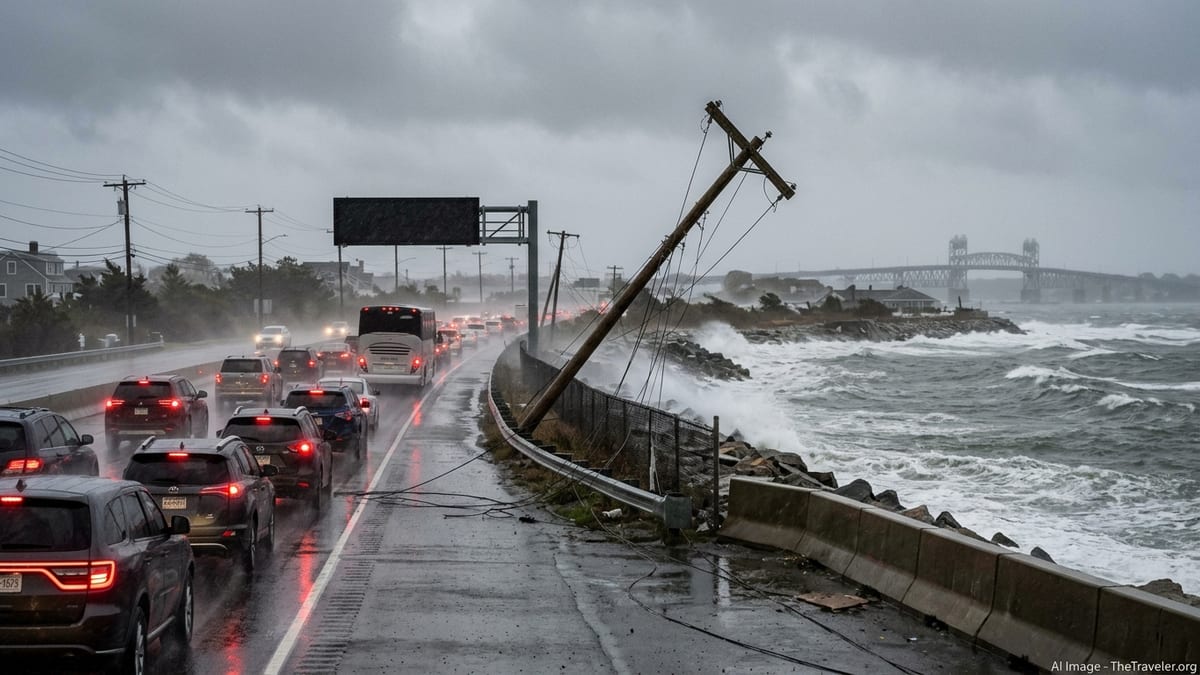
Power outages climb as high winds hit the East Coast
By early Thursday afternoon, more than 800,000 homes and businesses across the country had lost power as the storm pushed up the Eastern Seaboard, bringing wind gusts that in some coastal areas have approached or exceeded 60 to 70 miles per hour. The largest concentrations of outages have been reported in Mid-Atlantic and Northeast states, including Pennsylvania, New Jersey and New York, alongside pockets of significant disruption in parts of the Southeast affected by the same system.
Utilities and state emergency agencies have warned that restoration could be a multi day effort in the hardest hit coastal and bayside communities where saturated ground and repeated tidal flooding have made tree falls and damage to distribution lines more likely. Governors in several states, including New Jersey and Pennsylvania, have activated emergency operations and high wind or flood warnings remain in effect along much of the I 95 corridor, a key axis for both regional rail and road traffic.
Officials are cautioning travelers that the power cuts are not confined to residential neighborhoods. Outages have affected traffic lights, some commuter rail signaling infrastructure and highway message boards in certain areas, while localized cuts to station and terminal power have forced operators to rely on backup systems. Travelers are being urged to check the status of their route in real time and to allow additional time where local transit is operating on modified schedules because of debris removal or water on the tracks.
Flight cancellations and delays ripple across major hubs
The coastal storm has added a significant weather component to an already pressured Thanksgiving air travel period. By early Thursday afternoon, flight tracking data showed more than 400 US flights canceled and around 1,600 delayed nationwide, with the heaviest disruptions affecting airports along the storm’s path. New York City area airports, Philadelphia, Boston and Washington have all reported bouts of arrival and departure delays as low clouds, turbulence and strong crosswinds cut capacity on key runways.
On Wednesday evening, the impact of the holiday rush was compounded in Florida when a FedEx cargo aircraft overran a runway at Miami International Airport. That incident, which did not result in injuries, forced all but one runway to close temporarily just hours before the peak getaway period, creating congestion that spilled into the Thanksgiving travel window. While normal operations have largely resumed, schedule recovery from both the Miami disruption and Thursday’s East Coast weather has created knock on delays for connecting passengers far from the storm’s core.
Several major US airlines introduced flexible travel waivers ahead of the forecast coastal storm, particularly for customers booked to or from Northeastern airports on Thursday and, in some cases, extending through the weekend. These waivers allow travelers to rebook within a specified date range without change fees or fare differences, provided they keep the same origin and destination. However, availability on alternative flights is tightening on many routes, and some early morning departures on Thanksgiving Day itself were canceled pre emptively to avoid stranding aircraft and crews as conditions deteriorated.
Road and rail travelers face flooding, snow and high winds
The same system driving coastal winds has created a patchwork of hazardous conditions on the ground across several regions. In the interior Northeast and parts of the Ohio Valley and upper Midwest, bands of heavy, wet snow and freezing rain have reduced visibility and led to slick road surfaces, particularly on secondary highways and higher elevation passes. State police in multiple states have reported numerous minor crashes and spinouts, and transportation departments are urging drivers to reduce speed, leave extra following distance and be prepared for sudden lane closures where crews are clearing downed branches or power lines.
Along the Mid Atlantic and New England coasts, heavy rain has coincided with high astronomical tides to produce moderate to locally major coastal flooding in low lying areas. Sections of waterfront roads and some causeways have been closed temporarily, with detours in effect until waters recede and safety inspections can be completed. In urban centers, storm drains overwhelmed by leaf clogged runoff have produced localized flash flooding that has slowed traffic on key approach routes to regional airports and city centers.
Passenger rail operators in the Northeast have also warned of disruptions. Strong winds increase the risk of trees coming down across tracks or overhead power lines, while waterlogged track beds in flood prone zones can require speed restrictions or temporary suspensions. Some Northeast Corridor services and regional routes have experienced delays or cancellations as dispatchers reroute trains or hold them until debris is cleared. Passengers are being advised to monitor operator alerts closely, as conditions and service patterns can change over the course of the day as the storm moves northward.
New York’s Thanksgiving parade postponed and tourism plans upended
One of the most visible cultural casualties of the storm has been the postponement of the 100th Macy’s Thanksgiving Day Parade in New York City. Organizers confirmed on Wednesday that the event would be rescheduled for Saturday, 28 November 2026, citing forecasts of strong winds and heavy rain along the parade route that risked making it unsafe to fly the signature large balloons or to host hundreds of thousands of spectators along Manhattan’s streets.
The decision marks the first time in the parade’s century long history that it has been postponed because of weather, although the event was canceled entirely for three years during World War II. The postponement has significant implications for holiday tourism in New York, as many domestic and international visitors travel specifically to see the parade live on Thanksgiving morning. Hotels in Midtown and along the route have been fielding questions about room and viewing reservations, while restaurants that typically plan seatings around the parade timetable have had to adjust staffing and service plans with limited notice.
For travelers already in the city, the change has created a compressed schedule of events over the long weekend. City officials and tourism agencies are encouraging visitors to treat Thursday as an opportunity to explore indoor attractions, which have generally remained open, and to plan ahead for potentially larger crowds on Saturday when the rescheduled parade coincides with existing weekend events. The New York Police Department has indicated that road closures around the route will mirror the original Thanksgiving Day plan, meaning that those driving in Manhattan on Saturday should expect significant detours and avoid the parade zone where possible.
What travelers should check next as the storm evolves
Meteorologists expect the coastal storm to continue tracking northeast through Thursday evening and into Friday, with conditions gradually improving from south to north. However, residual impacts on transportation networks are likely to persist beyond the worst of the weather, particularly where power outages are widespread or where flooding and snow have left infrastructure in need of inspection and repair. Travelers planning to head home over the weekend may still encounter delays even under clearer skies as airlines and rail operators reposition equipment and work through backlogs created earlier in the holiday period.
Anyone with flights booked over the next several days is being advised to confirm the status of their departure directly with their airline before leaving for the airport, to verify whether any weather related waivers apply to their itinerary, and to allow additional time for security and check in in case of crowding from rebooked passengers. Those driving should consult updated state transportation maps and navigation apps that account for current closures, and pay close attention to local advisories on bridge restrictions or high profile vehicle warnings where wind gusts remain strong.
Travelers using intercity or commuter rail should monitor operator alerts on service frequency, potential bus substitutions and any lingering speed restrictions on exposed sections of track. With more unsettled weather forecast on parts of both coasts into the weekend, conditions may continue to evolve, and the most reliable information for individual journeys will come from the real time updates issued by airlines, rail companies, port authorities and state transportation departments as they respond to the storm’s changing impact.