


More news on this day
Trenitalia, Deutsche Bahn and ÖBB have confirmed plans to launch new cross-border Frecciarossa high-speed services between Germany, Austria and Italy from summer 2027, offering direct daytime trains from Munich to Milan and Rome as part of an EU-backed push to strengthen long-distance rail links.
Get the latest news straight to your inbox!
What Has Been Announced For Summer 2027
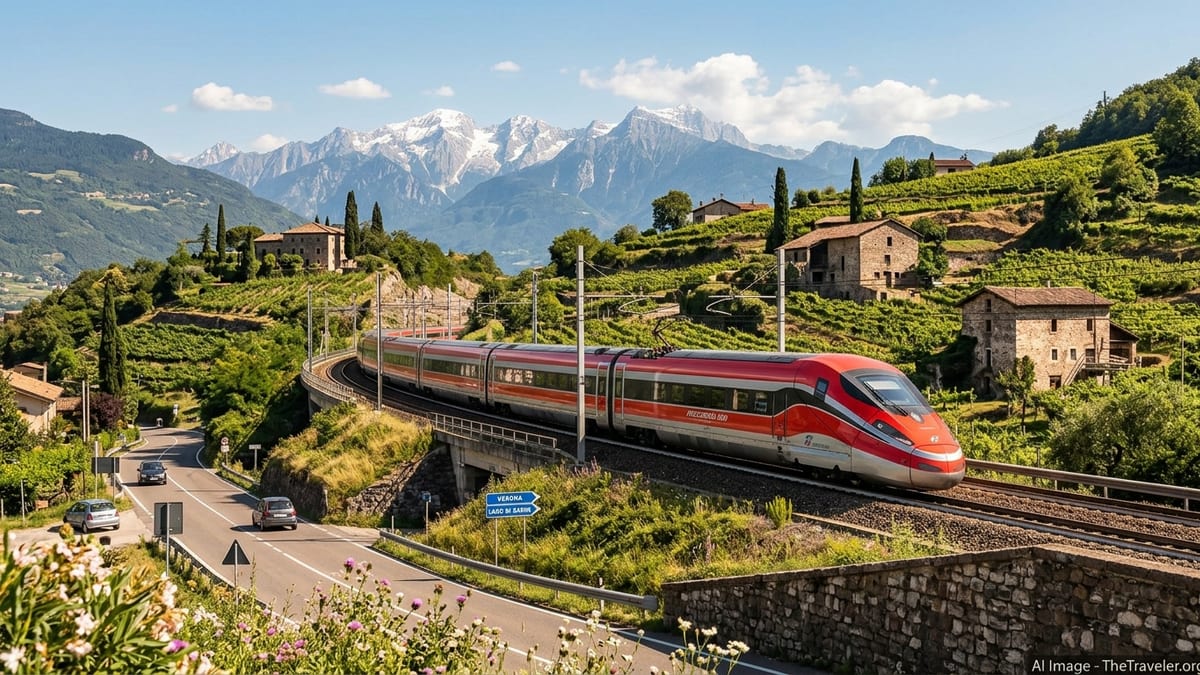
The three national rail operators have jointly announced that Frecciarossa high-speed trains will run from Munich via Innsbruck to Milan and Rome starting in the summer 2027 timetable period. Trenitalia will provide the Frecciarossa rolling stock, with Deutsche Bahn and ÖBB as operational partners in Germany and Austria. The project was presented publicly at the InnoTrans 2026 rail trade fair, and recent press releases from all three companies now align on a commercial launch in summer 2027 rather than the earlier target dates that had circulated during planning.
According to company statements, the new routes are designed as daytime intercity services, giving passengers a direct high-speed option linking Bavaria with northern and central Italy. The services form part of an EU pilot program to improve cross-border long-distance rail, with the Munich–Milan and Munich–Rome links listed among a small group of test corridors intended to demonstrate what more integrated rail timetables can achieve for international travel.
Planned Route Structure Across Three Countries
Current plans envisage two main daytime patterns: Munich–Innsbruck–Verona–Milan and Munich–Innsbruck–Verona–Florence–Rome. Operators have highlighted these as indicative routings, and they confirm that Innsbruck and Verona are intended as key calling points for both branches as trains cross Austria and northern Italy. The exact stopping pattern at intermediate stations in Germany, Austria and Italy has not yet been published in a final timetable, and it is possible that some stations mentioned in test schedules or trial documentation will not appear in the final commercial pattern.
The service is notable because it will carry a single Frecciarossa brand and train type across three national networks in one through journey. Trial runs of ETR1000 Frecciarossa sets began in Germany and Austria in mid 2026 to obtain the necessary approvals and to fine-tune operations on each network. For travelers, this should translate into a familiar on-board product from departure in Munich through to arrival in Milan or Rome, even though the infrastructure and national operators change at each border.
What Travelers Can And Cannot Book Yet
As of late November 2026, the railways have confirmed the intention to start services in summer 2027, but they have not yet published a detailed public timetable with train numbers, final station lists, or exact first day of operation. Journey times cited during technical presentations and test phases should be treated as provisional until full schedules appear in booking systems closer to launch. The operators have also not released information on introductory fares, on-board service levels specific to this route, or seating layouts beyond the standard Frecciarossa configurations already in use elsewhere in Europe.
Prospective passengers should therefore treat the Munich–Milan and Munich–Rome Frecciarossa as announced and planned, but not yet bookable on most consumer-facing channels. Industry and rail operator documents indicate that more precise details, including which June, July or August date will mark the actual start of service and on which days of the week the first trains will run, will only be confirmed nearer to the 2027 timetable change and summer season. Those planning trips should expect to recheck timetables and ticket availability in the months immediately before travel.
EU Pilot Project And Wider Network Implications
The new Frecciarossa links form part of an officially designated EU cross-border pilot project aimed at boosting long-distance rail, alongside a small number of other international corridors. The pilot status has helped coordinate infrastructure managers and operators in Germany, Austria and Italy to deliver compatible paths, train approvals and operating rules for the Munich–Italy route. That said, the project should be seen as one prominent example of emerging 2027 rail initiatives rather than evidence that every proposed cross-border scheme will launch on a similar timescale or with comparable levels of backing.
For travelers, the main impact will be a more straightforward rail alternative to flying between Bavaria and major Italian cities. With direct daytime services planned between Munich and Milan or Rome, onward connections from Munich toward destinations such as Prague or Copenhagen, and from Milan or Rome deeper into Italy, become easier to organize on a single rail-based itinerary. The operators have not yet provided firm guidance on through-ticketing or guaranteed connections, so passengers planning complex multi-country trips should continue to build in generous transfer times and verify minimum connection standards once detailed information becomes available.
What To Watch For Before Summer 2027
Between now and the start of the 2027 summer season, several key details remain to be clarified for travelers. These include the first operating date, whether services will run daily or on specific days of the week in the initial phase, and the final list of intermediate stops on each branch to Milan and Rome. Rail operators are also expected to confirm how far in advance tickets will open for sale and whether any promotional launch fares will be offered to encourage early adoption of the new route.
Closer to departure, travelers should check updated timetables from Trenitalia, Deutsche Bahn and ÖBB, along with booking engines and journey planners, to ensure they are seeing the latest information rather than early project material or draft schedules. Because infrastructure works and regulatory approvals can still affect start dates and timings, it will be important at article deadline and at trip-planning stage to verify whether the summer 2027 launch window, the planned route structure and ticket-sale timelines remain as announced, or whether the operators have adjusted their plans.