


More news on this day
Cyprus Airways is preparing what it calls a new phase of growth built around short- and medium-haul routes from Larnaca, even as elevated jet fuel prices and wider cost pressures push many European airlines to trim capacity or warn of higher fares.
Get the latest news straight to your inbox!
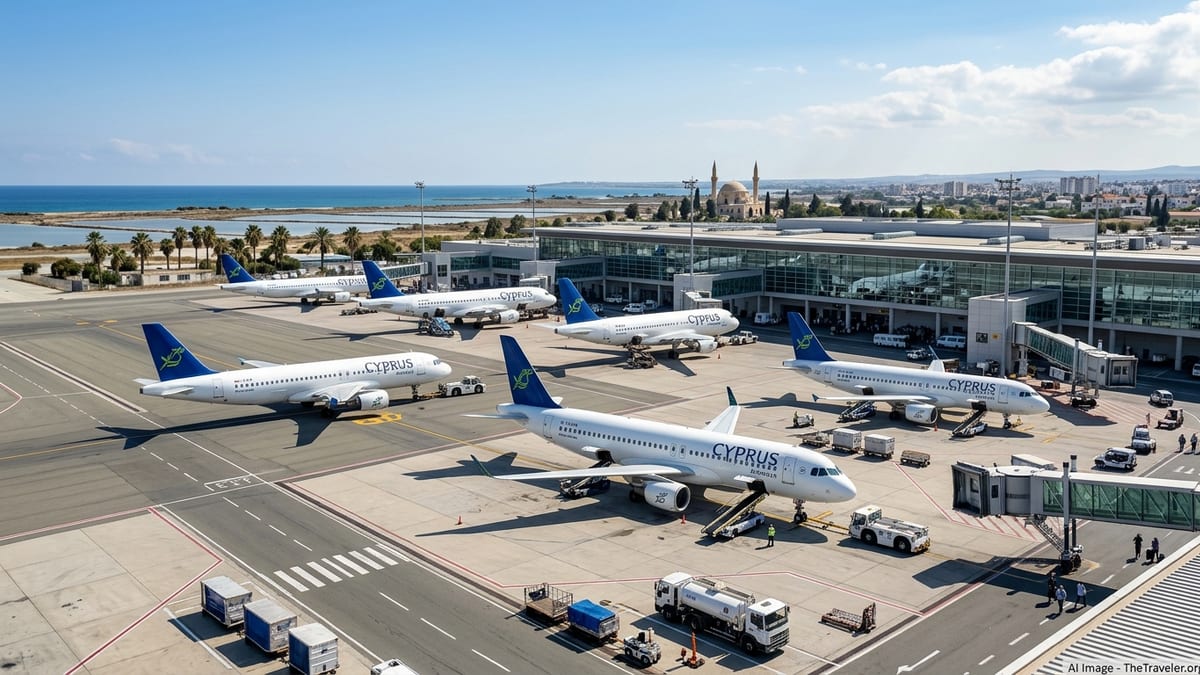
Lean Airbus fleet geared to regional flying
Cyprus Airways currently operates an all-Airbus fleet made up of Airbus A220-300 and A320-200 aircraft, according to the airline’s own fleet information and recent fleet-tracking data. The carrier is listed with six aircraft in service, comprising four A220-300s and two A320ceos, with additional A220-300 capacity indicated in charter and ACMI materials as available for growth and wet-lease work.
The A220-300, with a range suitable for routes across Europe and the near Middle East, has become the backbone of Cyprus Airways’ scheduled network. The airline promotes the type as its primary aircraft for efficiency and passenger comfort, while the A320 fleet continues to serve higher-density routes where 180-seat layouts remain useful.
This narrowbody-only mix underpins a strategy focused on relatively short sectors rather than long-haul flying, which would typically require widebody aircraft and carry greater exposure to fuel price swings on multi-hour intercontinental legs.
Larnaca network: more Europe and near Middle East options
From its main base at Larnaca International Airport, Cyprus Airways’ current scheduled network is centered on nearby European and Middle Eastern destinations. Airport and schedule data show regular services from Larnaca to Athens and Heraklion in Greece, Paris Charles de Gaulle, Milan Malpensa, London Stansted, Munich, and Rome Fiumicino, alongside regional routes to Dubai, Tel Aviv and Beirut.
Recent announcements confirm that Rome Fiumicino is scheduled to resume from 11 December 2026 and Munich from 17 December 2026, both as year-round services. The airline has described these additions as strengthening its European network, which already includes year-round links from Larnaca to Paris and Milan, and daily or near-daily services to key regional cities such as Tel Aviv, Beirut and Dubai.
Independent schedule aggregators indicate that several of these routes operate with multiple weekly frequencies. Tel Aviv is generally served at least five times per week, Beirut and Dubai up to daily in peak periods, and Paris, Milan and Munich offered several times weekly, reflecting a network tailored to short- and medium-haul demand rather than long-haul expansion.
Fuel prices and a shifting European capacity picture
The carrier’s network choices are unfolding against a backdrop of higher fuel costs and geopolitical disruption that have weighed on airline profitability. In its mid-2026 financial outlook, the International Air Transport Association said high jet fuel prices and Middle East-related disruptions were expected to halve global airline profits in 2026 compared with 2025 and to lift fuel’s share of industry operating costs to nearly one-third.
IATA’s traffic and chartbook reports for 2025 and 2026 point to relatively resilient demand on intra-European and Mediterranean routes, with passenger growth in those markets broadly aligned with capacity increases. At the same time, European airlines have begun adjusting capacity on selected services, particularly where longer routings and higher fuel burn make marginal routes more vulnerable when fuel prices rise.
Across Europe, several large groups have trimmed schedules or warned of pricing pressure. While individual numbers vary by carrier and season, some network airlines have cut thousands of flights from published timetables, and low-cost operators have signaled that sustained high fuel prices leave limited room for further fare reductions. Ryanair’s chief executive, for example, recently warned that European airfares could rise by up to 20 percent next year if current jet fuel trends persist.
How Cyprus Airways’ approach affects travelers
For travelers using Larnaca, the practical impact of Cyprus Airways’ current strategy is a growing set of short- and medium-haul options to key European cities, hubs and nearby Middle Eastern destinations. The expansion to Rome and Munich, in addition to existing services to cities such as Athens, Paris, Milan, Dubai, Tel Aviv and Beirut, increases the number of one-stop itineraries available from Cyprus to the wider European network.
Short-haul seat supply to and from Cyprus appears to be expanding rather than contracting, both through Cyprus Airways and competing carriers, even as the wider industry faces cost pressure. However, fares on these routes may feel less “ultra-low-cost” than some travelers remember, particularly in peak holiday periods, as airlines seek to offset higher fuel and operating costs while maintaining regional connectivity.
Cyprus Airways has also used targeted promotions to stimulate demand on its expanding network, including recent fare campaigns covering autumn and winter travel on routes such as Beirut, Tel Aviv, Milan, Rome and Munich. Promotional prices remain available, but base fares are likely to remain sensitive to movements in fuel prices and broader economic conditions.
What to watch next
The airline has characterized its current position as the start of a new growth phase following operational challenges earlier in the decade. For travelers, the key developments to monitor will be further route announcements for summer 2027 and beyond, particularly any additional European capitals or regional points added from Larnaca or other Cypriot airports.
Passengers should also watch for any explicit fuel surcharges or pricing adjustments tied to fuel costs, which some European airlines have historically introduced when oil prices spike. If jet fuel remains elevated, more volatile fares on leisure-heavy routes to and from Cyprus are possible, even if overall seat capacity continues to grow.
Finally, updated traffic and capacity data from IATA, Eurocontrol, Hermes Airports and Cyprus Airways itself will help show whether the island’s short- and medium-haul connectivity continues to expand or reaches a plateau. Those figures will be an important indicator of how sustainable the current regional focus proves to be in a cost-constrained European aviation market.