


More news on this day
Hundreds of flights were canceled at Chicago’s O’Hare International Airport as heavy rain and thunderstorms moved into the region over the weekend, snarling one of the nation’s busiest hubs and setting up cascading delays across the U.S. air-travel network.
Get the latest news straight to your inbox!
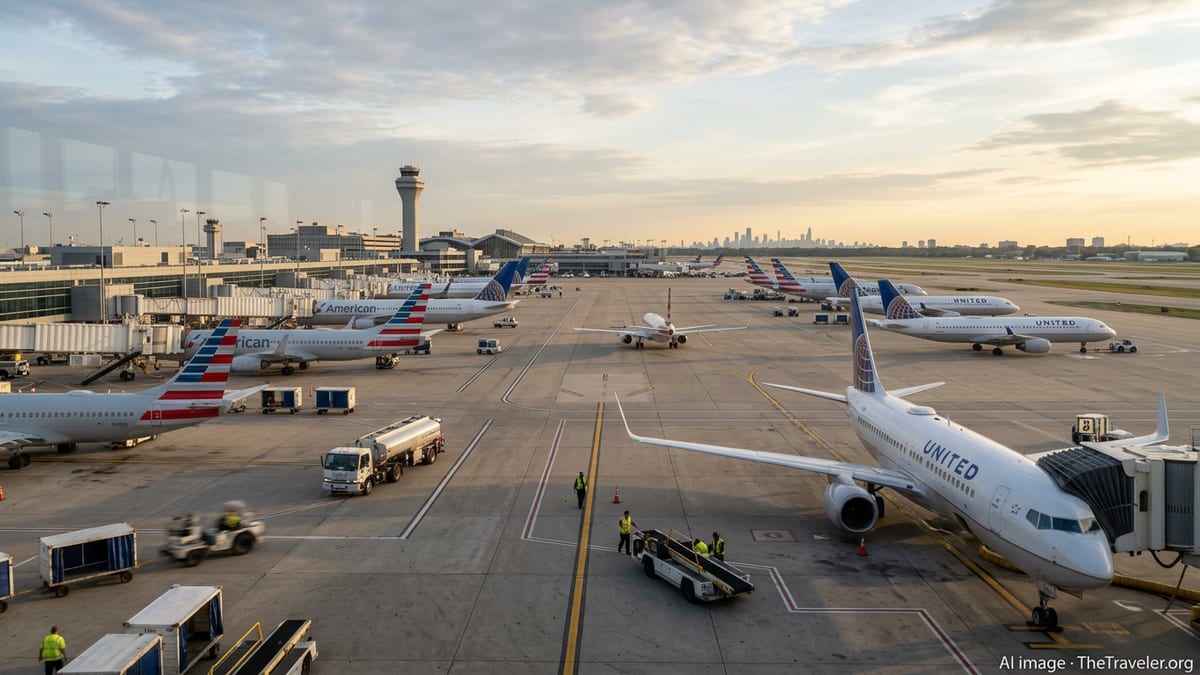
Cancellations mount as weather slows air traffic
Published coverage Saturday described more than 300 cancellations at O’Hare as rounds of heavy rain pushed through the Chicago area, with additional showers in the forecast. The disruptions arrived during a period when O’Hare’s dense schedule can magnify any weather slowdown into hours of systemwide knock-on effects.
Live flight-tracking data showed a high volume of disruption continuing into the current operating day. FlightAware’s airport statistics page for Chicago O’Hare listed 191 cancellations and 1,614 delays for “today” at the airport at the time of publication, underscoring that recovery often stretches well beyond the worst of the weather itself.
For travelers, the most visible impact is at the gates and in airline apps: late inbound aircraft, delayed crew rotations, and missed connections. Even when rain eases, air traffic managers may continue to meter arrivals and departures to keep spacing safe and manageable, which can keep delays elevated.
What the forecast shows for O’Hare and the Chicago region
Publicly available National Weather Service information for the O’Hare area highlighted heavy to excessive rainfall risk through the weekend, including flood-watch messaging around Saturday. The same forecast materials pointed to the potential for localized flooding, a scenario that can complicate ground operations even if runways remain usable.
In practical terms, heavy rain can reduce visibility and require greater spacing between aircraft. Thunderstorms in the vicinity can also trigger temporary route closures or holding patterns, particularly on arrival banks when many flights are trying to land within tight windows.
Rain-related disruptions at O’Hare can also be amplified by conditions beyond the airfield. When flash flooding affects roadways and transit access, passengers and airport workers may have difficulty reaching terminals on time, which can contribute to missed departures and longer lines at customer-service points.
FAA traffic management and why delays can persist
The Federal Aviation Administration’s daily air traffic reporting outlines how weather can lead to arrival and departure delays, ground delay programs, reroutes, and ground stops. While these measures are designed to maintain safety and manage demand during constrained conditions, they can slow the system to a crawl at major hubs.
O’Hare sits at the center of a tightly connected network, so disruption can spread quickly. When aircraft are held out of Chicago, they may arrive late to their next city, which then delays onward flights. The same pattern can occur with crews, which are scheduled to operate multiple segments per day.
Separately from weekend weather, O’Hare has faced broader capacity and scheduling scrutiny in 2026, including federal attention on preventing widespread delays during peak travel periods. That context matters because it means the airport can be operating close to its practical limits even on good-weather days, leaving less cushion when storms roll in.
What travelers should do now if flying through ORD
Travelers with trips involving O’Hare should monitor their flight status directly with their airline and in airport data tools, and avoid relying solely on a departure-time snapshot. In fast-changing weather, the most important indicator is often the inbound aircraft’s position and the airline’s re-accommodation options.
It can also help to anticipate connection risk. If you are connecting at O’Hare, consider whether an earlier flight, a different routing, or a longer connection window is available before you leave for the airport. When irregular operations build, same-day alternatives can sell out quickly.
Finally, plan for extended on-the-ground time. When storms are nearby, aircraft can sit at gates waiting for a departure slot, or wait on taxiways if ramp activity slows. Packing essentials in a carry-on, keeping chargers handy, and tracking rebooking options in-app can make a long delay more manageable.