


Taksim Square and nearby Istiklal Street are usually the first places travelers see in Istanbul. This central hub is busy at all hours, packed with shops, bars, hotels and constant foot traffic. It feels energetic and modern, but like any dense nightlife district it also brings pickpockets, pushy touts, occasional protests and the odd late night scam. This guide looks at how safe Taksim really is in 2026 and gives practical, real world tips so you can enjoy the area confidently while avoiding the main risks.
Get the latest updates straight to your inbox!
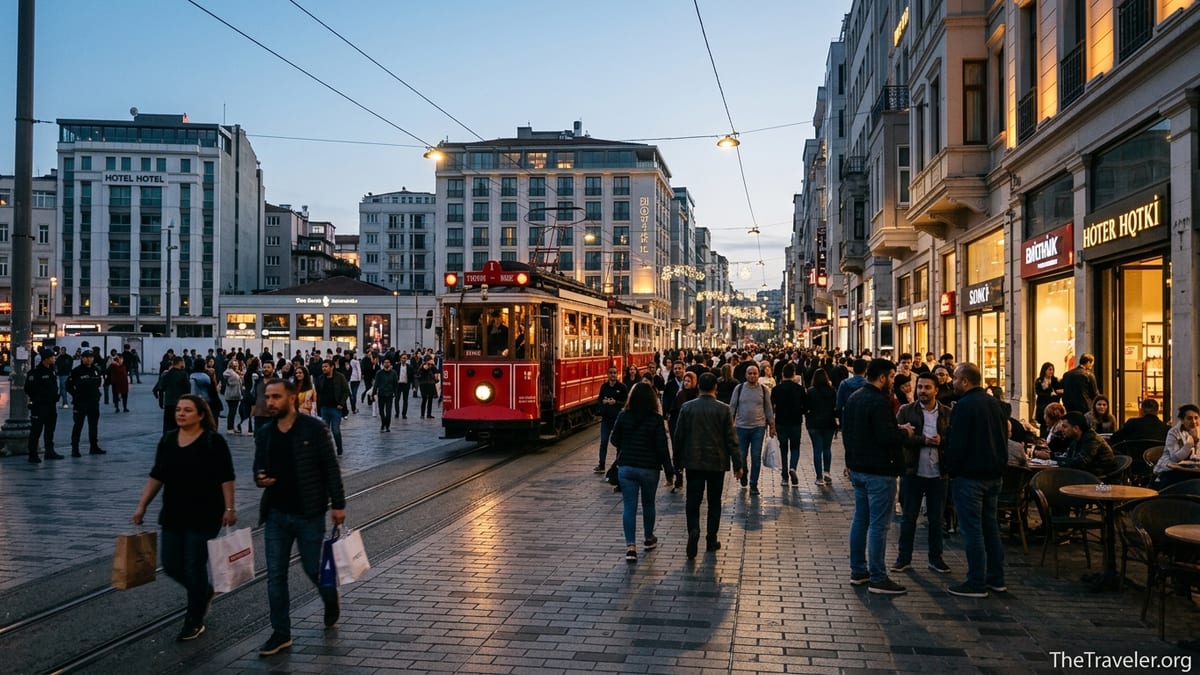
How Safe Is Taksim Square Overall?
For most visitors, Taksim Square and the surrounding streets are generally safe, especially compared with many big city nightlife districts. You will see families strolling Istiklal Avenue in the evening, office workers commuting through the square, and tourists dragging suitcases to hotels late at night. Violent crime against travelers is rare. The main safety issues are petty theft, harassment from touts, tourist scams and being caught up in the wrong place during a protest or heavy police operation.
The atmosphere changes depending on the time of day. On a Sunday afternoon, sitting near the Republic Monument and watching the nostalgic tram pass feels relaxed and open. By midnight on a summer Saturday, the same area can be loud, crowded and a bit chaotic as partygoers move between bars in streets like Nevizade and Asmali Mescit. You are unlikely to face serious danger, but you do need to pay attention to your pockets, bag and route home.
Police presence is highly visible around Taksim, especially on weekends and politically sensitive dates. On normal days this acts as a deterrent against serious crime. On certain dates, however, the same presence can mean tear gas or batons are used against demonstrators trying to reach the square. As a visitor, your main task is to recognize when a day is “normal busy” and when there is political tension, and to adjust your plans accordingly.
It also helps to compare Taksim with other Istanbul areas. If Sultanahmet feels like an open air museum and Kadıköy like a neighborhood hangout, Taksim is more like the Times Square or Piccadilly Circus of Istanbul: not the most charming part of town, but central, buzzing and usually safe enough for street smart travelers.
Crowds, Pickpockets and Everyday Street Smarts
The single most common problem in and around Taksim is pickpocketing in dense crowds. Istiklal Avenue can be shoulder to shoulder on weekend evenings or around public holidays. Thieves take advantage of the slow walking pace near landmarks like Galatasaray High School or around street musicians. Travelers often report discovering an open backpack or missing phone only once they step into a quieter side street.
Simple physical habits make a big difference. Wear crossbody bags with zippers toward the front of your body, keep wallets in front pockets, and avoid walking with your phone half sticking out of your back pocket. If you stop to watch a busker or the red nostalgic tram, keep one hand on your bag. When someone “accidentally” bumps into you in a crowd, immediately check your belongings. This may sound basic, but many visitors let their guard down because the area feels festive rather than risky.
Another everyday annoyance is the constant approach from touts. Around the square and lower Istiklal, you may be offered pub crawls, “Turkish night” shows, shisha bars, or gentlemen’s clubs. A common script starts with a friendly question like “Where are you from?” followed by “Come, my cousin has a great bar nearby.” In the worst cases, this leads to inflated bar bills or pressure inside upstairs venues that are difficult to leave without paying hundreds of euros. If a stranger on the street invites you to a bar or club you did not research yourself, the safest answer is a firm but polite “No, thank you” and to keep walking.
Families and more cautious travelers often feel safer one or two streets away from the noisiest stretches. For example, walking the upper part of Istiklal toward Tünel, or heading into Cihangir’s residential streets, provides plenty of cafes and restaurants without the most aggressive touts. The general rule is that the more an area seems built around quick tourist turnover, the more you should expect minor scams and hassle.
Nightlife: From Relaxed Bars to Tourist Traps
Taksim is one of Istanbul’s nightlife hubs, and safety depends heavily on where and how you choose to go out. Well known meyhanes and rooftop bars that cater to both locals and visitors are usually safe environments, with normal levels of city nightlife risk. Typical examples include modestly priced rakı restaurants on the back streets of Cihangir or bars near Tomtom that attract a mixed crowd of students, artists and office workers. In those venues you mainly need to watch your drink, keep an eye on your bag, and use reputable transport home.
The highest risk spots are unmarked or obscure adult venues in side streets off Istiklal or near the square, often reached after a stranger approaches you. Real world reports in recent years describe tourists being lured to “secret” clubs, shown a drink menu with normal prices, then presented with a bill for the equivalent of several hundred euros. When they protest, large men appear and pressure them to pay by card or ATM. This pattern is not unique to Istanbul, but Taksim is a known hotspot for it, especially for solo men or small groups of male travelers.
Safer choices are venues you find yourself through your hotel, reputable guidebooks or well reviewed mapping apps, rather than through street invitations. Look for places that display clear prices at the door and have a mix of Turkish and foreign customers. In many of the casual bars on streets like Mis Sokak or around Cihangir, a beer might cost close to what you would pay in a Western European capital. If a bouncer refuses to show a menu or pressures you to enter quickly, treat it as a red flag and move on.
Late at night, streets like Nevizade, Asmali Mescit and the passages off Istiklal remain busy until 2 or 3 a.m., with music and crowds. These areas can feel overwhelming but not necessarily threatening. The main issues are drunken arguments, the occasional fight, and the increased risk of losing your phone or being pickpocketed. Many Istanbul residents, including women, do go out there, but they usually stay with friends, watch their drinks closely and avoid overly insistent strangers. If you are tired or uncomfortable, it is perfectly reasonable to call it a night earlier and head back to your hotel before the very late crowd comes out.
Solo Travelers, Women and Late Night Streets
Solo travelers, including solo women, can and do stay around Taksim without major problems, but they tend to have the most hassle from street approaches. A common pattern for solo women is repeated invitations to “have a drink” or “smoke shisha” from men around the square or lower Istiklal. The behavior is often persistent rather than dangerous, but it can feel tiring. Many women report that sunglasses, headphones and a brisk walking pace reduce unwanted conversations. Being direct with “No, I am meeting someone” or “No, I prefer to be alone” also helps.
At night, street lighting is generally good on main routes like Istiklal and Cumhuriyet Avenue, and you will rarely find yourself completely alone before midnight. After 1 or 2 a.m., however, some side streets empty out while others remain loud and boozy. If you are walking alone late, it is better to stick to the busier, better lit streets even if that adds a couple of minutes to your route. In practice, that might mean walking up Istiklal to the square and then turning toward your hotel, rather than cutting through a quieter back lane.
Choose your accommodation with your comfort level in mind. A small guesthouse up the hill in Cihangir can feel quieter and more residential but may involve steep, dimly lit streets at night. A chain hotel directly on Taksim Square offers bright lighting, 24 hour reception and easy access to taxis and the metro, but at the cost of more noise. Travelers who feel nervous walking alone after dark often prefer the latter, while those who value a neighborhood vibe choose the former and simply take a taxi back late at night.
If something does feel wrong, trust your instincts early. For example, if a bar’s atmosphere changes after midnight, if a group at the next table starts pressuring you to keep drinking, or if someone insists on walking you “shortcuts” through unfamiliar alleys, it is better to extract yourself politely but firmly. In Istanbul, as in any big city, nothing obliges you to be polite at the expense of your safety.
Protests, Police Presence and When to Avoid the Area
Taksim Square has been a symbolic protest site for decades, and that history still shapes its security today. Since the large Gezi Park demonstrations in 2013, authorities frequently restrict protests in and around the square. On politically sensitive dates such as May Day or during certain high profile court decisions, police may block roads, close metro exits and use tear gas or rubber bullets on groups trying to reach the square. News outlets and local observers reported arrests and clashes near Taksim on 1 May in both 2023 and 2024, and similar patterns have continued.
For visitors, the practical advice is straightforward. Before heading to Taksim, check if your travel dates coincide with major events like 1 May, some election days, or large planned marches. On such days, the square and parts of Istiklal may be heavily controlled or temporarily closed, with long lines of riot police and water cannon vehicles. Even if you are not a target, being caught in a dispersal operation can mean burning eyes from tear gas, jostling crowds and sudden street closures.
If you arrive at Taksim and notice hundreds of police in helmets, parked armored vehicles and metal barriers blocking entrances to the square, consider changing your plan for the day. Go to another district like Kadıköy, Beşiktaş or the Old City instead, and return to Taksim on a calmer day. Avoid taking photos of close up police operations or joining groups that are clearly arguing with officers. In past incidents across Turkey, journalists and bystanders have occasionally been pushed, detained briefly or forced to delete images during tense moments.
It is worth noting that most days of the year you will not encounter any of this. The same square that appears on television during protests is on ordinary evenings simply a place where children chase pigeons and teenagers take selfies. The key is situational awareness. When the atmosphere feels like a relaxed public square, enjoy it. When it feels like a security operation, step away.
Taxi Issues, Transport and Safer Ways to Get Around
Istanbul’s taxis have a mixed reputation, and Taksim is one of the places where this is most obvious. Many drivers are honest and efficient, but enough are willing to overcharge tourists that you should treat taxis with caution. Travelers frequently report being quoted flat prices in euros for short trips, having drivers refuse to turn on the meter, or being taken on unnecessarily long routes between Taksim and common destinations like Sultanahmet or Beşiktaş.
Using metered rides or reputable apps is safer than hailing a random cab off Istiklal. At Taksim Square itself you will find official taxi stands where drivers are more likely to use the meter, especially if you are clear from the start: “Taksimetre lütfen.” If a driver insists on a high fixed price, simply step out and choose another taxi. Do not feel pressured once you are seated. Some visitors also use widely available ride hailing or taxi calling apps that connect to licensed yellow cabs and log the route and fare on your phone, which reduces opportunities for abuse.
Inside the car, keep your small bags with you rather than in the trunk, and pay attention to the banknotes you hand over. One well known scam involves switching your 200 lira note with a 20 and claiming you underpaid. To avoid this, count the cash aloud, make eye contact and watch the driver’s hands. If there is any dispute and you believe you are being cheated, you can note the plate number and, as some travelers have successfully done, call the official tourism or police hotlines from your hotel later.
In many cases, public transport is a calmer and cheaper option. From Taksim you can ride the funicular down to Kabataş for trams to Sultanahmet, or take the M2 metro to Şişhane or Yenikapı. These systems are modern, busy and generally safe, with the same pickpocket risks you would expect on any packed urban train. Many frequent visitors choose to avoid taxis entirely for everyday travel, using only pre booked transfers for airport runs and late night returns.
Choosing a Hotel Location Around Taksim
Taksim is a practical base, but not all streets around the square feel the same. When choosing a hotel, zoom into the exact block rather than just reading “Taksim area” in the description. Properties directly on the square or on Cumhuriyet Avenue are ultra central, well lit and busy almost 24 hours a day. This is convenient if you arrive late at night or want easy access to metro and buses, but it also means more noise, traffic and the constant flow of touts at your doorstep.
To the southwest, the Cihangir neighborhood offers a more residential atmosphere with cafes, small groceries and cats sunbathing on stairways. Many boutique hotels and apartments here are within a 10 to 15 minute walk of the square, but the streets are steeper and quieter. Safety wise, Cihangir feels similar or better than the square itself for most travelers, though solo visitors should still use normal city precautions after dark. If you plan to walk home late most nights, check reviews for comments about lighting, hills and how guests felt returning at 1 or 2 a.m.
North and northeast of Taksim, areas like Harbiye and Nişantaşı are more upscale and business oriented. Larger international chains and business hotels are common here, and the vibe is less touristy. Walking from these areas to the square generally feels safe during the day and early evening, with wide sidewalks and regular traffic. For travelers who want quick access to Taksim without sleeping in the most intense nightlife zone, these districts can be a good compromise.
On the other hand, some side streets immediately off Istiklal, especially closer to Tarlabaşı, can feel rough around the edges at night, with derelict buildings, informal bars and groups of men hanging around. Many locals and expats still live there without incident, but if you are not used to that kind of environment you may be happier staying a few blocks away. As always, recent guest reviews mentioning “felt safe walking back at night” or “street was noisy and full of clubs” are more telling than star ratings alone.
When to Stay Extra Alert and When to Relax
In practical terms, you do not need to be on high alert every minute in Taksim, but there are certain combinations of time and place where more caution is sensible. One is weekend nights after midnight in the busiest bar streets, especially if you are alone or clearly intoxicated. Another is any time you see large numbers of riot police, metal barricades and chanting crowds. A third is when a stranger approaches you with a deal that sounds much better than what you have seen posted on menus and price boards elsewhere.
By contrast, mid morning walks along Istiklal, afternoon tea at a cafe near Taksim Gezi Park, or evening rides on the nostalgic tram are situations where most visitors relax and enjoy the area without trouble. Families pushing strollers, older couples taking photos and local teenagers in school uniforms all share the same public spaces. Keeping your valuables zipped away and declining unsolicited offers is usually enough.
One of the best self checks is to ask yourself: “Would I do this in my own city?” If a stranger at home invited you to a nightclub on a side street, would you follow? If a taxi refused to turn on the meter and quoted a price that felt too high, would you still get in? Applying your normal standards of caution to Taksim goes a long way. Istanbul is not uniquely dangerous, but its tourist districts concentrate the same small set of problems seen in major cities worldwide.
Finally, remember that you can change neighborhoods if Taksim’s intensity does not suit you. Many travelers spend a couple of nights there to experience the buzz, then move to quarters like Karaköy, Kadıköy or the Old City for a different pace. Feeling safe and comfortable is more important than staying in the “main” area.
FAQ
Q1. Is Taksim Square safe to visit at night?
Yes, Taksim Square is usually busy and reasonably safe at night, with many people around and strong police presence. The main risks are pickpockets, drunk arguments and unfair taxi pricing rather than serious violent crime. Stay on well lit streets, avoid following strangers to unknown bars and keep valuables secure.
Q2. Is Istiklal Street safe for families with children?
During the day and early evening, Istiklal Street is popular with families and is generally safe. It can be extremely crowded at weekends, so keep a close eye on children in the densest sections and agree a meeting point in case you get separated. Late at night, some sections feel more like a party street and may not be ideal for young kids.
Q3. Are there specific days when I should avoid Taksim altogether?
It is wise to avoid Taksim on major protest days such as May Day or times of large political demonstrations, when roads may be closed and police can use tear gas or rubber bullets to disperse crowds. Check local news or ask your hotel if there are planned marches or bans around the square during your stay.
Q4. How can I avoid taxi scams when staying near Taksim?
Use official taxi stands or reputable apps, insist on the meter, and walk away from drivers who refuse. Have a general idea of the normal fare range for your route and watch out for note switching when you pay in cash. For airport transfers, consider pre booked services recommended by your hotel or a well reviewed provider.
Q5. Is Taksim a good area for solo female travelers?
Many solo women stay around Taksim without serious issues, but they do report more unwanted attention from men and bar promoters. Choosing accommodation on a main street or in a quieter residential pocket like Cihangir, dressing as local women do, and limiting late night walks alone on side streets can make the experience more comfortable.
Q6. Which side streets around Taksim feel safest to stay on?
Streets leading toward Cihangir, Harbiye or Nişantaşı generally feel safer and more residential than those dropping sharply toward Tarlabaşı. When researching hotels, look for recent reviews that mention feeling comfortable walking back at night and check satellite images to see if the street looks active or abandoned after dark.
Q7. What should I do if I get caught near a protest at Taksim?
If you unexpectedly encounter a protest or heavy police lines, move calmly away along side streets that lead downhill toward Karaköy or toward Şişhane and avoid standing between demonstrators and police. Do not take close up photos of confrontations, and if you feel the air burning from tear gas, cover your mouth and nose with fabric and keep moving until you reach a quieter area.
Q8. Are bars and clubs in Taksim safe for LGBTQ+ travelers?
Some venues in Beyoğlu, especially around Cihangir and side streets off Istiklal, are known to be LGBTQ+ friendly and generally safe inside. However, public LGBTQ+ marches near Taksim have faced bans and police action in recent years, so avoid any unauthorized street gatherings. As always, choose well known venues rather than following unknown promoters.
Q9. Is it safer to use public transport or taxis at night from Taksim?
Before midnight, the metro and funicular are usually safe, busy options with normal urban pickpocket risks. After the last trains, many visitors either walk short distances on main roads or use taxis. If you feel uncomfortable with taxis, consider arranging a pre booked car for late returns or choosing accommodation within a short, well lit walk of the square.
Q10. What is the safest type of accommodation near Taksim Square?
Larger hotels on or very close to the square, or reputable chains in nearby Harbiye and Nişantaşı, offer 24 hour reception, good lighting and easier transport. Boutique hotels and apartments in Cihangir can also be safe and pleasant but may involve steeper, quieter streets. The best choice depends on your comfort with walking at night and your desire for either buzz or calm.