


Rovaniemi, the capital of Finnish Lapland and self-proclaimed hometown of Santa Claus, has become one of Europe’s most talked‑about winter destinations. Photos of husky sleds at sunset and aurora glowing above glass igloos have filled social feeds, and winter visitor numbers have surged in the last few seasons. Yet behind the fairy lights and snow-dusted cabins lies a very real question for travelers: is Rovaniemi actually worth visiting, or is it an overhyped, expensive Christmas postcard? The answer depends heavily on what you expect from your Arctic trip, when you go, and how you plan. Here is a clear-eyed look at what travelers love, what often surprises them, and how to decide if Rovaniemi belongs on your itinerary.
Get the latest updates straight to your inbox!
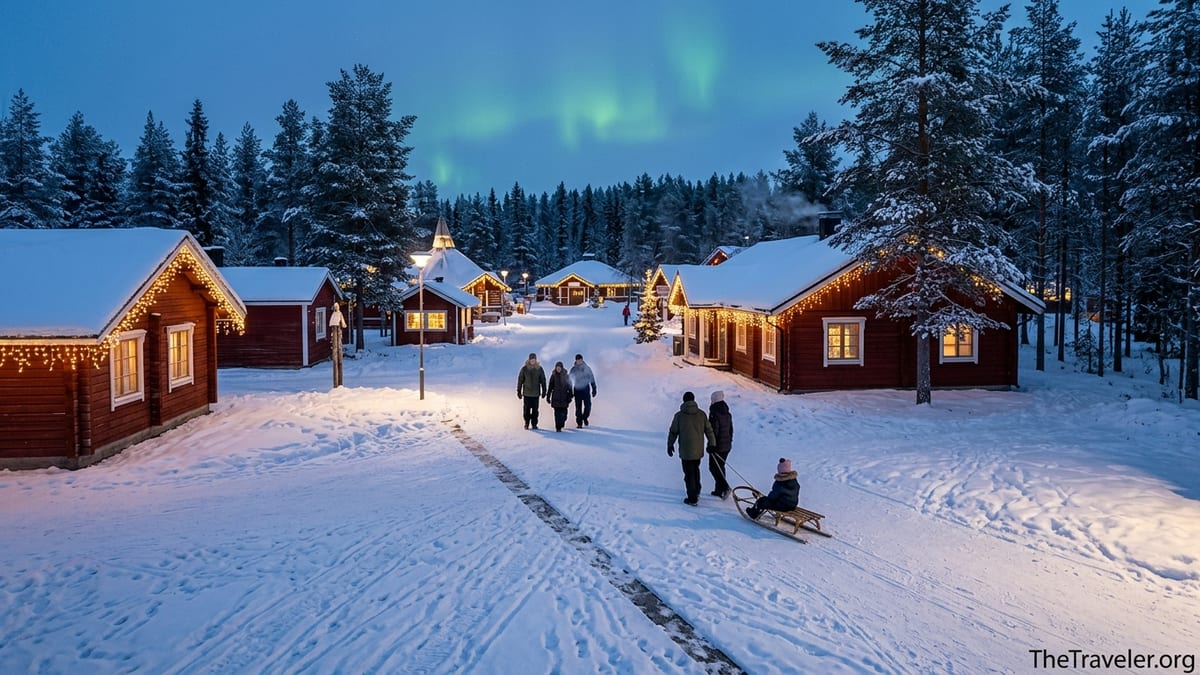
The Allure: Why So Many Travelers Fall for Rovaniemi
Rovaniemi’s main draw is simple and powerful: it offers a concentrated taste of the Arctic that feels easy and approachable, especially for first‑timers. You can land at Rovaniemi Airport and be at Santa Claus Village within about 10 minutes, standing on the Arctic Circle line with pine forests and snowbanks all around. For many visitors with limited time, particularly families with children, that convenience is a big part of the appeal. The city has a compact center with hotels, restaurants, supermarkets, and gear rental shops, but you are only a short drive from quiet wilderness where you can snowshoe, snowmobile, or simply stand on a frozen river under a very dark sky.
The “Christmas capital” identity is a second big magnet. At Santa Claus Village, which sits directly on the Arctic Circle north of town, you can visit Santa every day of the year, walk past glowing log buildings, meet real reindeer at nearby farms, and watch children post letters home from Santa’s Main Post Office. For younger kids, that combination can feel transcendent. Even in years when snow arrives late, operators work hard to keep the atmosphere festive with lights, music, and artificial snow around the central square.
Rovaniemi is also one of the most accessible places in the world to combine several classic Arctic experiences in a single short trip. In three days you might drive a husky sled on forest trails, join an evening Northern Lights chase by minibus, visit the Arktikum museum to learn about Sámi culture and Arctic climate, and relax in a riverside sauna. Many tour operators package these activities together, which reduces planning stress for travelers who do not have time to research remote wilderness lodges further north.
For those who time it right, Rovaniemi can deliver genuine natural drama. From roughly late August to early April, the region offers good chances to see the Northern Lights, and during December to March the snowy landscapes are at their most photogenic with thick snow-laden trees and frozen rivers. In summer, the same rivers transform into bright, glassy corridors under the midnight sun, with locals fishing along the banks almost around the clock. That seasonal contrast is one of the reasons the destination appeals not only in winter but also to travelers who want to avoid the cold and crowds.
The Magic & the Marketing: Santa Claus Village and Arctic Experiences
Santa Claus Village is the focal point of most first‑time visits, and it is both exactly what you expect and slightly more complex. There is a strong theme‑park feel: wooden chalets house souvenir shops, cafes sell hot chocolate and waffles, and you will see group buses dropping off visitors by the dozens on peak December days. Meeting Santa takes place in a carefully staged cabin environment with professional photography available for purchase, and children often come away glowing. Adults who arrive expecting a quiet, rustic Arctic village, however, can be surprised by how commercial it feels.
At the same time, there are small moments of authenticity here if you look for them. Stepping outside the main square, the view across the surrounding forest captures the real Lapland landscape. In the Santa Claus Main Post Office, staff sort piles of letters arriving from around the world, and you can send cards with a special Arctic Circle postmark. In winter, reindeer from nearby farms often wait in harness just beyond the main walkways, ready to pull short sleigh rides through the trees. If you are traveling with school-age children, most families report that these elements easily outweigh the souvenir‑shop atmosphere.
Beyond the village, travelers are drawn to Rovaniemi for its menu of winter activities. Husky safaris, for example, are among the most talked‑about experiences. A typical 10-kilometer self‑drive husky safari with transfers from Rovaniemi might cost in the region of 150 to 250 euros per adult depending on length and inclusions, with children somewhat less. That usually includes warm overalls, boots, and a post-ride drink around a fire at the kennel. Many visitors describe the first few minutes of driving your own sled through silent snowy forest as the highlight of their entire Lapland trip.
Reindeer sleigh rides and snowmobile trips offer a very different pace. A mid‑length reindeer safari of 2 to 3 kilometers with farm visit and hot drinks might be priced from around 80 to 100 euros per person, while a 2 to 4 hour guided snowmobile safari can fall roughly between 130 and 250 euros per adult, depending on distance and whether there is a meal or additional activity included. Evening versions of these safaris sometimes include an aurora component, with guides steering you toward darker areas away from city lights. For travelers who want a soft adventure rather than an expedition‑style trip, this structured format can feel reassuring and comfortable.
What May Surprise You: Crowds, Costs, and Commercialization
For many visitors, the biggest surprise in Rovaniemi is simply how busy and expensive it can be in peak winter. December, and especially the weeks around Christmas and New Year, see a huge spike in arrivals. Recent tourism figures suggest that the wider Rovaniemi area receives hundreds of thousands of visitors per winter season, with Santa Claus Village alone welcoming around half a million travelers to the Arctic Circle each year. On popular December weekends, staff at the Main Post Office can see several thousand visitors in a single day, and queues to meet Santa or join short reindeer rides can stretch into the cold.
Prices rise along with demand. Accommodation that might cost a moderate amount per night in January or March can be substantially higher in late December, particularly for sought‑after options like glass igloos or cabins with private saunas near the village. Some tour companies have started publishing candid cost breakdowns to help visitors budget: a couple might easily spend several hundred euros each on a combination of husky safari, reindeer visit, snowmobile tour, and one or two Northern Lights excursions over a long weekend. Food costs can also catch travelers off guard. While there are supermarkets and casual cafes in town, sit‑down dinners in hotel restaurants or village eateries quickly add up, especially for families.
The degree of commercialization is another common talking point. Travelers who envision a quiet Arctic town sometimes arrive to find large advertising banners, busy parking lots full of tour buses, and gift shops selling everything from high‑quality Nordic handicrafts to mass‑produced souvenirs. For some, this is part of the fun: a festive village where you can pick up reindeer‑themed mugs and Santa hats feels in keeping with the holiday spirit. Others, particularly independent travelers used to low‑key wilderness areas, can find it jarring and may prefer to base themselves in calmer parts of Lapland once they have experienced the highlights.
It is also worth acknowledging that tour capacity has its limits. Locals and long‑term residents sometimes point out that in high season, services in and around Rovaniemi are “pushed to the limit,” with guides, transportation, and restaurants all working at full stretch. On the traveler side, that can translate into tightly timed excursions, early pick‑ups, and occasional schedule changes due to weather or overbooking. Setting expectations realistically, and understanding that Rovaniemi is a small city hosting big‑city visitor numbers in winter, goes a long way toward enjoying the trip rather than feeling rushed.
The Nature Beyond the Neon: Northern Lights, Museums, and Quiet Moments
Underneath the lights and branding, Rovaniemi is still very much a true Arctic environment, and travelers who carve out time away from the main sights often come away with the strongest memories. The Northern Lights are the most obvious example. While you can sometimes see the aurora from the city itself on very active nights, locals and guides agree that you get the best experience by leaving the built‑up area for darker surroundings, whether that is a frozen lake, forest clearing, or hilltop about 30 to 60 minutes away. Many guided Northern Lights tours from Rovaniemi are built around this idea, using weather and solar forecasts to chase clearer skies and lower light pollution on each night.
The timing can surprise visitors from more southern countries. The broader aurora season around Rovaniemi runs from late August through early April, but the most popular months for snowy landscapes and dark nights are roughly December to March. Some local guides point out that January and March, in particular, often offer a sweet spot of good snow cover, fewer festive‑season crowds than late December, and slightly lower accommodation prices. On clear nights during this period, it is not unusual for travelers to see the sky ripple green over a line of dark treetops while they warm their hands by a campfire and sip berry juice provided by the tour.
Daytime has its own quieter surprises. The Arktikum museum and science center on the banks of the Ounasjoki River is frequently cited by visitors as a highlight, especially on very cold or cloudy days. Exhibitions focus on Arctic nature, climate, and the cultures of Lapland, set inside a striking glass‑roofed corridor that visually points north. Typical opening hours run from late morning to early evening on most days, with Monday closures outside peak periods, and adult tickets are often priced in the low‑20‑euro range. For many travelers, a few hours here deepens understanding of the land they have been snowmobiling or sledding through.
Even simple moments in town can be memorable. In deep winter, locals walk to work in sky‑blue twilight that lasts late into the morning, and the riverbanks become unofficial promenades for bundled‑up dog walkers and children dragging sleds. In early spring, you might see families grilling sausages on public fire pits at popular viewpoints or children learning to ski on gently sloping tracks. Visitors who stay in central Rovaniemi are often surprised by how easy it is to step from their hotel into these everyday Lapland scenes within a few minutes’ walk.
Seasonality: When Rovaniemi Is and Is Not at Its Best
Whether Rovaniemi feels “worth it” often depends on the season you choose. The peak winter season from early December through March is when the city looks most like the postcards, with snow‑covered roofs, illuminated trees, and a strong chance of winter activities running at full capacity. Early December brings the first big wave of Christmas‑focused visitors, while the last two weeks of the month and the New Year period are the busiest and most expensive. January can feel significantly quieter, with good snow depth, long nights for aurora hunting, and more availability in hotels and tours. February often balances deep winter conditions with school holiday crowds from various countries, and March offers brighter days and still‑snowy landscapes.
Autumn and early winter tell a different story. From late August through October, Rovaniemi is dressed in autumn colors, and the first Northern Lights of the season often appear above forests that are still snow‑free. Hikers and photographers sometimes favor this time for the “ruska” foliage, when birch and low shrubs turn shades of red and gold. Temperatures are milder than in mid‑winter, and activities like hiking, river kayaking, and berry picking replace sled rides and snowmobiling. It is a good season for travelers who are more interested in nature and culture than in Santa‑themed attractions.
Summer, from roughly June to August, is quieter in terms of international visibility but can be rewarding if you know what to expect. The midnight sun brings almost 24‑hour daylight around the solstice, with locals heading to cottages, fishing spots, and riverside saunas. Santa Claus Village remains open, but the experience feels more like a bright outdoor shopping village than a snowy wonderland. Instead of husky sledding, you might find kennel visits and cart rides on wheels, and glass igloos become places to watch the glowing sky rather than the aurora. Prices for some accommodations and flights can be gentler than in December, and travelers who dislike cold weather often find this the best way to sample Lapland.
One potential disappointment is the shoulder period in late October and November when snow cover can be unpredictable. Marketing images sometimes suggest deep snow from early November onward, but in reality some seasons see patchy or thin snow until closer to December. Activity operators typically adapt by shortening sled routes, using tracks with better snow, or pivoting to alternative excursions, but travelers specifically dreaming of thick “winter wonderland” scenes should consider January through early March the safest bet.
Who Rovaniemi Is Perfect For (And Who Might Prefer Elsewhere)
Rovaniemi tends to work best for certain traveler profiles. Families with children, particularly between about four and twelve years old, are the most obvious match. These travelers can get extraordinary mileage out of a few days in Santa Claus Village, a husky ride, a reindeer encounter, and perhaps a child‑friendly aurora camp with a short walk and warm shelter. Parents appreciate the short transfer times from airport to hotel, the availability of rental clothing, and the abundance of English‑speaking staff used to helping nervous kids into snowsuits and boots.
First‑time Arctic visitors of any age also tend to find Rovaniemi a good fit. If you want to see what minus‑20‑degree air feels like, stand on a frozen river under the Northern Lights, or drive a snowmobile through snowy forest but do not feel ready for off‑grid cabins or self‑guided expeditions, the city provides infrastructure and safety nets without completely diluting the sense of adventure. Tour companies often emphasize the high level of support: transfers directly from hotel, hot drinks around campfires, thick overalls provided on arrival, and clear briefings about cold‑weather safety and wildlife etiquette.
On the other hand, independent travelers seeking solitude, long ski tours, or multi‑day wilderness treks may find Rovaniemi a better gateway than a base. Many such visitors fly into Rovaniemi, spend a night, visit Arktikum or the village briefly, then continue by train or rental car to quieter destinations further north such as Saariselkä, Inari, or even the remote fells near the Norwegian border. For them, Rovaniemi is a practical transport hub rather than the main attraction.
Budget‑conscious travelers also need to think carefully. While you can manage costs by visiting in January or March instead of Christmas week, staying in simple guesthouses rather than themed resorts, and focusing on one or two key activities instead of a packed program, Rovaniemi is unlikely to be a low‑cost winter trip once flights, clothing, and excursions are factored in. Those on very tight budgets may prefer to combine a short visit here with more time in cheaper Finnish cities, or to plan a summer trip when activities like hiking and lake swimming are naturally less expensive and gear requirements are lighter.
The Takeaway
So, is Rovaniemi worth visiting? For many travelers, especially families and first‑time Arctic visitors, the answer is yes, provided expectations match reality. If you arrive knowing that Santa Claus Village is intentionally built for tourists, that winter activities and special accommodations will be a significant investment, and that peak December dates bring serious crowds, you are far more likely to enjoy the magic on offer. Within that framework, Rovaniemi can deliver some of the most memorable moments of a European trip: children whispering secrets to Santa, the hush of a husky team pulling through blue‑hour snow, or the first flicker of green aurora appearing over a frozen river.
If, however, your dream of Lapland centers on deep solitude, long back‑country tours, or quiet cabins far from any bus parking lot, you may want to treat Rovaniemi as a starting point rather than a final destination. Spend a day or two enjoying its accessible highlights, then continue deeper into the region for the silence and remoteness that marketing photos sometimes imply but the city itself cannot fully provide. Either way, understanding the trade‑offs between convenience and wilderness, spectacle and subtlety, will help you decide whether Rovaniemi belongs on your personal map.
FAQ
Q1. Is Rovaniemi worth visiting if I am not traveling with children?
Yes, many adults visit Rovaniemi without children and enjoy the Northern Lights, snowmobile and husky safaris, museums, saunas, and winter landscapes. That said, you should be comfortable with the Santa branding and family focus, especially around Christmas, or plan to spend more time in nature outside the main village.
Q2. How many days do I need in Rovaniemi to see the main sights?
For most visitors, 3 to 4 full days is enough to visit Santa Claus Village, join one or two key activities like a husky safari or snowmobile tour, try for the Northern Lights on at least two evenings, and spend a few hours at Arktikum or another museum. Shorter weekend breaks are possible but leave less flexibility if weather disrupts plans.
Q3. Is Rovaniemi too crowded around Christmas?
Late December, particularly the two weeks around Christmas and New Year, is the busiest and most expensive period in Rovaniemi. Expect queues at Santa Claus Village, fully booked activities, and higher prices for accommodation. Some travelers love the festive atmosphere, while others prefer to visit in January or early March for similar snow conditions with fewer crowds.
Q4. Can I see the Northern Lights from Rovaniemi without booking a tour?
It is possible to see the aurora from within or near the city on very active nights, especially from darker riverbanks or open fields. However, light pollution and cloud cover can reduce your chances. Guided tours increase the odds by driving you to darker areas and adjusting the route based on real‑time forecasts, which is why many first‑time visitors choose at least one organized aurora outing.
Q5. How expensive are activities like husky safaris and reindeer rides?
Prices vary by operator and length, but as a general guide, a standard husky safari is often in the 150 to 250 euro range per adult, a mid‑length reindeer visit with sleigh ride might start around 80 to 100 euros per person, and a 2 to 4 hour guided snowmobile safari commonly ranges from about 130 to 250 euros. These prices usually include warm clothing and transfers, which helps explain the overall cost.
Q6. Is Rovaniemi still worth visiting in summer?
Yes, if you are interested in the midnight sun, hiking, riverside activities, and a calmer version of Santa Claus Village without snow. You will not find husky sledding or thick winter scenery, but you can enjoy bright nights, forest trails, fishing, lake trips, and a more local atmosphere at lower temperatures and often with more moderate prices than in December.
Q7. Do I need special clothing for winter in Rovaniemi?
In mid‑winter you should be prepared for temperatures well below freezing, sometimes below minus 20 degrees Celsius. Most travelers bring their own thermal base layers, wool sweaters, and good socks, then rely on tour operators for heavy outer jackets, pants, and boots, which are commonly included in activity prices. Investing in a warm hat, scarf or neck gaiter, and glove liners makes a big difference in comfort.
Q8. Is Rovaniemi a good base for exploring other parts of Lapland?
Rovaniemi works well as a transport hub, with flights, train connections, and car rentals, so many travelers use it as a starting point. From here, you can continue north to smaller ski and wilderness areas, or west and east to quieter villages. It is common to spend one or two nights in Rovaniemi for Santa Claus Village and museums, then move on to a more remote lodge if you want deeper wilderness.
Q9. Can I visit Rovaniemi on a tighter budget?
While Rovaniemi is not a budget destination in winter, there are ways to control costs. Visiting in January or March instead of Christmas week, choosing simple guesthouses or apartments, focusing on one or two key activities rather than many, using lunch buffets instead of nightly restaurant dinners, and relying on public buses where possible all help. However, travelers on very strict budgets may find other regions of Finland more affordable.
Q10. Is Santa Claus Village too touristy to feel authentic?
Santa Claus Village is undeniably designed for tourists, with many souvenir shops and staged experiences. Whether that feels “too touristy” depends on your expectations. Families and Christmas enthusiasts often find it magical, while minimalist travelers may see it as a brief, fun stop rather than the center of their trip. The surrounding forests, local museums, and everyday life in Rovaniemi city offer a more down‑to‑earth Lapland experience if you balance your time.