


More news on this day
Australian startup Koala Airlines has postponed its planned launch by at least a year to 2027 as it works to finalise aircraft leases and secure regulatory approval to operate jet services, extending a years‑long effort to enter Australia’s tightly contested domestic aviation market.
Get the latest news straight to your inbox!
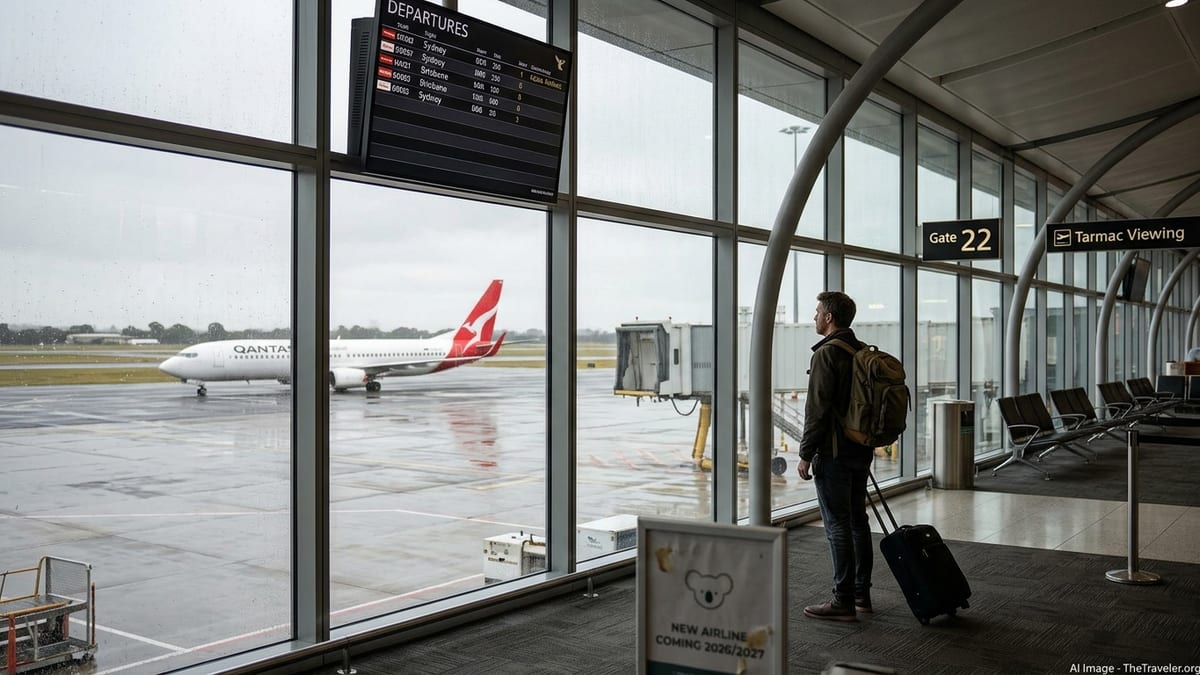
Launch target moves from late 2026 to 2027
Koala Airlines’ latest delay was disclosed in a Bloomberg report on 25 November 2026, which said the Melbourne based startup has pushed its intended debut to sometime in 2027 while it negotiates aircraft leases and seeks formal sign off from Australia’s Civil Aviation Safety Authority (CASA). Earlier public statements and media interviews had pointed to a target of launching toward the end of 2026, contingent on delivery of the first aircraft and completion of regulatory processes. The revised timing means Koala is now working to a moving window rather than a fixed entry date, and no firm inaugural schedule has been published.
The new timeline comes on top of several years of preparatory work. Koala, which owns long standing charter operator Desert Air Safaris, has for some time promoted plans to transition from small aircraft operations to scheduled services using Boeing 737 MAX jets on domestic routes. While the company has repeatedly signalled its intention to become a meaningful “third force” in Australian domestic aviation alongside Qantas and Virgin Australia, it has yet to operate any scheduled passenger flights or publicly release a confirmed route map, timetable or fare structure.
Regulatory filings and media reports indicate that Koala has attracted attention from policymakers and competition authorities because of its stated ambition to challenge the country’s two dominant full service carriers. Documents reported in Australia in late November 2026 showed the national competition watchdog had held meetings with representatives of the airline on at least two occasions, underlining how closely authorities are following any potential new entrant in a market that has already seen several low cost and hybrid airlines collapse in recent years.
Fleet plans hinge on 737 MAX leases and possible Airbus deal
Koala’s latest postponement is tied directly to its fleet strategy. The airline has long stated that it intends to launch with Boeing 737 MAX 8 aircraft and ultimately grow to around 20 jets in its first years of operation. In an August 2025 interview with Australian Aviation, chief executive Bill Astling said the carrier had secured leases for three 737 MAX 8s due for delivery the following year, with the planned launch date dependent on when those aircraft arrived and on subsequent regulatory approvals. However, no public record has yet confirmed that any of those aircraft have actually been delivered into Koala’s control or painted in its livery.
The Bloomberg report cited by aviation trade outlets in November 2026 adds that Koala is now in talks over leasing narrowbody aircraft, and that finalising those agreements is one reason its launch has been pushed into 2027. Some coverage mentions an arrangement that could give Koala access to additional Airbus A320 family aircraft under lease, but with no disclosed delivery schedule or binding fleet list. As of late November 2026, Koala’s own website and public communications still describe a 737 MAX based fleet plan and do not provide any updated aircraft registration details, suggesting that the composition and timing of the startup’s initial fleet remain fluid.
Koala’s business case appears to rely on operating modern, fuel efficient single aisle aircraft across domestic routes with enough density to support a low fare or hybrid service. The choice of relatively large narrowbodies such as the 737 MAX 8 for a startup has prompted debate among aviation analysts and enthusiasts, given the capital and traffic volumes required to profitably deploy such aircraft on competitive trunk routes between cities like Sydney, Melbourne and Brisbane. Until leases are inked and aircraft start to appear in registries and at airports, Koala’s fleet remains a plan rather than an operational asset base.
Regulatory approval remains a significant obstacle
The regulatory dimension is at least as challenging as the fleet question. Koala has long pointed to its ownership of Desert Air Safaris, a charter operator with more than five decades of history, as the basis for holding an Air Operator’s Certificate. Both Koala and CASA have confirmed that an AOC associated with Desert Air was acquired in 2019. However, CASA has also clarified in multiple statements over the past two years that this certificate carries a “direction not to operate” for the kind of large jet services Koala is proposing. The regulator has stated that if Koala wants to conduct air transport operations with large jet aircraft, it must complete a process equivalent to obtaining a new AOC, including demonstrating full compliance with current safety and regulatory standards for airline scale operations.
That requirement means Koala’s existing AOC cannot be used as a shortcut into scheduled jet services. The carrier must prepare extensive documentation, manuals and systems, and undergo CASA’s multi stage assessment before any commercial 737 MAX or other large aircraft flights can begin. Koala’s own website acknowledges that management are working on the necessary documentation so CASA can undertake a formal assessment and finalise any updated certificate. No deadline has been announced for completing that process, and CASA has historically stressed that approvals proceed at the pace dictated by safety and regulatory obligations rather than commercial targets set by applicants.
Regulatory scrutiny of Koala intensified after earlier media reports questioned the status of the Desert Air AOC and whether Koala had overstated its operational readiness. In 2025, trade press outlets documented CASA’s confirmation that the Desert Air certificate was subject to a non operation direction, and that any transition to jet services would require full vetting akin to a fresh AOC. Koala has publicly rejected suggestions that it has been “grounded,” arguing that it is following the established approval process. For travellers, the key practical point is that Koala cannot sell or operate regular jet services until CASA completes this process and issues explicit clearance, regardless of marketing material or tentative launch dates.
Business model aims to tap tourism and offer a ‘third force’
Alongside its operational hurdles, Koala has continued to describe a differentiated business strategy. In interviews and promotional material, Astling has said the airline plans to focus strongly on tourists and the tourism industry rather than prioritising traditional corporate contracts and high frequency business shuttle routes. Earlier outlines suggested that Koala wanted to act as a feeder carrier for overseas visitors, including those arriving from markets such as China, and to partner with foreign airlines to distribute passengers across secondary Australian destinations.
That positioning contrasts with the domestic networks of Qantas and Virgin Australia, which are built heavily around corporate travel and major trunk routes, and with previous low cost players that tried to compete head to head on the same corridors. Koala has argued that it seeks to “carve out a unique niche” instead of replicating the strategies of earlier failed challengers such as Bonza, Tigerair Australia or Impulse. Industry commentary has nonetheless pointed out that many Australian regional and leisure routes remain relatively thin, raising questions about whether there are enough unserved or underserved markets to sustain a new entrant operating large narrowbody aircraft.
A central element of Koala’s narrative is its in house technology platform, branded Koala Tech. The company describes this as an integrated suite of aviation business applications intended to automate functions from logistics and maintenance to customer service, using data and artificial intelligence. Koala has promoted this system as a way to keep costs down and improve efficiency, although specific implementations and customer facing tools have not yet been demonstrated in live airline operations. For now, Koala Tech remains largely a promise, and its practical impact will only become clear if and when the airline begins flying and publishes concrete examples of how the platform shapes schedules, pricing and service.
What the delay means for travellers and what to watch next
For travellers, the most immediate implication of Koala’s latest postponement is that nothing changes in the near term. As of late November 2026, Koala is not selling tickets, it has no published route network or launch date, and it has not filed schedules with global distribution systems for domestic or international services. Anyone seeing references to Koala flights in hobbyist forums or virtual aviation communities should note that a separate “Koala Air Virtual” group operates on flight simulation networks without any affiliation to the real world startup airline.
The pushback of the intended debut to 2027 means Australian domestic travelers will continue relying primarily on Qantas, Jetstar, Virgin Australia and Rex for scheduled services, along with regional carriers and charter operators. The prospect of additional competition from Koala therefore remains a medium term possibility rather than an imminent development. Passengers hoping for more choice or lower fares on particular routes should avoid factoring Koala into concrete travel plans until the airline gains regulatory approval, secures aircraft and begins publishing firm schedules.
Looking ahead, several milestones will signal whether Koala is moving closer to reality. These include CASA formally updating or issuing an AOC that authorises large jet operations under the Koala brand, confirmation of aircraft leases with identifiable tail numbers entering registries, and the release of a specific route map and launch timetable. Until those steps occur, Koala remains a prospective entrant rather than an operating carrier. Travellers and industry watchers who are interested in the project should rely on official regulatory updates, Koala’s own announcements and credible aviation industry reporting to track progress, and treat any future dates as indicative plans rather than guaranteed start times.