


More news on this day
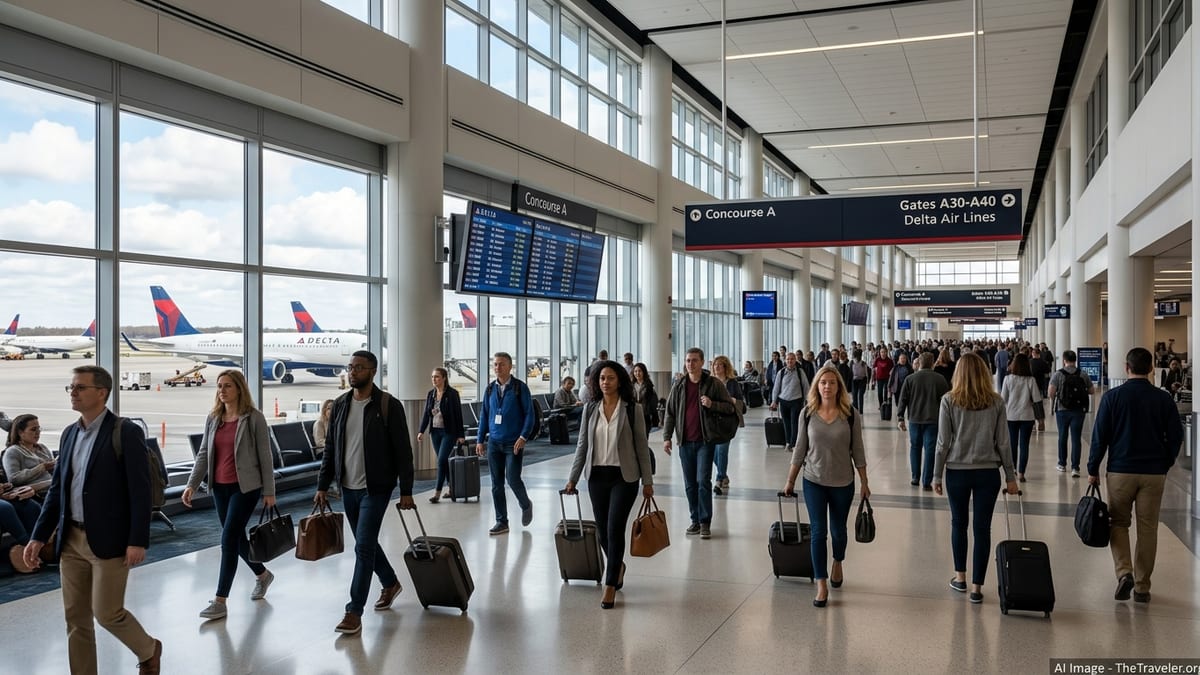
Thanksgiving-eve travel at Detroit Metropolitan Wayne County Airport appeared to move largely as scheduled on November 25, 2026, with passengers reporting smooth check-in and security despite heightened concern following a nationwide Federal Aviation Administration ground stop and separate Delta Air Lines and United Airlines technology issues earlier in the month.
Get the latest news straight to your inbox!
Holiday travel demand remains high but off last year’s peak
Detroit Metro’s relatively calm scenes come during what is still one of the busiest travel weeks of the year, even as national demand eases slightly from 2025’s record levels. AAA projects that 81.5 million Americans will travel at least 50 miles from home between Tuesday, November 24 and Monday, November 30, 2026, a 0.1% decline from last year’s record forecast of about 81.6 million domestic travelers. Of those, nearly 6 million are expected to fly on U.S. airlines, with air travelers accounting for a little over 7% of all Thanksgiving trips.
For Detroit specifically, the Wayne County Airport Authority expects more than 4 million passengers to pass through Detroit Metropolitan Wayne County Airport over the broader 2026 holiday season, which the airport defines as running from late November through early January. That total represents an anticipated 4% decrease compared with last year. While the airport has not publicly broken out an exact figure for the Thanksgiving window, local officials and broadcasters describe “hundreds of thousands” of travelers moving through DTW over the current nine-day period, consistent with a modest softening in traffic rather than a sharp drop.
The dip in travel aligns with national explanations from AAA that higher travel costs are tempering demand at the margins after three straight years of record Thanksgiving volumes. At the same time, overall numbers remain well above pre‑pandemic norms, and Detroit’s role as a major Delta hub and connecting point for the upper Midwest keeps terminals and parking facilities busy across the holiday week.
Recent FAA and airline outages raise concerns but operations stabilize
Traveler unease at Detroit ahead of the holiday has been shaped less by demand levels than by a string of recent system failures. On November 15, 2026, the FAA ordered a nationwide ground stop after a disruption in one of its critical air traffic control systems, halting most domestic departures for several hours before gradually lifting the order once stability was confirmed. The outage caused thousands of delays and cancellations across the United States, including at Detroit Metro, and revived questions in Washington about the pace of modernization of federal aviation technology.
Less than a week later, on November 22, an automation issue at Delta Air Lines, involving an automated weight and balance system used to calculate safe loading and performance limits, triggered at least an hour-long FAA ground stop into Hartsfield‑Jackson Atlanta International Airport, the carrier’s main hub. Departures to and from other Delta stations, including Detroit, were also affected as the airline temporarily paused some movements while the system was restored. United Airlines experienced a separate technology outage in the same period, leading to further delays for some passengers on the eve of the holiday travel surge.
By November 25, however, both federal regulators and carriers were emphasizing that operations had returned to normal ahead of Thanksgiving Day. Delta said flight operations had resumed Sunday afternoon after its system was restored, and the FAA’s nationwide ground stop was lifted on November 15 once its own systems were stable. At Detroit Metro on Wednesday, passengers interviewed locally described monitoring their flights closely in case of residual disruptions but ultimately encountered minimal issues beyond routine holiday crowds.
DTW’s Thanksgiving experience: busy but largely orderly
Detroit travelers arriving at the airport on November 25 reported that the biggest challenge remained reaching the terminals rather than navigating them. Ongoing regional road construction created slowdowns on approaches to the airport, but drivers described the congestion as manageable and less severe than feared for the day before Thanksgiving. Once on airport property, parking garages and surface lots were reported to have space, and shuttle services to terminals were operating normally.
Inside, passengers cited relatively smooth experiences at airline check-in counters and Transportation Security Administration checkpoints, with only moderate lines and wait times. Airport officials have repeatedly advised travelers to arrive at least two hours before domestic departures and earlier for international flights, guidance echoed this week by local broadcasters and travel forecasters. For the very busiest departure banks, some independent travel timing tools suggest arriving around 2 hours and 45 minutes before domestic flights, especially in the morning and early afternoon when outbound volumes are highest.
Wayne County Airport Authority representatives have noted that Detroit’s holiday traffic comprises a mix of frequent flyers and more occasional travelers who may be less familiar with airport procedures, from digital boarding passes to checked baggage rules. That mix typically produces uneven demand peaks at ticket counters and security lanes, particularly in the middle of the day when family groups travel together. On Wednesday, though, passengers who built in extra time reported that these bottlenecks were limited and that they were able to proceed to gates without major stress.
Parking, pickup rules and on-the-ground logistics for drivers
For those dropping off or collecting family and friends, Detroit Metro continues to enforce rules designed to keep terminal curbsides clear during peak periods. Law enforcement officers are urging drivers to wait in one of the airport’s designated cell phone lots until passengers have claimed their bags and are physically waiting at the curb. Vehicles left unattended at the terminal curb risk being ticketed and towed, and drivers who circle repeatedly or stop where prohibited can face fines of about 70 dollars for violations such as blocking loading zones or ignoring no-parking signs.
The cell phone lots allow private vehicles and ride‑share drivers to stage off-site, easing curb congestion when large bursts of passengers exit customs or baggage claim. Given that Detroit Metro is a significant connecting hub, late-arriving flights can sometimes cause short, intense surges at ground transportation areas even on days that are otherwise relatively steady. Local authorities say adherence to the cell‑lot policy, combined with clear communication between arriving travelers and their rides, can significantly shorten waits and reduce the risk of enforcement action.
Drivers should also be prepared for variable road conditions around the airport for the rest of the holiday period. Regional forecasts indicate periods of rain and potential low clouds across parts of the Great Lakes, conditions that can both slow freeway traffic and prompt air traffic control to adjust arrival and departure rates. While there were no widespread weather-induced disruptions at Detroit on November 25, the same storm system expected to affect major East Coast cities on Thanksgiving Day could indirectly impact some Detroit-bound or Detroit-originating flights as aircraft and crews cycle through the national network.
What Detroit Thanksgiving travelers should watch for next
The heaviest outbound rush at Detroit Metro typically occurs on the Tuesday and Wednesday before Thanksgiving, with another significant wave of departures on the holiday itself as some travelers aim for same-day arrivals. According to national traffic and travel data providers, Thanksgiving Day, Thursday, November 26, is often one of the lighter days for road congestion, but airports can still be busy in the morning as travelers take advantage of lower fares or off-peak schedules. For return journeys, the Sunday after Thanksgiving is expected to be the single busiest day of the period for U.S. air travel, and Detroit is likely to reflect that pattern as travelers converge on connecting hubs.
Over the remainder of the week, Detroit passengers are being encouraged to take a few steps to reduce the risk of disruption. Airlines, the FAA and airport authorities all advise checking flight status repeatedly on the day of travel, using both carrier apps and official airport information boards once on site. Recent experiences with the FAA’s nationwide ground stop and the Delta and United technology issues underscore how quickly conditions can change, even when airlines and regulators emphasize that systems are stable. Pack medication, essential documents and at least one change of clothes in carry‑on bags in case of missed connections or overnight delays, and factor in additional time for de‑icing procedures if temperatures drop.
Detroit Metro is also beginning to pivot toward the broader winter holiday season, for which the airport authority expects more than 4 million total passengers across late November, December and early January. Travelers with Christmas and New Year flights booked out of DTW can expect similar guidance on arrival times, parking strategies and use of cell phone lots as the calendar moves deeper into winter. For now, those heading in and out of Detroit over Thanksgiving 2026 are finding that, despite memorable system outages earlier in the month, patient planning and early arrivals are yielding a relatively stable journey through one of the year’s most demanding travel periods.