


More news on this day
A powerful Thanksgiving coastal storm is forecast to collide with one of the busiest US travel periods of the year, with New Jersey facing coastal flood warnings, hazardous driving conditions and the risk of weather-related flight disruptions just as more than 2 million state residents prepare to leave home for the holiday.
Get the latest news straight to your inbox!
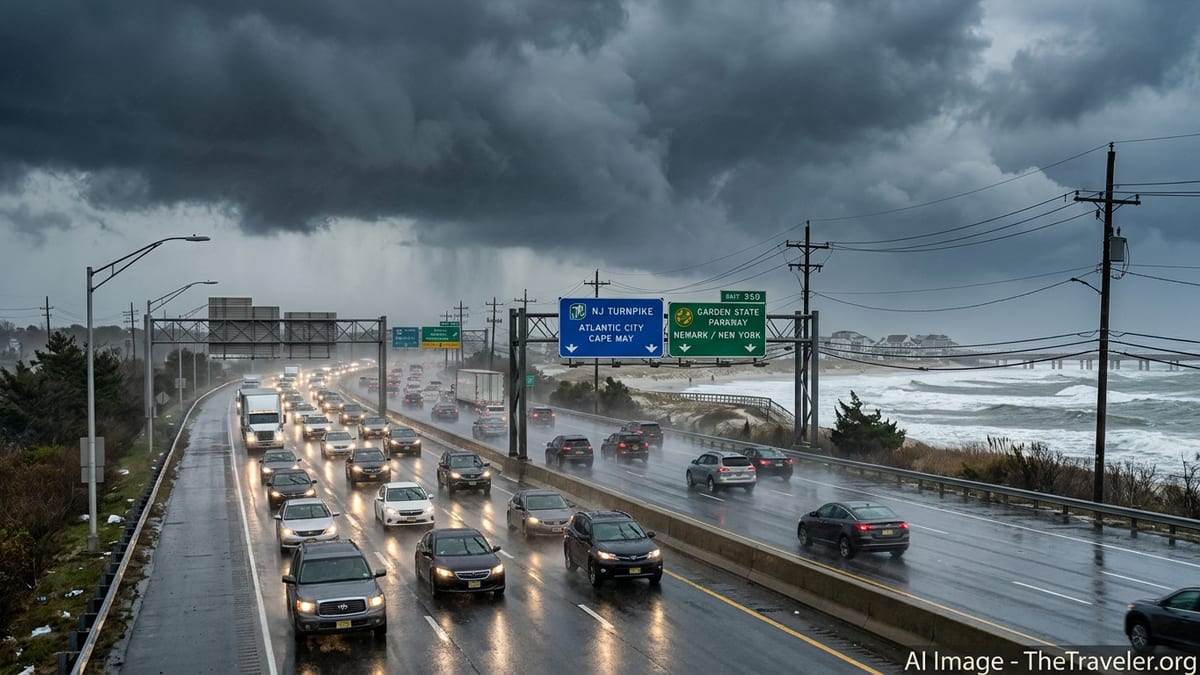
Storm forecast and statewide warnings for New Jersey
New Jersey is under a statewide state of emergency from the evening of Wednesday, November 25, 2026, as authorities brace for a Thanksgiving nor’easter expected to bring damaging winds, heavy rain and coastal flooding from Thursday into Friday. The National Weather Service has issued coastal flood warnings covering much of the shoreline and tidal waterways, including Atlantic, Cape May, Cumberland, Salem, Ocean, Monmouth and several north Jersey coastal counties, with forecasters warning of inundation in typically vulnerable low-lying areas during multiple high tide cycles.
Briefings from the National Weather Service’s Mount Holly office on Wednesday detail a deepening low-pressure system tracking up the Eastern Seaboard, with the worst impacts in New Jersey likely from late Wednesday night through Thanksgiving Day. Meteorologists expect periods of heavy rain, strong onshore winds and elevated surf to coincide with already high astronomical tides, increasing the risk of road closures along barrier islands, back bays and tidal rivers. The agency notes that forecast confidence is high regarding coastal flooding and hazardous marine conditions, while exact rainfall totals and the inland flood extent may vary by location as the storm evolves.
The governor’s emergency declaration activates the state’s emergency operations plan across all 21 counties and allows resources to be pre-positioned along the coast, in flood-prone river valleys and near key transportation corridors. State officials are urging residents to avoid driving through flooded roadways, to secure loose outdoor items ahead of strong winds and to build extra travel time into Thanksgiving plans in case of road closures, detours or power outages, particularly on Thursday.
Road travel: heavy volumes facing hazardous conditions
AAA’s national Thanksgiving forecast projects that 81.5 million Americans will travel at least 50 miles from home between Tuesday, November 24, and Monday, November 30, 2026, a marginal 0.1% decline from the 81.6 million who traveled last year. Within that total, AAA expects more than 2 million New Jersey residents to make trips of 50 miles or more, keeping state highways and local roads busy even as the storm moves through. Traffic agencies reported early delays on Wednesday on the New Jersey Turnpike and Garden State Parkway attributed mainly to holiday volumes, with congestion most pronounced in North Jersey approaches to New York City.
Based on AAA’s analysis of historical patterns, the Wednesday before Thanksgiving remains the single busiest road travel day. The club identifies Wednesday morning as the best window to depart, preferably before midday, with conditions typically deteriorating from noon through the early evening as commuters share the road with holiday travelers. This year, those typical traffic peaks are coinciding with the initial arrival of rain bands and strengthening winds across New Jersey, raising the likelihood that even routine congestion could be exacerbated by reduced visibility, ponding on road surfaces and minor spinouts or crashes.
Forecasters expect Thanksgiving Day itself to see lighter overall traffic than Wednesday, but travel could still be slow or hazardous in coastal counties where tidal flooding is most severe. Inland counties such as Salem and Cumberland are also included in coastal flood products because back bays and tidal stretches of rivers there can overflow when persistent onshore winds push water inland. Local transportation officials caution that some low-lying connectors to barrier islands and neighborhoods along tidal creeks may experience short-notice closures near high tide, and that alternate routes may involve lengthy detours around flooded zones.
Looking ahead to the return journey, national traffic analytics used by AAA indicate that the Saturday and Sunday after Thanksgiving will be the next peak days for road congestion, especially during afternoon hours when many travelers aim to arrive home by evening. For this year’s holiday, the storm is forecast to move away from New Jersey by late Friday, so weather-related hazards on the weekend should be less significant than on Thursday, although residual high water, debris on shoulders and ongoing utility work in hard-hit coastal neighborhoods could still slow traffic in spots.
Flight disruptions and flexible airline policies
As the nor’easter organizes along the Mid-Atlantic coast, major US airlines have issued advance travel alerts for Thanksgiving Day covering airports across the Northeast corridor. United Airlines, American Airlines, Delta Air Lines and Southwest Airlines have all posted advisories highlighting the potential for delays or cancellations at Newark Liberty International, Philadelphia International, New York’s LaGuardia and JFK, and the Washington-area airports, depending on how the storm’s wind and rainfall bands line up with peak flight periods on Thursday.
As of Wednesday afternoon, federal aviation status pages showed no ground stop or formal nationwide delay program in effect for Newark Liberty, and operations were continuing under normal procedures. However, the FAA has warned that localized air traffic management initiatives, such as minor ground delays or reroutes, may be introduced with limited notice on Thanksgiving if low cloud ceilings, reduced visibility or crosswinds exceed thresholds for specific runway configurations at busy East Coast hubs. Airlines are cautioning travelers that even if their departure airport is not directly affected at the time of departure, disruptions at upstream hubs elsewhere in the network could still cascade and affect aircraft and crew availability.
To give passengers more flexibility, the largest carriers serving New Jersey have activated weather waivers tied to Thanksgiving Day itineraries. United’s current alert allows customers booked to or from affected Northeast airports on November 26 to make a one-time change to their travel date without paying a change fee, provided they rebook within a specified window and keep the same origin and destination. American and Delta have introduced similar options for eligible itineraries, while Southwest is permitting customers covered by its advisory to modify travel within the published date range without additional fare differences in many cases. In all instances, the precise terms, route lists and rebooking deadlines are detailed in each airline’s own advisory and can differ by carrier, so travelers are urged to confirm conditions directly before altering plans.
Airport authorities in Newark and Philadelphia are advising passengers to arrive earlier than usual for Thanksgiving flights, especially on Wednesday afternoon and Thursday morning, to account for longer security lines and possible schedule adjustments. They also recommend that travelers monitor their airline’s mobile app or text alerts for gate changes and rolling delays, and that they verify the status of any tight connections through congested Northeast hubs, where weather-related spacing requirements between aircraft could lengthen queues for departures and arrivals during the storm’s peak.
Gas prices and cost considerations for drivers
High fuel costs remain a factor in Thanksgiving travel decisions this year, particularly for motorists in New Jersey. AAA’s statewide data show the average price of regular gasoline on Wednesday, November 25, at approximately 3.76 dollars per gallon, down modestly from about 3.89 dollars a week earlier but still near record seasonal levels for the state. Diesel remains significantly more expensive than regular gasoline, which affects the cost of commercial transport and some larger recreational vehicles sharing the roads with holiday travelers.
Nationally, AAA notes that elevated fuel prices and relatively expensive airfares appear to have contributed to a slight easing in overall Thanksgiving travel volumes compared with 2025, even as the total number of people on the move remains close to an all-time high. The organization’s forecast, compiled in partnership with a travel analytics firm, projects that auto travel will still account for the overwhelming majority of trips, followed by air travel and a smaller share using buses, trains and cruise ships. For drivers in New Jersey, the recent week-on-week dip in pump prices offers some relief on long-distance journeys, but the absolute cost of filling up for a round trip of several hundred miles is still materially higher than during many pre‑pandemic holiday seasons.
Travel planners say that the marginally lower travel volumes this year are unlikely to translate into noticeably emptier highways in New Jersey, given the concentration of departures into a handful of peak windows and the state’s position between major metropolitan areas. Instead, the combination of heavy usage of the Turnpike, Garden State Parkway and key feeder routes with adverse weather conditions is expected to be the defining factor for motorists. Officials emphasize that the practical steps travelers can take, such as leaving during recommended off‑peak hours, checking traffic and incident reports in real time, ensuring vehicles are fuelled and in good working order, and avoiding flooded or barricaded streets, will have a more immediate impact on journey times than small shifts in statewide traffic totals.
What New Jersey travelers should do next
With the Thanksgiving nor’easter approaching and the holiday travel period already underway, New Jersey travelers are being encouraged to finalize contingency plans and stay closely informed about changing conditions. Drivers planning to use coastal routes or bridges to barrier islands on Thursday or Friday are advised to review local forecasts, especially around high tide times, and to identify inland alternatives in case access roads are closed due to coastal flooding or debris. Motorists heading through traditionally congested stretches of the New Jersey Turnpike, the Garden State Parkway or major river crossings into New York and Pennsylvania may wish to depart earlier in the morning on peak days, particularly Wednesday and the Sunday return, when both commuter and holiday traffic are expected to be heavy.
Air travelers should verify their flight status repeatedly in the 24 hours before departure, paying special attention to any airline-issued waivers for their specific route and date. Those with flexibility in their schedules may choose to proactively move their flights to windows when the worst of the rain and wind are expected to have passed, provided their carrier allows fee-free changes and seats are available. At the airport, passengers can reduce the risk of missing flights in a disrupted environment by arriving earlier than usual, keeping checked baggage to a minimum when possible and monitoring gate information displays and airline apps for last-minute changes.
Because the storm’s precise track and intensity near the New Jersey coast can still shift as it evolves, forecasters and state officials stress that conditions may deteriorate or improve faster than earlier model runs suggested. Travelers are therefore urged to follow updates from the National Weather Service, state transportation agencies and their chosen carrier through Thanksgiving and the subsequent weekend, and to be prepared to delay or reroute journeys if new warnings, road closures or air traffic restrictions are issued. For those willing to adjust departure times or routes, there should still be opportunities to complete Thanksgiving trips safely once the most hazardous coastal flooding and high winds have passed.