


More news on this day
Airlines and transportation officials are warning U.S. Thanksgiving travelers that a sprawling storm system affecting both coasts could cause delays and cancellations across key hubs, with knock-on effects for flights connecting into Cincinnati/Northern Kentucky International Airport (CVG) during one of the busiest travel weeks of the year.
Get the latest news straight to your inbox!
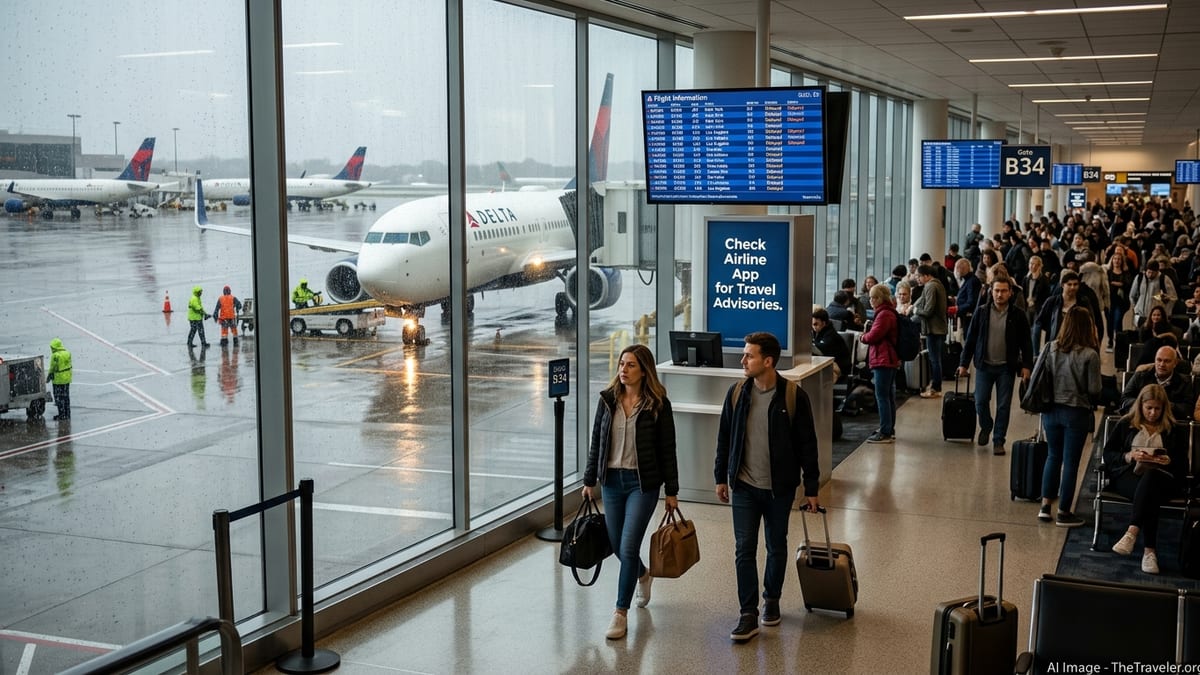
Storms on both coasts raise disruption risk for holiday flyers
Weather forecasters expect a large storm system to sweep up the East Coast around Thanksgiving, bringing bands of heavy rain, strong winds and potential coastal flooding. At the same time, very high tides and Pacific swells are forecast along parts of Southern California, raising the risk of beach erosion and localized flooding near coastal airports. While conditions at CVG in Hebron, Kentucky, were relatively stable midweek, airlines caution that disruptions at coastal hubs can quickly ripple through the national network, affecting passengers headed to or from Cincinnati on connecting itineraries.
Meteorologists note that the same pattern driving heavy rain and strong onshore winds along the Atlantic seaboard is expected to intensify travel impacts in major markets such as New York, Boston and the Mid-Atlantic corridor. On the opposite coast, unusually high tides combined with waves enhanced by the current El Niño pattern are expected to push water levels into low-lying roads and parking areas near some California coastal communities, with the greatest concerns around high tide cycles over the holiday period. For air travelers, the primary operational risks are low cloud ceilings, crosswinds on takeoff and landing, and ground delays if runways or taxiways become temporarily waterlogged.
Transportation officials stress that these conditions may not translate into widespread shutdowns but could lead to a patchwork of delays and schedule adjustments, especially at the busiest times of day. Even modest slowdowns at large coastal airports can cause missed connections and rolling disruptions for downline airports like CVG that depend heavily on traffic feeding in from major hubs.
Airlines issue weather advisories and flexible rebooking options
Major U.S. carriers including Delta Air Lines, United Airlines and Southwest Airlines have posted travel advisories covering parts of the Thanksgiving period, flagging the potential for weather-related delays at a range of East and West Coast airports. These advisories, which are updated as forecasts evolve, typically identify specific dates and airports where passengers may be eligible for fee-waived changes if their itineraries pass through affected cities.
Under these waivers, travelers whose origin, destination or connecting airports fall within the named regions can often rebook to a nearby date within a limited window, provided seats are available in the same cabin. Fare differences may still apply on some tickets, particularly for basic-economy fares or heavily restricted promotional prices, and rules can vary by airline and route. Passengers whose flights are canceled outright are generally entitled to a refund if they choose not to travel, but routine delays without a cancellation do not automatically trigger compensation under U.S. regulations.
Airline operations teams typically begin adjusting schedules several days in advance of a high-impact weather event, trimming frequencies at the most vulnerable times of day or proactively rerouting aircraft and crews to keep disruptions contained. Ahead of this Thanksgiving period, carriers have already cautioned that they may implement ground delay programs or revised departure slots at some coastal hubs if wind and visibility forecasts deteriorate near peak travel hours.
Record-level Thanksgiving crowds, slight dip from last year
Despite the unsettled forecast, overall demand for Thanksgiving travel remains close to historic highs. AAA’s 2026 holiday outlook projects that about 81.5 million Americans will travel at least 50 miles from home between Tuesday 24 November and Monday 30 November, covering the core Thanksgiving travel window. That figure represents a marginal decline of roughly 0.1 percent compared with last year’s record estimate of 81.6 million, suggesting that travel volumes remain broadly steady even as costs have risen and weather uncertainty has increased.
Driving remains the dominant mode of transportation, with nearly 73 million people expected to travel by car during the period, according to the AAA forecast. Traffic models suggest that the heaviest congestion will occur on the afternoon and early evening before Thanksgiving and again on the Sunday return, particularly around major metro areas and interchanges serving coastal and mountain corridors. Those timeframes leave little margin in the system if heavy rain, fog or snow further slows traffic.
Air travel is also expected to be intense but not dramatically higher than recent records. AAA estimates that just under 6 million people will fly over the same seven-day span, while around 2.6 million will use other modes such as intercity buses, rail and cruises. Federal data cited by transportation officials indicate that the Tuesday and Wednesday before Thanksgiving typically rank among the busiest flying days of the year. Ahead of this holiday, U.S. Transportation Department officials have highlighted that daily flight counts are running at or near their highest levels in more than a decade, increasing the stakes when weather forces even short-lived ground stops or equipment outages.
CVG prepares for 215,000 passengers amid network strain
Cincinnati/Northern Kentucky International Airport is expecting a robust holiday period that mirrors the national picture. In a recent Thanksgiving travel advisory, CVG said it is preparing to handle approximately 215,000 passengers over an eight-day period from Sunday 22 November through the following Sunday. Airport officials estimate that total volume will be about 3 percent higher than last year, reflecting both increased local demand and the continued strength of connections through airline partners that use CVG as a regional hub.
Local transportation agencies anticipate that around 663,000 Greater Cincinnati residents will travel for the holiday by all modes, based on regional projections aligned with AAA’s national forecast. Many of those travelers are expected to use CVG either for domestic connections to larger hubs or for point-to-point services to leisure destinations such as Florida and the Southwest. The days immediately before Thanksgiving and the Sunday return are forecast to be the busiest for security checkpoints, parking facilities and curbside pickup areas at the airport.
So far, CVG has reported largely routine operations this week, with no major weather-related interruptions on the airfield. However, the airport has recently experienced secondary impacts from national issues, including a nationwide ground stop earlier in November triggered by a federal technology failure. That incident temporarily halted departures around the country and left some Cincinnati-bound passengers facing extended delays and missed connections even after the local ground conditions had cleared.
What CVG-bound travelers should watch during the holiday week
With storms expected to affect both coasts and traffic volumes remaining near record highs, officials are emphasizing practical steps travelers can take rather than expecting the weather to derail every itinerary. At the national level, aviation authorities encourage passengers to monitor both their departure and connection points, especially if they are routed through coastal cities that may be more directly affected by heavy rain, strong winds or tidal flooding. Travel waivers issued by individual airlines will list specific eligible airports and travel dates, making it important for passengers to consult their carrier’s advisory pages rather than relying only on general news coverage.
At CVG, airport guidance for the Thanksgiving period focuses on arriving early, checking flight status frequently and planning parking or drop-off logistics in advance. Officials recommend that passengers on domestic flights arrive at least two hours before departure and that international travelers allow even more time, in line with standard holiday-season advice. Travelers requiring wheelchair or mobility assistance are asked to arrange support directly through their airline before arriving at the terminal so that staffing can be scheduled around peak periods.
For those picking up friends or relatives, both airport staff and airlines urge checking the real-time status of inbound flights before leaving home, particularly for arrivals connecting from coastal hubs. A late inbound aircraft or extended ground hold at another airport can result in last-minute schedule changes that do not necessarily show up in printed boarding passes or early-morning confirmations. If conditions on the coasts worsen, carriers may consolidate flights, swap aircraft types or re-time departures to thread gaps in the weather, all of which can change gate assignments and arrival times at CVG on short notice.
While the outlook suggests that most Thanksgiving trips will still go ahead, the combination of near-record traveler numbers and unstable coastal weather means delays are likely at some point in the holiday period. Passengers flying into or out of Cincinnati over the coming days are advised to remain flexible with their timing where possible, build extra connection buffers into complex itineraries and stay alert to updated airline advisories as the storm systems evolve.