


More news on this day
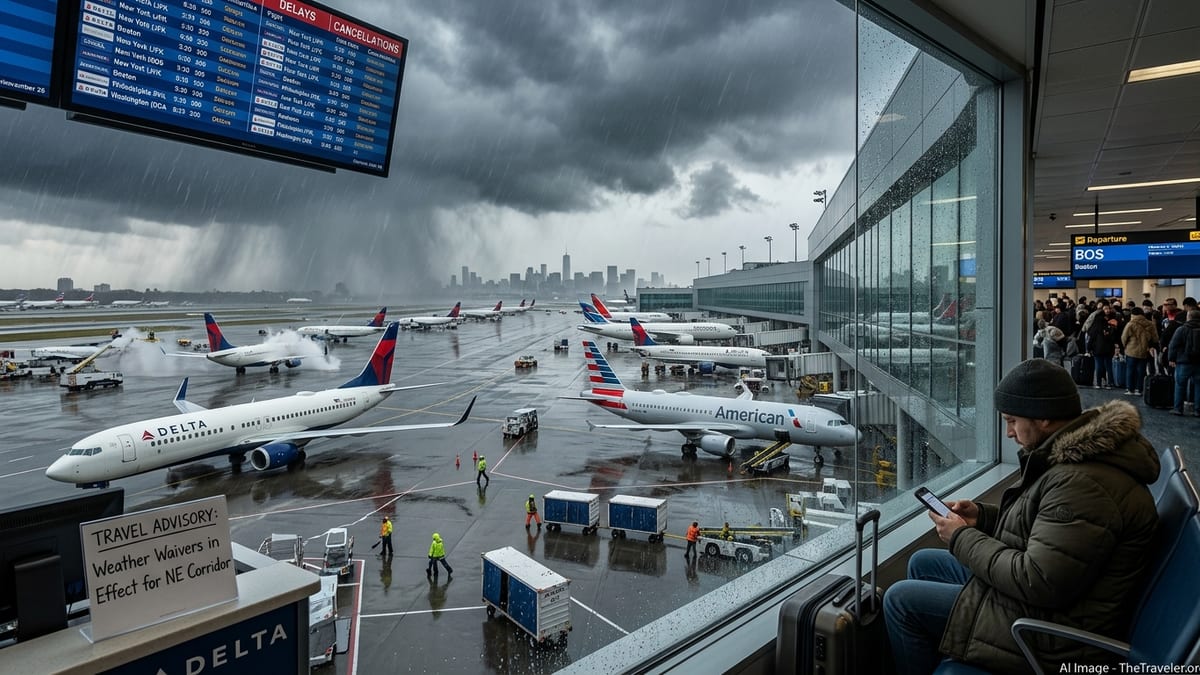
Major U.S. airlines have introduced broad weather waivers for Thanksgiving period flights across the U.S. East Coast, and in some cases the West Coast, as a powerful coastal storm system forecast to intensify on Thursday, November 26, 2026, threatens heavy rain, strong winds and potential air travel disruption along one of the busiest corridors in the country.
Get the latest news straight to your inbox!
Storm forecast and where travel is most at risk
Forecasts from the National Weather Service and NOAA’s Weather Prediction Center indicate that a strengthening coastal low will track up the Eastern Seaboard through Thanksgiving Day, November 26, bringing periods of heavy rain, coastal flooding and strong wind gusts from the Carolinas to New England. Meteorologists expect the worst conditions from Thursday afternoon into Thursday night for many major East Coast hubs, with lingering impacts into Friday, November 27, particularly in the Northeast.
Rainfall projections highlight a swath of moderate to heavy rain along and east of the Interstate 95 corridor, with locally higher totals possible in parts of the Mid-Atlantic and southern New England. Weather briefings from regional forecast offices, including Mount Holly, New Jersey, and Greenville-Spartanburg, South Carolina, emphasize the potential for reduced visibility, ponding on runways and nearby roads, and crosswinds that may force temporary ground stops at busy airports during peak travel periods.
Wind advisories and coastal flood statements are in effect or expected along sections of the Mid-Atlantic and New England coasts for Thursday into Friday, with gusts that could exceed 40 to 50 mph along exposed shorelines. Those conditions may complicate operations at coastal airports such as Boston Logan and New York’s LaGuardia and John F. Kennedy, where runway configurations can be particularly sensitive to strong, shifting winds. While exact timing can vary, forecasters consistently flag Thursday afternoon and evening as the most likely window for significant delay risk in the Northeast.
Which airlines are waiving fees and where they apply
In response to the forecast, the largest U.S. carriers have published weather waivers that allow affected customers to change plans once without a change fee, and in many cases without paying a fare difference if they travel within a specified date window and routing. The policies are similar in structure but differ in eligible dates, airports and rebooking rules, so travelers need to check the details of their specific airline’s alert or advisory page.
American Airlines has issued a travel alert covering a broad list of East Coast airports, including Boston, New York City, Philadelphia, Washington, Baltimore and several destinations in the Mid-Atlantic and Southeast. For tickets that meet the criteria in American’s alert, customers scheduled to fly on November 26 can typically move their trip to an alternative date within a defined period, on the same origin and destination, without a change fee. If travel is rebooked within the permitted window and the same cabin is available, American is waiving the fare difference; outside that window, normal fare rules apply.
Delta Air Lines, United Airlines and other major carriers have also published Thanksgiving storm waivers for flights involving key northeastern hubs, generally focused on travel on Thursday, November 26, with some flexibility extending into Friday for return or onward segments. United’s advisory, for example, covers a list of Northeast airports and allows one voluntary change for customers booked on November 26, provided they rebook within the dates listed by the airline and keep the same city pair. Low-cost and regional carriers serving the affected corridor have released similar but typically more limited waivers, often restricted to a smaller group of airports or a shorter rebooking window.
Scope of disruptions and how they compare with normal Thanksgiving traffic
The Thanksgiving period is always one of the busiest travel weeks of the year in the United States, and the 2026 holiday is no exception. The Federal Aviation Administration has projected the busiest Thanksgiving air travel in more than a decade, with traffic volumes across the national airspace system expected to exceed many pre-2020 benchmarks in the days surrounding the holiday. AAA has separately estimated that close to 6 million travelers will fly for Thanksgiving, in addition to tens of millions traveling by road and rail.
Weather impacts are anticipated to be highly uneven across the country. While the East Coast is forecast to bear the brunt of Thursday’s coastal storm, much of the central United States is expected to see relatively benign conditions, and many major hubs away from the coasts, including several in the Midwest and interior West, are currently forecast to experience fewer weather-related constraints. On the West Coast, however, a separate weather system has already prompted at least one major carrier to extend a travel waiver for San Francisco International Airport and, in some cases, other Pacific Northwest gateways, due to expected periods of heavy rain, low clouds and gusty winds.
As of Wednesday afternoon, November 25, national operational data show delays and cancellations within a range that is elevated but still consistent with a busy holiday period experiencing widespread rain and some low ceilings. Airlines and the FAA caution that the picture is likely to change quickly once the East Coast storm reaches full strength, particularly on Thursday afternoon. Many of the waivers are structured precisely to encourage travelers to move out of this highest-risk window if their plans are flexible, thereby reducing the number of passengers and aircraft exposed to the worst conditions later in the day.
How the waivers work in practice and what travelers should examine
Although each airline’s policy is different, most of the current Thanksgiving waivers share key features that determine how useful they are for individual travelers. Typically, the customer must have a ticket issued by the airline and be scheduled to travel on a specific set of dates, usually centered on November 26, to or from airports listed in the advisory. If those conditions are met, the traveler is allowed a single voluntary change, which must usually keep the original origin and destination and be booked within a short alternative window, such as November 25 through November 30.
Fee waivers generally cover the standard change fee and, when rebooking within the allowable window and fare class, any additional fare difference. However, if a traveler moves a flight to a significantly later date beyond the included range, or changes to a different routing, normal fare differences and restrictions generally apply. Same-day standby, upgrades and the use of miles or vouchers alongside a waiver are governed by each airline’s published rules, and may not be eligible for the same flexibility as standard revenue tickets.
Travelers should also understand what the waivers do not guarantee. Weather waivers do not assure that a particular flight will operate as scheduled, nor do they create entitlement to meals or hotel accommodation if a disruption is caused by weather rather than a controllable airline issue. In the United States, airlines are not required to provide meal or lodging vouchers for weather-related delays or cancellations, though some may offer goodwill gestures at their discretion. Waivers are best understood as an option to move away from the most impacted times without penalty, not as a form of travel insurance or compensation.
Practical steps for passengers traveling through the storm
For travelers who still plan to fly on Thanksgiving Day through East Coast airports, monitoring conditions closely in the hours before departure will be important. Forecasts call for rain and wind to intensify through Thursday afternoon and evening in many major markets, which could lead to ground delay programs, deicing queues and congestion at airport security and boarding gates. Checking both the airline’s app and the airport’s departures and arrivals boards can provide early notice of schedule changes, gate swaps or connection risks.
Passengers who have some flexibility are being encouraged by airlines, airport authorities and weather services to consider moving flights earlier in the day or to Wednesday, November 25, where seats remain available and waivers permit fee-free changes. The coastal storm is expected to lift away from the Northeast late Friday into Saturday, but updated briefings from the Weather Prediction Center and local forecast offices note that residual showers, gusty winds and saturated ground could still contribute to slower-than-normal operations for some Friday morning departures.
Looking ahead, travelers with flights booked for Friday and the weekend who are not currently covered by a waiver should continue to check their airline’s advisory pages. If the storm’s track or intensity changes, airlines may adjust the list of eligible airports or extend valid travel dates. Passengers with tight onward connections, international departures or essential time-sensitive plans may wish to contact their carrier proactively to understand what options are available if Thursday’s disruption has knock-on effects on later flights. In all cases, the most current and authoritative information will come from the operating airline’s alerts and the National Weather Service forecasts updated through the holiday period.