


Los Cristianos on Tenerife’s south coast has grown from a fishing village into one of the island’s busiest resort towns, combining sheltered beaches, a walkable centre and a working port with ferries to other Canary Islands. For many independent travellers, couples and families it offers a practical, mid‑range base to enjoy both easy beach time and wider exploration without a car.
Get the latest updates straight to your inbox!
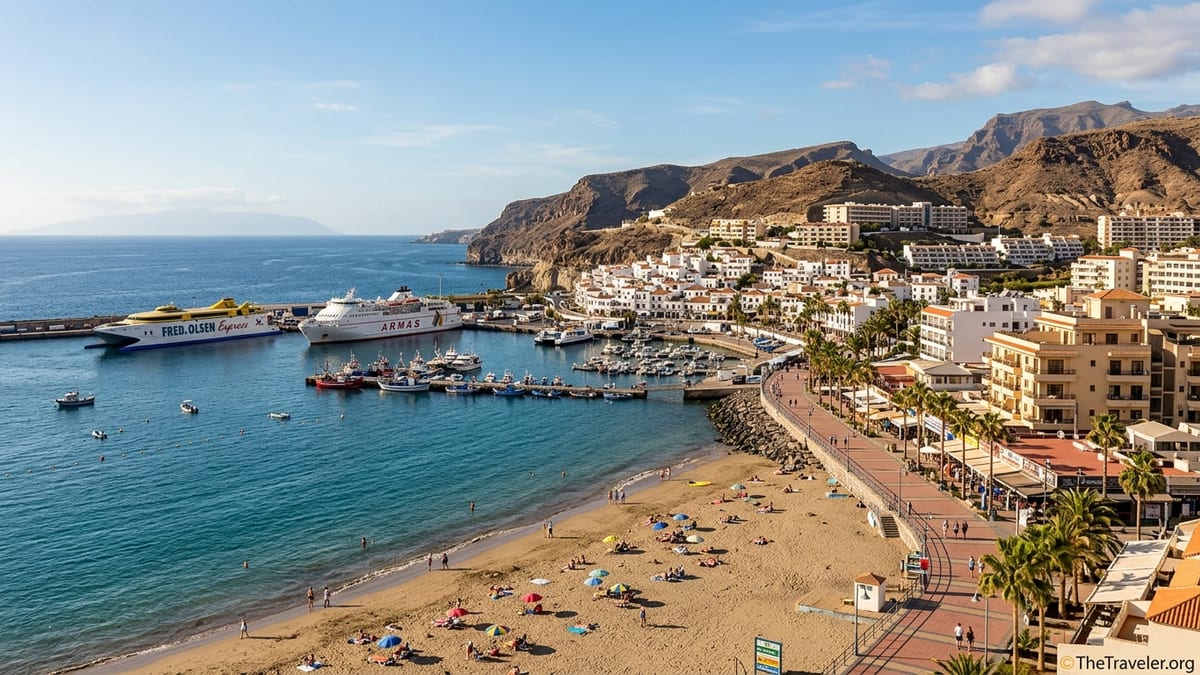
Orientation: Town, Beaches and Port
Los Cristianos sits in the municipality of Arona on Tenerife’s arid south coast, just west of the Reina Sofía (Tenerife South) airport. Today it has around 20,000 residents and blends high‑rise hotels with older low‑rise streets around the harbour. The atmosphere is lively but generally less hedonistic than neighbouring Playa de las Américas and less upmarket than Costa Adeje, which makes it appealing to visitors looking for something in between.
The town focuses on two main beaches. Playa de Los Cristianos curves around the harbour with golden imported sand and sheltered water protected by breakwaters. Immediately to the east, Playa de las Vistas is a long, broad beach backed by a flat promenade that continues all the way to Playa de las Américas. Both beaches are urban and busy, but they deliver calm swimming conditions that suit families and anyone who prefers gentle surf.
Behind the sands rises a compact grid of streets filled with bars, restaurants and small shops, climbing gradually towards newer residential and aparthotel zones on the hillside. To the west and south lies the port of Los Cristianos, which remains an active working harbour as well as a departure point for excursions and inter‑island ferries.
The port is a key reason many independent travellers choose Los Cristianos as a base. Ferries run from here to San Sebastián de La Gomera, Santa Cruz de La Palma and Valverde on El Hierro, typically operated by Fred. Olsen Express and Naviera Armas, with Baleària also serving La Palma on some schedules. Typical advertised crossing times are about 50 to 60 minutes to La Gomera, around 2.5 hours to La Palma and roughly 2 to 3 hours to El Hierro, depending on route and intermediate stops. Schedules and operators can change, so it is important to check current timetables and book tickets in advance in busy periods.
Who Los Cristianos Suits (and Who It Does Not)
Los Cristianos works particularly well for visitors who want a practical, walkable base. The town centre, beaches and port sit on relatively flat ground, the promenade is step‑free for long stretches, and most day‑to‑day needs are within a 10 to 20 minute walk if you stay near the seafront. The harbour beach offers especially calm water, which reassures many families with young children and less confident swimmers.
The resort also suits travellers who value a mix of British, Irish and Scandinavian tourist facilities and some Canarian life. English is widely spoken in tourist businesses, supermarkets and excursion offices. At the same time, Los Cristianos feels a little more like a functioning town than a purpose‑built resort, with local residents, schools and everyday shops in the back streets. Compared with Playa de las Américas, nightlife is present but milder, focused on pubs, karaoke bars and live‑music terraces rather than late‑night clubs.
On the other hand, travellers seeking a quiet village atmosphere or a secluded, luxury experience may prefer other areas. The seafront and streets around the port stay busy and can be noisy late into the evening, especially in high season. Costa Adeje, directly to the west, generally offers a higher concentration of four and five star hotels, newer developments and a slightly calmer, more polished ambience. Those prioritising wild scenery or traditional Canarian towns might rather base themselves on the north coast or in inland villages and visit Los Cristianos only for the ferries and excursions.
In terms of length of stay, a long weekend of 3 to 4 nights is usually enough if your focus is the local beaches and a single big day trip such as Teide National Park. A week gives time for several boat excursions and one or two inter‑island ferry day trips. If you aim to tour the whole island by bus or rental car while still enjoying rest days, 10 to 14 nights based in Los Cristianos or split between the south and the north coast is more comfortable.
Main Things To Do In and Around Town
For most visitors, life in Los Cristianos starts on the sand. Playa de Los Cristianos is the more enclosed of the two town beaches, set directly in front of the old centre and harbour. Here you will find sunbed and parasol rental, children’s play areas nearby and typically very gentle waves. Playa de las Vistas, slightly broader and more open, offers similar facilities with space to spread out; it is popular with families, walkers and people who like to combine a long beach day with easy access to cafés and shops along the promenade.
The harbour is the departure point for whale and dolphin watching trips, which operate year round in the waters between Tenerife and La Gomera. Several companies run catamarans and smaller boats offering short cruises with wildlife spotting, swimming stops and basic food and drink. Regulations and environmental practices can evolve, so travellers should always confirm that an operator holds current permits, follows local rules on approach distances and avoids feeding or disturbing animals. It is wise to check recent independent reviews and any safety information before booking.
Besides larger boat trips, there are kayaking and snorkelling excursions along the nearby coast, some marketed specifically for observing turtles in their natural environment. As with whale watching, you should look carefully at how operators describe interactions with wildlife and choose companies that emphasise responsible viewing rather than close contact. Conditions on the water can vary; guides may cancel or modify trips for wind or swell, especially in winter.
On land, one of the simplest activities is to follow the seafront promenade east from Los Cristianos through Playa de las Vistas into Playa de las Américas, and onward towards Costa Adeje. The route is paved and largely flat, passing multiple coves, cafés and viewpoints, and it helps new visitors understand how the main south‑coast resorts fit together. Inland, family attractions such as Jungle Park and Camel Park sit a short taxi or bus ride up the hill. Many visitors also join organised coach tours or use the regular bus services for day trips to Teide National Park, the island capital Santa Cruz and the historic university city of La Laguna.
Getting In and Around Without a Car
Tenerife South airport lies roughly 17 kilometres from Los Cristianos by road. In normal traffic a taxi or private transfer usually takes around 15 to 25 minutes. Recent indicative information from local sources suggests standard daytime taxi fares in this corridor tend to fall in a moderate bracket rather than premium long‑distance pricing, but exact fares vary with time of day, luggage and traffic. Travellers should always confirm approximate costs with the official taxi desk or app on arrival.
Los Cristianos is particularly convenient for those arriving by public bus. The island operator TITSA runs several lines that connect the airport, Los Cristianos and other resorts. Line 40 links Tenerife South airport with Los Cristianos and the Costa Adeje bus station, with a journey time of roughly 20 to 40 minutes depending on stops and traffic according to recent timetable summaries. Other relevant routes, such as the 111 and night service 711, also link the airport with Los Cristianos and onward to Santa Cruz. Timetables and fares can change, especially seasonally, so it is important to verify current schedules on official TITSA channels shortly before travel.
Within the town, Los Cristianos functions as a major bus hub for south Tenerife. From the main station and nearby stops you can reach Costa Adeje, Playa de las Américas, smaller resorts along the coast, and inland towns. There are also bus routes to Santa Cruz, La Laguna and Puerto de la Cruz on the north coast, though journey times are significantly longer than local hops. For many visitors who are comfortable with public transport, a Ten+ travel card and the bus network are sufficient for exploring the island without hiring a car.
Once in Los Cristianos, getting around on foot is straightforward if you stay close to the seafront or in the relatively flat central area. The main constraint is heat and sun exposure in the middle of the day, especially in summer, so carrying water and taking breaks in the shade is sensible. A car can be helpful only if you plan frequent independent trips into remote parts of the island or late‑night returns from rural areas. Parking in the central streets can be tight and some accommodation provides private or paid spaces, which is worth checking at booking time.
Town Layout and Where To Stay
Los Cristianos can be thought of in three simple zones. Around the original harbour and church square are the older streets of the town centre, many of them narrow and busy with small shops, bars and restaurants. Running along the water’s edge is the flat beachfront promenade, edged with hotels and apartment complexes looking over Playa de Los Cristianos and Playa de las Vistas. Behind both rises a fan of newer residential and holiday developments up the hillside.
Staying near Playa de Los Cristianos places you closest to the port, harbour beach and bus station. This area is convenient for early ferry departures and late returns, as well as for travellers who like to be in the thick of the town’s atmosphere. However, proximity to busy bar streets and port traffic can mean more noise late at night, particularly at weekends and in high season. Accommodation ranges from older aparthotels and self‑catering blocks to some more modern hotels, often with limited grounds compared with purpose‑built resorts.
The area around Playa de las Vistas, straddling the border between Los Cristianos and Playa de las Américas, usually feels a touch more spacious. Here you will find large beach‑front hotels, mid‑rise apartment complexes and easy access to both resorts along the promenade. It suits visitors who prioritise direct access to a broad, sandy beach and a long, flat walk, but still want a choice of restaurants and bars without being in the noisiest nightlife area.
Further uphill, the residential and apartment zones tend to be quieter at night and can offer better value, larger units and wider views at the cost of steeper walks. Many properties here are aparthotels or privately owned self‑catering apartments. The climb from the seafront varies from gentle to fairly steep depending on the exact street, so those with mobility issues or families pushing strollers should check the location on a map and reviews carefully. Being uphill usually adds 10 to 20 minutes’ walk to the beaches, and you may rely more on local buses or taxis at the end of the day.
Types of Accommodation and Typical Costs
Accommodation in Los Cristianos spans basic self‑catering studios, mid‑range aparthotels, adult‑only hotels and large all‑inclusive or half‑board resorts, with relatively few ultra‑luxury properties compared with Costa Adeje. Many visitors choose aparthotels or apartment complexes that combine a small kitchen area with hotel‑style pools and reception services, which suits longer stays and families who prefer flexible meal times.
When choosing where to stay, the main criteria are proximity to the beach, steepness of the walk, noise levels, and access to the bus station and port. Those planning early ferry departures to La Gomera, La Palma or El Hierro often prioritise locations within a short, flat walk of the harbour. Travellers who expect to use the bus network extensively appreciate being near the bus station, while light sleepers might prefer streets slightly set back from the busiest bar areas, even if that means an extra five or ten minutes on foot.
Price levels vary by season, room type and how far in advance you book. Recent surveys of online booking platforms suggest that mid‑range hotels in Los Cristianos often start in the lower to mid double‑digit euro range per person per night in the quietest months for standard rooms, rising to solid three‑figure totals per room per night at popular times such as winter sun season and the peak of school holidays. Self‑catering apartments, especially uphill or slightly away from the seafront, can be more economical on a per‑night basis, particularly for longer stays, though cleaning fees and utilities may add to the total. Because prices change frequently, travellers should always check their exact dates across several booking channels.
All‑inclusive or half‑board options are present but less dominant than in some purpose‑built resorts. They can offer good value for those who intend to spend most of their time by the pool and beach, but independent travellers who enjoy exploring the island and eating out often prefer bed and breakfast or self‑catering stays to keep their options open.
Food, Drink and Nightlife Character
Los Cristianos has a dense spread of restaurants and bars, especially along the seafront and in the streets behind the harbour. The offer leans towards international and tourist‑friendly menus, including British pub classics, Italian, Indian, steak and seafood. Portions are often generous and prices, while higher on the very front line, remain broadly competitive for a major resort. Vegetarians and vegans now have more options than in the past, although dedicated specialist venues are still limited compared with big cities.
Alongside the international focus, there are Canarian and Spanish bars and restaurants where you can try local dishes such as papas arrugadas with mojo sauces, grilled fish and gofio‑based desserts. These are scattered through the older back streets and occasionally along the front. Seeking out places frequented by residents a street or two inland can provide a change from the most tourist‑oriented strips, and staff are usually happy to explain local specialities.
Nightlife in Los Cristianos is lively but generally more restrained than in Playa de las Américas. Many venues offer live music, karaoke or sports on screens rather than club nights, and closing times are earlier in much of the town. Families often feel comfortable walking the promenade after dinner, and there is plenty of people‑watching around the squares and beach bars. Those who want a bigger night out can walk or take a short taxi into neighbouring areas where late‑night clubs and beach clubs are concentrated.
For drinks and dining, it is prudent to check recent reviews for service standards, noise levels and any cover charges. Tastes and management can change quickly in resort areas, and places that were quiet one year may become significantly busier or vice versa.
Seasons, Climate and Events
The south of Tenerife is known for its mild, dry climate, and Los Cristianos is a classic year‑round destination. Winter daytime temperatures commonly sit in the low 20s Celsius, with cooler evenings, while summer often brings warmer but still tempered conditions thanks to the ocean breeze. Rain is infrequent on the south coast, though occasional Atlantic fronts can bring cloudy or windy days at any time of year.
The busiest period for Los Cristianos typically runs from late autumn through early spring, when visitors from northern Europe arrive for winter sun. During these months beaches, promenades and restaurants feel lively, and accommodation prices tend to be at their highest. Summer school holidays also see strong demand from families, with warmer sea temperatures and busier beaches during the day.
For quieter conditions and a better chance of value in accommodation, many independent travellers favour the shoulder months, such as late April to early June and late September to October. During these periods you usually still enjoy beach‑friendly weather but with slightly fewer crowds. Local events and festivals, including Carnival celebrations on Tenerife that peak in late winter and various religious or town fiestas, can influence occupancy and prices, so it is sensible to check event calendars for the wider Arona area and the island capital Santa Cruz if your dates are flexible.
Because exact dates and formats of festivals change from year to year, prospective visitors should confirm current schedules close to travel. Booking accommodation early is advisable if your stay overlaps with major events or national holiday periods in Spain and key visitor markets.
Accessibility and Family Friendliness
Los Cristianos is regarded as one of the more accessible resorts on Tenerife’s south coast, largely due to its flat seafront and promenade. Both main beaches have been recognised in local documentation for their environmental or accessibility management. Playa de Los Cristianos is listed as holding a Blue Flag certification in recent municipal reports, while Playa de las Vistas has been highlighted for an accessibility award. Facilities such as ramps, adapted showers and, in some seasons, amphibious beach wheelchairs and assisted bathing services have been mentioned in public information, although availability can vary by year and by month.
The calm waters of the harbour beach, the prevalence of lifeguards during set hours and the gentle slopes into the sea make Los Cristianos attractive for families with small children. Playgrounds, pedalos and other small‑scale activities are typically available along the waterfront. As always, parents should check on arrival which facilities are currently open and how local beach safety flags are being used, since lifeguard staffing and rules about inflatables or equipment can change.
The town’s general layout also favours prams and wheelchairs, particularly along the main promenade where gradients are minor and surfaces are paved. The uphill residential areas are noticeably steeper, so families or visitors with limited mobility may prefer accommodation closer to the seafront or on streets with direct, level access. Many larger hotels state they have accessible rooms and step‑free entrances, but it is important to confirm details directly, including lift dimensions and bathroom adaptations, before booking.
On excursions, accessibility varies. Some whale watching boats and ferries offer ramps and dedicated spaces for wheelchair users, while smaller craft may require steps. National park viewpoints around Teide include some accessible platforms and short paths, but others are rough or steep. When planning trips, travellers with mobility needs should ask tour providers specific questions about embarkation, vehicle access and toilet facilities, rather than relying solely on general labels such as “suitable for all.”
Planning Checklist and How It Compares with Other South‑Coast Bases
When planning a stay in Los Cristianos, the first decision is where in town to base yourself. The seafront and centre offer maximum convenience for beaches, the port and buses but can be noisier, while uphill zones provide better value and quieter nights at the cost of steeper walks. Next, consider whether you will hire a car or rely on buses and excursions. For many visitors whose plans focus on the south coast, Teide, Santa Cruz and perhaps one or two inter‑island day trips, the bus network and organised tours are adequate and avoid parking concerns.
It is also worth deciding in advance which excursions or ferry crossings you want to prioritise. Whale and dolphin watching trips, Teide National Park tours and ferries to La Gomera, La Palma or El Hierro can book up in high season and around public holidays. Pre‑booking online or through your accommodation helps secure preferred times, but you should always read current reviews, confirm what is included, and review safety and cancellation policies carefully.
Compared with Playa de las Américas, Los Cristianos generally feels slightly more lived‑in and less dominated by nightlife, with a similar level of development but a calmer evening atmosphere along much of the seafront. Versus Costa Adeje, it tends to offer more mid‑range than luxury accommodation, slightly older building stock and a busier working port environment, but also often slightly lower prices and the benefit of being the primary ferry gateway to the western islands.
If you are looking for a flat, walkable resort with two dependable urban beaches, strong public transport connections and easy access to inter‑island ferries, Los Cristianos is an excellent candidate. Travellers who prioritise high‑end hotels, quieter promenades and landscaped resort areas might lean towards Costa Adeje, while those chasing late‑night clubs and party streets may prefer Playa de las Américas. Understanding these trade‑offs before you book will help ensure that your chosen base matches the Tenerife holiday you have in mind.