


More news on this day
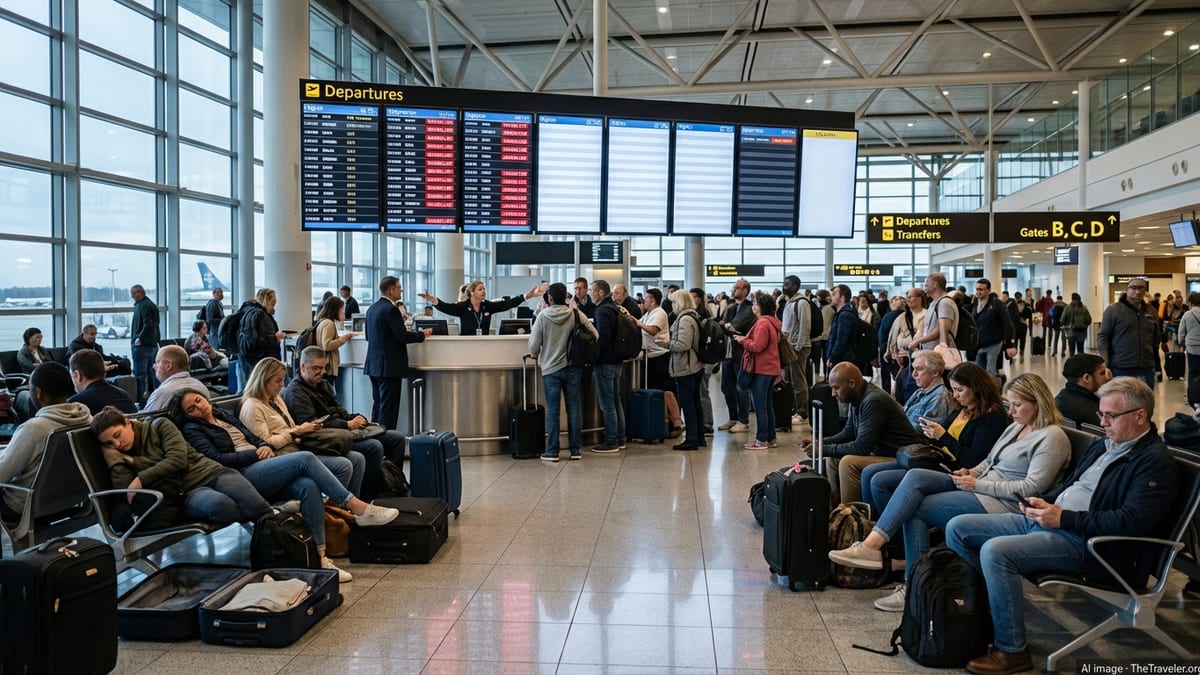
Fresh disruption across Middle Eastern airspace is rippling through Istanbul and a dozen other regional airports, with dozens of cancellations and hundreds of delays compounding a year already marked by severe schedule upheaval for travelers.
Get the latest news straight to your inbox!
Airspace Closures Continue To Reshape Regional Flight Patterns
Months after missile strikes and heightened tensions prompted widespread avoidance of Iranian and neighboring airspace, carriers are still recalibrating their networks across the Middle East. Published coverage shows that European and Asian airlines have repeatedly rerouted or suspended services to cities including Dubai, Doha, Riyadh, Tel Aviv and Jeddah, citing security and operational concerns linked to the conflict environment.
Factbox reporting from mid July 2026 indicates that many long haul operators have yet to restore full schedules into the Gulf, with some extending suspensions into September and October. While certain routes have reopened with reduced frequencies, others remain offline, forcing passengers to rely on secondary hubs and indirect routings. These prolonged adjustments have increased pressure on airports that remain fully active, particularly Istanbul’s growing global hub.
Regional carriers based in Türkiye have also had to modify their operations. Publicly available information from cargo and passenger divisions details selective cancellations to destinations around the Gulf, Iran and the Levant, as airlines work around restricted corridors and evolving regulatory notices. The result is a patchwork of service levels across key markets that previously enjoyed dense, high frequency links with Istanbul and other major nodes.
Istanbul’s Role as a Relief Valve for Diverted Traffic
Istanbul has emerged as one of the principal alternatives for traffic that can no longer safely or efficiently transit traditional Middle East corridors. Earlier in the year, diversion tracking showed long haul services from North America to Gulf and South Asian destinations being rerouted via Turkish and European airspace, adding both flight time and operational complexity. In some cases, widebody aircraft that once used Gulf hubs for connections have instead funneled passengers through Istanbul.
Analytical summaries of disruption in March 2026 underscore how exposed the region’s schedules are to airspace closures. A review of European networks found that a single wave of Middle East related restrictions led to nearly two hundred cancellations and more than eight hundred delays in one day, with Istanbul Sabiha Gökçen among the hardest hit secondary hubs. On that occasion, the airport recorded one of the highest cancellation counts in Europe, illustrating how Istanbul’s dual airport system absorbs both diverted and disrupted traffic.
While today’s live data for Istanbul’s main airport shows relatively modest day of delays and no mass cancellations, the broader pattern points to recurring peaks of disruption rather than a single acute event. Airlines are continually tweaking routings and departure banks to account for longer detours, slot availability and crew duty limits, leaving passengers exposed to last minute schedule changes even on days when local weather is benign and the airfield itself is functioning normally.
Knock On Effects Across Twelve Additional Airports
The latest phase of Middle East disruption is not confined to Istanbul. Operational intelligence platforms and passenger rights organizations describe a wider network of secondary shocks affecting at least a dozen other airports across Europe and the broader region. Earlier episodes tied to regional airspace closures saw cancellations and delays distributed among hubs such as London Heathrow and Athens, alongside Turkish coastal gateways like Antalya and Izmir, as airlines attempted to rebalance fleets and preserve long haul connectivity.
In one widely cited March case study, Europe and Türkiye together registered nearly three and a half thousand affected flights after airspace restrictions rippled out from the Middle East. That event alone produced close to two hundred cancellations and more than eight hundred delays, many of them clustered at airports that serve as stepping stones between Europe, the Gulf and South Asia. Antalya, for example, logged a noticeable spike in schedule disruption on top of Istanbul’s already heavy load.
Current reports from traveler communities and specialist outlets suggest a similar pattern in recent weeks, albeit on a more targeted scale. Airports handling dense flows to Kuwait, Iraq and the Gulf states have experienced repeated timetable cuts and rolling delays as some carriers delay the full restoration of their pre conflict frequencies. For passengers, that can translate into missed onward connections far from the original hotspot, including at European and Mediterranean holiday airports where capacity is already stretched for the peak season.
Airlines Trim Middle East Frequencies While Restoring Selected Routes
Airlines are responding to the volatile operating environment with a mix of route restarts, frequency reductions and outright suspensions. According to financial and aviation news summaries from July, major European groups have kept some services to Dubai paused well into September, while others have pushed back the return of flights to Baghdad and Erbil until the end of the third quarter. Several North American carriers have likewise extended cancellations on Tel Aviv and Dubai routes into late October, underscoring the long tail of the crisis.
At the same time, Turkish Airlines and other regional operators are selectively rebuilding their Middle East networks through Istanbul. Trade press coverage highlights how reinstated flights to certain Gulf and Levant destinations are being marketed as a way to restore connectivity between the region and global markets, even as some countries remain under tighter restrictions. In practice, that means travelers may find more options via Istanbul for specific city pairs, but with fewer daily frequencies and limited backup choices if something goes wrong.
Passenger rights resources have documented repeated schedule changes on routes linking Türkiye with Kuwait and other Gulf states. One late July disruption briefing notes that the full Kuwait operation for at least one major Gulf carrier remains on hold, while Turkish services on the Kuwait Istanbul corridor continue to face periodic cancellations. Travelers are being urged to verify departure times on the day of travel and to monitor rebooking options closely.
What Travelers Should Expect in the Coming Weeks
For passengers transiting Istanbul or any of the twelve other affected airports, the current pattern suggests a sustained period of elevated disruption rather than a short lived shock. Even when headline numbers on a single day show only dozens of cancellations and several hundred delays, those figures represent families missing weddings, business travelers losing meetings and tourists seeing carefully planned itineraries unravel at the boarding gate.
Analysts expect airlines to keep refining their schedules as political and security conditions evolve across the Middle East. Rerouted flight paths lengthen block times and soak up additional aircraft and crew hours, which can quickly cascade into later rotations. When combined with summer demand, limited spare capacity and occasional storms over Europe and Türkiye, these constraints leave little margin for error.
Travel experts recommend allowing extra connection time at Istanbul and other busy hubs, steering clear of tight minimum connections on journeys that still rely on routes skirting restricted airspace. Passengers are also encouraged to familiarize themselves with local and regional compensation frameworks, which can provide reimbursement or care in cases of long delay or cancellation, depending on the carrier’s home jurisdiction and the origin or destination of the flight.
Ultimately, the shifting mosaic of Middle East airspace access means that disruption statistics for Istanbul and its peer airports remain a moving target. While live dashboards may show relative calm on any given afternoon, the underlying network continues to operate under unusual stress, with the potential for fresh waves of cancellations and delays whenever geopolitical conditions change.
Sources: AirHelp analysis of Middle East airspace closures; Reuters factbox on Middle East flight resumptions and suspensions; AirHelp briefing on Kuwait related disruptions; AirHelp report on Istanbul disruption; live Istanbul Airport status data