


Nairobi’s Jomo Kenyatta International Airport (JKIA) is the main gateway into Kenya and East Africa, but the real test for many travelers starts after landing: getting safely and fairly from the terminal to a hotel or home in the city. With official airport taxis, several ride-hailing apps, informal drivers and hotel shuttles all competing for attention, it pays to understand how the system works before you wheel your luggage into the arrivals hall.
Get the latest updates straight to your inbox!
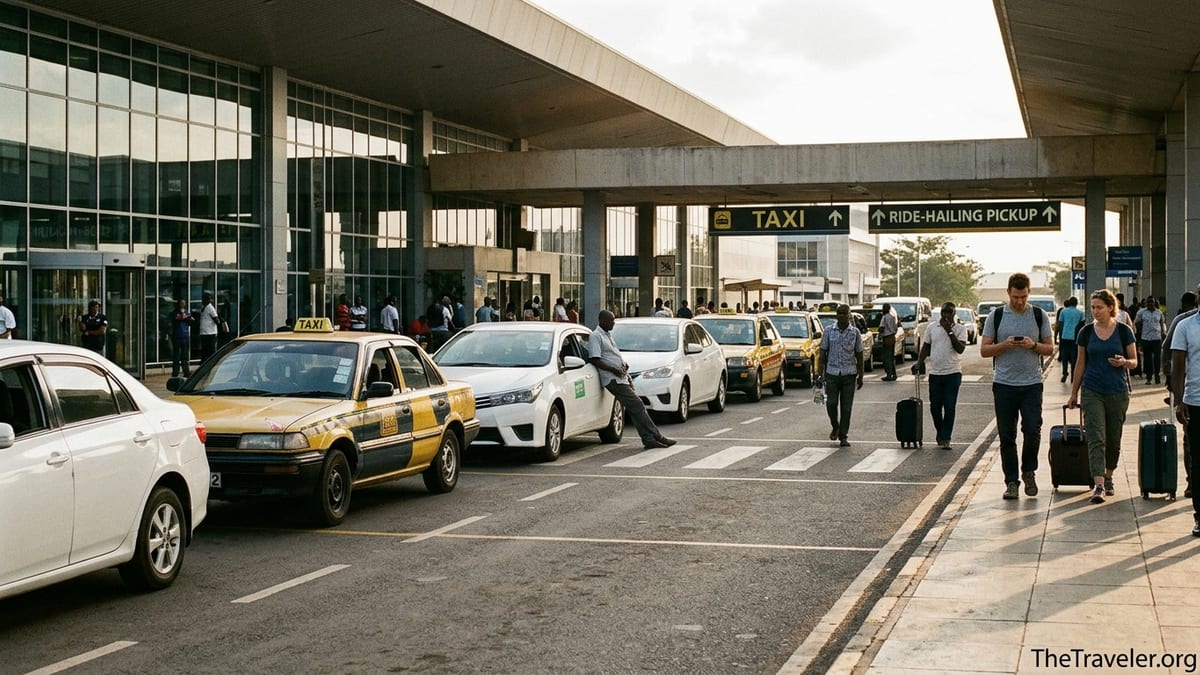
Understanding Your Taxi Options at JKIA
Jomo Kenyatta International Airport sits around 15 to 18 kilometers from central Nairobi, depending on your exact destination. Travel time can be as little as 25 minutes late at night, but 45 to 60 minutes is common in daytime traffic and during rush hour on Mombasa Road. That time difference matters because it can push up fares in taxis and ride-hailing apps alike, so planning your transfer in advance is worth the effort.
Inside the arrivals hall you will see branded counters for licensed airport taxi companies, often using names such as "Airport Taxis" or "Kenya Taxi Cab". These are approved by airport authorities and operate on fixed or zone-based prices. You speak to the dispatcher, tell them your destination, agree a fare, then they escort you to a marked vehicle in the official taxi rank just outside the terminal.
Alongside these official options, JKIA is well covered by ride-hailing apps that are popular in Nairobi, including Uber, Bolt and Kenyan-owned Little Cab. These apps usually offer lower prices than the desk taxis and allow you to pay by card or mobile wallet, but they require mobile data and a working app account. Most drivers wait in designated ride-hailing pickup areas outside arrivals, which the app will show once you request a ride.
Finally, you will notice individuals in the arrivals hall and at the curb asking if you need a taxi. They may be completely genuine drivers, but they are not part of the official airport taxi system. For safety and price transparency, travelers are generally better off using either the official counters or a major app, rather than accepting unsolicited offers from people walking up to them.
Typical Fares from JKIA: What You Should Expect to Pay
Fares from JKIA depend on the time of day, traffic and whether you use an airport taxi or an app. As a rough guide, most recent price comparisons suggest that a ride-hailing trip from JKIA to central Nairobi, such as the CBD or Upper Hill, might cost in the region of 800 to 1,800 Kenyan shillings in a standard Uber or Bolt under normal traffic conditions. Late-night journeys, or those ordered during heavy demand, can creep above 2,000 shillings due to dynamic pricing.
For hotels in popular visitor areas such as Westlands, Kilimani or Lavington, ride-hailing fares commonly fall somewhere around 1,200 to 2,000 shillings. For example, a daytime Bolt ride to a hotel on Waiyaki Way in Westlands might show an estimate of 1,300 to 1,600 shillings in the app, while a similar journey late in the evening could edge towards 2,000 shillings. Fixed-price airport taxis at the counter often quote more for the same trip, typically in the region of 2,500 to 3,500 shillings, reflecting higher base rates and the convenience of a walk-up service.
If you are heading further out, such as to the Karen area near the Karen Blixen Museum or to Gigiri for the UN complex and many embassies, expect higher prices. App-based rides from JKIA to Karen regularly land in the 1,500 to 2,200 shilling range, while counter taxis might quote 3,000 shillings or more, especially at night. Journeys all the way to satellite towns like Thika or Kiambu will be significantly more expensive and are best priced directly in the app or negotiated in advance with a transfer company.
Most airport taxis at the counters still operate on flat or zoned fares rather than meters, so you will see boards or printed sheets behind the desk listing areas like "City Centre", "Westlands" or "Karen" with set prices. These can be a helpful benchmark. If a driver at the curb quotes a price far above those ranges for a standard destination, that is often a sign to walk away and use the counter or an app instead.
Official Airport Taxis vs Ride-Hailing Apps
Official airport taxis have a few clear advantages. They are easy to find immediately after customs, they have a physical desk where you can clarify fares, and you can pay in cash without needing mobile data or a local SIM. For a traveler arriving very late at night after a long-haul flight, simply telling the counter staff "Sarova Stanley Hotel in the CBD" and being handed to a driver who knows the route can feel reassuring, even if the fare is on the higher side.
Ride-hailing apps such as Uber, Bolt and Little Cab tend to be cheaper and provide better price transparency in real time. Before you confirm, you will see an estimated fare for your exact destination, such as "JKIA to Ibis Styles Westlands" or "JKIA to Four Points by Sheraton in Hurlingham". You can track the driver to the pickup point, see their rating, and share your trip details with a friend or family member. Many Nairobi residents and regular visitors now rely on these apps as their primary way of getting to and from the airport.
However, apps have their own challenges. Surge pricing during peak periods, such as Friday evenings or after major events, can temporarily push fares close to or even above the airport taxi counter prices. At very quiet times, like around 3 a.m., there may be fewer drivers on the road, which can lead to longer waits or occasional cancellations. Some travelers also report that a minority of drivers ask to be paid outside the app or suggest cancelling the trip and negotiating a separate cash fare, which undermines the safety features that make apps attractive in the first place.
For many visitors, a balanced approach works best. For example, a solo traveler arriving mid-afternoon might choose an Uber or Little Cab for a relatively quick and economical ride to a hotel in Kilimani, while a family with children arriving close to midnight might value the predictability of a pre-booked airport cab or hotel transfer, even at a slightly higher cost.
Paying for Your Ride: Cash, Card and Mobile Money
Kenya is one of Africa’s pioneers in mobile money, and services like M-Pesa are deeply integrated into daily life. However, as a newly arrived visitor, you may not yet have a local SIM or mobile wallet set up. That makes it important to know how you can pay your taxi from JKIA without creating unnecessary friction at the curbside.
Official airport taxis typically expect payment in Kenyan shillings, in cash, at the end of the ride. Some drivers may accept US dollars or euros, particularly for trips to high-end hotels, but the exchange rate is rarely favorable. If you plan to pay cash, consider using an ATM inside the terminal as soon as you exit customs so you have enough shillings on hand. A typical ride to central Nairobi for two people with luggage might cost 2,500 to 3,000 shillings in an airport taxi, so withdrawing the equivalent of 5,000 to 8,000 shillings can comfortably cover your first transfer and a tip.
Ride-hailing apps give you more flexibility. When setting up Uber, Bolt or Little Cab before your trip, you can usually add an international credit or debit card. With card payment enabled, the fare is charged automatically at the end of your journey, so you do not need to exchange money at the airport for a taxi ride. In practice, many drivers in Nairobi still prefer cash because card and wallet payouts take time to reach them, and some may politely ask you to switch the trip to cash in the app. If you are not comfortable doing this, it is fine to decline and insist on paying by card through the app as originally requested.
If you will be staying in Kenya for more than a few days, buying a local SIM from a provider like Safaricom at the airport and registering for M-Pesa can make life easier. Many app drivers and independent taxis are happy to be paid via M-Pesa because it is instant and avoids handling cash. For example, a Little Cab driver taking you from JKIA to a guesthouse in South B might send you a quick M-Pesa prompt at the end of the ride so you can tap to approve the payment without pulling out notes.
Safety: Choosing Drivers, Routes and Pickup Points
Like any large, fast-growing city, Nairobi has its share of petty crime and road safety issues, and transport to and from the airport is no exception. Yet thousands of passengers move between JKIA and the city every day without incident. The key is to choose your driver carefully, stick to established pickup points and follow sensible precautions that would apply in many major cities.
Within the terminal, using the official taxi counters or a reputable hotel shuttle is generally considered low risk. Outside, when using ride-hailing apps, always verify the car’s registration plate, make, model and driver photo against what you see in the app before getting in. For example, if your Uber app shows a silver Toyota Axio with a particular number plate and a driver named Peter, do not enter a white sedan whose driver calls out your name but does not match the details on your screen.
At night, especially after midnight, many Nairobi residents recommend pre-booking a trusted driver, using a hotel-arranged transfer, or choosing ride-hailing services that are known for slightly tighter security controls. Some regular users give anecdotal preference to Little Cab for night rides because of perceived stronger vetting, while still using Uber or Bolt freely during the day. Whatever you choose, sit in the back seat, avoid displaying laptops or cameras on your lap by the window, and keep the doors locked once you are inside.
Route safety is mostly about traffic rather than crime. The roads between JKIA and the city include busy sections of Mombasa Road and the Nairobi Expressway. Accidents are not uncommon, so if you feel a driver is speeding or weaving between lanes, politely ask them to slow down. Many visitors are surprised by the assertive local driving style. A simple phrase such as "Tafadhali, pole pole" which means "please, slower" can send a clear message without causing offense.
Avoiding Informal and Unlicensed Drivers
The main safety risk at JKIA is rarely armed crime but rather opportunistic overcharging or being picked up by an unregulated driver whose vehicle and background you know little about. These drivers often approach passengers in the arrivals corridor or just outside the terminal, starting with a friendly question such as "Taxi, my friend? Where are you going?". While some may be legitimate independent operators, others bank on your fatigue and lack of local knowledge to quote inflated fares or persuade you into off-app arrangements.
A practical way to avoid this is to have a simple script in mind. If you plan to use an app, walk out of customs, connect to the airport Wi-Fi, open Uber, Bolt or Little Cab and request a ride while still inside the terminal. When approached, you can simply say "Thank you, I already have a driver" and continue walking toward the signed pickup point shown in the app. If you prefer an official airport taxi, head straight to the counters and ignore anyone soliciting rides before you reach the desk.
Be especially cautious if someone suggests canceling an app ride to pay them directly in cash at a "better price". On the surface this can sound attractive, but it removes the digital record, in-trip GPS tracking and built-in safety features from the equation. If something goes wrong, it becomes much harder to raise the issue with the platform or authorities. A common scenario is a driver accepting a Bolt ride from JKIA to Westlands, then calling to say traffic is heavy and asking you to cancel and agree a cash price instead. In almost all cases you are better off keeping the trip within the app or requesting a different driver.
Finally, if a price quoted at the curb feels unreasonably high, trust your instincts and walk away. For example, if someone in the public parking area quotes 6,000 shillings for a basic sedan to a well-known hotel in the CBD, that is significantly above typical market rates, and you have plenty of alternatives only a short walk away inside the terminal or within your phone.
Hotel Drop-offs, Pickups and Special Situations
Most major hotels and many guesthouses in Nairobi are accustomed to arranging airport transfers for their guests. Properties such as the Villa Rosa Kempinski in Westlands, the Fairview near Upper Hill or business hotels in the CBD commonly offer private cars or minivans that meet you outside arrivals holding a sign with your name. Prices are usually higher than an app ride, often closer to or above airport taxi counter rates, but the service can be worth it if you value direct coordination and having someone track your flight for delays.
For budget and mid-range hotels that do not run their own shuttles, reception staff often have trusted regular taxi drivers they call on. If you are nervous about navigating apps on arrival, you can email your hotel beforehand and ask whether they can arrange a pickup from JKIA. In many cases, they will send a driver in a standard sedan who knows exactly where your hotel is, whether it is in Westlands, Kilimani or near Yaya Centre, and who is used to dealing with late arrivals.
When using an app to reach your hotel, always double-check you have entered the correct property. Nairobi has multiple hotels with similar names, especially within the same chain. For example, "Hilton Garden Inn Nairobi Airport" near JKIA is a different location from former Hilton properties in the city center. Confirm the address line in the app before you tap "Confirm". If in doubt, show the hotel name and address to the driver at the start of the ride so you both agree on the destination.
For early-morning departures from the city back to JKIA, many residents rely on pre-scheduled rides through Uber or Little Cab, or on a known driver’s number saved from an earlier journey. It is entirely reasonable to ask your hotel front desk which option they consider most reliable at, say, 4 a.m. when you need to catch a 7 a.m. international flight. Giving yourself extra time for potential traffic or app delays is prudent, particularly on weekdays.
Practical Tips for First-Time Arrivals
First-time visitors to Nairobi often land after long overnight flights from Europe, the Middle East or North America, so it is best to minimize decision-making once you are on the ground. One practical approach is to decide on your preferred transfer method before departure. For example, if you are comfortable with apps, set up Uber, Bolt or Little Cab at home, add your card, and practice entering "Jomo Kenyatta International Airport" and a sample Nairobi hotel to see how the interface looks.
If you prefer the security of a pre-arranged ride, book an airport transfer through your hotel or a reputable travel agency in advance and request confirmation of the driver’s name, vehicle type and where exactly they will meet you. Many professional transfer operators in Nairobi will send you a note such as "Your driver James will wait after customs with a sign, driving a white Toyota Noah". Save this on your phone so you can match the details in the arrivals hall.
On arrival, move past the crowds and currency change kiosks until you reach the main public area where the taxi counters and meeting point are clearly visible. Take a few minutes to connect to Wi-Fi, message whoever is expecting you, and orient yourself. You do not have to accept the first offer of a taxi. Nairobi locals are accustomed to using the time after landing to check fares on their phones or confirm with friends, and no one will be surprised if you stand to the side for five minutes to open an app.
Language is rarely a barrier. Most taxi dispatchers and app drivers at JKIA speak good English, and many also speak Swahili and local languages. Having your hotel name written down or saved as a map pin is helpful, especially if it is a smaller guesthouse or Airbnb in areas like Kileleshwa or South C. Showing the driver the exact pin can avoid confusion and save time circling narrow residential streets.
The Takeaway
Getting from Jomo Kenyatta International Airport into Nairobi does not have to be stressful, but it does reward a bit of advance planning. Decide whether you lean toward the simplicity of official airport taxis and hotel transfers or the flexibility and lower cost of ride-hailing apps, then set yourself up accordingly before your flight.
Have a realistic idea of what fares should look like for your likely route, whether that is 1,200 to 2,000 shillings for an app ride to Westlands or nearer 3,000 shillings for a walk-up airport taxi. Carry some local currency if you plan to pay cash, set up card or mobile payments if you prefer digital transactions, and avoid informal offers that remove the protection of a dispatch counter or app.
Above all, apply the same common sense you would use in any major city. Verify driver and vehicle details, keep your valuables out of sight, and do not hesitate to say no to a ride that does not feel right. Do that, and your first journey from JKIA into Nairobi can be a smooth introduction to Kenya rather than a source of unnecessary anxiety.
FAQ
Q1. How much should a taxi from JKIA to central Nairobi cost?
For a standard sedan, expect roughly 800 to 1,800 Kenyan shillings with a ride-hailing app under normal conditions, and around 2,500 to 3,000 shillings for an official airport taxi to typical CBD or Upper Hill hotels.
Q2. Is it safe to use Uber or Bolt from Nairobi airport at night?
Many travelers and locals routinely use Uber, Bolt and Little Cab at night, but it is wise to verify the car and driver details carefully, sit in the back seat, share your trip with a trusted contact and avoid off-app cash deals. If you are nervous about a very late arrival, a hotel-arranged transfer or official taxi counter can offer extra peace of mind.
Q3. Can I pay for my taxi from JKIA with a credit card?
Most ride-hailing trips can be paid by card through the app if you add your card in advance. Official airport taxis are more likely to expect cash in Kenyan shillings, although some drivers for top-end hotels may accept cards or foreign currency by prior arrangement.
Q4. Do I need Kenyan shillings immediately on arrival for a taxi?
If you are using an app with card payment enabled, you technically do not need cash for the first ride, though it is still useful to have a small amount for tips or contingencies. If you plan to use airport taxis or informal drivers, withdrawing shillings at an airport ATM before leaving the terminal is recommended.
Q5. Where exactly do ride-hailing drivers pick up at JKIA?
Pickup locations can vary slightly by terminal, but in general the app will guide you to a marked ride-hailing or public pickup zone just outside arrivals. Follow the signs once you exit and match the license plate and car model shown in the app when your driver arrives.
Q6. Should I accept offers from people inside the terminal saying "Taxi, my friend"?
It is safer to decline unsolicited offers and either go to an official airport taxi counter or use a major ride-hailing app. This way your journey is recorded, fares are clearer and vehicles are subject to more consistent checks.
Q7. Are hotel airport transfers in Nairobi worth the extra cost?
For late arrivals, families with children or travelers carrying valuable equipment, hotel transfers can be worth the premium. The driver already knows your name, your destination and your arrival time, and the cost is usually added to your room bill, which simplifies payment.
Q8. What if my driver asks me to cancel the app trip and pay cash instead?
Politely refuse and explain that you want to keep the journey in the app for safety and record-keeping. If the driver insists, cancel the trip yourself and request another driver rather than agreeing to an off-app arrangement.
Q9. How early should I leave Nairobi for JKIA by taxi?
On most days, leaving your hotel about three hours before an international flight and two hours before a domestic flight is reasonable. This usually allows 45 to 60 minutes for the drive plus time for check-in and security, with a buffer for traffic delays.
Q10. Is tipping expected for taxi rides from JKIA?
Tipping is not strictly mandatory, but rounding up the fare or adding about 5 to 10 percent for good service is appreciated. For example, if the fare is 1,600 shillings and the driver helped with heavy bags, handing over 1,800 shillings in cash is a courteous gesture.