


Landing at Nice Côte d’Azur Airport means you are just a few kilometres from the Promenade des Anglais and the heart of the French Riviera. Yet the first hour after touchdown can set the tone for your entire trip. This practical arrival guide walks you through what actually happens after landing at Nice, from passport control and baggage claim to buying a tram ticket, choosing between taxis and Uber, picking up a SIM card, and connecting to trains and buses along the coast.
Get the latest updates straight to your inbox!
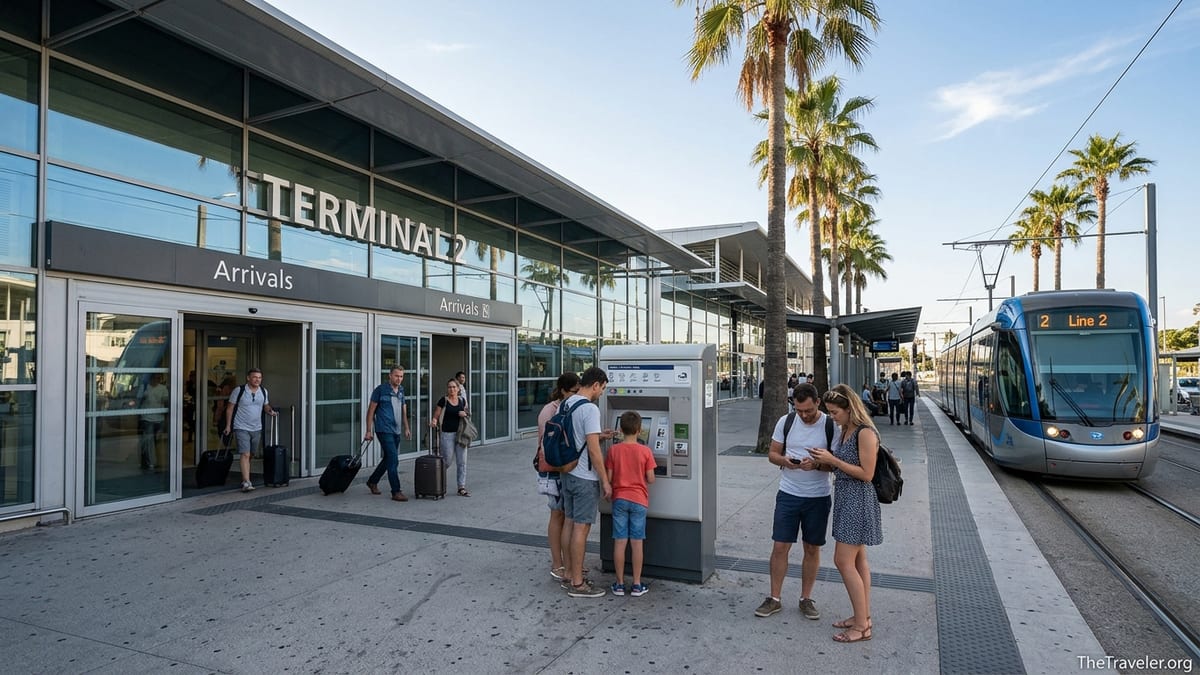
Understanding the Layout: Terminals, Arrivals Halls and Transfers
Nice Côte d’Azur Airport has two main passenger terminals, Terminal 1 and Terminal 2, a few minutes apart along the seafront. Most legacy carriers and many international flights use Terminal 2, while a mix of European and low-cost airlines still arrive into the smaller, older-style Terminal 1. Both terminals have separate Arrivals levels, with ground-side exits leading straight to ground transport, ATMs and a handful of cafés and shops.
If you are meeting someone or booking a car service, it is important to know your exact terminal and exit. Airlines usually print this on the boarding pass or booking confirmation, and electronic display boards in the baggage halls also show which exit doors correspond to each flight. In Terminal 1, international arrivals typically emerge near exits marked A0 or A1, while Terminal 2 has several doors labelled by sector. The two terminals are connected by tram Line 2 and by a free airport shuttle bus that loops every 10 to 15 minutes, so if you arrive in one terminal but your rental car or pickup is in the other, you can transfer quickly without going back through security.
The airport is compact compared with major European hubs. Walking distances from gate to passport control are usually short. In clear conditions, many arriving passengers get views of the Baie des Anges just before landing, but once you disembark the path is straightforward: follow the “Arrivals / Sortie” signs, then “Baggage reclaim” and “Exit / Sortie” to reach the public areas.
Passport Control and Schengen Formalities
On arrival, the first major checkpoint is passport control. If you are arriving from another Schengen country such as Italy, Spain or Germany, you usually bypass passport control and walk directly to baggage claim. Flights from the United Kingdom, Ireland, the United States, Canada and most non-Schengen countries are channelled through border control, where lines can range from 10 minutes in quiet periods to around an hour at busy times when several wide-body flights land close together.
Citizens of Schengen and EU countries typically have a separate lane and may find automated e-gates in service during peak hours. Non-EU travellers, including most UK and US visitors, usually queue for manual inspection. Recently, many European airports, including Nice, have begun phasing in new biometric entry systems, which can lead to occasional delays during busy holiday weekends. To speed things up, have your passport open at the photo page, remove hats and sunglasses, and keep your hotel address or first-night accommodation ready in case the officer asks for details of your stay.
Parents should be prepared for families to be processed together. If you are connecting onward on a separate ticket, factor in a realistic buffer time before any same-day train or bus departure from the city. Arriving on a transatlantic flight landing around midday and hoping to catch a mid-afternoon TER train to Italy is usually fine, but giving yourself around two hours from scheduled landing to the Nice-Ville railway station is a sensible minimum in high season.
Baggage Claim, Lost Luggage and Customs
After passport control you reach baggage reclaim. Each inbound flight is assigned a carousel displayed on overhead screens. In Terminal 2, long-haul flights often use carousels near the centre of the hall, while European and low-cost carriers tend to appear on the carousels closer to the exits. Baggage delivery times vary, but for intra-European flights it is common to see the first bags within 15 to 25 minutes of landing, slightly longer for intercontinental flights.
If your suitcase does not arrive, remain in the baggage hall and go straight to the airline or ground handler desk posted near the carousels. Bring your passport and the baggage receipt sticker from check-in. Many airlines at Nice use shared handling companies, so do not be surprised if you report missing luggage for an American or British carrier at a counter that handles several brands at once. Staff will open a file, give you a reference number, and typically arrange delivery to your hotel or rental apartment within a day or two if the bag is located on a later flight.
Once you have your bags, you walk through customs. There are separate channels for “Nothing to declare” and “Goods to declare,” but for most tourists this is a simple walk-through. Routine checks do occur, particularly for travellers arriving from outside the European Union with high-value electronics or large amounts of alcohol and tobacco. If you are carrying professional camera gear or equipment you plan to re-export, keep purchase receipts easily accessible in case you are questioned, although most visitors never have more than a cursory glance from officers.
Money, ATMs, SIM Cards and Connectivity on Arrival
Immediately after exiting the baggage hall you enter the public Arrivals area, where you will find ATMs operated by major French banks. Withdrawing euros from a bank machine is usually better value than using currency exchange kiosks, which may offer less favourable rates and higher commissions. In both Terminal 1 and Terminal 2, you will see ATMs near the main exit doors and close to café counters; if one machine is out of service, another is often within a short walk.
For mobile connectivity, many travellers rely on roaming plans from their home providers, especially visitors from other EU countries who can often use domestic allowances at no or low additional cost. If you need a local French SIM, look for multi-brand telecom resellers or electronics shops in the arrivals halls that stock prepaid cards from large operators such as Orange, SFR or Bouygues Telecom. Rather than spending your first 30 minutes at the airport figuring out the best deal, it can be wise to choose a straightforward package, for example a tourist data SIM with a moderate allowance for a week, and then adjust later in the city if needed.
Free airport Wi‑Fi is available throughout both terminals. After selecting the official airport network, you are usually asked to accept terms and may need to enter an email address. In practice, speeds are adequate for maps, messaging and ride-hailing apps, although peak holiday periods may see slower performance. Many arriving passengers simply connect to Wi‑Fi long enough to download offline maps of Nice and the Riviera, check the tram schedule, or order an Uber while they are still inside the terminal.
Using the Tram: Fast, Cheap Access to Nice City Centre
For most visitors staying in central Nice, the tram is the simplest and most economical way into town. Tram Line 2 stops at both Terminal 1 and Terminal 2 and runs east to Nice city centre and the Port Lympia area. Journey time from the airport to stops such as Jean Médecin in the shopping district is typically around 25 to 30 minutes, with trams running every few minutes during the day and slightly less frequently late at night.
One peculiarity of Nice is that tickets to and from the airport are priced differently from regular city trips. Machines at the airport tram stops prominently display an airport ticket option for visitors, which costs noticeably more than a standard single ticket used elsewhere in the city. Some travellers prefer to ride the tram a few minutes to the Grand Arénas area, which is within the free access zone, then buy a normal-priced ticket or pass from the machines there. As of mid‑2026, a typical single ride on the wider Lignes d’Azur network is in the ballpark of a couple of euros, while airport-branded products cost more, so checking the options on the screen and choosing what fits your itinerary can save money over a longer stay.
To use the tram from arrivals, follow signs for “Tram” and “Ligne 2” as you leave the terminal; in Terminal 2 the entrance is just outside the main doors of the ground-level arrivals area. Buy or validate your ticket before boarding, then hold onto it for the journey in case of ticket inspections. If your hotel is near the Old Town or Promenade des Anglais, stops like Jean Médecin, Alsace-Lorraine or Masséna will place you within walking distance of many popular hotels and apartment rentals.
If you are travelling onward by train, the tram can also connect you quickly to Nice-Ville railway station. From the airport, ride to Jean Médecin and transfer to Line 1, or ride to Grand Arénas and walk a few minutes to Nice-Saint-Augustin station, from which regional TER services run west towards Antibes and Cannes or east back towards Nice-Ville and Monaco. Many travellers heading directly to Cannes or Antibes after landing find it efficient to use this tram plus train combination rather than backtracking into central Nice.
Taxis, Uber and Private Transfers
For door-to-door convenience, especially if you have heavy luggage or are arriving late at night, taxis and ride-hailing services are attractive options. Official airport taxis line up directly outside the arrivals exits of both terminals. They operate on regulated rates, with a flat fare to Nice city centre that is typically in the low‑30 euros range in recent tariff schedules, plus potential supplements for luggage, night or Sunday travel. Because the fare is fixed, a short daytime ride from Terminal 2 to a hotel behind the Negresco on the Promenade des Anglais costs the same as a longer run into the eastern part of town, which can be good value when shared between two or three people.
When using the taxi rank, join the official queue and take the next licensed taxi rather than accepting unsolicited offers from drivers in the terminal, which are not permitted. Vehicles display a taxi roof sign and meter; although the city-centre fare from the airport is flat, the meter should still be running and reflect the agreed rate structure. If you suspect you have been significantly overcharged, make a note of the license number and request a printed receipt, which includes the details needed for any future complaint.
Ride-hailing services such as Uber also operate around Nice. Pickup zones can vary with airport policy, but many travellers arrange to meet their driver at designated points just outside the terminals or at nearby locations like Grand Arénas. During busy evenings or major events such as the Monaco Grand Prix or Cannes Film Festival, surge pricing can push Uber fares higher than standard taxis, so it is worth comparing the estimated in‑app price against the known flat taxi fare before committing. For example, if the Uber app quotes nearly 50 euros to reach a hotel on Avenue Jean Médecin while the taxi flat rate to the city centre is around the low‑30s, heading to the taxi queue will likely be better value.
Private transfer companies offer pre-booked cars or vans, which can be particularly convenient for families, small groups or travellers heading to resorts further along the coast. A pre-arranged transfer from Nice Airport to a villa in Saint‑Paul‑de‑Vence or a hotel in Cannes often costs more than a standard taxi but includes meeting the driver in the arrivals hall with a name board and direct loading of luggage into the vehicle. If you are arriving after a long-haul flight with children and several suitcases, this extra comfort and predictability can be worth the premium.
Car Rental and Driving Out of the Airport
Nice Côte d’Azur is a major hub for car rentals on the Riviera, with numerous international brands such as Hertz, Avis, Europcar, Enterprise and Sixt represented in both terminals. After exiting customs, follow “Car rental / Location de voitures” signs to reach the dedicated rental desks. In Terminal 1, counters are usually clustered in a side hall off the main arrivals area, while in Terminal 2 there is a spacious rental zone connected to the car parks. Some companies handle paperwork at the desk and direct you to pick up the vehicle in a nearby multistorey car park, while others may shuttle you a very short distance to an external lot.
In high season, especially July and August, rental queues can be long, so having a confirmed reservation, completed online check-in and clear understanding of your chosen insurance coverage speeds things up. Bring your driving licence, a credit card in the driver’s name, and any required international driving permit if your home licence is not in Roman script. Staff will typically walk you through the fuel policy and return procedure; many contracts at Nice are full-to-full, meaning you collect the car with a full tank and must refill before returning to avoid refuelling surcharges.
Exiting the airport by car is straightforward once you know the basic directions. Road signs direct traffic onto the Promenade des Anglais towards central Nice, or to the A8 motorway for destinations such as Cannes, Antibes, Monaco and the Italian border. For instance, driving to Cannes via the A8 might take around 30 to 45 minutes in light traffic, while reaching Monaco to the east can be under an hour outside rush hour. Use a reliable navigation app, but remember local driving norms: speed cameras are common, and the seafront Promenade has reduced speed limits and frequent pedestrian crossings.
Onward Travel: Trains, Buses and Regional Connections
Many travellers use Nice as a starting point for exploring the wider Riviera. If your final destination is along the coast, trains are often the most efficient option. From the airport, the closest station is Nice-Saint-Augustin, reachable in roughly 10 minutes on foot from the Grand Arénas tram stop or via short local bus rides. Regional TER trains from here and from Nice-Ville run west towards Antibes, Juan‑les‑Pins and Cannes, and east towards Villefranche‑sur‑Mer, Monaco and Menton. A daytime TER ticket from Nice to Cannes, for example, is typically priced in the low double digits in euros, making it an economical way to reach beach resorts compared with private transfers.
Intercity and regional buses also operate from near the airport. Certain ZOU! regional bus lines link the airport or nearby terminals with towns along the coast and in the hinterland. While timetables can vary seasonally, you will usually find services to destinations such as Sophia Antipolis, Vence or Grasse. If you have heavy luggage, a direct bus from the airport area to your town can be more comfortable than multiple changes between tram and train, even if it is slightly slower.
For trips that combine different modes, a typical arrival sequence might look like this: land at Terminal 2 around 09:30, clear passport control and collect luggage by 10:15, catch the tram to Grand Arénas at 10:25, walk to Nice-Saint-Augustin station, and board a TER train to Antibes or Cannes shortly after 10:40. In less than 90 minutes from landing, you can be walking along the Croisette or checking into a seafront hotel in Antibes. Planning these connections in advance, and checking approximate departure times, reduces the stress of improvising after a long flight.
Practical Tips for a Smooth Arrival
A few simple habits can make your first hour at Nice more relaxed. Before landing, fill in your hotel address on your phone or a piece of paper so you can show it quickly to a taxi driver, tram inspector or rental car employee. If you plan to use the tram, keep a small amount of euro coins or a contactless payment card handy, as the ticket machines accept cards but sometimes reject foreign magnetic stripe-only cards. Downloading a map of Nice and the surrounding Riviera for offline use ensures you have navigation even if mobile reception is patchy as you leave the terminal.
Security staff and airport employees in Nice are accustomed to international visitors, and English is widely spoken, but learning a few basic French phrases can smooth interactions. Saying “Bonjour” before asking a question or “Merci, bonne journée” when leaving a taxi are small courtesies that locals appreciate. If you are travelling with limited mobility, request assistance with your airline in advance so that airport staff can escort you through passport control and to baggage claim or ground transportation.
Finally, stay flexible. During major events, summer storms or periods of heavy air traffic, passport queues can swell and luggage may take longer to reach the carousel. Having a loose schedule for your first afternoon in Nice, rather than rigid reservations 60 minutes after landing, gives you room to adapt. The city centre is close, the weather is often kind, and even a small delay at the terminal will soon be forgotten once you are walking along the Mediterranean with an ice cream in hand.
FAQ
Q1. How long does it usually take to get out of Nice Airport after landing?
Outside the busiest summer weekends, many travellers exit the airport within 30 to 60 minutes of landing, including passport control and baggage claim, but it is wise to allow up to 90 minutes in your plans.
Q2. Is it better to take the tram or a taxi into Nice city centre?
The tram is much cheaper and reasonably fast, ideal for solo travellers or couples with light luggage, while taxis cost more but provide door-to-door comfort, especially late at night or for families.
Q3. How much does a taxi from Nice Airport to central Nice cost?
Official taxis operate with a regulated flat fare to Nice city centre that is typically in the low‑30 euros range, with possible small supplements for luggage or night-time rides.
Q4. Can I use Uber or other ride-hailing apps at Nice Airport?
Yes, Uber and similar services operate around Nice. You arrange pickup via the app, usually at designated areas near the terminals or nearby zones such as Grand Arénas, and compare the quoted price with the fixed taxi fare.
Q5. How do I buy a tram ticket at the airport?
Ticket machines are located at the tram stops outside each terminal. You select your ticket type on the screen, pay by card or coins, and validate the ticket before boarding the tram.
Q6. Is public transport from the airport free within a certain zone?
There is a short free-access section between the airport and nearby stops such as Grand Arénas, which some travellers use before buying regular city tickets or passes at standard prices.
Q7. Where can I buy a local SIM card on arrival?
Multi-brand telecom resellers and electronics shops in the arrivals areas of both terminals usually sell prepaid SIM cards from major French mobile operators, and staff can help with activation.
Q8. Is it easy to get from the airport to Cannes, Antibes or Monaco by public transport?
Yes. Many travellers take the tram to Grand Arénas or central Nice and then board regional TER trains, which run frequently along the coast to Cannes, Antibes, Monaco and other Riviera towns.
Q9. Can I walk from the airport to a nearby train station?
From the airport area, it is a short walk from the Grand Arénas tram stop to Nice-Saint-Augustin railway station, where regional trains connect to Nice-Ville and other coastal destinations.
Q10. Are car rentals at Nice Airport convenient for exploring the Riviera?
Yes. Numerous international rental brands operate on site, and once you collect your car it is straightforward to join the Promenade des Anglais or A8 motorway to reach resorts across the French Riviera.