


More news on this day
New York City area airports are continuing to experience delays and residual disruption after a major American Airlines technology outage briefly grounded flights nationwide on July 28, leaving travelers facing missed connections, cancellations and extended waits at terminals.
Get the latest news straight to your inbox!
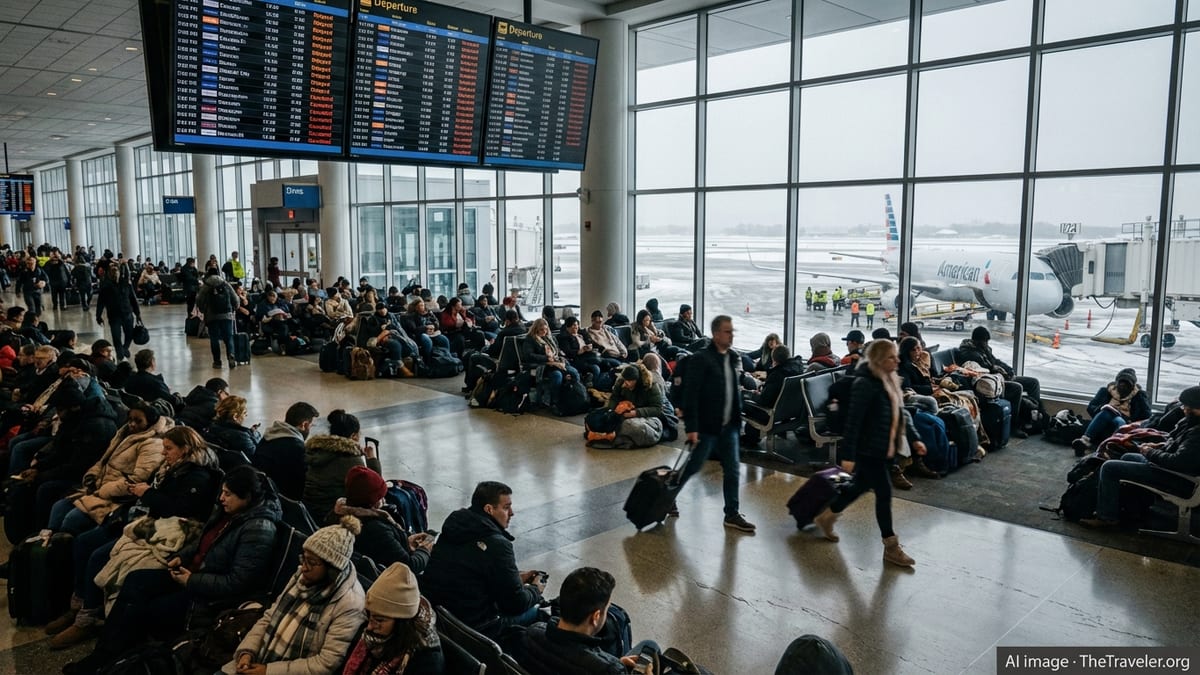
Residual disruption lingers across New York’s busiest hubs
Flight tracking data and airport status boards for John F. Kennedy International, LaGuardia and Newark Liberty on July 29 show elevated delays on American Airlines services following the nationwide ground stop linked to the carrier’s technology failure the previous evening. While most American operations have resumed, knock-on effects from aircraft and crew being out of position are still being reflected in late departures, rolling delays and scattered cancellations.
Publicly available flight histories for American routes such as New York to Los Angeles and New York to Miami indicate departure delays that began building late on July 28 and carried into the morning of July 29. Even when flights are operating close to schedule, customers report longer lines at check in, at rebooking desks and at security checkpoints as crowds from disrupted services work their way through the system.
American is a smaller player than some rivals at New York’s airports, but the carrier still operates a dense schedule from JFK and LaGuardia. Industry observers note that any widespread outage affecting a large domestic airline can ripple through congested hubs like New York, where tight turnaround times and limited spare gate capacity make it difficult to absorb sudden schedule changes.
Travel forums and social media posts from passengers at JFK and LaGuardia describe evening departures pushed back by hours, aircraft held at gates while crews await clearance to depart, and connections missed when inbound flights arrive well outside their scheduled arrival windows. Some travelers reported choosing alternate airlines or ground transport after learning of the ongoing disruption.
Technology failure triggered brief nationwide ground stop
According to published coverage, American Airlines experienced a significant technology issue on July 28 that affected connectivity to some of its core systems. In response, the Federal Aviation Administration issued a temporary ground stop on American flights that were not already in the air while the problem was being addressed. The disruption occurred during a busy summer travel period, increasing the number of passengers caught up in delays.
American indicated in public statements cited by national and local outlets that the underlying technology problem was resolved on Tuesday evening and that operations were resuming. However, the nationwide halt of departures, even for a relatively short window, led to hundreds of delayed flights across the carrier’s network. Once a disruption of that scale ripples through peak-time schedules, it can take into the following day for aircraft rotations, crew duty hours and passenger itineraries to be fully realigned.
A similar pattern emerged during past aviation technology incidents, including the widely reported global IT disruptions in 2024, when large carriers needed more than a day to recover normal operations after ground stops. Analysts point out that modern airline networks are tightly integrated across fleets, crews and airport slots, meaning an outage at a central system can quickly cascade from one hub to another.
In the current episode, New York’s role as both an origin and a key connecting point for American’s domestic and international services helped ensure that JFK and LaGuardia felt the effects of the outage even though it did not originate in the region. Delays on inbound aircraft from American hubs such as Dallas Fort Worth and Charlotte left New York departures without their assigned aircraft or required crew members.
Passengers navigate rebooking, missed connections and compensation rules
The technology failure and resulting delays have pushed many New York area travelers into last minute itinerary changes. Reports from passenger advocacy groups and online travel communities describe individuals missing onward flights from New York to destinations in Europe, Latin America and the U.S. West Coast after their initial American segments arrived late or were cancelled outright.
Under current U.S. Department of Transportation guidance for controllable airline delays, technology and IT system outages generally fall under the carrier’s responsibility. Consumer-facing summaries of these rules indicate that passengers delayed by such events may be entitled to free rebooking on the airline’s next available flight, meal vouchers for longer delays, hotel accommodations when an overnight stay becomes necessary, and in some cases a refund option when a trip is significantly disrupted.
Travel experts recommend that affected passengers retain documentation of delay notifications, boarding passes and receipts for out of pocket expenses in order to support any requests for reimbursement. Many also advise checking both airline mobile applications and airport departure boards, as schedules can change quickly while carriers work through backlogs.
At New York airports, long lines have been reported at customer service counters as passengers seek rebooking and written confirmation of their rights. Some travelers have turned to phone and online chat channels rather than remaining in physical queues, though call wait times can also lengthen during major disruptions when thousands of customers seek assistance at once.
Operational recovery complicated by summer traffic and weather
The American Airlines technology outage arrived during the peak of the summer travel season, when New York airports already operate near capacity on many days. Aviation operations data and FAA advisories for July show that traffic levels through JFK, LaGuardia and Newark are running high, leaving airlines and air traffic managers with limited flexibility to absorb unexpected disruptions.
In addition to heavy demand, afternoon and evening thunderstorms along the U.S. East Coast are a recurring feature of late July operations, periodically triggering ground delay programs, reroutes and extended taxi times. When combined with a carrier specific technology failure, these routine weather and congestion challenges can magnify the impact on travelers, particularly those with tight connections or complex itineraries.
Industry analysts note that carriers typically build some extra time into aircraft turnarounds and connect times during the summer, but this buffer can quickly be exhausted when a widespread outage halts departures across a network. As operations resume, airlines must also manage federal crew duty limits, which can prevent staff from operating later flights if they have already reached maximum work hours while waiting out earlier delays.
As of July 29, publicly accessible flight status boards indicate that many American flights in and out of New York are operating, but with a higher than normal share of services showing delays of 30 minutes or more. Travelers with flights over the next one to two days are being encouraged by travel commentators and airport advisories to monitor their itineraries closely and arrive early at the airport.
What New York travelers can expect in the coming days
Aviation consultants interviewed in published reports suggest that if no further technology issues emerge, American should be able to largely normalize its schedule within a day or two, although isolated delays and equipment swaps may persist as the carrier rebalances aircraft and crews. For passengers starting or connecting in New York, that means conditions are likely to gradually improve, but same day changes and tight connections may remain risky in the short term.
Travel planners recommend that those with flexibility consider building longer layovers into itineraries that involve American flights through New York this week, particularly on routes that rely on a single daily frequency. Where possible, selecting earlier departures in the day can provide more rebooking options if another disruption occurs.
For those already ticketed, experts advise continuing to use official airline channels to check the latest status rather than relying solely on third party apps or screenshots shared online. With schedules still in flux following the outage, real time updates from the carrier and airport displays remain the most reliable indicators of whether a particular New York flight is likely to depart on time.
While the immediate technology problem has been resolved, the episode underscores how quickly a systems failure at a major carrier can affect travelers far beyond the airline’s primary hubs. For New York City area passengers, the events of July 28 and 29 provide another reminder to plan for contingencies and to stay informed whenever large scale operational disruptions make headlines.