


More news on this day
Peru-bound travelers at Hartsfield-Jackson Atlanta International Airport say a late-night cancellation and limited rebooking options left them stuck for days in one of the world’s busiest hubs, underscoring how a single disruption can ripple across already crowded international schedules.
Get the latest news straight to your inbox!
Cancellation turns overnight delay into days-long ordeal
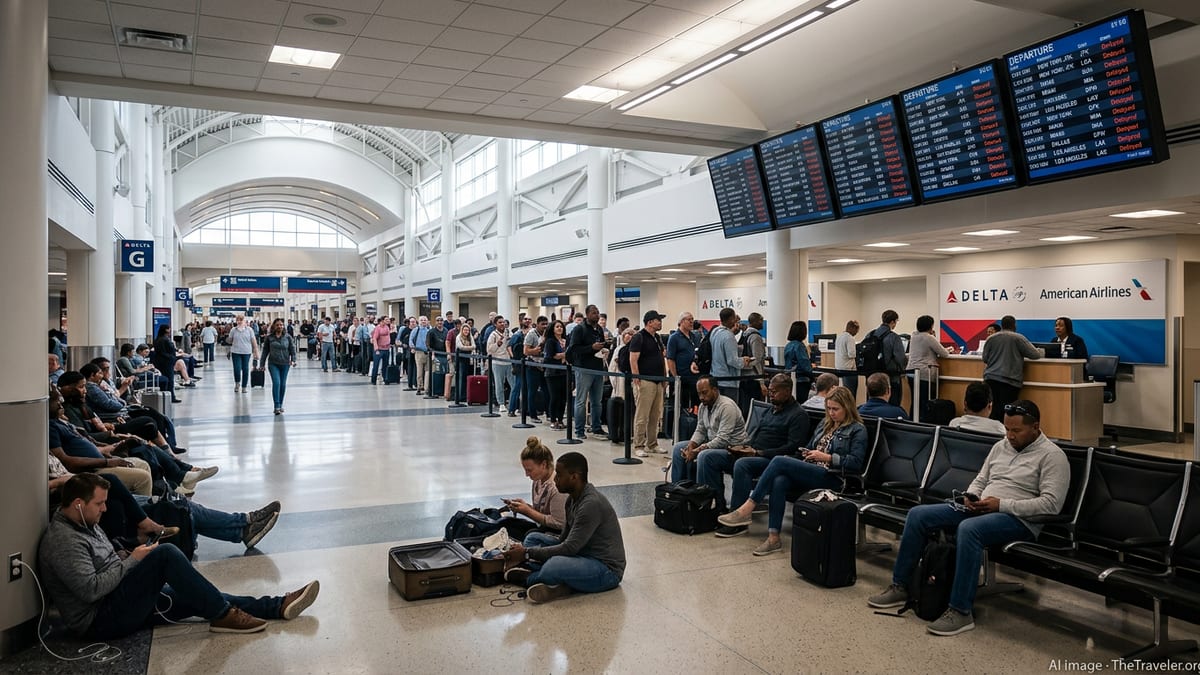
Reports from Atlanta indicate that a scheduled overnight departure to Peru was canceled after a mechanical issue, stranding passengers who expected to be in Lima within hours. Instead, many found themselves sleeping in terminal chairs and along concourse walls while waiting for scarce replacement seats on subsequent flights.
Coverage from local Atlanta outlets describes long lines at service counters and repeated schedule changes as airline staff attempted to rebook travelers onto later departures to Peru and connecting routes through other hubs. Some passengers reported being placed on flights several days after their original departure time, describing the situation as a blur of shifting gate information and limited communication.
Because the affected service was an international route operating late at night, options were constrained by the small number of daily flights between Atlanta and Lima compared with higher-frequency domestic routes. Publicly available schedule data show only a handful of nonstop or codeshare services on this corridor each day, meaning one canceled aircraft can push hundreds of travelers into an already tight system.
The disruption follows a broader pattern of operational strains at major hubs where high traffic volumes, full flights, and tight aircraft rotations often leave little margin to recover quickly from mechanical problems or crew-time limits.
Limited rebooking options and missing bags add to frustration
Passengers attempting to reach Peru from Atlanta described multilayered challenges beyond the initial cancellation. In addition to long waits for rebooking, several travelers reported difficulty accessing checked luggage that remained in the airline’s control during the extended delay. For those without changeable clothing, medications, or work equipment in their carry-on bags, being unable to retrieve checked items added to the stress of an unplanned multi-day stay in the terminal or at nearby hotels.
Published coverage notes that some travelers were rebooked on an afternoon departure to Peru, only to face further delays and uncertainty over whether they would actually depart that day. With international flights often departing late in the evening and arriving before dawn, even modest schedule changes can force passengers to lose an entire travel day, particularly when onward domestic connections or tour departures are involved.
For visitors bound for Peru’s peak tourism destinations such as Cusco or Machu Picchu, even a one- or two-day delay can mean losing prepaid hotel nights, missed guided excursions, or forfeited rail and entrance tickets tied to specific dates. Travelers stuck in Atlanta reported anxiously recalculating itineraries and weighing whether to cancel portions of their trips altogether as the backlog dragged on.
Travel forums and social media posts from the episode reflect a recurring theme in modern air travel: once irregular operations begin, passengers often feel responsible for solving their own logistics, even when the initial cause lies in a mechanical problem or crew limitation outside their control.
Passenger protections and refund rules for canceled international flights
The Atlanta disruption has revived questions about what rights travelers actually have when a carrier cancels or significantly alters an international itinerary. Under the U.S. Department of Transportation’s current refund framework, passengers are generally entitled to a cash refund if a flight originating in the United States is canceled or changed in a way the department views as significant, and the traveler chooses not to accept an alternative itinerary.
For international routes, a significant change is often interpreted to include large shifts in departure or arrival time, missed connections that require an overnight stay, or rerouting that substantially alters the journey. While airlines can and do offer travel credits or vouchers, consumer advocates stress that cash refunds remain an option when the airline is unable to operate the original flight as sold.
However, the Atlanta case also illustrates the gap between formal rights and practical outcomes. Even when refunds are available, passengers headed to events, cruises, or fixed-date treks in Peru may have already sunk substantial nonrefundable costs into their plans. Rebooking on another airline at the last minute can be prohibitively expensive, and hotel or tour providers often maintain strict cancellation timelines.
Travel specialists note that the burden remains on passengers to document what happened. Keeping boarding passes, bag tags, hotel receipts, and written records of updated schedules can help support refund requests or travel insurance claims once travelers reach their final destination or decide to abandon the trip.
Why Atlanta–Peru flights are particularly vulnerable to disruption
Industry data and public timetables highlight how the Atlanta to Lima corridor, although important, operates with relatively few daily frequencies compared with more heavily served international routes. Several of the flights involve codeshare arrangements in which a U.S. carrier markets seats on a South American partner operating the aircraft, creating additional coordination demands when irregular operations occur.
Mechanical issues on a single widebody aircraft, or a late arrival from a previous segment, can cascade into missed departure slots and crew scheduling conflicts. When that happens at a time of day when there are no more onward departures, passengers often must wait until the next day’s schedule, and in peak travel seasons those flights may already be close to full.
Recent months have also seen high overall demand for travel across Latin America, as leisure and visiting-friends-and-relatives traffic grows. Airlines have worked to restore and expand capacity, but utilization of aircraft remains intense, leaving limited spare planes available for so-called rescue operations when something goes wrong at a hub like Atlanta.
For passengers, this means that even a well-connected global airport may offer fewer realistic backup options than expected on specific international routes. The multi-day wait faced by some Peru-bound travelers at Hartsfield-Jackson underscores how vulnerable niche yet popular long-haul corridors can be to isolated operational failures.
Practical steps for travelers heading to Peru through Atlanta
Travel experts say the events in Atlanta provide a timely reminder for anyone planning South American trips that begin or connect through major U.S. hubs. One key recommendation is to avoid tightly stacked itineraries on the inbound leg to Peru when possible, particularly if onward journeys involve separate tickets on domestic Peruvian carriers or time-sensitive tours.
Booking longer layovers before critical connections, such as flights onward to Cusco or early-morning rail departures to Machu Picchu, can provide a cushion if the initial Atlanta to Lima segment is delayed. Travelers are also encouraged to keep essential medications, a change of clothes, and chargers in carry-on bags so that a lost night at the airport does not become a health or safety risk.
Independent travel insurance with robust trip-interruption coverage can help offset the cost of extra hotel nights, replacement flights, and missed tour components when disruptions like the Atlanta cancellation occur. Policies vary, so travelers are advised to review exclusions related to mechanical issues, schedule changes, and preexisting conditions before purchasing.
Finally, the Atlanta incident reinforces the value of proactively monitoring flights in the days before departure and again on the day of travel. Using both airline apps and independent tracking tools can sometimes reveal early signs of schedule changes, aircraft swaps, or inbound delays, giving Peru-bound travelers a small but significant head start in rebooking or adjusting plans before a terminal fills with stranded passengers.