


Aruba is compact, safe, and easy to navigate, but getting from Queen Beatrix International Airport to your hotel on a budget is not as straightforward as it first appears. The public bus system, Arubus, is excellent along the main hotel strip, yet its luggage rules and routing mean it is not a simple airport shuttle for most visitors. This guide explains exactly how Arubus fits into an airport-to-hotel journey, what luggage you can realistically bring on board, where the hotel-area routes run, and when a taxi, shuttle, or rental car is a more practical choice.
Get the latest updates straight to your inbox!
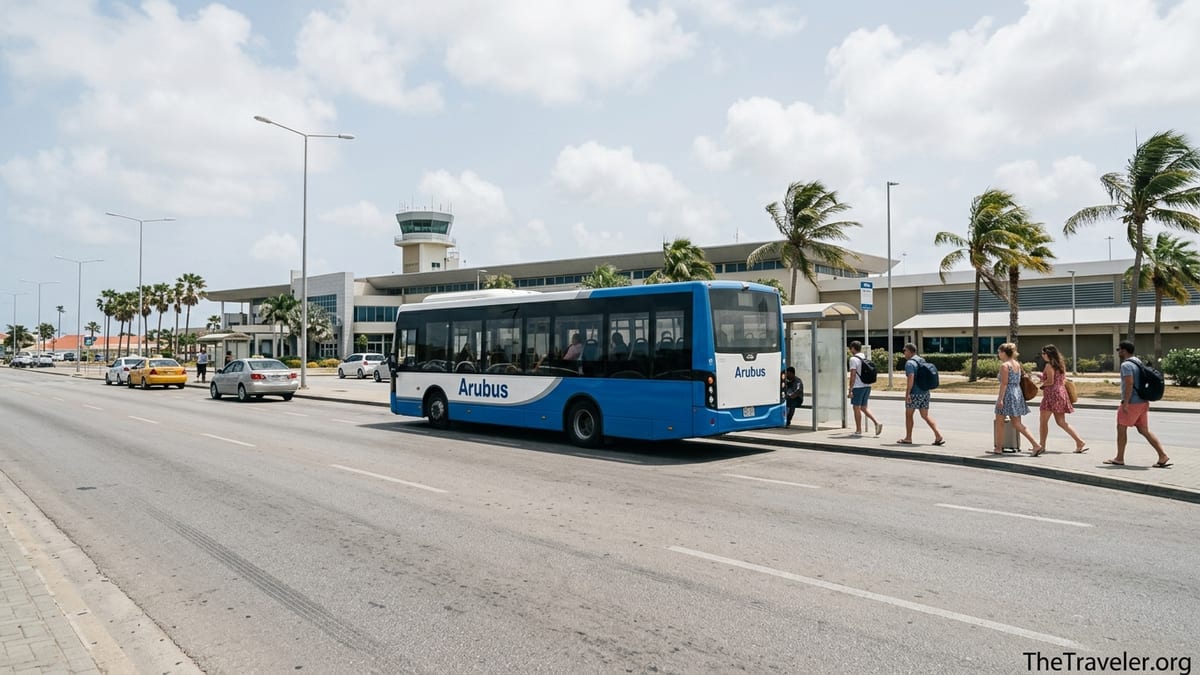
How Arubus Fits Into an Aruba Arrival
Arubus is Aruba’s public bus network, operating modern, air-conditioned buses that link Oranjestad with the main hotel zones such as Eagle Beach, Palm Beach, and Arashi, as well as residential areas and San Nicolas. For visitors, the system is best thought of as a cheap spine that runs between downtown Oranjestad and the western resort beaches, not as a door-to-door airport transfer. Single fares on key routes are typically a few US dollars per ride, paid in cash to the driver, making it one of the most affordable ways to move around the island’s tourist corridor compared with taxis that can cost several tens of dollars per trip.
Queen Beatrix International Airport sits just southeast of Oranjestad on the main coastal road. There is no dedicated airport-city bus line. Instead, several regular routes pass on the main road near the airport entrance, and from there it is a short walk into Oranjestad or onward to the central bus terminal. This reality surprises many first-time visitors who expect a clearly signposted airport bus stop directly outside arrivals. In practice, what you get is a normal roadside stop on the main road, used mainly by locals and carry-on-only travelers who are comfortable walking with their bags in the heat.
The biggest constraint for using Arubus on arrival is luggage. Official guidance and on-the-ground practice both make it clear that large suitcases are not allowed in bus aisles for safety reasons, and the network is designed primarily for local commuters rather than fully loaded vacationers. If you are arriving for a week at a high-rise resort with two 50-pound checked bags per person, you should assume you will be using a taxi or prebooked shuttle from the airport instead of the public bus, even if you plan to ride Arubus during the rest of your stay.
That does not mean the bus is irrelevant for airport days. Many travelers still weave it into their arrival or departure, for example by taking a taxi from the airport to a hotel in Eagle Beach, then using Arubus for the rest of their sightseeing, or by spending a luggage-free final afternoon in Oranjestad and hopping the bus around town before heading back to the airport by taxi. Thinking of Arubus as a flexible, budget-friendly layer that complements your airport transfer, rather than replaces it, is the most realistic way to approach planning.
Where to Catch the Bus near Queen Beatrix Airport
There is no Arubus stop directly at the Queen Beatrix terminal doors. Instead, buses run along the main road just outside the airport area, on the coastal route into Oranjestad. After exiting the arrivals hall, you first pass the taxi rank and parking area, then continue toward the main road that leads west into town. The walk to the nearest useful stop is typically around 5 to 10 minutes depending on your pace and the exact bus you are aiming for. In Aruba’s midday sun and humidity, that can feel longer, especially if you are carrying bags and have just stepped off a long flight.
In practice, travelers who use the bus from the airport typically do so with light luggage only: one backpack or a small roller bag that can fit neatly on their lap. An example would be a solo traveler arriving on a regional flight with just a carry-on, walking out of the terminal, crossing to the main road, and catching a bus into Oranjestad for the price of a standard urban fare. Once in the central bus station, they can easily transfer to the hotel-area line or to another route serving a guesthouse in a residential neighborhood.
Because the stop near the airport is essentially just another roadside Arubus stop, there are no special ticket machines, airport information staff, or sheltered waiting areas set up specifically for visitors. Timetables and route numbers are posted, but service patterns and line designations can be confusing if you have not looked them up in advance. For this reason, many budget-conscious visitors instead take a taxi into Oranjestad or directly to Eagle Beach, then start using Arubus later, when they have had time to study the route map in a more relaxed setting.
On the way back to the airport, the equation can look different. Some travelers ending a stay in Oranjestad or nearby lodging choose to roll a single small bag to the roadside stop and catch a bus that passes by the airport access road, then walk the final stretch into the terminal. This works best in the early morning or late afternoon when temperatures are lower, and only if your luggage is compact enough to comply with Arubus policies and not inconvenience local riders heading home from work or school.
Key Arubus Routes for Hotel Areas
Once you are in Oranjestad, Arubus becomes genuinely useful for reaching the island’s main hotel zones. The central bus terminal sits near the waterfront downtown, and from there the core tourist service is the Line 10 family, which runs north through Eagle Beach and Palm Beach along the hotel strip. Variants such as 10, 10A, and 10B cover slightly different patterns but collectively make it easy to reach most high-rise and low-rise resorts along the west coast, as well as beaches like Malmok and Arashi further north.
As an example, a couple staying at a mid-range hotel on Eagle Beach can walk to the bus stop on the main road, catch Line 10 toward Oranjestad for a couple of dollars each, and be downtown in about 15 to 20 minutes depending on traffic. From there they might stroll the pastel-colored streets, visit supermarkets or local eateries, and then ride the bus back in the evening. Similarly, guests at a large Palm Beach high-rise can hop on the same line to head downtown or to transfer to another route if they want to explore beyond the hotel strip.
Arubus also serves a string of smaller stops that are convenient for apartment rentals, boutique hotels, and beach access points. For example, a family staying in a self-catering condo a few blocks behind Eagle Beach can walk 5 to 10 minutes to the main road, catch an Arubus down to Oranjestad for groceries, and return with lighter bags earlier in the day when buses are less crowded. Many budget travelers plan their lodging specifically within a short walk of these hotel-area bus stops so that they can avoid renting a car for their entire stay.
Beyond the main Line 10 corridor, additional routes radiate out from Oranjestad to Noord, San Nicolas, and residential districts inland. These can be helpful if you are staying in an Airbnb away from the beachfront hotels, but timetables may be less frequent, particularly on weekends and evenings. For a visitor whose priority is easy, low-cost access to beaches and downtown dining, choosing accommodation along the Oranjestad to Palm Beach bus corridor keeps Arubus at its most practical and predictable.
Luggage Limits and Practical Realities on Arubus
Arubus formally restricts large luggage on board. Bags must not obstruct the aisles or doors and should be able to sit on your lap or under your seat without impacting other passengers. In practice, this means small backpacks, daypacks, and compact carry-on rollers used like cabin luggage are generally acceptable, while full-size checked suitcases are not. The policy exists both for safety in the event of sudden stops and for passenger comfort on often busy local routes.
A real-world example illustrates the difference. A weekend visitor flying in with a single 40-liter backpack can realistically walk from Queen Beatrix Airport to the roadside stop, ride into Oranjestad on a standard route, and then transfer to the Line 10 hotel bus to Eagle Beach, all for the cost of two bus fares. By contrast, a family of four arriving for a week-long stay at a Palm Beach resort with four large rolling suitcases plus carry-ons would struggle to fit their luggage without blocking aisles. In that situation, most drivers will not allow the group to board, and even if they did, it would be inconsiderate to local riders.
Even smaller rolling suitcases can be awkward on busy buses, especially at peak times when locals are commuting to and from work or school. Buses serving downtown and the hotel corridor are popular throughout the day, and standing passengers are common in high season. Trying to keep two or three hard-shell carry-on cases secure in such conditions is stressful, particularly on the curves and speed bumps along the coastal road. For that reason, many seasoned travelers treat Arubus as a no-luggage or one-small-bag-only option, using it mainly once they are already checked into their hotel and have stored their main suitcases.
Because rules and enforcement can evolve, it is always wise to confirm the latest luggage guidance shortly before travel. However, over recent years the pattern has been consistent: Arubus is designed to carry people, not large holiday baggage. If your packing list looks more like a moving day than a weekend city break, planning to use a taxi, shuttle, or rental car between the airport and your accommodation is the safer assumption.
Timing, Frequency, and How Long Trips Really Take
On paper, distances in Aruba are short. Queen Beatrix Airport to downtown Oranjestad is a matter of a few kilometers, and Oranjestad to Palm Beach is only a modest drive along a single main corridor. In a taxi, these hops often take around 10 to 20 minutes depending on traffic and the time of day. By bus, they take a little longer once you factor in walking to stops, waiting for the next departure, and any transfers, but are still manageable for most day-to-day sightseeing.
Core Arubus routes along the hotel strip typically run fairly frequently during the day, with intervals on the order of every 15 to 30 minutes on the main Line 10 variants when demand is high. Early mornings, late evenings, Sundays, and public holidays can see reduced service or longer gaps, so it is important not to assume that buses will appear on an urban subway-style schedule at all hours. Many visitors aim to finish beach days and shopping trips by early evening, when buses are still running commonly enough to feel convenient, and switch to taxis if they plan late-night dinners or nightlife.
As a practical example, consider a budget traveler staying in Palm Beach who wants to explore Oranjestad on a weekday. They might walk to the nearest hotel-strip stop, catch a Line 10 bus downtown around 10:00 a.m., spend the late morning wandering the city and visiting supermarkets, and then return around 3:00 p.m. on another Line 10 bus. Each leg of the journey might take 20 to 30 minutes door to door, including short walks, and cost only a few dollars, leaving more of the daily budget available for meals and activities.
Airport days add extra timing pressure. With international flights, especially those bound for the United States, airlines and the airport recommend arriving well in advance for security and border checks. For most visitors, that time buffer makes relying on a multi-step public bus journey to the airport too risky. Even if a route technically passes close to the airport, any missed bus or unexpected delay could quickly eat into your check-in margin. Using a taxi or prebooked shuttle on departure day, even for those who have relied on Arubus all week, is usually the more stress-free option.
Costs: Bus vs Taxi vs Shuttle from the Airport
From a pure price perspective, Arubus is by far the cheapest way to travel the Oranjestad to hotel-area corridor. A single ticket on a local route is just a few US dollars per person, and some visitors buy day or multi-ride passes when they know they will be hopping between beaches and town several times. By comparison, official taxi fares from Queen Beatrix Airport are fixed by zone and can run to several tens of dollars for a single ride to the main hotels, though the cost can be shared among up to four passengers.
For example, a couple arriving together and taking a taxi from the airport directly to a Palm Beach high-rise hotel might pay a fare in the region of forty US dollars for the vehicle. If they instead used Arubus and could comply with the luggage rules, they would pay only a few dollars each, but would need to walk to the roadside stop, possibly wait in the heat, and then transfer at the Oranjestad terminal before eventually reaching their hotel stop along the Line 10 corridor. For many, especially after a long flight, the time and comfort trade-off makes the taxi feel like money well spent.
Shared shuttle operators and hotel-arranged transfers sit between these extremes. A resort on Eagle Beach, for instance, may partner with a local operator so that guests can prebook a seat on a coach that meets their flight and delivers them to the property for a lower per-person fee than a private taxi. The ride can take longer as the bus may stop at multiple hotels, but all luggage is accommodated, and the service is designed for tourists rather than commuters. Budget travelers who still want structure and luggage handling often find these shuttles a comfortable compromise.
For those staying longer or planning to explore beyond the resort corridor, rental cars can also make economic sense despite the higher upfront cost. A compact car hired for several days allows easy transfers between the airport, hotels, and lesser-visited beaches or inland sites, and can end up cheaper than a string of taxis if you are moving around daily. Arubus then becomes a supplement rather than the backbone of your transport, used perhaps for a relaxed, car-free outing to downtown Oranjestad when you prefer not to drive.
When the Bus Is Not Practical for Tourists
There are clear scenarios in which Arubus is simply not the practical choice from Queen Beatrix Airport. The most straightforward is when you have large or multiple suitcases, as is common for families, long-stay visitors, or those traveling with sports equipment like golf bags or dive gear. With the bus’s luggage restrictions and the need to keep aisles clear, trying to board in such circumstances can be unrealistic, and a taxi or shuttle built around spacious trunks and under-floor storage is the better fit.
Arrival time also matters. Late-night or very early-morning landings may not line up well with the Arubus timetable, especially on weekends or holidays when headways are longer and some routes may run reduced schedules. After clearing immigration and customs, travelers can easily find themselves standing at the roadside in the dark, uncertain when the next bus will arrive. In that situation a taxi from the rank just outside arrivals or a prebooked transfer waiting with a sign is far more dependable and comfortable.
Destination is another deciding factor. If you are staying in a residential pocket of Noord, inland from the main hotel strip, the nearest Arubus stop may be a long walk from your accommodation, especially with luggage. Similarly, guesthouses in less central parts of San Nicolas or scattered Airbnb rentals off the main roads may not be within an easy stroll of any frequent bus route. In these cases, even if you could technically link a series of bus rides and walks from the airport, the combined time and effort would outweigh the savings compared with a direct taxi, ride-hail, or rental car.
Finally, personal comfort and mobility play a role. Travelers with reduced mobility, families with young children in strollers, or anyone sensitive to heat will likely find the walks between the airport, bus stops, and hotels challenging. Aruba’s sun is intense, and shade is limited on some stretches of road. Even seasoned backpackers often find that after a long international flight, dealing with bus transfers and roadside waits is more stress than it is worth, particularly at the start of a vacation meant for relaxation.
The Takeaway
Arubus is a valuable tool for budget-conscious travelers in Aruba, but it is not a universal answer to the airport-to-hotel question. Its strength lies in connecting Oranjestad with the main hotel corridor along Eagle Beach and Palm Beach at very low cost, once you are already settled and traveling light. For day-to-day outings between your resort, downtown, supermarkets, and beaches, it can save you a meaningful amount of money over the course of a week-long stay while providing a glimpse of local daily life.
From Queen Beatrix International Airport itself, however, luggage limits, the lack of a dedicated terminal stop, and the need to walk out to the main road make Arubus a niche choice best suited to solo or couple travelers with small bags and a high tolerance for heat and minor inconvenience. For many visitors, especially families and those carrying full holiday luggage, a taxi or shared shuttle on arrival and departure, combined with strategic use of Arubus once the bags are in the hotel room, offers the best balance between budget, comfort, and reliability.
Planning with these realities in mind allows you to make the most of both options. Build Arubus into your itinerary for inexpensive trips along the hotel strip and into Oranjestad, but do not hesitate to budget for taxis or shuttles when timing, luggage, or comfort make them the clearly more practical choice. That way, your first and last impressions of Aruba are relaxed, and your days in between can be as budget-friendly or adventurous as you like.
FAQ
Q1. Can I take an Arubus directly from Queen Beatrix Airport to my hotel? Most visitors cannot. There is no dedicated airport shuttle, and buses stop on the main road outside the airport, not at the terminal doors. With luggage limits and the need for at least one transfer through Oranjestad, Arubus from the airport is practical mainly for light-packers comfortable walking in the heat.
Q2. Does Arubus allow suitcases on board? Only small bags that fit on your lap or under your seat are realistically accepted. Large or multiple checked-size suitcases are not allowed because they block aisles and exits, so travelers with full holiday luggage should plan on taxis or shuttles instead of the public bus for airport transfers.
Q3. How do I reach the nearest Arubus stop from the airport? After leaving arrivals, you walk past the taxi rank and parking areas toward the main coastal road that leads into Oranjestad. The nearest useful bus stops are a short walk along or across this road, typically 5 to 10 minutes on foot, which can feel longer in the midday sun, especially with bags.
Q4. Which bus do I take from Oranjestad to the hotel areas? From the central bus terminal in Oranjestad, look for the Line 10 family, including variants like 10, 10A, and 10B. These routes run north along the hotel strip, serving Eagle Beach, Palm Beach, and onward toward Malmok and Arashi, and are the main options for reaching the island’s high-rise and low-rise resort areas by bus.
Q5. How much does the bus cost compared with a taxi from the airport? A single Arubus ride is just a few US dollars per person, while official taxi fares from the airport to the main hotel zones are fixed and typically run to several tens of dollars per vehicle. For a couple, a direct taxi to Palm Beach might be around forty dollars total, whereas the equivalent journey by bus, if feasible with your luggage, would cost only a fraction of that but involve more time and effort.
Q6. Is Arubus safe for tourists to use? Yes. The buses are widely used by locals, reasonably modern, and considered safe during normal service hours. As in any destination, you should keep an eye on your belongings, avoid flashing valuables, and choose seats where you feel comfortable, but incidents involving visitors on Arubus are uncommon, especially on the busy hotel-corridor routes.
Q7. How late do the buses run between Oranjestad and the hotel strip? Service is reasonably frequent during the day and into the early evening, but buses become less frequent at night, and the last runs are typically late in the evening rather than after midnight. If you plan to stay out late at restaurants, bars, or casinos, it is sensible to budget for a taxi back to your hotel instead of relying on a late-night bus.
Q8. Can I pay the bus fare with a credit card? No, you should be prepared to pay in cash. Drivers generally accept local currency and small US dollar bills, and change is often given in Aruban florins. Carry a few low-denomination notes specifically for bus fares so you are not relying on large bills that may be difficult for the driver to change.
Q9. Is Arubus a good option if I am staying in Noord or San Nicolas? It can be, but it depends on your exact address and how far it is from the nearest stop. Buses from Oranjestad do run toward Noord and San Nicolas, yet many residential streets and scattered rentals are not within an easy, shaded walk of a frequent route. In those cases, Arubus may still be useful for excursions, but taxis or a rental car are often more practical for airport transfers and daily movements.
Q10. What is the best overall strategy for using Arubus on a budget trip? A practical approach is to use a taxi or shuttle for airport transfers if you have more than a small backpack, then rely on Arubus for inexpensive travel along the Oranjestad to Palm Beach corridor once you are checked into your hotel. Choosing accommodation within a short walk of a hotel-strip or downtown bus stop maximizes the network’s usefulness while letting you avoid car rental costs for much of your stay.