


More news on this day
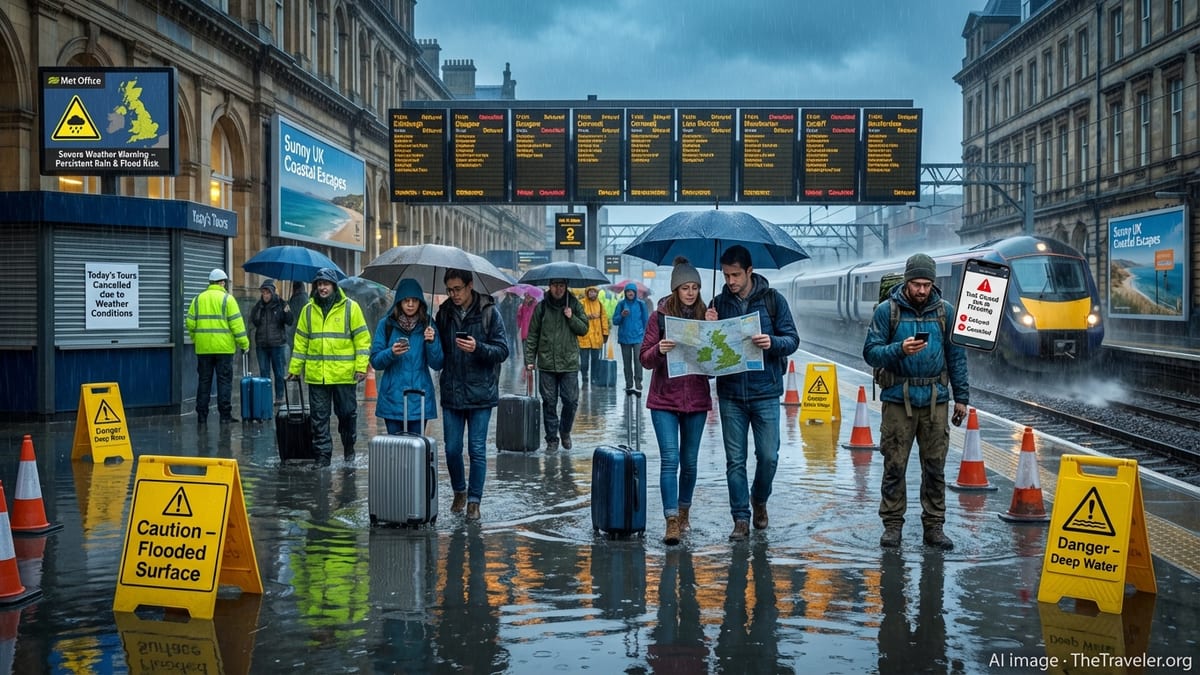
Severe disruption across key rail corridors in the Midlands and North of England has left thousands of passengers stranded, with reports indicating a sharp rise in cancellations, missed hotel stays and abandoned itineraries at the height of the UK’s summer tourism season.
Get the latest news straight to your inbox!
Major Routes Paralysed at Peak Holiday Period
Publicly available rail updates show widespread disruption on routes serving Birmingham, Manchester, Leeds, Sheffield and surrounding hubs, with signalling failures, overhead line problems and congestion combining to halt or heavily curtail services. In several areas, rail operators have issued “do not travel” warnings, urging customers to postpone journeys unless absolutely essential.
Reports from passenger forums and regional news outlets describe packed concourses, long queues at information desks and trains terminating short of their planned destinations. Travellers have spoken of journeys taking double their scheduled time, while some services between the Midlands and northern England have been cancelled outright for large parts of the day.
According to published performance statistics and recent commentary, infrastructure weaknesses, ageing assets and a network operating close to capacity have increased the risk that individual incidents cascade into system-wide disruption, particularly on cross-country and intercity routes that serve both commuters and tourists.
Industry documents on operational regulation indicate that when major disruption is formally declared, timetables can be stripped back to a basic skeleton service while control centres attempt to restore normal running. For visitors who rely on fixed check-in times, excursions and onward connections, this reactive approach can translate directly into lost holiday time and unexpected costs.
Tourism Hotspots Across the Midlands and North Feel the Strain
The Midlands and North have marketed themselves heavily as rail-accessible destinations, with cities such as Manchester, Liverpool, Leeds, York and Birmingham positioning frequent, car-free rail links as a key part of their appeal. Current disruption has therefore hit at the core of the region’s tourism proposition, particularly for visitors arriving without a car.
Hotel operators and attraction managers quoted in recent regional business coverage describe a spike in late arrivals, no-shows and same-day cancellations, especially for weekend city-break trade. Heritage railways and countryside destinations that depend on connecting mainline services also report reduced footfall when rail access is impaired, echoing historic patterns seen after past rail-related disruptions in central England.
In the North West, publicly accessible incident logs and passenger accounts highlight particularly severe delays around Manchester, a gateway city for popular destinations including the Lake District, Peak District and North Wales. With control issues affecting signalling across a wide area, delays have rippled outward, affecting both intercity and local stopping services.
East of the Pennines, constraints on trans-Pennine and cross-country routes have complicated itineraries that link Yorkshire cities with the Midlands and the North East. Travellers attempting multi-city trips by rail report having to abandon ambitious routes and focus their stays on a single urban base, cutting out smaller destinations that rely on passing tourism.
International Visitors Confront Uncertainty and Extra Costs
The disruption has been particularly challenging for international tourists, who often plan tightly timed itineraries based on advertised rail frequencies and journey times. Travel forums over recent days feature accounts from visitors facing missed tours, forfeited advance-purchase tickets and urgent rebooking of hotels when trains fail to run.
Some long-haul visitors report difficulty understanding the patchwork of refunds and compensation available across different train companies, with terms varying according to ticket type and whether the journey was abandoned or merely delayed. Package tourists whose rail travel is bundled into broader arrangements have in some cases been referred back and forth between rail operators and tour providers.
At airports such as Manchester and Birmingham, where rail connections form a core element of surface access, delays and cancellations have prompted more travellers to turn to taxis, ride-hailing services and car rentals at short notice. This surge in demand has in turn increased road congestion around terminals and pushed up prices, adding to the overall cost of disruption for inbound visitors.
Travel advisers and consumer groups quoted in recent coverage recommend that visitors build additional buffer time into their journeys, avoid booking last trains of the day for key connections and keep flexible accommodation options where possible. However, for many travellers visiting during a limited holiday window, the current level of disruption allows little room to fully mitigate risk.
Underlying Network Pressures Exposed Again
The latest turmoil has renewed scrutiny of long-running debates over rail investment in the Midlands and North. Government strategies such as the Integrated Rail Plan for the North and Midlands and proposals under the Northern Powerhouse Rail banner have repeatedly promised faster, more reliable connections between major cities, yet elements of these schemes have been delayed, reshaped or scaled back.
Transport commentators note that the current disruption highlights how dependent tourism growth has become on an infrastructure base that was not designed for today’s volumes and speeds. With key intercity and regional corridors already busy on a typical weekday, there is limited spare capacity to absorb incidents during holiday peaks, severe weather or infrastructure failures.
Recent discussions around regional funding levels have underlined disparities in per-head transport investment between London and regions such as the East Midlands and the North of England. Tourism businesses argue that unreliable rail services risk undermining years of marketing aimed at persuading visitors to choose rail over domestic flights or long car journeys.
Network planning documents for 2026 point to continuing efforts to modernise signalling, electrify more routes and improve resilience to extreme weather. Yet industry analysts caution that benefits will take time to be realised, and that disruption may in fact increase temporarily as major engineering works proceed, further complicating travel for domestic and overseas tourists.
Travel Industry Adjusts as Peak Season Continues
As the summer season progresses, the wider travel industry is moving quickly to adjust. Coach operators on intercity routes between London, the Midlands and the North report heightened demand from rail passengers seeking more predictable journey times, even if road congestion can create its own delays.
Domestic tour organisers are revisiting itineraries to reduce dependence on tightly timed rail hops between multiple destinations. Some are shifting to hub-and-spoke models that base groups in one city and use shorter day trips, allowing more flexibility if trains do not operate as planned.
City tourism bodies are updating visitor information to feature real-time guidance on disrupted lines, alternative stations and coach or tram connections. Publicly available advice increasingly stresses the importance of checking rail status on the day of travel, rather than relying on timetables printed weeks or months in advance.
While the immediate priority for travellers is simply reaching their destinations, sector analysts warn that repeated high-profile episodes of disruption risk damaging the long-term perception of rail as a convenient and climate-friendly way to explore the UK. For regions whose visitor economies are built around that promise, the current crisis is a pointed reminder that reliability on the rails is now as critical a tourism asset as world-class attractions or new hotel rooms.