


Rijeka is Croatia’s gritty port city with a creative streak, a place where Austro-Hungarian facades meet industrial cranes, student bars, and a surprisingly relaxed Adriatic vibe. For first-time visitors to Croatia, it makes a clever base: less crowded than Split or Dubrovnik, cheaper in summer, and perfectly positioned between islands, Istria, and the mountains. This guide walks you through what to see, how to get around, where to swim and eat, and how to use Rijeka as a smart starting point for exploring Croatia.
Get the latest updates straight to your inbox!
Where Rijeka Is and Why It Works as a Base
Rijeka sits on the Kvarner Gulf in northern Croatia, roughly halfway between Istria to the west and Dalmatia to the south. It is about 2 hours by highway from Zagreb and 90 minutes from Ljubljana, which makes it easy to slot into a Central Europe itinerary. The city spreads along a deep-water bay backed by green hills, with the main port and old center squeezed between sea and slopes. Once you arrive you quickly see why locals call it a working city first and a tourist destination second.
For first-time Croatia visitors, Rijeka offers a slower, more local introduction than the country’s blockbuster destinations. You still get classic Adriatic elements like clear water and island views, but instead of cruise-ship crowds you are more likely to share the streets with students and shipyard workers. English is widely spoken in cafes and hotels, and prices in summer are usually lower than in Dubrovnik or Hvar, especially for accommodation and restaurant meals.
Rijeka’s location is also ideal for day trips. Within 60 to 90 minutes you can reach island beaches on Krk and Cres, the Italian-influenced coastal towns of Opatija and Lovran, forested hiking areas around Platak, or vineyards in inland Kvarner. Regular buses, island ferries, and a solid road network make these outings straightforward even if you do not rent a car, although a car does add flexibility for smaller coves and villages.
Another advantage is that Rijeka has its own international airport on nearby Krk Island, plus good intercity bus connections with Zagreb, Zadar, Split and other coastal hubs. Trains exist but are slower and less frequent, so most travelers arrive by bus or car. Once you are in the center, the main sights cluster around the waterfront, and you can walk almost everywhere inside 15 to 20 minutes.
Walking the Korzo and Rijeka’s Historic Core
Korzo is Rijeka’s living room, a pedestrian promenade that runs parallel to the port. Paved with smooth stone and lined with 19th century facades, it is where people come to meet friends, have coffee, and watch the world go by. You will find popular cafe terraces such as Cacao or Cafe Al Teatro where a cappuccino is often around 2 to 3 euros, slightly more if you sit in a prime front-row spot and linger for an hour of people watching.
One of the Korzo’s landmarks is the City Clock Tower, an ocher-colored gate topped with a large clock and the Habsburg double-headed eagle. Passing under the arch leads into a small tangle of older streets around the Church of St. Vitus. Keep an eye out for the Rijeka Tunnel entrance near the cathedral: this former World War Two shelter runs beneath the old town and is open as a pedestrian passage. Walking its cool concrete length is a memorable way to cross from the cathedral side back toward the main shopping streets.
Just off Korzo, the Governor’s Palace houses the Maritime and History Museum of the Croatian Littoral, where you can see artifacts from Roman times through the Austro-Hungarian period and traces of Rijeka’s role as a major port. The building itself, with its grand staircase and ornate ceilings, hints at the city’s past prosperity. Nearby, the art-minded might stop in at the Museum of Modern and Contemporary Art in a converted warehouse area, part of Rijeka’s ongoing transformation from heavy industry to culture.
Korzo is at its liveliest in the early evening when locals take a passeggiata-style walk before dinner. If you are arriving on your first day, use this time to orient yourself: note the main bus stops on Jelačićev trg, the tourist information office near the waterfront, and the streets that climb up toward the residential neighborhoods above the center. From here you are also only a short walk to the main city market, a good place in the morning to see fishmongers and fruit stalls and to pick up picnic supplies before a beach trip.
Trsat Castle, City Views, and Nearby Neighborhoods
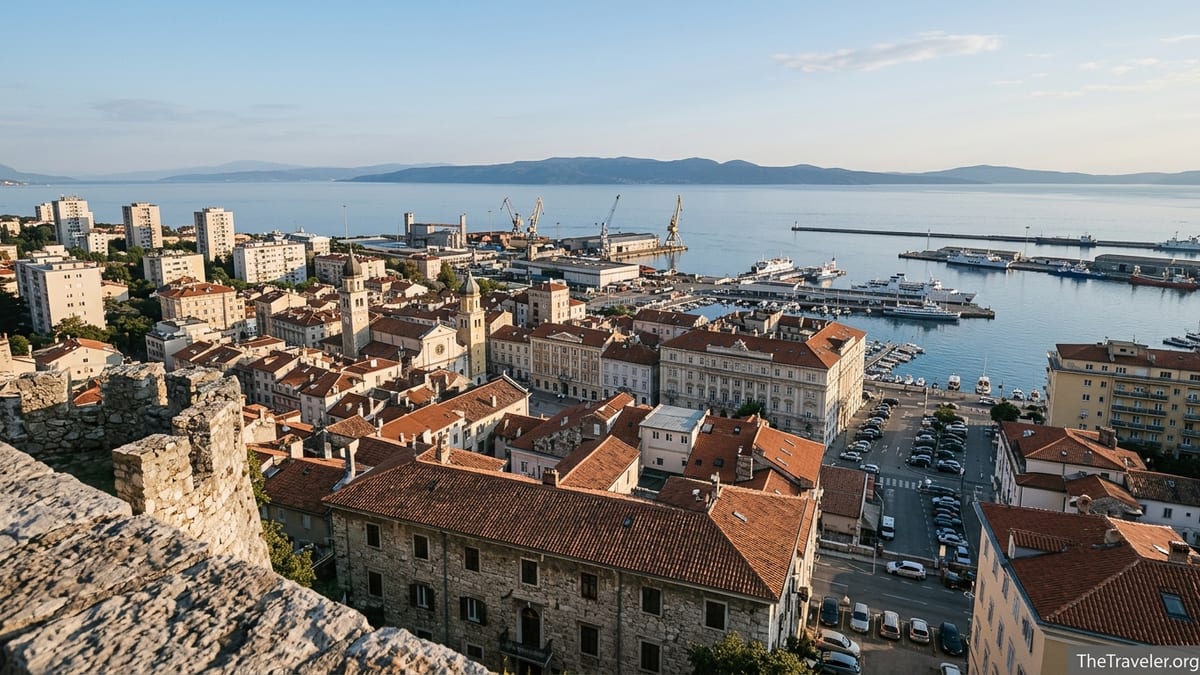
Trsat Castle sits on a hill around 138 meters above sea level, looking down over the port, city roofs, and Kvarner Bay. You can reach it either by city bus from the center or by climbing the famous Trsat Steps, a historic pilgrimage route that starts near the Rječina river and ascends more than 500 stone steps. The climb is steep but broken into terraces with chapels and benches; many visitors take their time and stop for photos as the views open up.
The castle itself is more of a fortified complex than a single tower, with stone walls encircling a courtyard. Once inside, you can walk the ramparts for panoramic views and look across to Krk Island on a clear day. There is a cafe on the terrace where a coffee or simple drink costs only slightly more than in town, a fair trade for the location. In summer, the space often hosts concerts or cultural events, so it is worth checking local posters or asking at your hotel if anything is scheduled during your stay.
Just below the castle is the Sanctuary of Our Lady of Trsat, one of Croatia’s important pilgrimage churches. Even if you are not religious, stepping inside lets you see a different side of local life, with sailors’ votive offerings and thank you plaques hung on the walls. Dress modestly if you plan to enter the church and avoid visiting during services with large tour groups out of respect for worshippers.
The broader Trsat neighborhood has a student energy thanks to nearby university faculties. You will find casual bars, bakeries, and pizzerias where prices are lower than on the Korzo. A typical slice of pizza from a takeaway window might cost around 2.5 euros, and a local beer in a student bar about 3 euros. If you come up to the castle in the late afternoon, consider staying for sunset, grabbing a drink in Trsat, and then taking the bus back down instead of walking the steps in the dark.
Beaches Around Rijeka and the Kvarner Coast
Rijeka itself is a working port, so you do not swim right next to the cranes and cargo ships. Instead, locals head east toward Pećine and Kostrena or west toward Kantrida and Opatija for clearer water and proper beaches. Within the city boundaries, Sablićevo is one of the oldest and most popular spots, a pebbly cove beneath cliffs reachable by a stairway. It has showers and seasonal kiosks, and in peak summer it fills up quickly by late morning.
Further along the coast, the Pećine neighborhood has a chain of small coves that mix concrete sunbathing platforms with pebble sections. You can reach them by city bus or even on foot from the center in about 30 to 40 minutes. West of the stadium, Ploče Beach near Kantrida offers a more modern setup with sports facilities and a larger open area, making it suitable for families and people who like to combine a swim with a game of football or volleyball. Expect to pay a few euros for a sun lounger if you choose a managed section, while public areas remain free.
Many locals consider Kostrena, a coastal municipality just south of Rijeka, one of the best nearby swimming zones. A long seaside path connects a series of small bays and rocky platforms, with informal spots for cliff jumping at places like Bijele Stijene and bars and grill stands dotted along the way. Here a simple plate of grilled sardines or ćevapi with bread might cost in the range of 8 to 12 euros, with cold drinks a couple of euros more. There is enough variation that you can find a quiet corner even on busy August weekends if you keep walking.
If you are willing to travel a bit farther, the island of Krk offers sandy and pebbly beaches around towns like Baška and Malinska, while Cres has quieter coves that feel more remote. Reaching these often involves a bus ride combined with a ferry, or a car drive over the Krk Bridge followed by another hour or so on island roads. For a first visit with limited time, many travelers are satisfied with Sablićevo and Kostrena for easy swims and then plan a separate full-day outing to one of the islands.
Food, Cafes, and What to Order in Rijeka
Rijeka’s food scene reflects both its port history and its position between Istria and Dalmatia. On menus you will see classic Adriatic seafood, Central European meat dishes, and Italian-influenced pastas and pizzas. In a midrange konoba or traditional tavern, a main course such as grilled calamari or seafood risotto often runs between 12 and 20 euros, while a margherita pizza might be around 7 to 9 euros. House wine by the glass is usually good value and often under 4 euros.
For a first taste of local flavors, look for simple dishes done well. Grilled fish, usually priced by weight, is a good choice when the daily catch is highlighted on a blackboard. Ask staff to estimate the total price before ordering a whole fish if you are unsure of weights. Pasta with scampi, black risotto made with cuttlefish ink, and buzara-style shellfish cooked with garlic, wine, and parsley are reliable Adriatic staples. Inland influences show up in goulash, stews served with handmade šurlice pasta from nearby Krk, and platters of cured meats and cheeses.
Korzo and the streets just behind it are lined with cafes that double as casual food spots. You can have a coffee and croissant breakfast for around 4 to 5 euros, or a simple sandwich from a bakery for less. For dessert, look for gelato stands and patisseries selling kremšnite and other Central European cakes. If you are traveling on a budget, bakeries are your friend: a savory burek pastry filled with cheese or meat often costs 3 to 4 euros and can keep you going until a late lunch.
Vegetarians and vegans will find more options now than a decade ago, especially in the student-heavy districts and newer bistros. Menus often mark meat-free dishes, and falafel wraps, vegetarian pizzas, and pasta with seasonal vegetables are widely available. Supermarkets in the center stock plant milks and basic vegan products, useful if you book an apartment and plan to self cater. Tipping follows Croatian norms: it is appreciated but not mandatory, with locals usually rounding up the bill or leaving about 10 percent for good service in restaurants.
Getting to Rijeka: Airport, Buses, and Ferries
Rijeka Airport (RJK) is located on the island of Krk, linked to the mainland by a bridge. It is a small seasonal airport, busiest from late spring to early autumn, with flights from several European cities. From the terminal, the official shuttle bus connects to downtown Rijeka and to stops in Kraljevica and Omišalj. The published fare for the shuttle is in the mid teens of euros for a one way ticket to central Rijeka, and around half that for closer stops on Krk, with departures typically timed to match flight arrivals.
Taxis and app based services also operate from Rijeka Airport, though availability can fluctuate with the arrival schedule. Travelers report that a ride to Rijeka city center usually costs a few dozen euros, more expensive than the shuttle but convenient if you arrive late or are a small group sharing the fare. It is wise to confirm the approximate price with the driver or app before setting off. Private transfer companies sometimes offer prebooked rides at set rates, which can be reassuring after a long flight.
Intercity buses are the backbone of travel in Croatia, and Rijeka’s main bus station near the waterfront handles frequent routes to Zagreb, Zadar, Split, Istria, and many smaller coastal towns. Tickets are sold at station counters, kiosks, or online, with prices varying by operator and route. As an example, a bus to Zagreb might take around 2.5 hours and cost in the zone of 15 to 25 euros depending on the time of day and whether you choose a direct or stopping service. In peak summer, buying tickets a day or two ahead for popular weekend departures is advisable.
Rijeka once had more passenger ferries, but the network has shifted and many island connections now depart from nearby ports combined with bus links. One practical approach is to use a bus to reach Valbiska on Krk and then board a car ferry to Merag on Cres or Lopar on Rab. The ferry ride itself takes under an hour in most cases, and foot passenger tickets tend to be relatively inexpensive, often under 10 euros per person. Schedules change by season, so before planning a day trip, check current departures at the bus station or through your accommodation.
Using Local Transport and Getting Around the City
Rijeka’s public transport is based on buses run by the local company Autotrolej, which serves the city and surrounding areas. Within the central zone, most visitors rely on a handful of routes that run along the waterfront and up into residential neighborhoods like Trsat, Pećine, and Kantrida. Stops are marked with yellow or white signs, and timetables are posted but can be a little dense if you do not read Croatian. Drivers are used to visitors asking for the correct stop, so do not hesitate to confirm where to get off for Trsat Castle or specific beaches.
Tickets can be purchased at kiosks, from machines where available, or directly from the driver for a small premium. Recently, digital options have expanded and a city mobility app linked to the Rijeka City Card system allows riders to buy and validate tickets on their phones for travel in the main zone. A single ride typically covers 30 to 60 minutes of travel within a tariff zone and costs only a few euros. If you plan multiple trips in one day, ask about daily or time based tickets, which may reduce costs for heavy use.
For most visitors staying close to the center, walking is the default mode. From Korzo you can reach the city market, the main museums, and the Pećine direction on foot. Taxis are fairly easy to find at designated stands near the bus station and main squares, and app based services like Bolt operate in the city and often undercut traditional taxi prices for short hops. Cycling infrastructure is modest but improving, and some hotels and hostels rent out bikes for guests who want to explore sections of the coast road at a slower speed.
Parking can be tight in the old center, with street spaces divided into paid zones that are enforced during the day. If you are driving a rental car, consider booking accommodation that includes a parking spot or that is a short walk from one of the larger public garages. Many visitors find it simpler to park once on arrival and then rely on buses and walking until it is time to leave Rijeka.
Easy Day Trips from Rijeka for First-Time Visitors
One of Rijeka’s strongest assets is how many contrasting landscapes lie within easy reach. To the west, Opatija and Lovran form a string of refined seaside towns with belle époque villas, manicured parks, and a waterfront promenade. You can reach Opatija by bus in about 30 minutes, making it an effortless half day trip for coffee on the seafront and a walk along the Lungomare coastal path. Prices for food and drink are slightly higher than in Rijeka, but you gain a more resort like atmosphere.
To the south over the bridge, Krk Island offers charming towns like Krk Town, Vrbnik, and Baška. In summer, buses connect Rijeka with the main island settlements, though frequency varies by route and day of the week. A typical plan is to take an early bus to Krk Town, spend the morning exploring its small old quarter and beaches, and then either continue by local bus or taxi to a second spot, such as Vrbnik for wine tasting and cliff side views, before returning in the evening.
If you prefer quieter nature, head inland toward the plateau around Platak or the Gorski Kotar region, sometimes called the green lungs of Croatia. In winter, Platak functions as a small local ski area, while in summer it becomes a hiking and picnic destination with cooler temperatures than the coast. Buses run from Rijeka toward these upland areas, though having a rental car gives more freedom to combine hiking trails, viewpoints, and village restaurants that serve hearty mountain dishes like bean stews and grilled meats.
Rijeka also connects by bus to larger regional sights further afield, such as Plitvice Lakes National Park or Istrian towns including Pula and Rovinj. As day trips, those can be long and better suited to travelers with a high tolerance for bus time, but they are feasible. Tour agencies in the center offer organized day tours that bundle transport and guiding, which can be worth the extra cost for first time visitors who prefer not to figure out bus changes and ticketing for a one off excursion.
First-Time Croatia Tips Using Rijeka as Your Gateway
For many travelers, Rijeka is the first encounter with Croatian language, currency, and everyday habits. Croatia uses the euro, and cards are widely accepted in hotels, supermarkets, and most restaurants, though small family run places, market stalls, and bus ticket purchases may still prefer cash. Having a supply of smaller notes and coins is useful for paying for public transport, coffee in simple bars, and tips. ATMs are easy to find along Korzo and near larger supermarkets.
Croatians generally have a relaxed but direct communication style. A few words of Croatian such as “hvala” for thank you and “molim” for please or you are welcome go a long way in everyday interactions. English is very common in Rijeka, particularly among younger people and in tourism related jobs, but you may encounter older bus drivers or market vendors who speak German or Italian more confidently than English. In those situations, gestures, place names, and written addresses help avoid confusion.
When planning your schedule, remember that Rijeka is a real working city. In August, some smaller shops and services may close for holidays, but the center remains busy. Many locals take their main meal at lunch, so restaurants can be lively in early afternoon and again later in the evening. Coffee culture is strong, and it is normal to sit for an hour over a single drink on Korzo. Service may feel unhurried by North American standards; simply ask for the bill when you are ready instead of waiting for it to appear automatically.
As a base for exploring Croatia, Rijeka gives you a taste of the country without the polished resort sheen of more famous destinations. Use your time here to understand how buses work, get comfortable ordering food and buying tickets, and then branch out to islands and other coastal towns. By the time you head south toward Zadar or Split, you will have already handled the practical details, which makes the rest of your Croatian journey smoother and more enjoyable.
FAQ
Q1: Is Rijeka worth visiting for a first trip to Croatia?
Yes. Rijeka offers a more local, less crowded introduction to Croatia, with good connections to islands, beaches, and nearby towns, plus lower peak season prices than major resorts.
Q2: How many days should I spend in Rijeka?
Plan at least two full days to see Korzo, Trsat Castle, and nearby beaches, and three to four days if you want to include one or two day trips to Krk, Opatija, or the mountains.
Q3: How do I get from Rijeka Airport to the city center?
Use the official shuttle bus, timed to flight arrivals and costing in the mid teens of euros, or take a taxi or app based ride which is faster but more expensive.
Q4: Can I swim in Rijeka itself or do I need to go to the islands?
You can swim at city and nearby beaches like Sablićevo, Pećine, Kostrena, and Ploče. The islands of Krk and Cres offer additional options if you want a full day beach trip.
Q5: Do I need a car to explore from Rijeka?
No, but a car helps. Buses cover most popular destinations such as Opatija and Krk, yet a rental car gives more flexibility for small coves and inland villages.
Q6: Is Rijeka safe for solo travelers?
Rijeka is generally safe, including at night in central areas. Normal city precautions apply, such as watching your belongings in crowds and using licensed taxis.
Q7: What is the best time of year to visit Rijeka?
Late May, June, and September balance warm weather with lighter crowds and more reasonable prices. July and August are hottest and busiest but still manageable.
Q8: Can I use credit cards and contactless payments everywhere?
Cards and contactless payments are widely accepted in hotels, supermarkets, and many restaurants, though it is wise to carry some cash for buses, kiosks, and small bars.
Q9: Is English widely spoken in Rijeka?
Yes, especially among younger people and in tourism and hospitality. Older residents may speak more Italian or German, but basic communication is rarely a problem.
Q10: Is Rijeka a good base for visiting other parts of Croatia?
It works well as a northern base, with buses and roads linking it to Zagreb, Istria, and islands. You can then continue south to Zadar or Split as your trip progresses.