


More news on this day
Saudi Arabia and Turkey have signed new memorandums of understanding on logistics and railway cooperation that aim to tighten connections between Riyadh, Jeddah, Istanbul, Antalya and Cappadocia, positioning both countries as greener transit and tourism gateways between Europe, the Gulf and wider Middle East.
Get the latest news straight to your inbox!
New MoUs Signal Deeper Transport and Logistics Ties
Publicly available information from Riyadh and Ankara indicates that transport ministers from Saudi Arabia and Turkey signed two memorandums of understanding on June 9, 2026, covering logistics services and railway cooperation. The agreements are framed as a new phase in regional connectivity, with provisions to coordinate policies, exchange technical expertise and explore joint projects that move freight and passengers more efficiently across borders.
The logistics-focused memorandum is reported to include cooperation on developing and operating logistics centers, integrating port, airport and inland hub capacities, and improving multimodal corridors that link sea, air and rail. For Saudi Arabia, this aligns with plans under its National Transport and Logistics Strategy to turn the Kingdom into a global logistics hub connecting Asia, Africa and Europe through new inland landbridge routes and upgraded ports.
The second memorandum centers on railway collaboration, including technology transfer, infrastructure planning, staff training and human-capital development. Turkish officials have highlighted that the framework is intended to create a more sustainable rail system across the region, building on Turkey’s experience with high-speed and intercity rail and Saudi Arabia’s rapid build-out of passenger and freight networks serving economic and tourism projects.
Observers note that the MoUs also carry diplomatic weight. Relations between the two countries have warmed in recent years, and deeper cooperation in transport and trade infrastructure is seen as a practical way to anchor that reset in long-term projects with mutual economic benefits.
Riyadh and Jeddah Positioned as Saudi Gateways
The new cooperation comes as Saudi Arabia accelerates its own internal rail and logistics expansion, using Riyadh and Jeddah as twin anchors. Reports on Saudi infrastructure policy describe how the planned Saudi Landbridge will connect Jeddah on the Red Sea with the capital, creating a strategic freight corridor that shortens Asia–Europe shipping times by shifting containers from sea to rail across the Kingdom.
Riyadh is also emerging as a multimodal hub, with its growing rail network, metro system and new airport projects designed to handle a larger share of global transit passengers. Recent data on Saudi Arabia Railways performance shows strong year-on-year growth in passenger and freight volumes, underlining how rail is starting to absorb traffic that would otherwise move by road, with corresponding benefits for emissions, congestion and safety.
Jeddah, already the Kingdom’s main Red Sea port, is equally important from a tourism perspective. It is the coastal gateway for visitors headed to Makkah and Madinah and a staging point for Red Sea leisure developments. Integrating Jeddah’s port and airport logistics with inland rail and cross-border corridors toward Turkey would make the city a more efficient transfer point for both religious and leisure travelers.
Within this context, the Saudi–Turkish MoUs are expected to encourage joint work on digital platforms for customs and cargo tracking, standardization of procedures and coordinated capacity planning along corridors that link Jeddah and Riyadh with Turkish networks via Jordan, Syria or other regional connections.
Istanbul, Antalya and Cappadocia Targeted as Tourism Hubs
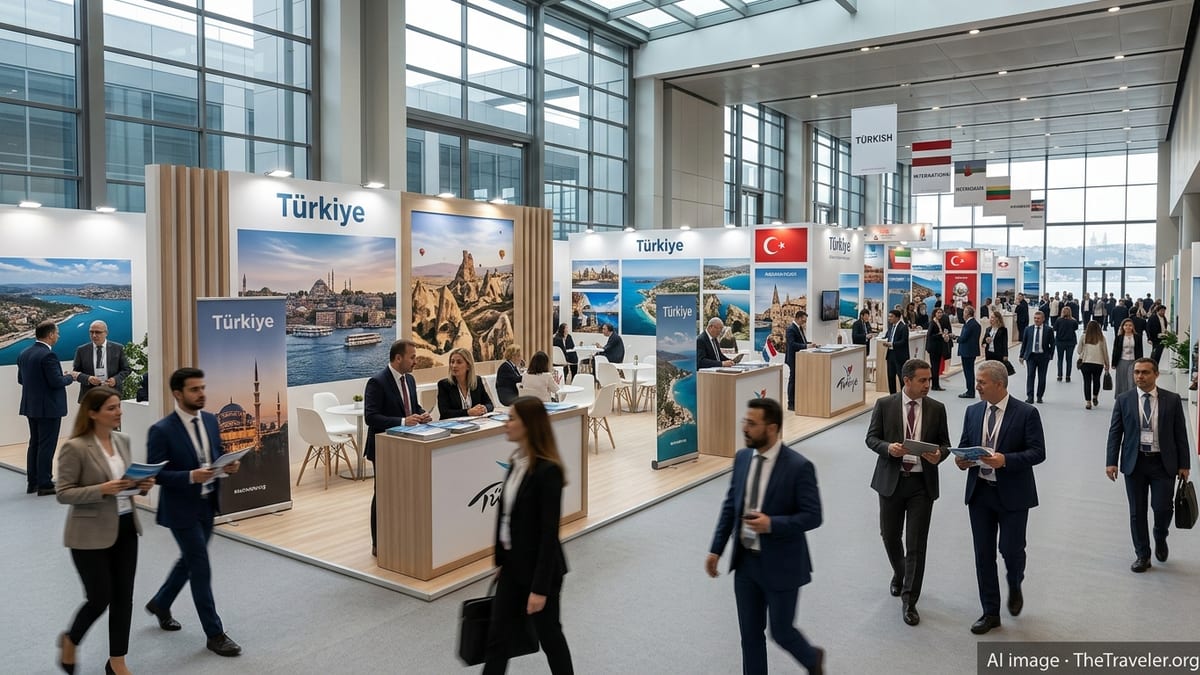
On the Turkish side, Istanbul, Antalya and Cappadocia stand out as the clear beneficiaries of closer transport integration with Saudi Arabia. Istanbul’s role as a major aviation and maritime hub is already established, with extensive flight connections to Saudi cities and busy shipping lanes through the Bosporus. Additional rail and logistics cooperation could reinforce the city’s status as a transfer point where Gulf cargo and passengers converge before moving onward to Europe and Central Asia.
Antalya, one of Turkey’s leading coastal resorts, is a priority destination for sun and sea tourism and has been targeted in national transport plans for stronger rail and intercity bus links to Istanbul and Ankara. Better coordination of logistics and air services with Saudi Arabia would support package holidays, cruise itineraries and multi-country tours that combine the Turkish Riviera with Saudi heritage and Red Sea projects.
Cappadocia, famed for its volcanic landscapes and hot-air ballooning, represents the heritage and nature segment that both countries want to grow. Turkey has promoted inland rail improvements as a tool to bring more visitors to regions like Cappadocia while easing pressure on highways. By aligning schedules, marketing and possibly future rail connections with Saudi corridors, tourism planners see an opportunity to encourage twin-center trips that include spiritual or cultural stops in Saudi Arabia alongside extended stays in central Anatolia.
Travel industry analysis suggests that these cities, when marketed together with Riyadh and Jeddah, can form themed itineraries built around history, faith, gastronomy or coastal leisure, supported by integrated air, rail and road options intended to reduce door-to-door journey times and carbon footprints.
Railway Cooperation Underpins Sustainable Transport Goals
The railway elements of the Saudi–Turkish MoUs are particularly significant for sustainability. International studies repeatedly show rail as one of the lowest-emission modes for medium and long-distance travel, especially when powered partly by renewable energy. Turkey has set rail-share targets in its long-term transport master plans, while Saudi Arabia has highlighted rail as central to achieving Vision 2030 climate and congestion goals.
Available policy documents describe how Saudi Arabia’s network brings together the Haramain high-speed line between Makkah and Madinah, the North–South Railway and urban systems such as the Riyadh Metro, with plans for further extensions and freight corridors. Turkey, for its part, is continuing to expand high-speed lines radiating from Ankara and Istanbul, alongside conventional routes that serve industrial centers and ports.
Within the new MoUs, cooperation on technology, training and standards is expected to help both sides accelerate these plans. Areas of focus include rail electrification, signaling and control systems, energy-efficient rolling stock and safety management. Joint working groups and exchanges can also support common approaches to environmental impact assessments, noise mitigation and land-use planning around stations.
For travelers, the emphasis on rail means more options that combine air and ground transport. For example, passengers from Riyadh or Jeddah flying into Istanbul could connect onward by train to Antalya or central Anatolia, while visitors landing in Saudi Arabia might use rail to reach heritage sites and coastal resorts with fewer domestic flights or long car journeys.
Tourism and Trade Prospects Across a Wider Region
Beyond bilateral ties, the agreements are being interpreted by analysts as part of a broader map of emerging Eurasian and Middle Eastern corridors. Discussions in regional forums have highlighted projects to revive historical rail routes and build new freight links that connect Turkey through Syria, Iraq or Jordan to the Gulf, where Saudi Arabia is a central node.
The MoUs strengthen Saudi Arabia’s bid to become a primary logistics and tourism platform between continents, leveraging its geographic position, extensive coastline and expanding rail grid. For Turkey, they complement efforts to secure a larger role in east–west trade and to diversify tourism flows by drawing more visitors from Gulf markets seeking cooler summer destinations and cultural experiences.
If the cooperation yields concrete investments, industry observers expect to see new logistics parks, dry ports and rail-linked distribution centers near Riyadh, Jeddah, Istanbul and key resort regions. Improved customs coordination and digital documentation could shorten transit times for containerized cargo moving between Asia and Europe, making overland routes through Saudi Arabia and Turkey more competitive with purely maritime options.
For tourism, coordinated marketing, route planning and possibly bundled visa or ticket solutions would help turn what are now mostly point-to-point trips into multi-stop journeys linking Jeddah’s Red Sea waterfront, Riyadh’s cultural districts, Istanbul’s historic core, Antalya’s beaches and Cappadocia’s landscapes. The new Saudi–Turkey logistics and railway agreements are designed to create the transport backbone that makes such itineraries more seamless and sustainable.