


Seven Mile Beach is the postcard view most travelers picture when they think of Grand Cayman: sugar-soft sand, calm turquoise water and a long curve of resorts, bars and palm trees along the island’s west coast. If it is your first time on Grand Cayman, this stretch of shoreline will likely be your base or at least the focus of a day trip from the cruise port. This guide walks you through where Seven Mile Beach actually is, how to access it, the best sections for different travel styles, where to stay and eat, how to snorkel it safely, and what first-timers should know before they arrive.
Get the latest updates straight to your inbox!
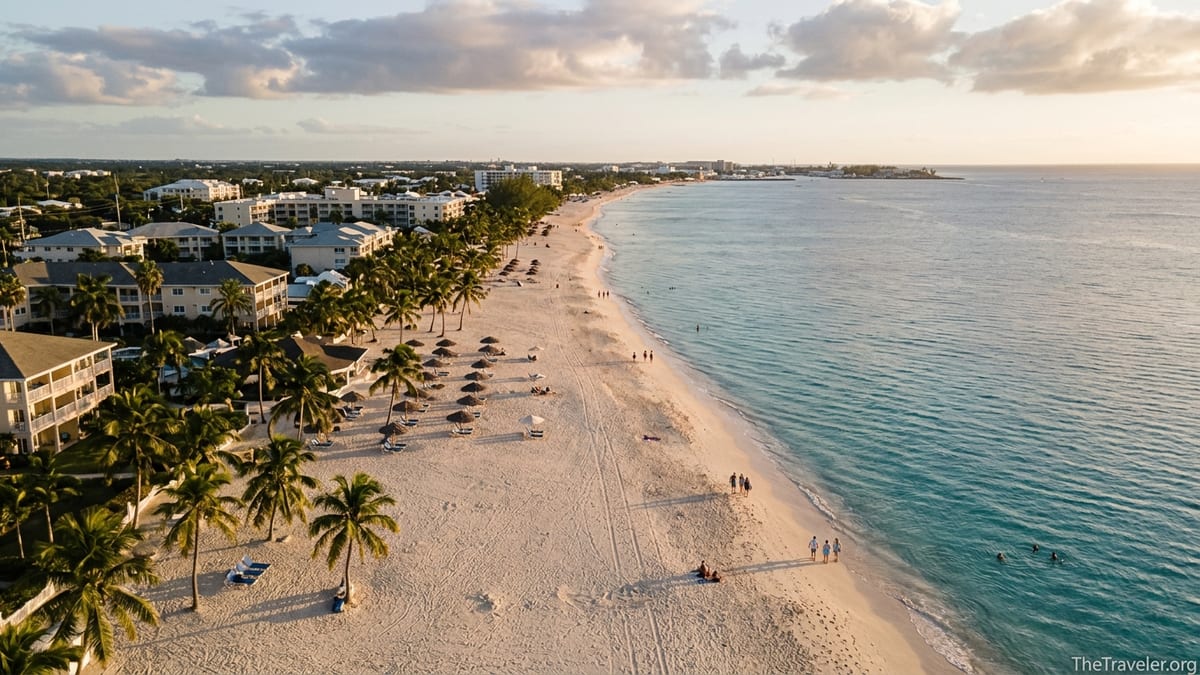
Where Seven Mile Beach Is and What to Expect
Seven Mile Beach sits on the western side of Grand Cayman, beginning just north of George Town and running in a gentle curve up toward West Bay. Despite the name, recent measurements put the continuous sandy stretch closer to about 5.5 to 6 miles long, but it remains the largest, most developed beach on the island and the center of its tourism scene. The water here is typically calm thanks to prevailing trade winds hitting the opposite coast, which makes it a reliable choice for swimming almost any day of the year.
Unlike some Caribbean beaches broken up by private clubs or rocky headlands, Seven Mile Beach feels like one long corridor of sand fronted by hotels, condos and a few remaining low-key beach bars. Even so, you will find quieter pockets at the northern end near Cemetery Beach and busier spots around Seven Mile Public Beach and the large resorts. The sand slopes gently into the water, so there is usually a wide, shallow area suitable for children and less confident swimmers, especially on calm days.
Driving time from Owen Roberts International Airport to the central Seven Mile Beach area is usually around 10 to 15 minutes by taxi or rental car, depending on traffic. From the cruise tender pier in George Town, you can reach the first beach access points in roughly 8 to 10 minutes by taxi or about 15 to 20 minutes by public bus. Many day visitors underestimate how compact the area is; you can technically walk from the southern end up to the main Public Beach section in around 45 minutes if you are comfortable in the heat and sun.
Weather remains beach-friendly most of the year, with daytime highs typically in the low to mid 80s Fahrenheit in winter and upper 80s in summer. Sea temperatures are usually warm enough for comfortable swimming without a wetsuit. Showers tend to be brief, though hurricane season from June through November brings a higher chance of unsettled weather, so first-timers booking during these months should buy travel insurance and keep flexible plans.
Beach Access and Getting Around Without Stress
One of the most important things to know before you arrive is that all beaches in Grand Cayman, including Seven Mile Beach, are public up to the high-water mark. Even when a luxury resort fronts the sand, you are legally allowed to walk and swim along the shoreline. What is controlled is access through private property, so you will rely on clearly signed public beach access paths along West Bay Road and a few larger public areas like Seven Mile Public Beach and Governor’s Beach. These access paths usually have a blue and white sign and may offer a few parking spaces, a trash bin and sometimes an outdoor shower.
If you are driving, parking at public beach access points along Seven Mile Beach is generally free. Seven Mile Public Beach, just south of the Kimpton Seafire resort, has a comparatively large parking area, picnic cabanas you can reserve ahead through the island’s Public Lands Commission, restrooms, outdoor showers and a small playground. A bit farther south near the Governor’s residence, Governor’s Beach has roadside parking and a sandy path between seagrape trees that opens onto a broad, often less crowded section of shore popular with both locals and tourists.
Rental cars are common for visitors staying more than a couple of days. You will drive on the left, and speed limits around Seven Mile Beach are relatively low. For those who prefer not to drive, taxis wait outside the airport, major resorts and cruise port. A typical taxi fare from the airport to a central Seven Mile Beach hotel can range roughly between 25 and 40 US dollars equivalent for two people, more for larger groups or late-night trips, based on recent guideline rates. Within the George Town and Seven Mile corridor, short hops to dinner or a shopping center often run in the 15 to 25 US dollar range, so costs can add up if you rely on taxis several times per day.
Budget-focused travelers and cruise passengers often use the island’s informal public buses, which are actually minivans labeled with route numbers. Route 1 and Route 2 run between George Town and West Bay along West Bay Road, passing most of the Seven Mile Beach access points. You usually flag them down from the roadside and pay a set cash fare when you get off, often only a few Cayman dollars per person. This can make a round-trip from the cruise port to Seven Mile Public Beach significantly cheaper than a taxi, as long as you are comfortable with a more local experience and occasional crowding.
Best Sections of Seven Mile Beach for Different Travelers
Seven Mile Beach is not uniform along its length, so first-time visitors benefit from choosing the right section for their style. The southern part, near George Town, has a slightly narrower strip of sand in places and some ironshore, but it offers quick access to town and good snorkeling off certain hotel fronts. Mid-beach between the Ritz-Carlton area and Governor’s Beach delivers the classic long, wide sandbank many people picture, with upmarket resorts and easy water access but relatively modest offshore reef life. The northern end around Cemetery Beach tends to feel quieter and more residential, with leafy shade and some of the most accessible coral for shore snorkeling.
Families traveling with children often gravitate toward Seven Mile Public Beach and Governor’s Beach. Both typically have very gentle entry into the water and more facilities. At Public Beach, you will see locals playing volleyball under floodlights in the late afternoon, kids on the playground and vendors renting stand-up paddleboards or jet skis. Governor’s Beach, just north, usually has fewer vendors and a larger space between the water and tree line, leaving room for kids to run and play. The sea is often as calm here as a swimming pool, which is reassuring for nervous swimmers.
Couples seeking a slightly quieter vibe and stronger snorkeling might prefer the northern stretch near Cemetery Beach. Access is through a small parking area set back from the road near a local cemetery; from there, a sandy path leads to a picturesque crescent with seagrape trees offering natural shade. The sand can be a little narrower at high tide, but the trade-off is fewer crowds and easy swimming out to nearby coral heads when conditions are calm. Those staying in condo-style properties at this end of the beach often report that early mornings feel almost private, especially outside peak winter season.
Travelers who care most about nightlife, restaurants and being able to walk everywhere may be happiest in the central corridor between the Ritz-Carlton and Public Beach. From here you can stroll to bars along the sand, cross the road to casual eateries serving fish tacos or jerk chicken, and take a short ride or walk to the shopping and dining district at Camana Bay via its elevated pedestrian bridge. While the beach sections in front of large resorts can feel busy in peak months, many visitors find the convenience worth it for a short first-time stay.
Hotels, Resorts and Where First-Timers Should Stay
Seven Mile Beach offers a full spectrum of places to stay, from global-brand resorts to independent condo complexes with kitchenettes. At the high end, properties like The Ritz-Carlton, Grand Cayman and Kimpton Seafire Resort and Spa anchor the central and northern ends of the beach. These full-service resorts typically have multiple pools, on-site dive shops, kids’ clubs and a lineup of restaurants that allow you to spend full days without leaving the property. Nightly rates in peak winter season commonly run into several hundred US dollars per night or more, but you are paying for direct beachfront, amenities and a polished experience.
Mid-range travelers often look at smaller beachfront hotels or condo resorts that include kitchens and laundry facilities. These can sit in the 250 to 400 US dollars per night range in shoulder seasons, sometimes lower for older properties set slightly back from the sand. Examples in this style include low-rise condo complexes along the central corridor, where each unit is individually owned and rented out to visitors. Many first-time families like this setup because they gain extra space and the option to cook some meals while still being steps from the water.
Budget-conscious visitors who still want easy access to Seven Mile Beach sometimes choose accommodations just off the main strip, either inland along West Bay Road or near Camana Bay. These might be business-style hotels or guesthouses where rooms can occasionally be found for under 200 US dollars per night outside the busiest periods, especially in late summer and early fall. From these spots you may walk 5 to 10 minutes to the nearest public access path. The savings can be significant over a weeklong stay, though you will trade away the luxury of watching sunset from your private balcony right on the sand.
For cruise passengers, “where to stay” is more about where to set up for the day. Many beach clubs and a few resorts along Seven Mile offer day passes that include a lounger, shared shade and access to restrooms and sometimes a pool. Prices vary widely, roughly from 30 to 100 US dollars per person depending on what is included. Others simply head to Seven Mile Public Beach or Governor’s Beach with a towel and rent chairs and umbrellas on arrival. If you are in port only for a few hours, it often makes sense to choose a section of beach that is a 10 to 15 minute drive from the pier to maximize your time in the water.
Where to Eat and Drink Along Seven Mile Beach
One of the perks of staying on Seven Mile Beach is the variety of places to eat within a short distance. Upscale beachside restaurants attached to major resorts serve dishes such as fresh-caught grouper, tuna tartare and Caribbean takes on pasta or steak, often with long wine lists and sunset views. Expect main courses in the 35 to 60 US dollar range at many of these venues, with dress codes leaning “resort casual” in the evenings, which usually means collared shirts for men and sundresses or similar for women.
For a more casual experience, look to beach bars and roadside spots along West Bay Road. These might offer grilled fish sandwiches, burgers, conch fritters and Cayman-style dishes like stewed beef with rice and peas. At simple shacks or small cafés, a generous plate of local food often falls in the 15 to 25 US dollar range, while a beer is typically comparable to other Caribbean islands, though imported craft options may cost more. Many travelers adopt a pattern of simple lunches on or near the sand followed by a more polished dinner every second night.
Camana Bay, a short drive or taxi ride from central Seven Mile Beach, functions as an additional dining hub with a waterfront promenade, coffee shops, an ice cream parlor and restaurants covering everything from sushi to pizza. Families appreciate being able to let kids splash in fountains or run on the lawn while adults linger over a drink. Because menus range from grab-and-go salads to sit-down bistros, this area works well for mixed groups where some people want a quick, affordable meal and others are in the mood for something more elaborate.
First-time visitors should be prepared for food prices that are higher than many mainland destinations, in part because the Cayman Islands import most goods. If you are staying in a condo with a kitchen, stocking up on basics like breakfast cereal, snacks and drinks at a supermarket near Seven Mile Beach can reduce how many full restaurant meals you need. Many repeat visitors roll a soft cooler down to the beach with water, fruit and sandwiches, then plan one special sunset dinner during their stay at a well regarded restaurant along the sand.
Snorkeling Seven Mile Beach Safely and Where to Go
Seven Mile Beach is more famous for its classic Caribbean swimming water than for world-class reef, but there are still rewarding spots for snorkelers. For many beginners staying at central resorts, simply drifting over patches of sea grass and occasional coral heads near shore is enough. You may spot schools of small silver fish, a shy stingray moving across the sand or a sea star in the shallows. The water is usually very clear, so even modest fish life looks impressive to first-time snorkelers.
For better coral and more variety, the northern end of the beach around Cemetery Beach is often recommended. From the shore, confident swimmers can head out toward a reef that sits a couple of hundred yards offshore. On calm mornings, snorkelers report parrotfish, blue tangs and other colorful reef species feeding around the coral heads. Because the swim is significantly farther out than in the central sections, you should use a brightly colored snorkel vest or surface marker and stay aware of boat traffic in the area. Conditions can change quickly with wind and current, so less experienced swimmers may prefer joining an organized snorkel trip by boat instead.
Governor’s Beach offers a middle ground, with some coral heads accessible by a shorter swim from shore. On the right days, you can see schools of chubs, sergeant majors and the occasional turtle closer to the beach. Several independent guides and dive shops based along Seven Mile also run trips to off-beach sites such as the wreck of the USS Kittiwake, a scuttled ship that lies in relatively shallow water, and the Wreck of the Gamma closer to shore. These excursions usually provide gear and flotation aids, making them a good option for first-timers who want a bit more structure and safety oversight.
Key safety tips include entering and exiting the water only where you can avoid walking over coral, never standing on reef, and always checking sea conditions before heading out. Early morning between about 7 and 10 a.m. often brings the calmest seas and brightest underwater visibility, especially outside of windy weather patterns. Sun protection is essential; a long-sleeve rash guard and reef-safe sunscreen help reduce burn risk and environmental impact. If you are bringing your own gear, pack a mask that seals well against your face and soft-strap fins suitable for gentle shore entries rather than heavy-duty boat fins.
Getting to Seven Mile Beach from the Cruise Port
Most cruise ships visiting Grand Cayman anchor offshore near George Town, and passengers transfer to land by tender. Once you step off the tender dock, you will find taxi dispatchers and tour operators within a short walk. For a quick trip directly to Seven Mile Beach, you can share a taxi van with other passengers heading to the same general area. Per-person prices can vary based on the exact stop and how many people are in the vehicle, but a typical shared ride to a central stretch like Seven Mile Public Beach often falls into the 8 to 12 US dollar per person range each way, while a private taxi for a couple or family costs more.
If you prefer to minimize transport costs or want a more local feel, you can walk a few blocks inland to find the public minibuses heading toward West Bay. Look for vans with “WB1” or similar markings, ask the driver whether they are going along Seven Mile Beach and tell them which access point you are aiming for. Cash fares are modest and usually fixed, which makes this an attractive option for independent travelers who are comfortable managing their own time. The trip itself is short, often under 15 minutes to Seven Mile Public Beach, but you should factor in waiting time and potential traffic when planning your return to the ship.
Time management is crucial for cruise visitors. Many ships require you to be back on board at least an hour before departure, and tender lines can be long in the late afternoon. If your ship departs at, for example, 4 p.m., plan to leave Seven Mile Beach no later than about 2:30 p.m. to allow for traffic along West Bay Road and the queue at the tender pier. Booking a beach excursion directly through the cruise line can remove some of that stress because the operator coordinates timing and the ship will typically wait for its own organized tours if they are slightly delayed.
Cruise passengers who want to combine beach time with a quick look at other Grand Cayman highlights often link a morning visit to Seven Mile Beach with an early afternoon stop at a nearby attraction like the Cayman Turtle Centre or a short sightseeing loop through George Town’s shops. If your port call is very short, it can be wiser to pick one priority, such as two to three hours at Governor’s Beach plus a simple lunch, instead of trying to fit in multiple stops and worrying about the clock.
Essential First-Time Tips for Enjoying Seven Mile Beach
Planning a first trip to Grand Cayman is mostly about fine-tuning details, since the island is generally safe, English-speaking and used to visitors. One practical tip is to remember that the local currency is the Cayman Islands dollar, which is pegged to the US dollar at a fixed rate, but US cash is widely accepted at a standard conversion. You will usually receive change in Cayman dollars. Credit cards are accepted at most hotels, restaurants and tour operators along Seven Mile Beach, though keeping some small cash bills helps with bus fares and tips.
Sun and heat can surprise first-timers, especially those arriving from milder climates. The combination of white sand and water reflection means you can burn quickly even on overcast days. Pack a wide-brim hat, polarized sunglasses, high-SPF reef-safe sunscreen and light, breathable clothing. Many repeat visitors wear sun shirts and long shorts over swimsuits when walking the beach. Hydration is equally important; bottled water is readily available at supermarkets and convenience stores along West Bay Road, but costs can be high if you rely solely on small purchases from hotel kiosks, so buying larger bottles or a refillable jug can help.
Respect for the marine environment is central to enjoying Seven Mile Beach responsibly. Never touch or stand on coral, avoid chasing turtles or rays and do not feed fish from the shore. Small actions like picking up any plastic you see on the sand or declining single-use straws at beach bars add up when multiplied across thousands of visitors. If you join a tour to popular sites such as Stingray City or the USS Kittiwake, choose operators who emphasize safety briefings and environmental best practices.
Finally, build in at least one evening to watch sunset from the beach itself. The sun sets over the water on this coast, and even on partly cloudy days, the sky often glows pink and gold. Many visitors grab a simple picnic from a nearby deli or supermarket and sit directly on the sand. Others opt for a drink at a bar with their toes in the water. However you choose to do it, it is usually the moment when first-time visitors decide they will return.
FAQ
Q1. Is Seven Mile Beach really seven miles long?
Not quite. The continuous sandy stretch today is closer to about 5.5 to 6 miles, but the historic name Seven Mile Beach has remained in use.
Q2. Can I use any part of Seven Mile Beach if I am not staying at a resort?
Yes. All beaches in Grand Cayman are public up to the high-water mark, so you are free to walk and swim along the shoreline, entering through public access paths.
Q3. What is the easiest section of Seven Mile Beach to reach from a cruise ship?
Seven Mile Public Beach and Governor’s Beach are among the easiest to reach, typically a 10 to 15 minute taxi or bus ride from the George Town cruise tender pier.
Q4. Where is the best snorkeling on Seven Mile Beach for first-timers?
Confident swimmers often like Cemetery Beach for its offshore reef, while many beginners start at Governor’s Beach, which has some coral heads a shorter swim from shore.
Q5. Do I need to rent a car to enjoy Seven Mile Beach?
No. Many visitors rely on taxis and the local minibuses, especially if they are staying in the central corridor. A car becomes more useful if you plan to explore the rest of the island.
Q6. Are there restrooms and showers on Seven Mile Beach?
Yes in some areas. Seven Mile Public Beach has restrooms, showers and picnic cabanas, while other access points vary and may offer only parking and a footpath to the sand.
Q7. Is Seven Mile Beach suitable for young children?
Generally yes. The water is usually calm with a gentle slope, especially at Seven Mile Public Beach and Governor’s Beach, though parents should always supervise closely.
Q8. How expensive is food around Seven Mile Beach?
Expect higher prices than many mainland destinations. Casual meals might run 15 to 25 US dollars per person, while main courses at upscale beachfront restaurants are often higher.
Q9. When is the best time of day to visit Seven Mile Beach?
Early mornings bring cooler temperatures and calmer seas for swimming or snorkeling, while late afternoon and sunset offer softer light and a more social beach atmosphere.
Q10. Is tipping expected at restaurants and for taxis?
Yes. A tip of around 15 to 20 percent is common in restaurants, and rounding up or adding a few extra dollars for taxis and tour guides is generally appreciated.