


Flying into the San Francisco Bay Area quickly turns into a multiple-choice test: San Francisco International (SFO), Oakland (OAK) or San Jose Mineta (SJC). Each airport serves the same region, but they feel very different once you step off the plane. The best choice is not about which airport is “biggest,” but which one lines up with your actual itinerary, budget and tolerance for stress. This guide breaks down the tradeoffs with concrete examples so you can pick the airport that works for how you really plan to travel.
Get the latest updates straight to your inbox!
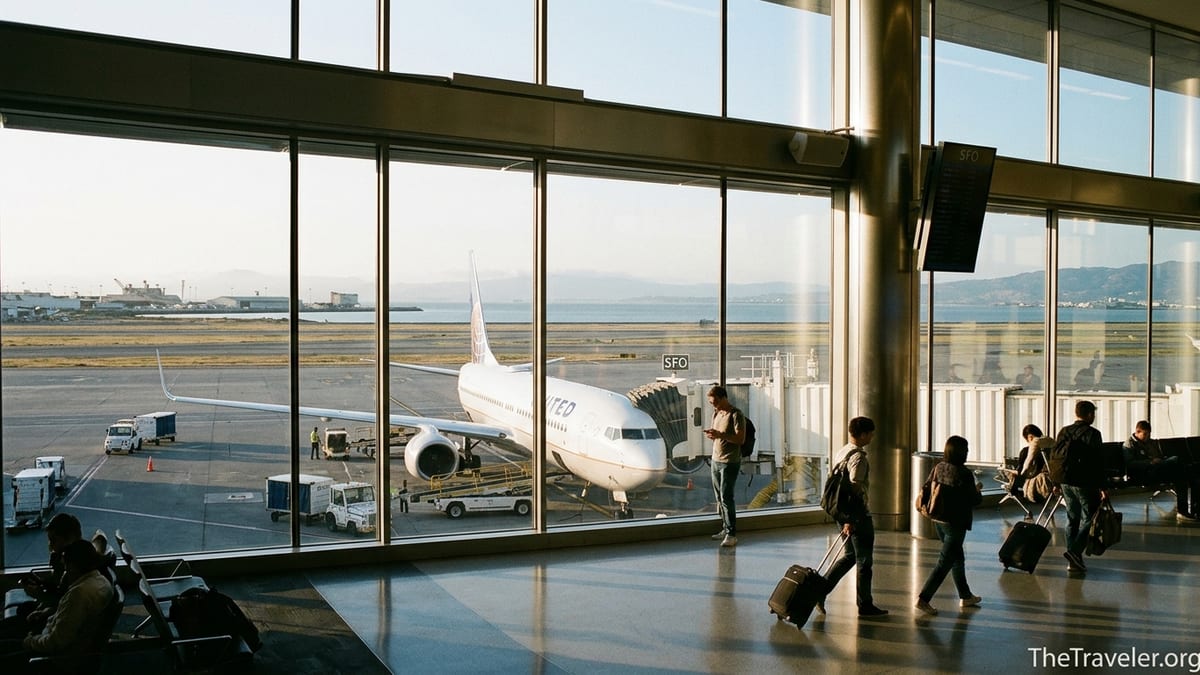
Big Picture: How the Three Bay Area Airports Compare
SFO is the region’s main international gateway and sits about 13 miles south of downtown San Francisco along Highway 101. It has the widest range of long haul flights, including nonstops from Europe and Asia, and a deep network of domestic routes from airlines such as United, Alaska, Delta and American. Travelers headed to central San Francisco, the convention hotels around Moscone Center or coastal destinations like Pacifica and Half Moon Bay usually find SFO the most straightforward option.
Oakland, officially Oakland San Francisco Bay Airport, lies across the Bay in the East Bay industrial flats, a short drive from downtown Oakland. It is smaller and more relaxed than SFO, with a strong presence from Southwest and other low cost carriers. For many visitors staying in Oakland, Berkeley or other East Bay cities, OAK can cut ground travel time in half and often offers lower base fares on domestic routes compared with SFO.
San Jose Mineta International Airport sits right in Silicon Valley, less than 4 miles from downtown San Jose. It primarily serves tech and business travelers heading to companies in Santa Clara, Sunnyvale, Cupertino and Mountain View, with plenty of flights from Alaska, Southwest and the big legacy airlines. If your trip revolves around meetings at Google in Mountain View or Apple in Cupertino, SJC frequently offers the most efficient overall journey, even if airfare looks similar.
All three airports have modern terminals, rental car facilities and rideshare access. Where they diverge is in how easily they connect to your actual destination, the typical crowding and delays you will experience, and how likely you are to find a cheap nonstop flight. Understanding those differences is the key to making a smart choice for a long weekend, a wine country escape or a week of back to back meetings.
Access to San Francisco, Oakland and Berkeley
For travelers who want to stay in San Francisco proper, SFO is usually the most convenient combination of time and predictability. SFO has a dedicated Bay Area Rapid Transit (BART) station connected to the terminals by the free AirTrain people mover, so you can roll your suitcase from baggage claim to a downtown train without going outside. Typical travel time from SFO to downtown stations like Powell Street or Montgomery is about 30 minutes once you are on the train, and off peak fares are usually in the low double digits per person. During busy evening hours, a taxi or rideshare from SFO to a Union Square hotel often runs in the 50 to 70 dollar range depending on traffic and surge pricing, and may take 35 to 60 minutes.
Oakland can also work surprisingly well for San Francisco stays if you do not mind a transfer. From OAK, the Oakland Airport Connector automated train takes you in just a few minutes to Coliseum BART station, where you can board a regular BART train through the Transbay Tube into downtown San Francisco. The total ride typically takes around 35 to 45 minutes from OAK to downtown San Francisco once you factor in the short connector ride and the mainline train; fares are similar to SFO because BART adds surcharges for both airports as well as for crossing the bay. The main tradeoff versus SFO is the extra transfer and the feeling of a more industrial corridor around the airport, but on days when 101 is heavily congested, OAK plus BART can be faster door to door.
For Oakland and Berkeley stays, OAK is usually unbeatable. The Coliseum BART station is only a few stops from downtown Oakland, and from there it is a short ride north to Berkeley. A visitor heading to a hotel near the Fox Theater in Oakland can be off a Southwest flight, onto the airport connector and standing on Telegraph Avenue in roughly 30 to 40 minutes using rail. A similar trip from SFO would involve a longer BART ride under the bay and through downtown Oakland or a more expensive rideshare that has to contend with bridge traffic.
SJC is the least practical option for San Francisco or Oakland tourism. To reach downtown San Francisco by public transit, you generally take a VTA Route 60 bus from the airport to the Santa Clara or San Jose Diridon rail stations, then transfer to Caltrain north toward the city. In good conditions, that whole trip can take 1.5 to 2 hours and involves at least one transfer with luggage. Rideshares from SJC to downtown San Francisco frequently run into the 100 dollar range or more, especially in peak hour traffic on US 101. As a result, SJC only makes sense for San Francisco visitors if airfare is drastically cheaper or if you are combining time in the city with a Silicon Valley based itinerary.
Reaching Silicon Valley and Tech Campuses
When your calendar is packed with meetings in Cupertino, Mountain View or Sunnyvale, the calculus flips and SJC becomes a clear favorite. The airport sits just off Highway 87 and US 101, and a taxi or rideshare to downtown San Jose often costs less than a typical ride from SFO to downtown San Francisco, simply because the distance and congestion are lower. A traveler landing at SJC at 8 a.m. can often be parked in front of the Adobe headquarters downtown in around 15 minutes, or at a big tech campus in North San Jose in 20 minutes.
Public transit connections from SJC to the core of Silicon Valley are improving but still require planning. The VTA Route 60 bus links the terminals to both the Metro/Airport light rail station and the Santa Clara transit center, where you can catch Caltrain toward Mountain View and Palo Alto. For example, a budget conscious traveler heading to Stanford University might ride the 60 bus to Santa Clara, board Caltrain to Palo Alto and then use a short rideshare or campus shuttle. Total travel time can be around 60 to 75 minutes, compared with a direct 25 to 40 minute drive in moderate traffic.
SFO can still work well for Silicon Valley trips, especially if your destination is on the northern end of the tech corridor around San Mateo, Redwood City or Menlo Park. Many visitors take Caltrain from San Francisco or Millbrae down to their meeting city, then use local rideshare or corporate shuttles. For instance, someone staying near the Embarcadero could ride BART or Muni to the 4th and King or Salesforce Transit Center area, board Caltrain to Redwood City and then hop in a short Uber to an office park in Redwood Shores. The downside is that this routing adds an extra urban transfer, and traffic getting out of SFO on 101 can be slow during commute hours.
Oakland is usually the least efficient choice for Silicon Valley. To reach tech hubs from OAK using public transit, you generally travel on BART through downtown San Francisco, then connect to Caltrain or corporate shuttles. By car, you must cross a bridge and then drive the length of the Peninsula, which can turn even a modest distance into a 90 minute journey in heavy traffic. OAK can still make sense if airfare is significantly cheaper and your meetings are clustered in San Francisco with only a side trip to Silicon Valley, but as a primary gateway to the Valley it is rarely ideal.
Getting to Napa, Sonoma and Wine Country
Wine country trips introduce a different map. Napa Valley sits northeast of the Bay, roughly aligned with Vallejo and the Carneros hills, while Sonoma Valley stretches a bit farther west. None of the airports is directly adjacent, so you are choosing the least awkward approach rather than a perfect fit. For most wine focused itineraries, Oakland is often the most convenient starting point, especially for drivers. From OAK, you can take Interstate 580 across the East Bay hills, then cut north toward Napa or Sonoma via Interstate 80 or Highway 37. In light traffic, that drive can take around 1.5 hours to downtown Napa, and you avoid much of the inner city congestion that plagues trips starting on the San Francisco side of the bay.
SFO can still work for Napa and Sonoma, particularly if your first night is in San Francisco and you are picking up a rental car the next morning. Many visitors like to spend a night near Union Square or the Ferry Building, then drive north over the Golden Gate Bridge to Sonoma or via the Bay Bridge to reach Napa. That gives you a chance to shake off jet lag before tackling wine tastings. The tradeoff is that you are threading through urban freeways before you ever reach the scenic parts of the drive, and weekend traffic northbound can be heavy during prime harvest months.
San Jose is the least obvious choice for wine country, but it can make sense if you are combining Napa or Sonoma with a broader Northern California road trip. For example, a traveler might fly into SJC, spend a couple of days in Santa Cruz and Monterey, then loop up to Napa and depart from SFO. That kind of open jaw itinerary can keep daily driving times more manageable. From SJC directly to Napa, you should usually budget more than 2.5 hours by car, and public transit options are limited and involve multiple transfers; a typical journey might require VTA light rail or bus, BART and a regional bus like Vine Transit.
If you plan to drink at multiple wineries, it is worth factoring in transportation once you are in wine country, not just how to get there. Shared shuttle tours, private drivers and rideshares are more common on the SFO and OAK side because those airports feed a high volume of tourists into Napa and Sonoma. In practical terms, that can make it easier to leave your rental car parked for a day and explore safely.
Flight Prices, Airlines and Route Networks
In many searches, SFO appears first simply because it has the largest number of flights and airlines. United operates a major hub, and there is extensive service from Alaska, Delta, American and international carriers. That depth of service often means more nonstop options from distant US cities and from overseas. For example, a traveler flying from Frankfurt or Tokyo will usually find nonstops into SFO, while reaching OAK or SJC might require a connection in another US hub. More competition on popular routes can help keep fares competitive, but SFO’s airport fees and popularity also mean it is rarely the absolute cheapest option.
Oakland punches above its size on domestic point to point routes, particularly through Southwest. Travelers from cities such as Denver, Las Vegas or Los Angeles frequently see very competitive fares into OAK, sometimes undercutting SFO by a noticeable margin, especially when you book advance purchase economy. The airport’s smaller footprint often translates into shorter security lines outside of peak holiday crush, which can be a real advantage for families with strollers and checked bags.
San Jose’s route network is tailored to business and tech travel. You will find plenty of flights from major West Coast cities, Texas hubs and a selection of East Coast and international routes, often timed for Monday morning arrivals and Thursday evening departures. For example, nonstop service between SJC and cities like Dallas or Seattle can be attractive to corporate travelers whose companies maintain offices in both regions. However, because SJC has fewer total flights, options for rebooking after delays or cancellations can be more limited than at SFO.
When comparing prices, it is smart to mentally add the cost of ground transport. Saving 40 dollars on a ticket into SJC does not help if you then spend 100 dollars on a rideshare to reach a San Francisco hotel, particularly late at night when public transit runs less frequently. Likewise, a low fare into OAK might be less attractive if your meetings are in Cupertino and you will sit in traffic twice a day crossing the bay.
Rental Cars, Public Transit and On the Ground Logistics
All three airports centralize rental cars in consolidated facilities, but the experience of reaching them feels different. At SFO, you ride the free AirTrain Blue Line from your terminal to the Rental Car Center, with trains running every few minutes. In practice, you can often go from baggage claim to a rental car counter in about 10 to 15 minutes if you catch the train quickly. The rental facility sits close to the freeway ramps, which makes it relatively easy to join Highway 101 or Interstate 280 once you have your vehicle.
Oakland’s rental car center is reached by a short shuttle ride from the terminals. Because the airport is more compact, shuttle loops tend to be quick, and the drive from the rental lot to Interstate 880 is short. For travelers nervous about merging into intense freeway traffic right away, OAK can feel less intimidating than SFO, where you may immediately encounter multi lane merges and dense traffic. This can be especially welcome for visitors arriving after long international flights.
At SJC, the rental car center is directly across from Terminal B and connected via skybridge, so many travelers simply walk with their luggage rather than taking a shuttle. This proximity is a major convenience advantage, particularly for short business trips where every minute counts. Public transit at SJC relies on VTA buses like Route 60, which connect the terminals to light rail and Caltrain. Service is frequent during the day but can be less convenient late at night, so late evening arrivals should double check schedules if they plan to avoid rideshares.
For purely transit based travelers, SFO and OAK both integrate more seamlessly into the regional rail network because of their BART connections. Someone arriving at SFO can reach San Francisco, parts of the East Bay and even connect to Caltrain at Millbrae without setting foot in a car. From OAK, the BART connector and mainline trains put downtown San Francisco, downtown Oakland and Berkeley within roughly an hour. In contrast, SJC requires at least one local bus leg before you can board regional rail, which adds complexity if you are managing jet lag and luggage.
Crowds, Delays and Overall Convenience
SFO’s strength as a hub also creates some of its biggest headaches. The combination of heavy traffic, frequent fog and runway constraints can lead to delays, especially in winter storm patterns. Security lines in the bigger terminals can swell during early morning departure banks and late afternoon transcontinental waves. On a busy Monday at 7 a.m., you might easily spend 25 to 45 minutes in security if you do not have TSA PreCheck or CLEAR. That said, SFO offers a wide range of amenities like upgraded food options, lounges and quiet workspace areas, which take the edge off longer connections.
Oakland generally feels calmer and more compact. Terminals are shorter walks end to end, and many passengers report being able to move from curbside drop off to their gate in under 30 minutes during typical midday periods. Weather related delays are less common than at SFO because OAK’s runway layout and approach patterns are less affected by the fog that blankets the Peninsula. For early morning departures to places like Phoenix or Seattle, OAK can be a smoother experience, particularly for families or infrequent flyers who find large hub airports overwhelming.
San Jose offers a middle ground: more polished and modern than its size might suggest, but without the sheer scale of SFO. Security lines can be brisk during peak business travel times, especially on Mondays and Thursdays, yet the smaller footprint means walking distances are manageable. SJC’s terminals are known for ample natural light, and many gates have power outlets and seating that suits laptop work. This is not a small detail for travelers who may be jumping on conference calls the minute they land.
When judging convenience, it helps to think about your specific stress points. If you dread long security lines and confusing terminal layouts, OAK and SJC will probably feel more humane. If you worry more about getting stuck without a flight option after a cancellation, SFO’s deep route network and airline presence can be a safety net. And if you are sensitive to weather related disruption, it is worth remembering that SFO’s fog can ripple through its operations even on days when skies look clear by the time you land.
The Takeaway
No single Bay Area airport is “best” for every trip. SFO is the heavyweight hub with the most flights and the most direct transit access to downtown San Francisco. It shines for international arrivals, first time visitors who plan to stay in the city and anyone who wants the comfort of abundant airline options. The tradeoffs are heavier crowds, more frequent delays and higher ground transport costs if you are heading far beyond the core.
Oakland excels for East Bay stays, many wine country trips and travelers who prioritize a low key, efficient airport over a flagship hub. It is especially appealing when Southwest or other carriers undercut SFO fares on the same route, or when you want to be in Oakland or Berkeley in under an hour of landing. The combination of the airport connector and BART keeps San Francisco accessible without requiring you to fight Peninsula traffic.
San Jose is the natural choice for Silicon Valley and South Bay business travel. Its compact layout, walkable rental car access and short drives to downtown San Jose and nearby tech campuses can turn a punishing cross country itinerary into a manageable day. It becomes less compelling for pure San Francisco tourism or wine country itineraries unless airfares are much cheaper or you are structuring a multi stop road trip.
When booking, look beyond the airfare column and picture your first 90 minutes on the ground. If you see yourself stepping onto a train into downtown San Francisco, SFO or OAK will likely serve you best. If you imagine walking across a skybridge straight to a rental car and pulling into a campus parking lot before your first espresso, SJC comes into its own. Matching the airport to your real world plans is the difference between a smooth Bay Area arrival and a long day of unnecessary zigzags.
FAQ
Q1. Which Bay Area airport is best if I am staying in downtown San Francisco?
SFO is usually the best combination of time and simplicity because you can take BART directly from the airport station to downtown in about 30 minutes once you are on the train. Oakland can also work if you do not mind transferring from the airport connector to a mainline BART train at Coliseum, while San Jose generally adds too much transit time or expensive rideshare cost for a central San Francisco stay.
Q2. Is Oakland Airport really cheaper to fly into than SFO?
Often, but not always. On many domestic routes, especially those served by Southwest, base fares into OAK can be lower than SFO on the same travel dates. However, sales and competition at SFO can narrow or reverse that gap. To compare honestly, you should add estimated ground costs from each airport to your actual destination and consider whether a slightly cheaper ticket is worth a more complicated or longer transfer.
Q3. Which airport is most convenient for visiting Napa or Sonoma wine country?
For most travelers renting a car and driving directly to wine country, Oakland is often the most practical starting point because it sits closer to freeway routes leading to Napa and Sonoma and avoids some inner city congestion. SFO is a solid alternative if you plan to spend a night in San Francisco first, then drive north. San Jose usually requires the longest drive and is better suited to itineraries that combine wine country with other parts of Northern California.
Q4. I am visiting Silicon Valley for work. Should I still consider SFO instead of SJC?
It depends on your exact destination and flight options. If your meetings are concentrated around downtown San Jose, Santa Clara or North San Jose, SJC is typically much faster and easier, often putting you at your hotel within 15 to 25 minutes of leaving the terminal. If you find a significantly cheaper or more convenient nonstop into SFO, it can still make sense, especially if you are staying farther north on the Peninsula or splitting time between San Francisco and the Valley.
Q5. How late does public transit run from the airports into San Francisco?
BART runs into the late evening, but frequencies and last train times vary by line and day of the week, so it is important to check schedules close to your travel date. If you arrive near midnight at SFO or OAK, you may find that trains are running less often or that you need to switch to a rideshare for the final leg. From SJC, late night public transit requires multiple bus and rail connections and can be challenging with luggage, so many travelers arriving very late opt for taxis or rideshares instead.
Q6. Are security lines shorter at Oakland and San Jose than at SFO?
In general, yes. SFO handles far more passengers, so its security lines can be long during peak times, especially early weekday mornings and late afternoon bank periods. Oakland and San Jose see their own mini rush hours, but their smaller scale and simpler layouts often mean you can reach your gate faster from curb to security to boarding area. That said, on major holidays or big event weekends, all three airports can be busy enough that you should still arrive early.
Q7. Is it worth renting a car, or can I rely on public transit from these airports?
It depends on your itinerary. If you plan to stay in central San Francisco, downtown Oakland or downtown San Jose and focus on urban sightseeing, public transit and rideshares are usually sufficient and may be cheaper than parking a rental car. If you want to explore wine country, coastal highways, national parks or suburban office parks, a rental car becomes far more useful. SFO and OAK integrate well with BART for car free trips in the urban core, while SJC is more car oriented overall.
Q8. Which airport is best for families traveling with young children?
Oakland and San Jose often feel easier for families because they are smaller, less crowded and have shorter walking distances. Getting through security and to your gate with strollers and car seats can be less stressful than at SFO. However, SFO offers more nonstop options, which can be a big advantage if you want to avoid connections with kids. For a family staying in San Francisco, SFO may still be the best choice if it allows a reasonable nonstop flight at a good time of day.
Q9. How should I factor in Bay Area traffic when choosing an airport?
Traffic patterns can significantly change door to door times. Morning and evening rush hours on Highway 101 near SFO, Interstate 880 near OAK and the freeways feeding SJC can all add 20 to 45 minutes to what looks like a short drive on a map. If your arrival or departure lines up with peak commute times, an airport that looks slightly farther in distance may still be faster if it keeps you off the most congested corridors. When in doubt, build in generous buffer time and favor routes that use rail where practical.
Q10. Is it realistic to fly into one Bay Area airport and depart from another?
Yes, many travelers book open jaw tickets, such as flying into SFO and out of OAK or SJC, especially when planning road trips that loop through different parts of Northern California. This strategy can reduce backtracking and make it easier to include destinations like Big Sur, Yosemite or wine country. The key is to price those multi city tickets carefully and confirm that your rental car company does not charge a steep one way drop fee between airports.