


San Francisco International Airport is large, busy and constantly changing, but with a bit of planning your departure can be straightforward and even enjoyable. This guide walks you through every stage of leaving from SFO in 2026, from when to arrive and how check in works, to navigating security, finding your gate, choosing a lounge, and knowing what is available to eat, drink and buy in each terminal.
Get the latest updates straight to your inbox!
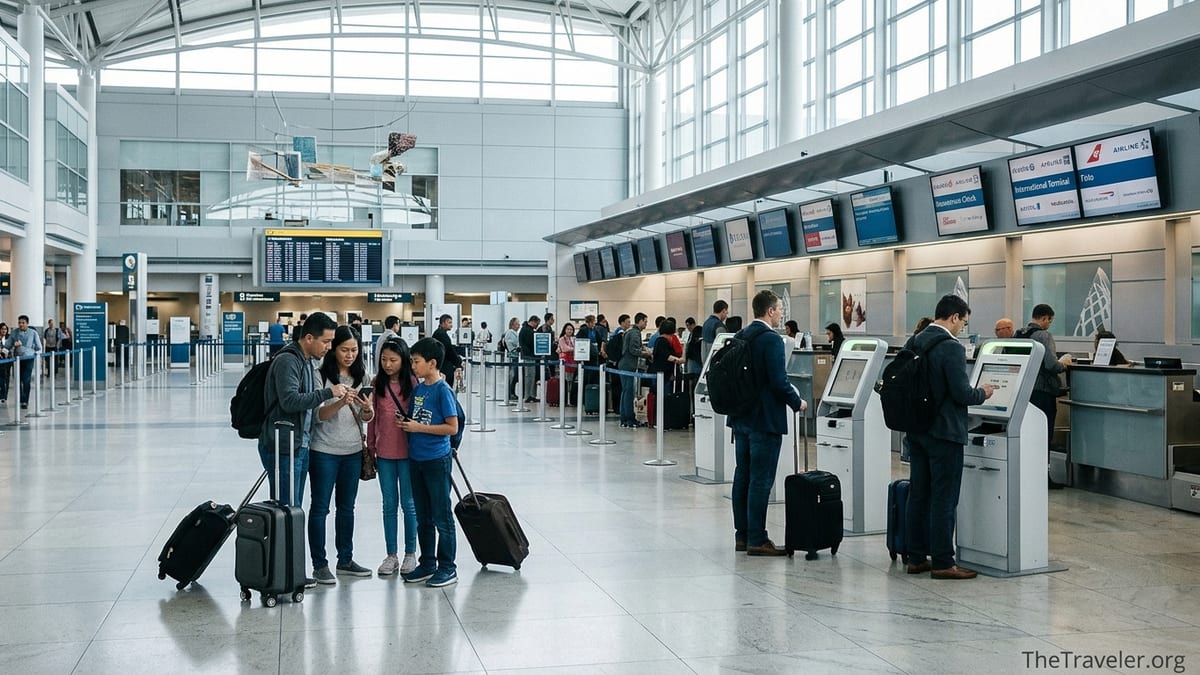
Understanding SFO’s Terminals and Layout
San Francisco International Airport has four main terminals arranged in a rough horseshoe: Harvey Milk Terminal 1, Terminal 2, Terminal 3 and the International Terminal. Gates are grouped into boarding areas labeled A through G. Boarding Area A and G sit in the International Terminal, B and C are in Harvey Milk Terminal 1, D is in Terminal 2, and E and F are in Terminal 3. In broad terms, most domestic flights on Southwest, Frontier and others leave from Terminal 1; Alaska and some American flights use Terminal 2; United dominates Terminal 3 and the G side of the International Terminal; and many foreign carriers depart from International A.
Arrivals and departures at SFO are vertically stacked. Ticketing and check in are usually one level above ground transportation and ride app pickups. Security and departure concourses sit above the check in halls. If you are being dropped off by car, you will typically be left at the departures level of your airline’s terminal; if you arrive by BART or the AirTrain, you come in at a lower level and ride escalators or elevators up to check in.
The AirTrain is SFO’s free driverless train, running 24 hours and connecting all terminals, parking garages and the Rental Car Center. Stations for Terminals 1, 2 and 3 are generally on the garage side, linked by skybridges near security checkpoints B, D and F, while the International Terminal has its own station. In practice this means you can land on one airline and easily transfer to another terminal for your connection without going outdoors, which also helps if you misjudge where your check in counter is located.
For departures, one of the most useful features is the post security connectors. Harvey Milk Terminal 1 connects airside to Terminal 2, and Terminal 2 connects to Terminal 3, allowing passengers on many domestic flights to clear security in one terminal and walk airside to another. The International G concourse also connects airside to Terminal 3. This flexibility can be useful if one checkpoint looks particularly crowded or if you wish to visit a specific lounge or restaurant located in a neighboring terminal.
How Early to Arrive at SFO
Officially, the Transportation Security Administration advises arriving two hours before domestic departures and three hours before international flights. SFO echoes this guidance, and for peak travel periods such as summer weekends, major holidays and Monday mornings, it is sensible to follow or even exceed these times, especially if you are checking bags or traveling with a family. Many frequent flyers out of SFO aim for about 90 minutes for a routine domestic trip with only carry on and TSA PreCheck, but first time visitors or infrequent travelers should avoid cutting it so close.
Security wait times at SFO can vary significantly by terminal and time of day. Early mornings between about 5:30 and 8:30 a.m. are often busy with East Coast and Midwest departures, particularly in Terminal 3 for United and Terminal 2 for Alaska and American. Late evening waves around 9:00 to 11:30 p.m. are common for long haul international flights departing from the International Terminal. On some days waits in general security can approach 30 to 45 minutes in these peaks, while off peak midday periods may see waits closer to 10 to 20 minutes. Because the airport’s official wait time tools and app data can lag reality, treating any estimates as rough guidance rather than guarantees is wise.
As a working rule for 2026, a solo traveler with no checked bag on a midweek domestic flight, holding TSA PreCheck, might reasonably arrive 75 to 90 minutes before departure. A family of four with checked luggage flying to New York or Chicago at 8 a.m. should aim for a full two hours. For long haul international flights to Europe or Asia, especially on busy carriers such as United, Singapore Airlines, Lufthansa or ANA, three hours before departure is a sensible target. During peak summer weekends or around Thanksgiving, adding another 30 minutes on top of these guidelines can provide a comfortable buffer.
Remember that boarding at SFO typically begins 30 to 40 minutes before departure for domestic flights and 45 to 60 minutes before departure for widebody international flights. If you want time to visit a lounge, have a sit down meal or browse shops, you should factor that on top of the security and boarding windows. For example, leaving San Francisco on a 10 p.m. flight to London from International Terminal A and hoping to enjoy a shower and dinner in a lounge, arriving at 7 p.m. is far more realistic than 8:30 p.m.
Check In: Counters, Kiosks and Baggage Drop
Most major airlines at SFO offer a mix of staffed counters, self service kiosks and separate bag drop lines for travelers who have checked in online. United’s large ticketing area in Terminal 3, Alaska and American in Terminal 2, and Southwest in Terminal 1 all run multiple rows of counters divided into general economy, priority or premium, and sometimes full service for complex itineraries. During busy morning and evening banks, the regular economy line can stretch well beyond the roped area, while priority lanes for elite status or premium cabins typically move more quickly.
For domestic flights, checking in through your airline’s app before you reach the airport is often the easiest option. With a mobile boarding pass, you can go straight to a bag drop if you need to check luggage. For instance, a traveler on Alaska from SFO to Seattle who has already checked in online can use the dedicated bag drop counters in Terminal 2, which usually move faster than full service lines. If you are only traveling with carry on, you can skip the ticketing level entirely and head directly to security.
International departures bring a few additional considerations. Many carriers still require passport checks or document verification for flights to destinations such as Japan, China or the European Union, even if you have checked in via an app. At SFO, this typically happens at staffed airline counters in the International Terminal. For example, a passenger flying on Lufthansa to Frankfurt from Boarding Area A will usually need to show their passport at the Lufthansa counters on the departure level of the International Terminal before proceeding to security. Some airlines partner with third party ground handlers, so the branding at the counter may not match the airline you are flying; overhead signage and airport monitors help direct you to the correct zone.
Bag drop cut off times also vary by carrier, especially on international routes. United might stop accepting checked bags for an international flight around 45 minutes to one hour before departure, while certain foreign carriers enforce even earlier deadlines. Travelers arriving at SFO with less than one hour to departure and checked luggage risk being turned away even if they have technically “checked in” online. If your trip involves oversize bags, sports equipment or pets, leave additional margin, as these items may require a separate counter or inspection.
Security, TSA PreCheck, CLEAR and Global Entry
Security checkpoints at SFO are located near each cluster of gates. Harvey Milk Terminal 1 has a primary checkpoint serving B and C gates; Terminal 2’s main checkpoint serves D gates; Terminal 3 has checkpoints near E and F; and the International Terminal has a large checkpoint for A gates on the south side and another for G gates on the north side. All checkpoints offer standard TSA lanes alongside TSA PreCheck lanes for eligible travelers, and most now host CLEAR pods that verify identities and escort members to the front of the chosen lane type.
TSA PreCheck speeds up screening by allowing travelers to keep shoes, light jackets and belts on, and to leave laptops and small liquids in bags, when using designated PreCheck lines. At SFO, PreCheck is widely available in all terminals and can significantly shorten waits during peaks. For instance, on a busy Monday morning in Terminal 3, the general security queue might snake back toward the food court with a posted 35 minute estimate, while the adjacent PreCheck line could be 10 minutes or less. However, PreCheck is not guaranteed and can be randomly revoked for a given trip, so be prepared for standard screening procedures just in case.
CLEAR operates in all terminals at SFO, offering biometric identity verification and then escorting members to the front of either the PreCheck or standard queue, depending on eligibility. This can be especially valuable in the International Terminal during evening long haul waves. For example, when a cluster of flights to Europe and Asia depart between 9 and 11 p.m., standard security lines for Boarding Area A can become lengthy, and CLEAR members often bypass much of that congestion. SFO also serves as a location where you can enroll in or renew CLEAR and, in some areas, enroll in TSA PreCheck, which may be useful for frequent travelers.
Global Entry, which speeds re entry into the United States with automated kiosks and the newer Mobile Passport Control style apps, does not directly affect departure security but can influence your overall timing if you are connecting at SFO from an international arrival. If you land from an overseas flight and then connect to a domestic departure, clearing immigration quickly with Global Entry can be the difference between making a tight connection and missing a flight, especially in busy evening inbound banks.
Food, Drinks and Shopping in Each Terminal
SFO has invested heavily in local food and beverage concepts, so dining before departure is often better than what many travelers expect at an airport. In Harvey Milk Terminal 1, you will find a mix of Bay Area names and national brands. Travelers departing on Southwest or JetBlue might grab sourdough sandwiches or clam chowder in a bread bowl from Boudin near the B gates, or a quick burger from a local concept near the C gates. Coffee options typically include outposts of Peet’s or Equator, alongside smaller specialty stands.
Terminal 2, serving Alaska and American, is known for a more curated set of options that often highlight Northern California ingredients. Here you might sit down at an outpost of Napa Farms style eateries for flatbreads and salads, pick up a hearty burrito from a Mexican fast casual stall, or choose healthier bowls and smoothies from a wellness oriented cafe. Pricing is typical for large US airports: expect to pay around 15 to 20 dollars for a main dish in a sit down restaurant and 6 to 7 dollars for a specialty coffee drink.
Terminal 3 and International G, dominated by United, have the widest variety simply due to their size and traffic. Near the E and F gates in Terminal 3, travelers find everything from pizza and noodle bars to burger chains and grab and go markets stocked with salads, wraps and local snacks like Ghirardelli chocolate. In the International G concourse, you may come across Asian noodle houses, sushi counters and wine bars catering to long haul passengers heading to Tokyo, Seoul, Singapore and beyond. In the International A concourse, where many European and Asian carriers depart, options include wine centric bars, bistros with pasta and charcuterie, and cafes serving espresso and pastries that feel closer to European standards than generic US airport fare.
Retail at SFO is a mix of travel basics and higher end shopping. Duty free stores are concentrated in the International Terminal near A and G gates, offering liquor, cosmetics and luxury brands at tax free or tax reduced prices for eligible international travelers. Elsewhere, you will find newsstands with books and magazines, tech shops selling headphones, chargers and travel adapters, and boutiques featuring Bay Area themed gifts such as Golden Gate Bridge souvenirs and San Francisco branded apparel. If you forgot a charger or neck pillow, you will have multiple chances to buy a replacement after security in every terminal.
Lounges at SFO: From Basic to Premium
San Francisco International Airport is home to a dense collection of lounges, ranging from standard airline clubs to premium flagship spaces. United alone operates multiple United Clubs in Terminal 3 and the International Terminal, plus the United Polaris Lounge for eligible long haul business class passengers in International G. Typical United Clubs provide quiet seating, light snacks like soups, salads and packaged items, soft drinks and basic beer and wine, along with Wi Fi and power outlets. Access is usually reserved for United Club members, certain credit card holders and Star Alliance Gold passengers traveling internationally.
The United Polaris Lounge in International G is the airport’s flagship premium space for travelers flying long haul international business class on United and select Star Alliance partners. Located just past the G side security checkpoint, it offers a full bar, buffet, a la carte dining in a sit down restaurant area, shower suites and quiet rest zones. For instance, a passenger flying United Polaris business class from SFO to London or Tokyo could check in, clear security, and then enjoy a multi course meal with dishes like hand cut pasta or Asian comfort foods before boarding, along with a shower and a nap in a semi private daybed alcove. Access rules are strict: holding a United Club credit card or domestic first class ticket does not grant entry; you need a qualifying long haul business class boarding pass.
Beyond United, SFO hosts numerous lounges operated by foreign carriers and partners, particularly in International A. Air France KLM, British Airways, Cathay Pacific, China Airlines, Emirates and Virgin Atlantic all run branded lounges near their gates, often on an upper mezzanine level overlooking the concourse. A traveler flying in business class on Virgin Atlantic from SFO to London, for example, would typically be directed to the Virgin Atlantic Clubhouse near the A gates, which might feature made to order dishes, cocktails and shower facilities. Priority Pass and similar membership programs partner with a rotating selection of these lounges or independent spaces, though availability can change and some lounges impose access caps during peak waves.
There are also non airline branded options tied to bank and card issuers, such as an American Express Centurion style lounge concept, though construction and renovation projects have periodically affected their opening status. These lounges often provide higher quality food and beverage offerings than standard airline clubs, with barista made coffee, curated wine lists and hot dishes, and can be a good choice for travelers with eligible premium credit cards who are not flying in business class. Regardless of which lounge you target, plan your timing carefully: some of SFO’s lounges, including the Polaris and several Priority Pass spaces, can become quite crowded in the early evening as international departures peak, sometimes leading to waitlists at the entrance.
Getting to the Right Gate and Making Connections
Gate areas at SFO are grouped by boarding zones A through G, but your boarding pass will also list the specific terminal. Domestic connections within Terminals 1, 2 and 3 are generally straightforward. For example, if you arrive on Alaska in Terminal 2 and connect to United in Terminal 3, you can follow the airside connector from D gates toward E and F without exiting security, so long as both flights are domestic and on separate boarding passes that do not require you to recheck luggage at a different ticket counter.
International connections require more care. If you are departing SFO on a long haul flight, you will likely leave from A or G gates in the International Terminal. However, some international flights, such as those to Canada or Mexico on certain carriers, may still use domestic terminals because of preclearance or different handling arrangements. The airport’s departure boards, overhead signage and staff at information desks can confirm where you should go. If you are connecting from a domestic flight in Terminal 3 to an international flight in G, you can usually walk airside via the connector near gate F11, which saves time compared with exiting security and reclearing at the International Terminal.
Walking times at SFO are manageable but not trivial. From the far end of C gates in Harvey Milk Terminal 1 to the far F gates in Terminal 3, you should plan on around 20 to 25 minutes at a comfortable pace, especially if you are navigating crowds or moving with children. Moving walkways in some corridors help shorten this slightly. If you have mobility concerns, request wheelchair assistance in advance through your airline; SFO’s concourses can feel long, especially when carrying heavier bags.
For passengers connecting from international to domestic flights at SFO, your timing will depend heavily on immigration and customs procedures. If you land in International G on a flight from Asia in the late afternoon and then connect to a domestic United flight in Terminal 3, you will first clear immigration, collect checked bags, clear customs, and then either drop your bags at a transfer belt or recheck at a counter before passing through security again. In busy periods, this process can take an hour or more even with Global Entry, so booking connections of at least two hours is prudent and three hours is more comfortable for first time visitors.
The Takeaway
Departing from San Francisco International Airport in 2026 is all about timing, awareness of the terminal layout and a realistic sense of how long each step will take. For most domestic flights, arriving 90 minutes to two hours before departure is appropriate, with more time during holiday peaks or if you are checking bags. International flights merit a full three hours, especially if you want to enjoy a lounge or sit down dining before boarding.
Knowing which terminal and gate area you will use, understanding that security wait times can spike during morning and evening banks, and taking advantage of programs like TSA PreCheck and CLEAR can dramatically reduce stress. Once past security, SFO offers better than average food, drink and shopping options that reflect the Bay Area, plus a deep roster of lounges that range from simple but quiet United Clubs to the full service United Polaris Lounge and a suite of foreign carrier spaces.
With a clear plan, realistic expectations and a bit of flexibility, your departure from SFO can be less about queues and confusion and more about setting the tone for the trip ahead, whether you are commuting to Los Angeles, heading to a business meeting in New York, or embarking on a long haul journey to Europe or Asia.
FAQ
Q1. How early should I get to SFO for a domestic flight?
For most domestic flights you should arrive 90 minutes to two hours before departure. During peak seasons, early morning Monday departures or if you are checking bags with a family, two hours is safer.
Q2. How early should I arrive at SFO for an international flight?
Plan to be at the airport about three hours before scheduled departure for long haul international flights, especially in the evening waves to Europe and Asia, and add extra time around major holidays.
Q3. Which terminal does my airline use at SFO?
Generally, Southwest and some low cost carriers use Harvey Milk Terminal 1, Alaska and many American flights use Terminal 2, United uses Terminal 3 and International G, and many foreign carriers use International A, but always confirm with your airline or boarding pass.
Q4. Does SFO have TSA PreCheck and CLEAR in every terminal?
Yes, SFO offers TSA PreCheck lanes and CLEAR pods at all main security checkpoints in Terminals 1, 2, 3 and the International Terminal, though specific lane hours can vary.
Q5. Can I walk between terminals after security at SFO?
Yes, Harvey Milk Terminal 1 connects airside to Terminal 2, Terminal 2 connects to Terminal 3, and Terminal 3 connects to International G, allowing many domestic and some international passengers to walk between terminals without re clearing security.
Q6. What are the best lounges at SFO for international business class passengers?
For eligible United and Star Alliance long haul business class travelers, the United Polaris Lounge in International G is the top option. In International A, business class passengers typically use their airline’s own lounge, such as Virgin Atlantic Clubhouse, Cathay Pacific Lounge or Emirates Lounge.
Q7. Can I access the United Polaris Lounge with a United Club membership or credit card?
No, United Polaris Lounge access is limited to passengers flying long haul international business class on United or select Star Alliance partners the same day. United Club memberships and most credit cards do not grant Polaris access.
Q8. Are there good food options at SFO if I do not have lounge access?
Yes, all terminals offer solid dining, including local names such as Boudin for sourdough and chowder, wine bars in the International Terminal and a mix of sit down restaurants and grab and go markets.
Q9. How long are security wait times at SFO?
Waits vary by terminal, day and time. They can be as short as 10 to 15 minutes in midday lulls and reach 30 to 45 minutes or more during busy morning and evening waves, especially at holidays, so building in extra buffer is wise.
Q10. What is the easiest way to move between terminals if I arrive too early at the wrong one?
You can use the free AirTrain to move landside between all terminals and parking garages, or after you clear security in an eligible terminal, use the post security connectors to walk between Terminals 1, 2, 3 and International G.