


Southeast Alaska, home to the famed Inside Passage, is one of the most dramatic coastal regions in North America. Glaciers spill into narrow fjords, humpback whales surface in misty channels, and small island communities cling to shorelines backed by steep, forested mountains. Many visitors first glimpse this region from the deck of a cruise ship, but there are multiple ways to experience Southeast Alaska, from classic voyages to flexible ferry trips and independent stays in key towns.
Get the latest updates straight to your inbox!
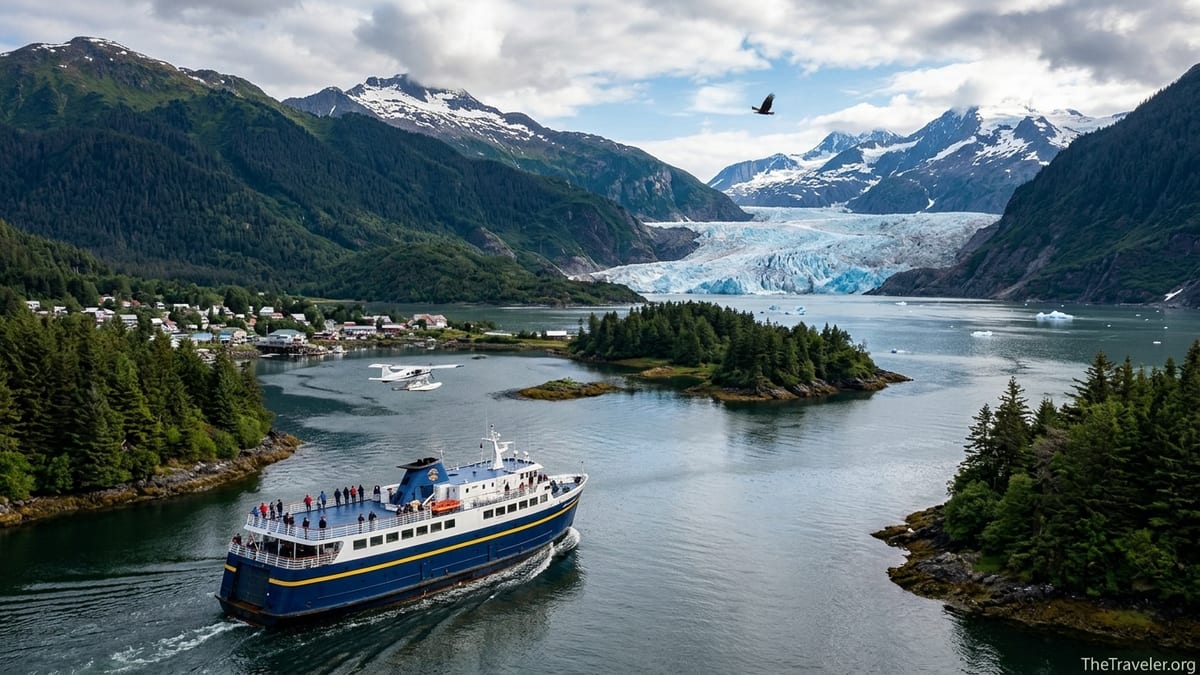
Understanding Southeast Alaska and the Inside Passage
Southeast Alaska is the long, island-studded panhandle that stretches south and east of the rest of the state along the border with British Columbia. It includes major communities such as Juneau, Ketchikan, Sitka, Skagway, Haines, Wrangell and Petersburg, along with dozens of smaller towns and villages scattered across islands and narrow mainland inlets. Glacier Bay National Park and Preserve, a largely roadless wilderness of tidewater glaciers and rugged peaks, is also part of this region.
The Inside Passage refers to the protected marine route that threads through this maze of islands and channels between Washington State, British Columbia and Southeast Alaska. Cruise ships, ferries, fishing boats and local water taxis all use this corridor as a relatively sheltered alternative to the open Pacific. For travelers, “Inside Passage” is often shorthand for the classic cruise itinerary that links ports like Ketchikan, Juneau, Skagway and Glacier Bay on a northbound or southbound route between Vancouver or Seattle and Alaska.
What makes Southeast distinct from the rest of Alaska is how thoroughly it is shaped by water. With the exception of road links to Haines, Skagway and the tiny border community of Hyder, most towns are not connected to the broader North American road network. They rely on ferries, small planes and cruise ships for people and freight. The state-run Alaska Marine Highway System, or AMHS, functions as a marine highway here, tying together communities from Bellingham in Washington and Prince Rupert in British Columbia up through the Southeast archipelago.
This geography creates both limitations and opportunities for travelers. Planning a Southeast trip means thinking in terms of sailings, flights and tides instead of road miles. In exchange, you get immersive time on the water, lingering in long fjords, skirting temperate rainforest shores and moving at the pace of the coastal communities that depend on these routes every day.
Why Choose Southeast Alaska: Scenery, Wildlife and Culture
Southeast Alaska is one of the best choices in the state for travelers who want dramatic coastal landscapes concentrated into a fairly compact region. Much of the area lies within the Tongass National Forest, one of the largest temperate rainforests on earth. Steep mountains plunge into deep inlets, waterfalls stream from hanging valleys, and low clouds and shifting light give the scenery a constantly changing mood. Tidewater glaciers are a major draw, whether seen in Glacier Bay, Tracy Arm, Endicott Arm or from smaller local glaciers near communities.
Wildlife viewing is another defining reason to visit. Humpback whales feed in the Inside Passage during summer, and orcas, porpoises, sea lions and harbor seals are regular sights. Bald eagles are abundant, often visible right from town docks, and black bears and brown bears forage along salmon streams. In Southeast, much of this viewing happens from boats or shoreline trails, sometimes just minutes outside of town, making it accessible even to short-stay visitors.
The region is also a center of Alaska Native cultures, particularly Tlingit, Haida and Tsimshian peoples. Totem poles, clan houses, carving centers and cultural institutes in communities such as Ketchikan, Sitka and Juneau offer visitors a chance to learn about histories that long predate the arrival of Russian and American settlers. Historic districts in ports like Skagway and Wrangell layer in stories of gold rush booms, fishing and timber industries, and the evolution of coastal trade.
For many travelers comparing regions, Southeast offers a very different feel from the open tundra, vast road systems and towering interior mountains of Southcentral or Denali. If you are drawn to coastal scenery, maritime culture, cool misty weather and time on the water, Southeast is a strong match. If your priorities are long highway road trips, broad mountain vistas from the car and easier access to interior wildlife like caribou, you may be better served by other Alaska regions or by pairing Southeast with time elsewhere in the state.
Who Southeast Alaska Is Best For
Southeast Alaska works particularly well for travelers who enjoy slow journeys and do not mind building an itinerary around boat and plane schedules. Classic cruise passengers get a taste of multiple ports in a week, with glacier viewing built into many itineraries. This is ideal if you prefer an all-inclusive experience with lodging, transport and many meals bundled, and you are comfortable with limited time in each town. Photography enthusiasts, first-time Alaska visitors and multi-generational groups often appreciate the ease and comfort of these trips.
Independent travelers who are willing to use the Alaska Marine Highway ferries and regional flights can go deeper. By treating Juneau, Ketchikan or Sitka as hubs, you can spend several days in each community, adding side trips by small plane or boat. This style suits people who like to walk, hike, visit museums and cultural sites, or simply settle into the rhythm of a coastal town. It can also work well for anglers booked into fishing lodges, paddlers joining guided kayak trips, and hikers using ferry stops to access trail networks near ports.
Slow travelers using ferries as a backbone often build extended itineraries, staying three or four nights in places like Petersburg or Wrangell that cruise passengers might never see. These communities, focused on commercial fishing and local life rather than mass tourism, reward visitors who value authenticity, quiet harbors and the chance to meet residents at cafes and harbors rather than on organized tours.
On the other hand, travelers whose top priorities are seeing Denali, driving long distances, or having maximum flexibility without thinking about schedules may find the ferry-and-flight puzzle of Southeast limiting. Those interested primarily in northern lights or very cold, snowy winter scenes will also have better odds in interior and northern Alaska than in the comparatively maritime climate of the Inside Passage.
Cruise, Independent or Hybrid: Choosing Your Travel Style
Most visitors encounter Southeast Alaska through large-ship cruises that run from roughly May through September. Typical Inside Passage itineraries sail between Seattle or Vancouver and either turn around or continue to Southcentral Alaska. Common Alaska port calls include Ketchikan, Juneau and Skagway, often paired with a day of glacier viewing in areas such as Glacier Bay, Hubbard Glacier, Tracy Arm or Endicott Arm. Time in each town is usually limited to several hours, which is enough for a guided excursion or a compact self-guided walk but not for deeper exploration.
Independent travelers can visit many of the same communities using the Alaska Marine Highway System and regional air service. AMHS ferries typically connect Bellingham or Prince Rupert with Ketchikan, Wrangell, Petersburg, Sitka, Juneau, Haines, Skagway and other ports in Southeast. Rather than staying aboard for an entire long sailing, independent travelers usually disembark in one town for a few days, then reboard a later ferry to continue onward. In practice, this requires checking current route maps, seasonal timetables, and reservation availability before committing to dates, since some communities may see only intermittent service.
Regional flights complement the ferries and are particularly important if you have limited time. Alaska Airlines links major Southeast hubs such as Juneau, Ketchikan and Sitka to Seattle and Anchorage, and operates multi-stop “milk run” routes that serve smaller communities like Wrangell and Petersburg as part of a single through flight. Local carriers and seaplane operators fill in additional routes to places such as Gustavus for Glacier Bay, Hoonah, Angoon and Prince of Wales Island. For an independent trip, many travelers fly into Juneau or Ketchikan, spend several days, then add one or two additional communities reached by short flight or ferry.
A hybrid approach combines a one-way cruise segment with independent travel before or after. For example, you might sail northbound from Vancouver to Seward or Whittier, then travel overland to Anchorage and Fairbanks, or reverse the order. Another hybrid option within Southeast is to arrive by AMHS ferry from Bellingham or Prince Rupert, spend time in a few ports, and then join a small-ship expedition or flight-based lodge stay to reach more remote areas. When planning any hybrid, it is essential to verify current cruise schedules, ferry timetables and flight options for your target year before locking in nonrefundable arrangements.
Seasons, Weather and When to Visit
The primary visitor season in Southeast Alaska runs from roughly May through September. During this period, cruise traffic is at its peak, many tour operators are active, and the Alaska Marine Highway typically offers more frequent sailings than in winter. Daylight is longest from late May through July, which can be helpful for fitting in hikes, boat trips and evening strolls along the waterfront. Wildlife viewing opportunities are strong through most of this window, with whale activity common in summer and salmon runs peaking in many streams later in the season.
Weather in Southeast is famously changeable. Much of the region lies within the Tongass National Forest, a temperate rainforest where frequent rain and low clouds are normal. Even in mid-summer, travelers should expect cool temperatures, damp conditions and occasional windy or foggy days on the water. That said, there are also stretches of clear, brilliant weather, and the combination of mist, cloud and sun can make for striking photography. Packing high-quality rain gear, warm layers and waterproof footwear is far more important here than the exact temperature forecast.
Shoulder seasons in late April and early May, and in September and early October, can be appealing for some travelers. Cruise and tour offerings may be fewer, but crowds are lighter and prices for lodging and activities sometimes moderate. Fall brings changing foliage and the tail end of salmon runs in some areas. Winter is a distinct experience: communities stay open, but ferry and flight schedules may be more limited, many tours close, and some small lodges or seasonal restaurants shut until spring. Independent travelers planning outside the primary season should pay close attention to which services run on their specific dates.
In terms of cost, peak summer months often come with higher airfares, cruise prices and lodging rates, especially in June, July and early August. Shoulder months can offer relative savings, but conditions vary by year, community and operator. For any time of year, Southeast is generally more expensive than comparable destinations in the Lower 48, particularly when you factor in the cumulative cost of flights, ferries and specialized tours.
Key Communities of the Inside Passage
Juneau, the capital of Alaska, is the main transportation hub for much of Southeast. It has frequent jet service, AMHS ferry connections and a broad range of lodging and tours. Many visitors come for easy access to a road-accessible glacier, hiking trails that climb into alpine areas above town and whale-watching excursions in nearby channels. For most itineraries, two to four full days is a reasonable starting point, with more time if you plan side trips by boat or small plane. Juneau is typically linked by ferry to ports such as Ketchikan, Sitka, Haines and Skagway, though exact routes and frequencies change and must be confirmed with current schedules.
Ketchikan is often the first Alaska port for northbound cruises and ferries. Built along a narrow strip of shoreline at the base of steep forested slopes, it is known for its historic Creek Street boardwalk, a concentration of totem poles and access to Misty Fjords National Monument by boat or plane. A stay of one to three nights allows time for a combination of town exploration, cultural sites and at least one excursion into surrounding wilderness. Ketchikan is usually served by ferries from Bellingham or Prince Rupert and connected onward to Wrangell, Petersburg and Juneau, as well as by daily flights from Seattle and other Alaskan cities.
Sitka, on the outer coast of the Inside Passage, feels more like an oceanfront town than some of the more sheltered inside ports. It blends strong Tlingit and Russian history, visible in its totem parks and historic church, with quick access to hiking trails and sea kayaking routes. Wildlife-focused marine trips from Sitka can offer chances to see whales, sea otters and seabirds in exposed coastal waters. Because Sitka is a little less tied into the main ferry corridor, many travelers rely on flights to reach it, and a two to three night stay works well for most.
Skagway and Haines sit near the northern end of the Inside Passage in the Lynn Canal. Skagway is best known for its gold rush-era historic district and popular scenic railway, and is a regular stop for large cruise ships. Haines has fewer big ships and attracts visitors with its arts scene, river and fjord landscapes and access to bear and eagle viewing in season. Both have road connections into the interior via Canada, making them natural endpoints for road trippers or for hybrid ferry-and-drive itineraries. One to two nights in each town, or a longer base in one with a day visit to the other by ferry, is common.
Wrangell and Petersburg are smaller working towns that reward travelers seeking a quieter experience. Wrangell offers access to ancient petroglyphs, nearby islands and seasonal bear viewing opportunities at certain rivers, while Petersburg has a strong Norwegian heritage, compact harborfront and good access to nearby tidewater glaciers and marine wildlife. Because cruise traffic is lighter, lodging and restaurant options are more limited, and a two or three night stay fits most independent itineraries. Both towns sit on the AMHS route between Ketchikan, Juneau and other ports, and are also served by multi-stop regional flights. Travelers should verify which ferries and flights operate in their chosen season, as small communities can see infrequent service.
Glacier Bay National Park and Preserve is most commonly experienced on a cruise or through a stay in or near the small community of Gustavus. Large cruise ships enter the bay on day-long scenic permits, while independent travelers typically fly or ferry from Juneau to Gustavus and then join day boats or guided trips into the park’s deeper fjords. There is no road connection to the rest of Alaska, and inside the park, a single road links Gustavus to park headquarters at Bartlett Cove. Planning at least two or three nights in Gustavus or nearby accommodations gives you the best chance of fitting in a full day on the water plus time to walk forest and shoreline trails.
Getting There and Getting Around
From the Lower 48 and Canada, most visitors reach Southeast Alaska either by cruise ship, scheduled flight or AMHS ferry. Large-ship cruises to the Inside Passage typically depart from Seattle or Vancouver and operate seasonally, while small-ship expedition cruises may start or end in ports such as Juneau or Sitka. Because companies regularly adjust itineraries, ships and homeports, it is essential to consult current schedules for your intended year of travel rather than relying on past patterns.
Air connections provide the fastest access for independent travelers. Juneau, Ketchikan and Sitka usually have direct jet service from Seattle, and many also have links to Anchorage and other Alaskan cities. Multi-stop flights serve smaller communities such as Wrangell, Petersburg and Yakutat, often as part of a route that hops between several Southeast towns on one plane. Seasonal flights to Gustavus serve Glacier Bay. Seaplane operators and small local carriers connect additional villages and lodges that do not have large runways. When planning, pay attention to minimum connection times, the potential for weather-related delays and the possibility that some routes operate only on certain days of the week.
The Alaska Marine Highway System is the backbone of surface travel in Southeast. Its Southeast network is typically described in terms of mainline routes, which cover longer distances and often take more than a day to travel between endpoints, and shorter feeder or day-boat routes that leave a home port in the morning, visit one or more nearby communities, and return the same day. Travelers commonly string together trips by taking a mainline ferry between major hubs like Bellingham, Ketchikan and Juneau, then using feeder routes to reach places like Haines, Skagway, Wrangell or Petersburg.
Because AMHS schedules and vessel assignments change from year to year, you should always consult current route maps and timetables for your specific dates. Before booking, check whether your intended sailings run on the days you need, whether space is available for vehicles if you are bringing one, and whether cabins are offered on overnight legs. Some popular routes and dates can sell out well in advance, especially in high summer. Walk-on passengers have more flexibility, but should still make reservations once their plans are set, and be prepared for possible schedule adjustments due to weather or operational changes.
In addition to AMHS, there are other local ferry services, including boats linking Prince of Wales Island with Ketchikan and passenger ferries between Haines, Skagway and Juneau in some seasons. These services can significantly reduce travel time between certain communities, but their schedules and operating seasons vary. As with the state ferries and flights, you should verify current routes and frequencies directly with the operators for the year you plan to travel.
Where to Stay and What It Costs
Lodging in Southeast Alaska ranges from familiar chain hotels in larger hubs to small locally owned inns, fishing lodges, remote wilderness lodges and simple public cabins or campgrounds. In Juneau, Ketchikan and Sitka you can expect a mix of midrange hotels, small waterfront properties and bed-and-breakfast style accommodations. Smaller communities like Wrangell, Petersburg, Haines and Gustavus typically have a handful of inns, motels or lodges, sometimes with only a limited number of rooms in total. In very small towns, you may also find vacation rentals, seasonal cabins or homestay-style options, though availability can be highly variable.
Fishing lodges and remote wilderness lodges offer more immersive stays focused on angling, kayaking, wildlife or retreat-style experiences. These often include meals, guided activities and transport from a regional hub, and they may sit on islands or coastline reachable only by boat or small plane. For hikers and paddlers with backcountry experience, some parts of Southeast offer U.S. Forest Service cabins and basic campgrounds, though these require advance reservations, careful planning around tides and weather, and the ability to be self-sufficient in a remote environment.
Because Southeast communities are small and summer demand is high, it is wise to book lodging as early as you can once your ferry, cruise or flight dates are firm. This is especially true on peak cruise days, when hundreds or thousands of day visitors may be in town and overnight options are in high demand. Booking ahead is also important in places with limited inventory, such as Gustavus, Hoonah or small fishing communities. In shoulder seasons, you may find more flexibility, but some properties close outside of summer.
In general, travelers should expect Southeast Alaska to be a relatively expensive destination. Operating costs for lodging, food and tours are high in remote coastal communities where most goods arrive by barge, ferry or air. Ferry fares and regional flights can add up quickly if you plan multiple legs, and guided excursions such as whale watching, bear viewing, flightseeing and fishing charters are typically priced at a premium compared with similar activities in many parts of the Lower 48. Because prices vary significantly by community, season and operator, example price ranges should always be checked against up-to-date sources for your travel year rather than assumed from previous seasons.
Example Trip Frameworks
One classic way to experience Southeast Alaska is a one-week cruise-focused Inside Passage trip. A typical route might sail from Seattle or Vancouver and include port calls in Ketchikan, Juneau and Skagway, along with a day of glacier viewing in a place like Glacier Bay or Tracy Arm, before returning to the starting city or continuing to Southcentral Alaska. Within this framework, you can choose shore excursions that match your interests, such as a cultural visit and totem pole park in Ketchikan, whale watching or glacier viewing in Juneau, and a historic railway ride or hiking in Skagway. This style keeps logistics simple and works well if you prefer to unpack once and let the ship handle transportation and most meals.
A more in-depth 10 to 14 day independent loop could start with a flight to Juneau or Ketchikan. From there, you might spend several days exploring your arrival city, then board an AMHS ferry to Wrangell or Petersburg for a quieter small-town experience and access to nearby fjords and wildlife. Continuing by ferry to another community such as Sitka, Haines or Skagway adds variety in history, hiking and scenery. Flights can then return you to your starting point or on to Anchorage for onward journeys. The exact sequence will depend on current ferry schedules and flight availability, so many travelers begin by sketching their must-see communities, then adjusting dates and order to match the transportation options for their chosen month and year.
A hybrid itinerary links Southeast with other parts of Alaska while still highlighting the Inside Passage. For example, you could fly into Anchorage, travel by train and road to visit Denali and the interior, then continue south to a coastal port such as Whittier or Seward to join a cruise that sails through Glacier Bay and the Inside Passage to Vancouver or Seattle. Alternatively, you could take the AMHS ferry north from Bellingham or Prince Rupert to Ketchikan or Juneau, spend time exploring several Southeast towns independently, then fly onward to Anchorage or Fairbanks to experience a different side of the state.
Whatever structure you choose, building in some flexibility is helpful. Weather can affect small-plane flights and occasionally ferries, and you may discover a town where you wish you had more time. Many travelers find it useful to anchor their itinerary around a few fixed points, such as a cruise departure date, a Glacier Bay visit, or a key ferry segment, then keep the days at either end slightly open until transportation details are confirmed. Once you decide that Southeast Alaska and the Inside Passage are your focus, more detailed articles on individual towns, the Alaska Marine Highway, Glacier Bay and specific activities will help you refine your plans.
Bringing It All Together
Southeast Alaska offers an unusually rich combination of fjord landscapes, abundant marine wildlife, deep cultural roots and compact historic towns, all knit together by water. Whether you glimpse it briefly from a cruise ship deck or spend two weeks hopping between ferry ports and small-plane airstrips, the region tends to linger in memory long after the trip ends. The key to a rewarding visit is matching your travel style, time frame and budget to the realities of a place where most movement happens by boat and plane.
As you weigh Southeast against other Alaska regions, consider what matters most: days on the water versus miles on the road, coastal rainforests versus interior mountains, short sampler stops versus slower immersion in working communities. There is no single right approach. A first-time visitor might opt for the simplicity of a cruise, a returning traveler might build a ferry-and-flight loop focused on smaller towns, and others might connect an Inside Passage voyage with time around Denali or Anchorage.
Once you have decided that Southeast Alaska and the Inside Passage will anchor your trip, the next step is to dive into more focused planning. Look for dedicated guides to the Alaska Marine Highway, in-depth articles on Juneau, Ketchikan, Sitka, Skagway, Haines, Wrangell and Petersburg, and detailed resources on Glacier Bay National Park and Preserve. With those tools in hand and realistic expectations about schedules, weather and costs, you will be well prepared to chart your own course through one of Alaska’s most memorable regions.