


Playa de Famara on Lanzarote’s northwest coast is one of the Canary Islands’ most versatile surf beaches: a long, exposed Atlantic beach break running beneath the Risco de Famara cliffs, with multiple peaks spread over several kilometres. For visitors weighing it up against other Canary spots, understanding how the sandbanks, winds and seasons interact here is key to choosing the right time, tide and zone for your level.
Get the latest updates straight to your inbox!
How Famara Works as a Surf Spot
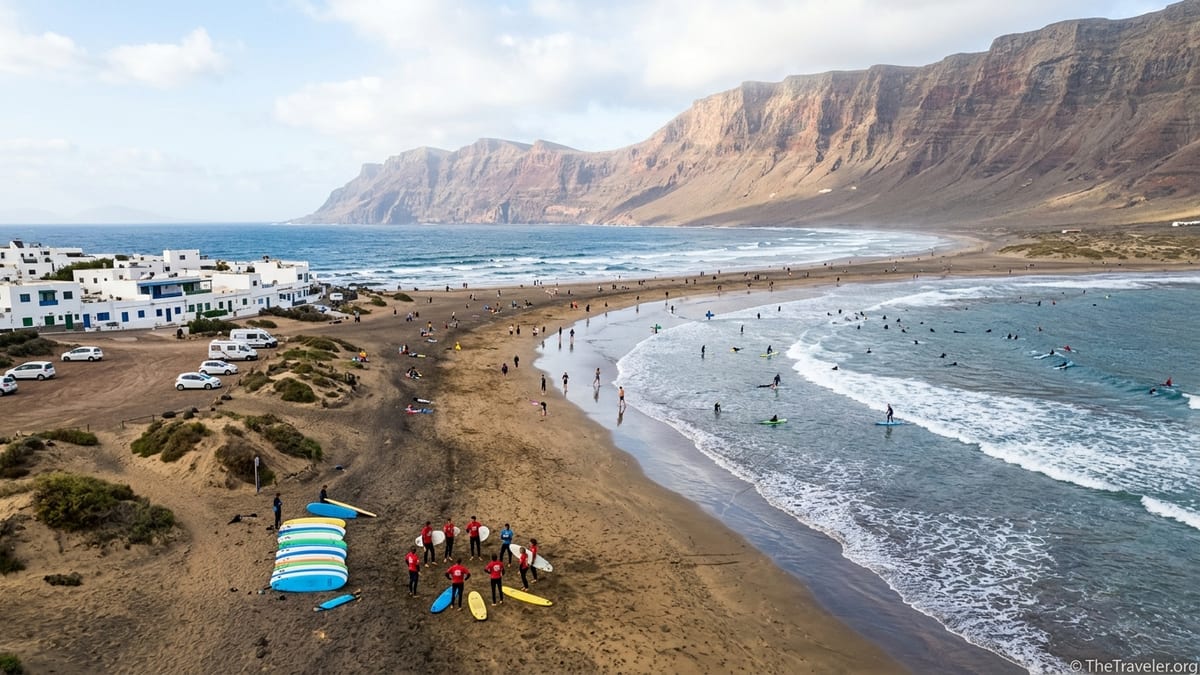
Famara is a west to northwest facing beach break that picks up a wide range of Atlantic swells. The main surfing area stretches roughly 3 to 4 kilometres from the village of Caleta de Famara southwards towards the river mouth and dunes. Sandbanks create many separate peaks along this stretch, so conditions can vary noticeably from one section of the beach to the next, even on the same tide.
Independent surf guides describe Famara as working best on north to northwest swells, with west and occasionally north northeast also producing rideable waves when the sandbanks are well formed. Smaller swells around waist to chest high tend to break more gently over the outer sandbars, often producing spilling waves that suit learners and early intermediates. Once the swell builds into the head high range and beyond, the energy concentrates on the inner bars, the take off steepens, and closeouts and powerful rips become much more common.
Wind has a major impact here. Typical northeast trade winds are side to side onshore for much of the beach, which can chop up the surface, especially in spring and summer afternoons. Mornings often offer lighter breezes and cleaner faces, while occasional southeast or easterly winds groom the waves and feel almost offshore along the main stretch. Compared with more sheltered Canary points and reefs, Famara is more exposed to wind, which is good for consistency of swell but means visitors need to watch the forecast and aim for favourable wind windows.
Overall, regional surf climatology and multi‑year forecast data confirm a pattern of relatively consistent rideable swell at Famara in autumn and winter, with more wind‑affected but still surfable conditions in late spring and summer. This makes it a flexible base: rarely flat for long, but not always clean or beginner‑friendly.
Beach Zones, Peaks and Nearby Reefs
Most surf schools focus their beginner lessons on the sandbanks directly in front of Caleta de Famara village and stretching south towards the river mouth. This area offers easier beach access, lifeguard coverage in season, and a wide, gradually shelving beach that allows whitewater reforms to roll in for a long distance. On small to moderate swells, the sections just south of the village often have softer peaks with more forgiving shoulders, so students can stand in waist to chest deep water and catch broken waves towards the shore.
Further along the beach, particularly towards the southern end beyond the river mouth and into the more open dune zone, the peaks tend to feel more powerful and less managed by schools. Here the sandbars can funnel swell into punchier, faster peaks that are better suited to confident intermediates and above. On larger winter swells, these peaks can produce heavy shorebreak sections, strong lateral currents and closeouts that are dangerous for inexperienced surfers. Many local coaches advise beginners to avoid walking too far down the beach in big surf, even if it looks quieter.
Caleta de Famara also serves as a base for surfers who want to access Lanzarote’s well‑known reef breaks. To the north and west of the beach, and along the coast towards La Santa, there are several volcanic reef and point setups that offer more powerful, hollow waves when solid swell arrives. These spots are not suitable for first timers and are usually treated as advanced or at least solid intermediate venues, with sharp lava rock, strong currents and often more localised lineups. Any visitor thinking of surfing reefs should seek detailed, spot‑specific advice from experienced local surfers or guides and should not simply paddle out alone after learning on the beach.
Within the village limits, the focus remains firmly on the sandy beach break. Risco de Famara’s cliffs at the northern end and the arc of the bay mean there are subtle variations in exposure to wind and swell as you walk, which is why even experienced surfers here often spend time watching several peaks before choosing where to paddle out.
Seasons, Swell Patterns and When to Learn
Climatological data for Lanzarote indicate that Atlantic swell is most reliable from roughly October through March, when mid‑latitude storms track across the North Atlantic and send frequent west to northwest swell trains towards the Canaries. In this period, wave heights at exposed spots like Famara are often in the chest to overhead range for days at a time, with occasional bigger pulses. Water temperatures in winter typically sit around the high teens Celsius, so most surfers use a 3/2 or light 4/3 wetsuit.
Summer, from June to September, tends to bring smaller, less frequent groundswell and more pronounced northeast trade winds. For advanced surfers chasing bigger, more powerful waves, this can feel inconsistent compared with the winter reef season. For beginners and lower intermediates, however, these months often serve up more manageable waist to shoulder high surf on many days, albeit sometimes wind‑chopped in the afternoons. Local coaches commonly highlight late spring to early autumn as the most forgiving window for adults learning to surf at Famara, provided they pick days with modest swell size and lighter winds.
Shoulder seasons in April, May, late September and October often offer a useful compromise. Swell is still reasonably active compared with high summer, and there are more days with moderate wave size and bearable winds. Independent guides that aggregate multi‑year forecast data suggest that winter delivers the highest percentage of days with rideable swell for shortboards, while late spring and summer have more small‑wave days that suit foam boards and longboards. For travellers balancing work and holidays, this means winter is best for confident intermediates and advanced surfers targeting reefs and stronger beach‑break days, while late spring to autumn may be preferable for surf‑curious visitors seeking mellow conditions.
When comparing Famara with other Canary spots, it stands out as one of the few extensive sandy beaches with enough space to spread learners out, similar to stretches of Fuerteventura’s north shore but in contrast to the rockier setups common on Gran Canaria or Tenerife’s main breaks. That makes it particularly attractive for first timers who want Atlantic power, but not necessarily over a shallow reef.
Tides, Rips and Essential Safety
Local lifeguards and schools repeatedly emphasise that Playa de Famara can be deceptively powerful. Even on days when the waves look modest from the road, shifting sandbanks and channels create strong rip currents that pull water back out to sea. These rips can appear as darker, choppier lanes with fewer breaking waves, often between sandbanks where whitewater is more continuous. Their exact position and strength change with tides, recent storms and sand movement, so any visitor should spend time observing the water from the beach before entering.
At mid to high tide, water can push right up the beach, leading to strong shorebreak and thumping dumpers that slam directly onto the sand. For beginners and non‑swimmers, this can be dangerous. Several local operators advise that complete novices and weaker swimmers should stay in shallow water close to shore, under supervision, and avoid conditions where waves are consistently head high or larger for the average adult. On big winter swell days, even many intermediates choose to sit out or move to a more sheltered corner of the island rather than force a session at Famara.
The primary safety message at Famara is that formal surf lessons are strongly recommended for first timers. Instructors know how local rips typically form along the beach, which sections are currently safer, and how to choose appropriate tides and sandbanks for the day’s conditions. They also brief students on flag systems, safe entry and exit points, and basic self‑rescue techniques if caught in a channel. Visitors are repeatedly advised to talk to lifeguards and local professionals before paddling out, rather than relying only on apps or distant webcams.
For non‑surfers and paddlers, the same caution applies. Weak swimmers should not attempt to “just have a quick bodyboard” when the red flag is flying or when visible rips are pulling other beach users sideways or outwards. The Atlantic here has much more force than many sheltered Mediterranean or resort beaches. Choosing to sit out one day and waiting for smaller, cleaner conditions is part of safe surf travel in Lanzarote.
Surf Schools, Camps and Typical Offers
Caleta de Famara has become a concentrated hub of surf instruction over the last two decades, with a cluster of schools and camps operating year‑round from within or immediately around the village. As of November 2026, several well‑established operators advertise daily lessons and multi‑day packages based in Caleta itself, including providers that also run surf and yoga camps. Their websites and booking materials position Famara as Lanzarote’s main learning beach, serving a mix of European and international visitors.
Most schools offer a similar core structure: half‑day group lessons that run for approximately 3 to 4 hours, and full‑day programmes that include a morning coaching block, a break, and supervised or free practice in the afternoon. Multi‑day camps often bundle 3 to 7 days of instruction with accommodation in shared houses or hostel‑style lodges in the village. Surf and yoga packages typically add daily yoga sessions either before breakfast or in the late afternoon, with some camps running special themed weeks outside peak holiday periods.
Recent price checks on Caleta de Famara school and camp websites in November 2026 show that a single day group lesson for adults commonly falls in a broad range that starts around the low double digits in euros and rises towards the mid double digits, depending on duration and inclusions such as transport and photo analysis. Three to seven day camp packages with shared accommodation and daily lessons typically start in the mid hundreds of euros and climb based on room type, season and extras like yoga. Because pricing is actively adjusted for demand and special offers, any visitor should treat these figures as indicative and confirm exact rates at the time of booking.
Instead of focusing on brand names, it is more useful to compare decision criteria. Key points include instructor qualifications and whether coaches hold recognised surf and lifesaving certifications, maximum group sizes, and language options for instruction. Equipment quality matters: good schools refresh their soft boards and wetsuits regularly and carry a range of sizes and volumes. Insurance coverage, rescue plans and whether beach transfers and accommodation are included are also important. For travellers comparing Famara with other Canary camps, paying attention to these details often matters more than small price differences.
Rentals and Equipment Choices
Caleta de Famara village hosts multiple surf shops and school fronts that offer board and wetsuit rental alongside lessons. Visitors can generally find a broad selection of foam boards for beginners, larger volume minimal shapes for progressing surfers, and a smaller selection of performance shortboards and longboards for more experienced riders. Some outlets also rent bodyboards and accessories such as boots and hoods in cooler months.
Half‑day and full‑day rentals are common, with discounts for multi‑day or weekly hires if you plan to surf regularly during your stay. Shops typically ask for an identity document or passport copy and some form of deposit or card pre‑authorisation against damage or loss. Exact terms vary between providers, so it is important to read the rental agreement, check for repair charges and responsibility in case of breakage, and clarify whether transport racks or board bags are included if you intend to drive to other breaks on the island.
For visiting surfers used to colder climates, a 3/2 full suit is often sufficient from roughly late spring through autumn, while a slightly thicker suit can feel more comfortable during the coldest winter weeks. Booties can be useful if you plan to explore lava reef spots, though they are not typically necessary on Famara’s sandy bottom. Comparing rental rates and equipment condition in two or three shops on arrival is wise before committing to a longer rental period.
Compared with resort towns elsewhere in the Canaries, Famara’s rental scene is more tightly focused on surf rather than general beach leisure equipment, reflecting its role as a surf village rather than a mass tourism resort. This makes it easier to find help choosing the right board volume and shape for your level if you ask directly in the shops.
Where to Base Yourself: Famara vs Resorts
Staying in Caleta de Famara places you within walking distance of the main surf meeting points on the beach. Accommodation in and around the village ranges from surf camp houses and shared apartments to independent holiday rentals. Surf camp lodging typically offers simple, social facilities with shared kitchens and communal spaces, ideal for travellers who want to meet other surfers, compare sessions and join structured lesson programmes. Shared apartments and independent rentals provide more privacy and can suit small groups or families who still want quick beach access.
The main trade off of staying in Famara is that it is a quiet village with only a handful of restaurants, small shops and low key bars. Nightlife is limited, and non‑surfers in a mixed group may find the options for alternative activities, shopping and entertainment somewhat narrow after a few days. The setting, however, with the cliffs behind and the open bay in front, feels immersive and suits visitors who prioritise surf and nature over bustling promenade life.
By contrast, basing yourself in Costa Teguise or another resort area and driving in daily gives you a broader range of hotels, restaurants, family attractions and evening options. Costa Teguise, on Lanzarote’s east coast, is a well established resort with regular bus connections and road links. From there, the drive to Famara typically takes around 25 to 35 minutes by car depending on traffic. Many surf schools can arrange pickup from resort zones or provide directions for self‑drive guests. For groups that include non‑surfers, a resort base can provide more variety, with Famara visited as a day surf destination.
Traveller feedback in recent seasons often reflects this split: dedicated surf travellers tend to favour staying in Caleta de Famara for convenience and atmosphere, while families and mixed groups lean towards resorts for their broader amenities, treating the beach as one of several daytime excursions. When comparing with other Canary surf hubs, Famara sits somewhere between the compact surf villages of Fuerteventura’s north shore and the busier resort cities of Gran Canaria and Tenerife.
Getting to Famara and Local Logistics
Reaching Famara without a car is possible using Lanzarote’s interurban bus network. As of late 2026, line 20 links Arrecife, the island’s main town and transport hub, with Caleta de Famara, travelling via inland villages. Journey times are typically on the order of 35 to 50 minutes depending on stops. Line 31 connects Costa Teguise with Caleta de Famara through Teguise. Official timetables and recent transport reports note that services can be less frequent or require transfers on weekends or public holidays, so travellers should always confirm current schedules close to their travel date.
From Arrecife’s central bus station or Costa Teguise’s main stops, surfers can ride these buses with a soft board bag, although at busy times you should be prepared to wait for a less crowded service if the driver cannot accommodate large equipment. News updates from 2026 highlight ongoing adjustments to certain lines and occasional disruptions, which reinforces the need to double check both routes and weekend timetables, especially if you plan to rely solely on public transport for an early lesson.
Arriving by car is straightforward, with road access from both the south and east of the island. Caleta de Famara offers informal parking areas close to the beach and along the access roads used by surf schools. These can fill up on busy weekends, particularly when conditions are good or during local events, so allowing extra time to park and walk to your meeting point is wise. There are no large multi‑storey car parks; instead, drivers use marked roadside spaces and dirt lots near the dunes.
Compared with some other Canary surf towns, Famara currently feels less developed in terms of transport infrastructure, so building in buffers for bus changes, festival closures and parking is a sensible part of planning your surf days.
Level‑Specific Expectations and How Famara Compares
For complete beginners, Famara offers one of the more suitable setups in the Canary Islands thanks to its long sandy bottom, multiple peaks and established teaching infrastructure. With a reputable school, first timers can expect to start in whitewater close to shore, learning basic board handling, safety and pop‑ups under supervision. On small to moderate days in late spring, summer or early autumn, waves are often gentle enough for repeated attempts, although wind chop and currents still demand respect. Beginners should not expect every day to be ideal; strong trade winds, bigger winter swells and shifting rips mean there will be days when lessons are cancelled or moved to more sheltered times.
Improving intermediates often find Famara rewarding because it offers more space and power than many small European beach breaks, while still providing a sandy bottom and forgiving shoulders on moderate swells. They can work on trimming, cutbacks and basic manoeuvres on longer rides when sandbanks line up. Compared with tighter reef set‑ups elsewhere in the Canaries, Famara allows room to paddle around crowds and try different peaks along the beach. Intermediates should, however, be prepared to step up their ocean awareness, learning to read rips, adjust to bigger winter sets and decide when conditions have moved beyond their comfort zone.
Advanced surfers may not always choose Famara as their primary target when Lanzarote’s famous reefs are firing, but they still benefit from having a consistent, versatile beach nearby. On big days, the outer bars can provide heavy, challenging beach‑break waves, while the village base makes it easy to organise trips to nearby reef and point breaks that demand experience and respect. For this group, the comparison with other Canary options hinges on balancing Famara’s exposure and wind sensitivity against the quality of more sheltered reef setups around the island.
Across all levels, the key is realistic expectation. Famara is not a perfectly groomed, always‑clean postcard wave. It is a dynamic Atlantic beach that delivers everything from soft learner rollers to serious winter surf within the same arc of sand. Visitors who come prepared to choose their days, invest in professional guidance and respect the power of the ocean will understand why it features so strongly in discussions of Canary surf travel.