


More news on this day
A powerful coastal storm and lingering operational strains are disrupting Thanksgiving air travel across the United States on Thursday, November 26, 2026, with hundreds of flights delayed or canceled at some of the nation’s busiest airports just as nearly 6 million people are expected to fly for the holiday period.
Get the latest news straight to your inbox!
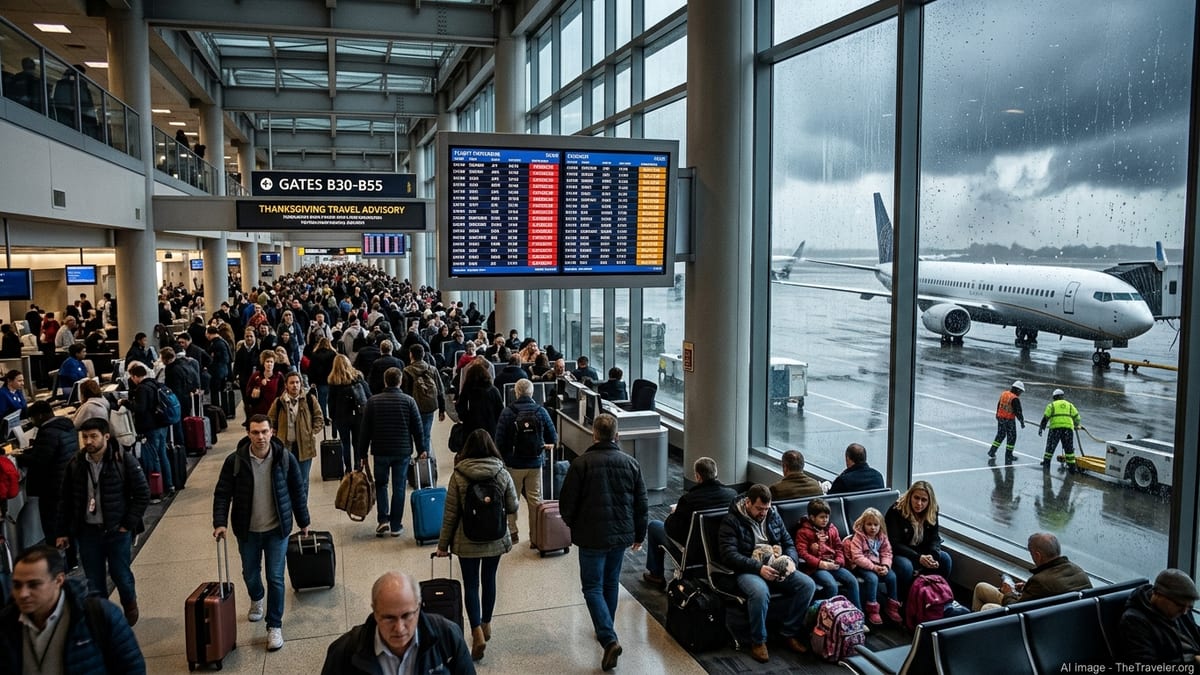
Storms, runway closures and a busy holiday crush converge
Thanksgiving Day has brought turbulent conditions for U.S. air travelers in 2026 as weather and infrastructure constraints collide with one of the busiest periods of the year. A strong coastal storm system is bringing high winds, heavy rain and coastal flooding to parts of the East Coast on Thursday, affecting airports from Washington, D.C. to Boston. Airlines and flight-tracking services report that by late morning, hundreds of flights had already been canceled and many more were delayed nationwide, with East Coast hubs experiencing some of the most severe impacts.
The bad weather comes on top of operational aftershocks from recent disruptions. A nationwide ground stop on November 13, triggered by a Federal Aviation Administration communications problem, led to widespread delays and cancellations that some carriers were still working through in subsequent days. Separate technology outages at individual airlines earlier in November also produced backlogs of displaced passengers and aircraft. While schedules had broadly recovered heading into the Thanksgiving week, these earlier events left networks more vulnerable to fresh weather-related disruption.
Local infrastructure issues are adding further strain at key gateways. At Miami International Airport, a FedEx cargo aircraft overran a runway on Wednesday night, November 25, temporarily closing all but one runway and contributing to longer taxi times and delays heading into the holiday. Although the airport has been working to restore capacity, the incident illustrates how quickly an already busy travel period can tip into congestion when even a single piece of critical infrastructure is taken out of service, particularly when bad weather is also affecting routes along the East Coast and Midwest.
How extensive are Thanksgiving 2026 delays and cancellations?
By Thanksgiving morning, multiple sources were reporting significant, though not systemwide, disruption. Flight-tracking data cited by national and local outlets indicated that hundreds of flights had been canceled across the United States before midday, with hundreds more departing or arriving behind schedule. Some reports pointed to more than 400 cancellations and around 1,700 delays to or from U.S. airports by early afternoon, figures that continued to shift as airlines adjusted schedules, activated waivers and repositioned aircraft in response to the evolving storm track.
The impact is especially visible at East Coast hubs in the path of the coastal system. Airports serving New York City, including John F. Kennedy, LaGuardia and Newark Liberty, have been experiencing delays tied to wind, low clouds and air traffic control programs designed to safely manage arrival and departure rates. Philadelphia, Boston, Baltimore/Washington and Washington Reagan National have also seen elevated levels of disruption as the storm brings bands of heavy rain and gusty winds across the Mid-Atlantic and New England. Some carriers and travel advisories highlight these airports specifically in their holiday weather alerts, indicating higher risks of significant schedule changes for passengers traveling to or through the region on November 26.
Conditions elsewhere are more mixed. Many airports in the central and western United States are operating closer to normal, aside from knock-on delays caused by aircraft and crews arriving late from affected regions. For travelers flying point-to-point within relatively unaffected areas, flights may depart and arrive largely on time, illustrating the uneven nature of weather-related disruption. However, because so much of the U.S. network is interconnected, problems at a few major hubs can ripple outward during peak travel periods, creating delays even for journeys far from the worst of the storm.
Record-busy skies meet slightly softer overall Thanksgiving demand
This year’s Thanksgiving air travel disruption is coming despite a slight softening in overall travel volumes compared with 2025. AAA’s national forecast projects 81.5 million Americans traveling at least 50 miles from home between Tuesday, November 24, and Monday, November 30, 2026. That represents a modest 0.1 percent dip from last year’s estimated 81.6 million travelers and ends a three-year streak of record Thanksgiving travel. Within that total, AAA expects approximately 72.9 million travelers to go by car and 5.96 million to fly domestically, with bus, train and cruise passengers making up the balance.
Even with that small year-on-year decline, the aviation system is operating at extremely high volumes. The U.S. Department of Transportation has characterized the 2026 Thanksgiving period as one of the busiest in more than a decade, with the Federal Aviation Administration forecasting record-breaking holiday skies in terms of flight numbers. Airline schedules for the week include slightly more flights than in 2025, according to industry analyses, reflecting continued network rebuilding since the pandemic and strong baseline demand despite higher airfares and broader inflation pressures.
The combination of near-record flight counts and dense passenger loads means there is limited slack in the system when weather or infrastructure issues occur. High average load factors reduce opportunities to rebook travelers onto later flights, especially on peak days such as the Sunday and Monday after Thanksgiving, when TSA historically screens the largest numbers of passengers. As a result, even a relatively modest cancellation rate can translate into lengthy waits for alternative options and fuller flights across entire airline networks, particularly for travelers headed to smaller markets that rely on a limited number of daily departures.
Weather waivers, passenger rights and what airlines are offering
In anticipation of the Thanksgiving storm and its potential effects on the Northeast and Mid-Atlantic, several major airlines issued weather waivers covering travel on or around Thursday, November 26. These waivers generally allow customers booked to, from or through a defined list of airports in the affected region to change their travel dates without paying the usual change fees. In many cases, carriers are also waiving fare differences for rebooked travel within a limited window, typically through Saturday, November 28, provided customers maintain the same origin and destination.
Coverage details vary by airline, but recent advisories have singled out airports such as Boston Logan, Baltimore/Washington International, New York JFK, LaGuardia, Newark, Philadelphia, Washington Dulles and Reagan National, and Westchester County for flexible rebooking. Some carriers extended similar waivers earlier in the week for select airports in the Southeast and along the Gulf Coast as the broader weather system developed. Travelers whose flights are canceled by the airline are generally entitled to a full refund if they choose not to travel, even on nonrefundable tickets, under long-standing U.S. Department of Transportation rules.
For flights that are delayed but not canceled, available remedies depend heavily on the cause of the disruption and each carrier’s policies. When delays stem primarily from weather or air traffic control restrictions, airlines in the United States are not required to provide compensation beyond rebooking on their own flights or partner services when available. Some carriers may offer meal vouchers or hotel accommodations on a case-by-case basis, particularly if the delay leads to an overnight stay and is partially related to factors within the airline’s control, such as crew scheduling or maintenance. Travelers are being advised by consumer advocates and travel insurers to check both airline commitments and policy documents carefully before incurring additional costs.
What Thanksgiving fliers should do now and over the coming days
With the storm still working its way up the East Coast on Thanksgiving Day and airlines continuing to adjust schedules, travelers with flights on November 26 and in the following days are being urged to monitor their trips closely. Checking flight status regularly through airline apps or websites remains essential, as departure times, gate assignments and even routings can change on short notice when conditions worsen, or air traffic control introduces new flow restrictions. Where waivers are in effect, rebooking as soon as plans become uncertain can help secure remaining seats on alternative flights.
Passengers yet to travel over the long weekend may wish to pay particular attention to the busiest remaining days. Historically, the Sunday after Thanksgiving sees some of the highest passenger volumes of the year at U.S. airports, and projections for 2026 suggest that pattern will continue, even with overall travel slightly below last year’s record. If weather-related delays on Thursday and Friday cause crews and aircraft to fall out of position, knock-on effects could persist into Saturday and Sunday, leading to tight connections and longer lines at security checkpoints. Allowing additional time at the airport and considering earlier departures or less busy times of day may reduce the risk of missed flights.
Looking ahead, the interplay between increasingly variable weather, a tightly scheduled airline system and strong holiday demand suggests that Thanksgiving travel disruptions could remain a regular feature, even in years when overall traveler numbers plateau or edge down. For now, the focus remains on clearing the immediate backlog of delayed and canceled flights while safely managing operations through the rest of the 2026 Thanksgiving period. Travelers planning trips for Christmas, New Year and into early 2027 are likely to see airlines and regulators revisit contingency plans, staffing levels and scheduling choices informed by how the system performs during this latest test, but any longer-term adjustments will depend on post-holiday analysis rather than decisions made in real time during the current storm.