


More news on this day
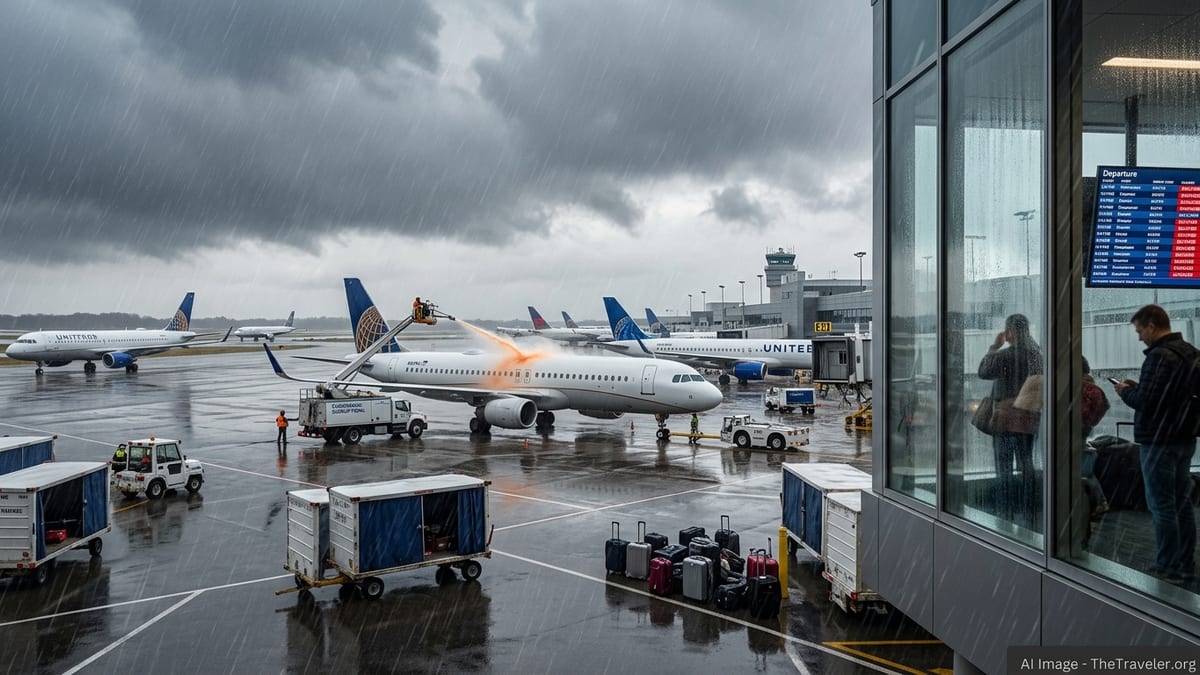
A powerful Thanksgiving nor’easter sweeping up the U.S. East Coast on Thursday, November 26, 2026, has snarled one of the year’s busiest travel days, with more than 1,700 flights delayed and over 400 canceled nationwide as airlines, airports and passengers contend with heavy rain, strong winds and localized flooding across key corridors from Washington to Boston.
Get the latest news straight to your inbox!
Storm-linked disruption by the numbers
By Thursday afternoon on November 26, flight-tracking data showed that at least 1,700 flights to, from or within the United States had been delayed and roughly 400 to 420 canceled as the Thanksgiving nor’easter intensified along the East Coast. The figures represent real-time totals that continued to change through the day, but they confirm that the storm moved beyond forecast risk and into widespread operational disruption for travelers trying to reach holiday gatherings.
Most of Thursday’s cancellations and delays have been concentrated at major East Coast and Mid-Atlantic hubs directly under the storm band. Data cited by multiple outlets using FlightAware’s tracking platform indicated that Baltimore/Washington International Thurgood Marshall Airport was among the hardest hit, with several dozen flights scrubbed by midday and more affected later in the day. New York’s John F. Kennedy, LaGuardia and Newark, as well as Boston Logan and Philadelphia, also reported elevated disruption as low clouds, strong crosswinds and heavy bands of rain cycled across the region.
The overall percentage of canceled flights nationwide on Thanksgiving remained relatively modest compared with historic mass-disruption events earlier this month and in past winters, when severe storms or nationwide system outages led to thousands of cancellations in a single day. Yet the timing on a peak holiday travel day, following a series of technology failures and a recent nationwide ground stop, meant that each cancellation or long delay had a greater impact, affecting full planes and already tight connection windows.
Weather conditions driving the Thanksgiving slowdowns
The current disruption is closely tied to a coastal storm that developed into a nor’easter along the Eastern Seaboard in the days leading up to Thanksgiving. On Thursday, November 26, the system brought periods of heavy rain, strong wind gusts and coastal flooding to parts of the Mid-Atlantic and Northeast, with forecasters warning that winds at times could reach 40 to 45 miles per hour in exposed areas. Those conditions are well within the range that can keep airport operations running, but they also increase the likelihood of approach changes, runway configuration shifts and temporary flow restrictions by air traffic control.
The combination of poor visibility, low cloud ceilings and gusty crosswinds is particularly challenging for heavily trafficked airports around New York, Boston, Philadelphia, Baltimore and Washington. Even when the weather technically allows safe takeoffs and landings, controllers often slow the rate at which aircraft can arrive and depart. That creates airborne holding patterns, pushes back scheduled departure times and can result in ground stops for specific airports when congestion builds faster than it can be cleared.
Beyond the impact on runways and flight paths, the same storm system has caused localized flooding on roads feeding major airports, as well as on some rail lines along the Northeast Corridor. Media reports Thursday described submerged stretches of track and reduced commuter and regional rail frequencies in parts of the New York and New Jersey area. For air travelers, that meant that even once flights were operating, reaching or leaving the airport could still take longer than usual, tightening margins for connections and increasing the risk of missed departures.
Strains on an already fragile Thanksgiving travel week
The timing of the nor’easter follows a turbulent period for the U.S. aviation system in November 2026. Earlier in the month, a nationwide ground stop tied to issues with an artificial intelligence-based air traffic management system led to more than ten thousand flights being canceled or delayed over several days. More recently, Delta Air Lines and United Airlines each experienced separate technology outages affecting critical operational systems, forcing hundreds of additional delays and cancellations at hubs such as Atlanta before Thanksgiving week had even begun.
While these earlier problems were largely resolved before the storm arrived, their ripple effects continued into the holiday period. Aircraft and crews were still working back into normal rotation, and some routes had limited spare capacity. As a result, Thursday’s weather-related cancellations and delays came on top of an already constrained system, leaving many passengers with fewer easy rebooking options if their flights were disrupted.
At the same time, overall demand for Thanksgiving travel in 2026 remains very high. Forecasts released earlier in the week projected more than 80 million Americans would travel at least 50 miles from home between Tuesday, November 24, and the Monday after the holiday, with roughly six million of those people expected to fly. Even a small percentage of cancellations or long delays on days with such dense traffic can translate into tens of thousands of passengers facing missed connections, overnight stays or the loss of entire holiday trips.
Where delays are most severe and how airlines are responding
The worst disruption on Thanksgiving Day has been clustered along the I‑95 corridor from Washington to Boston, where the nor’easter’s rain and wind were strongest during key morning and afternoon departure banks. Baltimore/Washington International saw the highest share of its schedule affected, with some reports indicating that more than a quarter of its daily flights were canceled or marked unable to operate by mid-afternoon. New York’s JFK and LaGuardia, Newark Liberty International, Boston Logan and Philadelphia International all recorded elevated levels of delays and a growing list of cancellations as the day wore on.
Further south, conditions were more mixed. Washington Reagan National and Dulles International experienced significant delays but lower cancellation rates than Baltimore, reflecting differences in runway layouts, wind orientation and airline scheduling flexibility. In the Southeast, major hubs like Atlanta and Charlotte saw weather-related slowdowns and residual congestion from earlier in the week, but they were less directly under the storm’s strongest bands and generally kept a greater share of their Thanksgiving schedules operating, albeit with frequent departure and arrival holds.
To manage the disruption, several major U.S. carriers issued weather-related travel waivers for passengers booked through the affected airports. At least one large network airline publicly confirmed that travelers using airports including Boston, Baltimore, New York’s JFK and LaGuardia, Newark, Philadelphia, Washington Dulles, Washington Reagan National and White Plains could change their flights without additional fees if they rebooked within a short window that runs through Saturday, November 28. Some low-cost carriers have also relaxed same-day change policies or allowed fee-free standby in selected markets, though conditions vary by airline and route.
What Thanksgiving travelers should do next
With the nor’easter expected to weaken and move away from the coast late Thursday into Friday, forecasters anticipate that the worst weather-related pressure on the U.S. air travel system will gradually ease heading into the weekend. However, the lagging effects of aircraft and crew displacement, as well as residual congestion in busy airspace along the East Coast, mean that travelers could still see elevated delays and scattered cancellations on Friday, November 27, even if local conditions appear calmer.
Passengers scheduled to fly later on Thanksgiving Day or on Friday are being advised by airlines, airports and travel agencies to monitor their flight status frequently, ideally beginning 24 hours before departure. Because Thursday’s disruptions have already forced many aircraft and crews off their planned rotations, same-day schedule changes can ripple outward, affecting flights well beyond the immediate storm zone. Checking in early via airline apps, signing up for text or email alerts and paying close attention to gate information at the airport can significantly reduce the risk of missing a re-timed boarding call or an equipment swap.
Travelers whose flights are canceled or significantly delayed should review their specific carrier’s policies before making alternative arrangements. For weather-related disruptions, U.S. airlines are generally not required to provide compensation beyond a refund if a passenger chooses not to travel, but many carriers will attempt to rebook customers on the next available service at no extra cost. In cases where delays run overnight, some airlines may offer hotel or meal vouchers as a gesture of goodwill, particularly if they still have open inventory in gateway cities. Given the tight conditions around Thanksgiving, however, hotel availability near major hubs can shrink quickly, so travelers may want to secure accommodation as soon as a cancellation is confirmed.
Looking beyond this storm, the early season nor’easter falls within a broader winter outlook that suggests storms and associated travel disruptions are likely to remain a recurring risk through the 2026–27 cold season. For upcoming trips, travelers may want to build in additional buffer time for connections, favor earlier departures where possible and keep flexible backup plans in mind. For those flying in the next 24 to 48 hours, the most practical steps remain straightforward: verify flight status repeatedly, arrive at the airport earlier than usual, and be prepared for lines and occasional schedule changes as the system works through the Thanksgiving backlog.