


More news on this day
New research suggests that nearly half of people in the United Kingdom now associate travel with higher stress, as concerns over flight disruption, rising costs and crowded airports increasingly overshadow the excitement of getting away.
Get the latest news straight to your inbox!
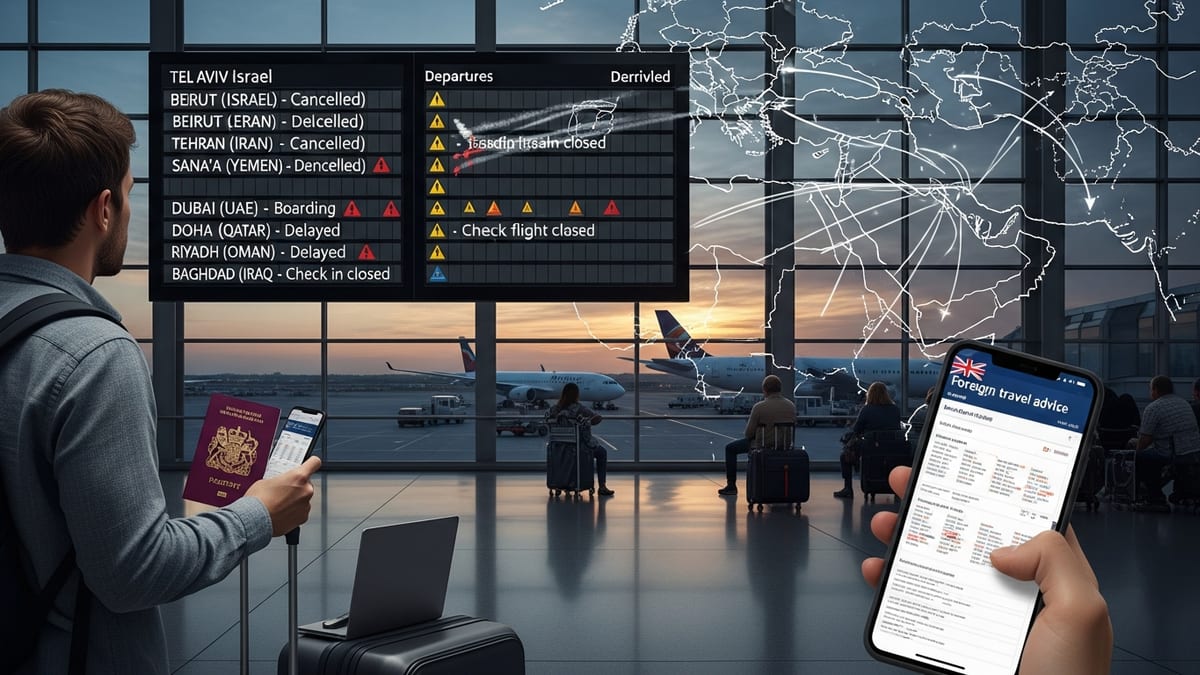
Surveys Point to Growing Holiday Anxiety
Recent surveys of UK travellers indicate that a large share of holidaymakers are experiencing higher levels of stress around their trips than in previous years. Travel insurance and aviation reports highlight that close to half of respondents now rank travel-related worries among their main sources of anxiety, with disruption and affordability at the forefront.
One widely cited travel anxiety study found that around 45 percent of respondents regard airline delays and cancellations as their leading stressor when planning a trip, ahead of the cost of travel, large crowds and fear of illness or injury abroad. These findings, based on thousands of travellers, suggest that concerns once seen as occasional frustrations have become routine expectations.
That pattern aligns with broader research on stress in Britain, which has recorded a sharp rise in people reporting heightened anxiety over the past year, particularly linked to the cost of living. Holiday planning appears to sit directly at the intersection of these pressures, with many travellers caught between the desire to take a break and the fear of what might go wrong.
Industry analysts say the result is a more emotionally charged booking environment. Travellers are now scrutinising itineraries and policies in far greater detail, often building in extra time or protection products as they brace for potential disruption.
Flight Disruption and Airport Crowds Drive Worry
Flight disruption has emerged as one of the clearest drivers of rising travel stress for UK residents. International data on airline performance show that significant delays and cancellations have become more common than before the pandemic, with tens of millions of seats affected in recent years. These trends filter directly into the experience of British travellers using busy hubs such as London Heathrow, Gatwick and Manchester.
Research drawing on passenger surveys has linked increasing delays to lower satisfaction scores for both airlines and airports. Studies of airport service quality also highlight that long queues at security checkpoints, crowded departure halls and uncertainty at the gate amplify travellers’ sense of tension, especially when they are already anxious about making connections.
Official statistics from UK regulators and government-backed passenger surveys have documented a range of recurring problems, from bottlenecks at security to baggage handling issues and last-minute schedule changes. The share of passengers reporting a completely problem-free journey has fallen compared with pre-2019 levels, suggesting that hassle-free flights are now the exception rather than the norm.
For many travellers, this environment has reshaped the entire journey. Arriving at the airport earlier, constantly checking apps for updates and preparing for potential rebooking has become standard behaviour, reinforcing the perception that flying is an ordeal rather than a straightforward part of the holiday.
Cost of Living Pressures Add to Holiday Strain
Economic pressures are deepening the sense of stress around travel plans. UK-wide consumer surveys in 2025 show that more than four in five people remain worried about rising day-to-day expenses, and many say the cost of living affects their ability to spend on non-essentials such as holidays.
Separate research into workplace wellbeing in Britain has found that the cost of living crisis is now a major contributor to overall stress levels, with a majority of employees reporting that financial strain affects their daily life. When these concerns are layered onto big-ticket purchases like flights, accommodation and insurance, the emotional weight of holiday decisions grows significantly.
Travel sector polling indicates that while many Britons are determined to keep travelling, they are making trade-offs to do so. Some cut back on dining out, clothing or home improvements in order to protect their holiday budget. Others shorten trips, choose cheaper destinations or travel outside peak seasons. Even with these adjustments, a sizeable minority report feeling anxious about whether they can truly afford their break, especially if something goes wrong.
Analysts note that this financial unease often extends through the entire travel cycle. From paying deposits months in advance to facing unexpected airport charges or higher local prices on arrival, each additional cost can reinforce the sense that a holiday is a financial risk as much as a reward.
Brits Keep Travelling, but Seek More Support
Despite higher stress levels, UK travel demand remains relatively robust. Recent holiday habit studies and industry booking reports show that a large majority of Britons still intend to take at least one leisure trip in the year ahead, whether within the UK or overseas. Many respondents even say holidays feel more important than before, because they offer rare opportunities to switch off from daily pressures.
At the same time, travellers appear increasingly keen to share the burden of planning and risk management. Research released in 2024 and 2025 suggests a growing proportion of UK holidaymakers are booking through travel professionals, citing reasons such as help if something goes wrong, clearer advice on complex itineraries and support in navigating changing rules.
Travel insurance providers are also reporting higher interest, with surveys showing that a rising share of customers now view cover as essential rather than optional. Concerns over flight disruption in particular are prompting more people to scrutinise policy terms on cancellations, missed connections and missed departures, in an attempt to cushion potential financial losses.
For the wider industry, this shift represents both a challenge and an opportunity. Travellers are more nervous and more demanding, but they are also more willing to pay for reassurance. Companies that can offer transparent information, responsive customer service and practical tools to reduce uncertainty may be best placed to win over stressed British holidaymakers.
Coping Strategies Reshape the Travel Experience
The rise in travel stress is also influencing how Britons design their trips. Booking patterns suggest that some travellers are opting for fewer connections, choosing direct flights where possible and avoiding tight layovers in crowded hubs. Others are turning to off-peak travel periods or less congested destinations in search of a calmer experience.
Domestic tourism bodies report that UK regions positioned as easy-to-reach, value-focused and nature-oriented are drawing interest from travellers who feel cautious about both budgets and overseas disruption. Overnight trips closer to home can offer a sense of escape while keeping perceived risks lower, from currency fluctuations to flight cancellations.
On the ground, travellers are adopting more personal coping strategies. These range from arriving at the airport with extra time and using fast-track services where available, to planning digital detoxes at their destination and building in rest days at the start of a trip. Some are investing in travel gadgets or premium services that promise to reduce friction at key pinch points.
As stress becomes a defining feature of the modern travel landscape, UK holidaymakers appear to be recalibrating their expectations. The traditional ideal of a seamless trip is giving way to a more pragmatic mindset, in which disruption is anticipated and managed rather than treated as a rare exception. The extent to which airlines, airports and destinations can adapt to this reality may determine how many of those anxious British travellers ultimately feel that their hard-earned break was worth the worry.