


More news on this day
A new round of global airfare competition is taking shape for 2027, as Cebu Pacific accelerates its push for ultra-low fares and next-generation cabins in Asia while major US airlines race to defend market share with denser fleets, new long-range jets and premium-focused products.
Get the latest news straight to your inbox!
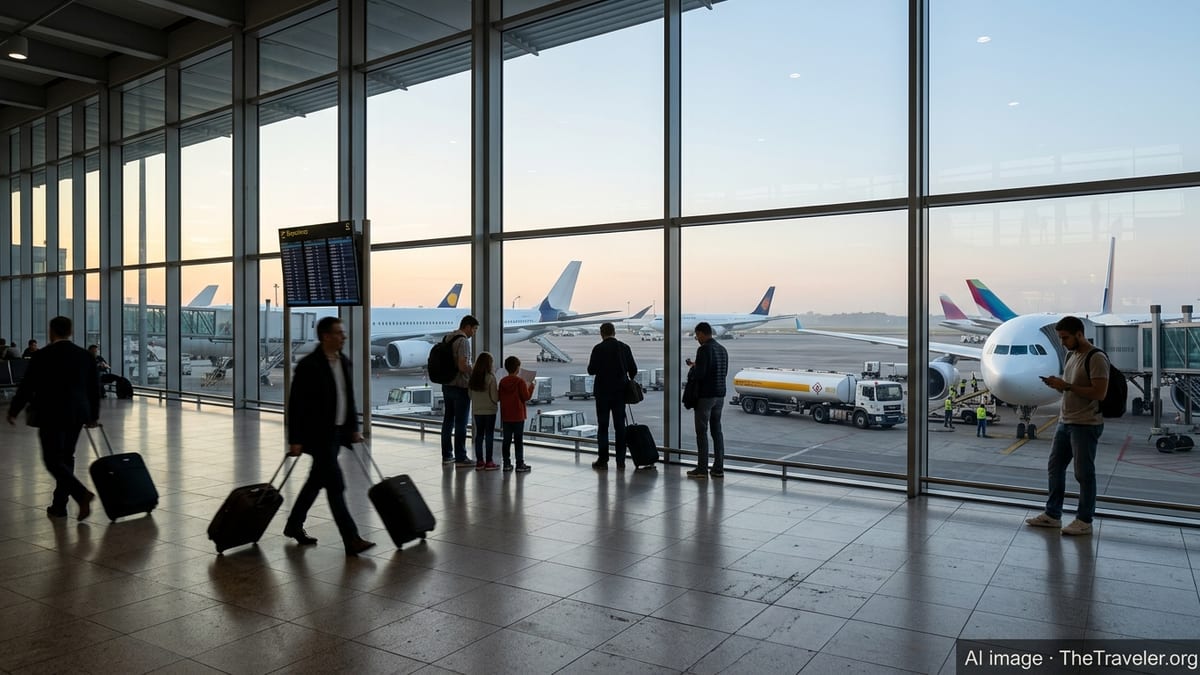
US Airlines Lock In 2027 Capacity as Competition Heats Up
Published data on fleet orders and government travel contracts suggests that US carriers are entering 2027 with more capacity and sharper pricing tools than at any point since before the pandemic. A recent General Services Administration award for the 2027 City Pair Program locked in discounted government fares with eight US flag airlines, signaling confidence that capacity and competition will be sufficient to deliver lower taxpayer costs on official travel.
Government auditors have separately reported that the presence of low cost and ultra low cost carriers has increased over the past two decades on the busiest domestic routes, even as competition on thinner routes has declined. This bifurcated pattern is shaping how US airlines plan their fleets for 2027, concentrating growth in large markets where price-sensitive travelers are most active and where new aircraft can be deployed most efficiently.
Against this backdrop, US network airlines are proceeding with major single aisle fleet renewals that will reach travelers in the second half of the decade. Filings and corporate updates point to hundreds of new-generation narrowbodies entering service by 2027, with aircraft such as the Airbus A321neo and its long range A321XLR variant enabling longer routes at lower operating cost per seat.
Some carriers are already flagging 2027 as an inflection year for new products built on that hardware, including long transcontinental and transatlantic services using high density narrowbodies with updated economy and premium cabins. These moves aim to keep US airlines competitive on comfort and network reach, even as international low cost carriers raise pressure on price.
Cebu Pacific Bets on Scale, Ultra-Low Fares and 2027 Demand
While US airlines focus heavily on premium offerings, Cebu Pacific is taking a different route to the 2027 travel market: more seats and lower base fares. The Philippine low cost carrier has outlined an aggressive re-fleeting and expansion plan that includes large orders for Airbus A321neo aircraft, providing double digit improvements in fuel efficiency and higher seat counts per flight compared with older jets. Corporate disclosures describe this transition to neo aircraft as central to keeping unit costs among the lowest in Asia.
The carrier has reinforced its low fare positioning with large scale seat sales timed to cover the 2026 to 2027 travel seasons. Recent promotions have offered hundreds of thousands of seats at base fares measured in double digit Philippine pesos on selected domestic and regional routes, with travel windows stretching into March 2027. Industry coverage notes that these campaigns are designed to stimulate demand far in advance, locking in budget conscious travelers before rival airlines can match the pricing.
Cebu Pacific is also targeting international leisure flows around the same period. Anniversary promotions launched in early 2026 marketed rock bottom one way base fares from North and East Asian cities into the Philippines, again with travel periods that run through late 2026 and the first quarter of 2027. These initiatives are intended to cement the airline’s role as a volume-driven gateway carrier for Southeast Asia’s recovering tourism industry.
Financial results show that the strategy is not without risk. The airline has recently reported a return to quarterly net losses, citing currency effects and higher financing costs. Even so, management commentary and fleet planning materials point to a continued commitment to capacity growth through 2027, on the assumption that scale and cost leadership will outweigh near term volatility.
Connectivity and Cabin Upgrades: 2027 as a Turning Point
The coming battle is not only about ticket price but also about what travelers receive on board. In mid 2026, Cebu Pacific announced plans to roll out satellite based Wi-Fi using a low Earth orbit constellation beginning in 2027, positioning itself as the first low cost airline in Southeast Asia to introduce that specific high speed connectivity standard. Publicly available information describes the initiative as a way to let passengers stream video, work remotely and stay connected even on short haul flights that historically offered little or no connectivity.
For a carrier that markets itself as an ultra low cost option, the move signals a shift toward differentiating through technology rather than frills, with the expectation that connectivity can be monetized without undermining the core low fare proposition. Aviation analysts note that pairing very low base fares with paid digital services is becoming an increasingly common model for budget airlines seeking additional revenue streams.
US airlines, meanwhile, are pushing cabin upgrades in a different direction. Several major carriers have already begun deploying new narrowbody interiors with larger premium cabins, more extra legroom seats and refreshed economy products aimed at higher yielding travelers. Airline statements and independent reporting highlight 2027 as a milestone year for rolling out extended range single aisle aircraft equipped with new business class and extra comfort options on long haul routes.
On the domestic front, some US airlines are experimenting with novel economy layouts and convertible seating aimed at offering more personal space or rest on longer flights without fully abandoning the standard coach cabin. These interior innovations are timed to coincide with large deliveries of aircraft such as the Airbus A321neo, which can be configured to carry more passengers than older narrowbodies while still offering competitive comfort levels.
Global Pricing Pressures and the US Consumer
Although Cebu Pacific does not operate transpacific routes to the United States, its tactics are influencing expectations across the broader market that US carriers compete in. Online travel communities and regional aviation commentary frequently compare the airline to ultra low cost operators in North America, noting similarly sharp pricing but often more extensive regional networks. As Southeast Asian carriers flood nearby markets with low promotional fares through 2027, international travelers become more accustomed to rock bottom price points for short and medium haul flights.
For US consumers, the direct impact is most visible through connecting itineraries and competitive responses by domestic low cost carriers. When travelers can pair a discounted US domestic ticket with an ultra low fare onward sector on an Asian budget airline, the total trip cost to destinations such as the Philippines, Japan or Indonesia can undercut traditional one carrier options. That dynamic encourages US airlines to sharpen pricing on feeder routes and to consider partnerships or fare-matching strategies with foreign low cost carriers.
US government and regulatory analysis underscores that while passengers may benefit from lower prices on busy routes, consolidation and capacity constraints can still lead to higher fares in smaller markets. As 2027 approaches, the contrast between dense competitive corridors served by multiple airlines and lightly trafficked regions with limited choice is expected to widen, raising questions about how far global low cost competition can realistically push down prices for all US travelers.
Nevertheless, the broader trend toward lower unit costs and more efficient aircraft is likely to support relatively affordable headline fares on many US routes, even as airlines face higher labor and financing expenses. In that environment, Cebu Pacific’s high capacity, low fare play in Asia provides a reference point for how far cost discipline and fleet modernization can be pushed, and how aggressively airlines elsewhere may need to respond to defend their share of increasingly price sensitive demand.
2027 Travel Landscape: Parallel Strategies, Shared Pressures
By 2027, Cebu Pacific and major US airlines are expected to be operating at scale with refreshed fleets and new onboard offerings, but their strategies will remain markedly different. The Philippine carrier is doubling down on the classic low cost formula of high seat density, simplified service and attention grabbing promotions, augmented by selective investment in connectivity technology to enhance ancillary revenue.
US airlines, by contrast, are emphasizing segmentation: using the same new generation aircraft to offer a spectrum of products from basic economy to upgraded premium cabins, while layering in loyalty benefits and branded experiences. Their goal is to capture both the most price sensitive travelers and those willing to pay more for comfort, flexibility or status, rather than focusing primarily on the absolute lowest fare.
What unites these approaches is a shared reliance on more efficient, longer range narrowbody aircraft and digital revenue models that extend beyond the base ticket. Both Cebu Pacific and US carriers are betting that by 2027 passengers will be more comfortable than ever booking trips far in advance, customizing add ons and expecting Wi-Fi as a near standard feature, even at the budget end of the market.
The result is a 2027 travel landscape defined by intense competition, with Cebu Pacific leading the race for affordable flights in its home region and US airlines responding with capacity growth and product innovation on their own networks. For travelers, the emerging battle promises more choice and, in many cases, lower real prices, even as airlines navigate the financial and operational strain of funding the next generation of global air travel.