


More news on this day
A fast-moving series of visa-related reprisals between Brazil, the United States and Argentina is reshaping how citizens move across the Americas, sending a chill through Mercosur’s traditionally open travel landscape and raising new questions for airlines, tour operators and everyday travelers.
Get the latest news straight to your inbox!
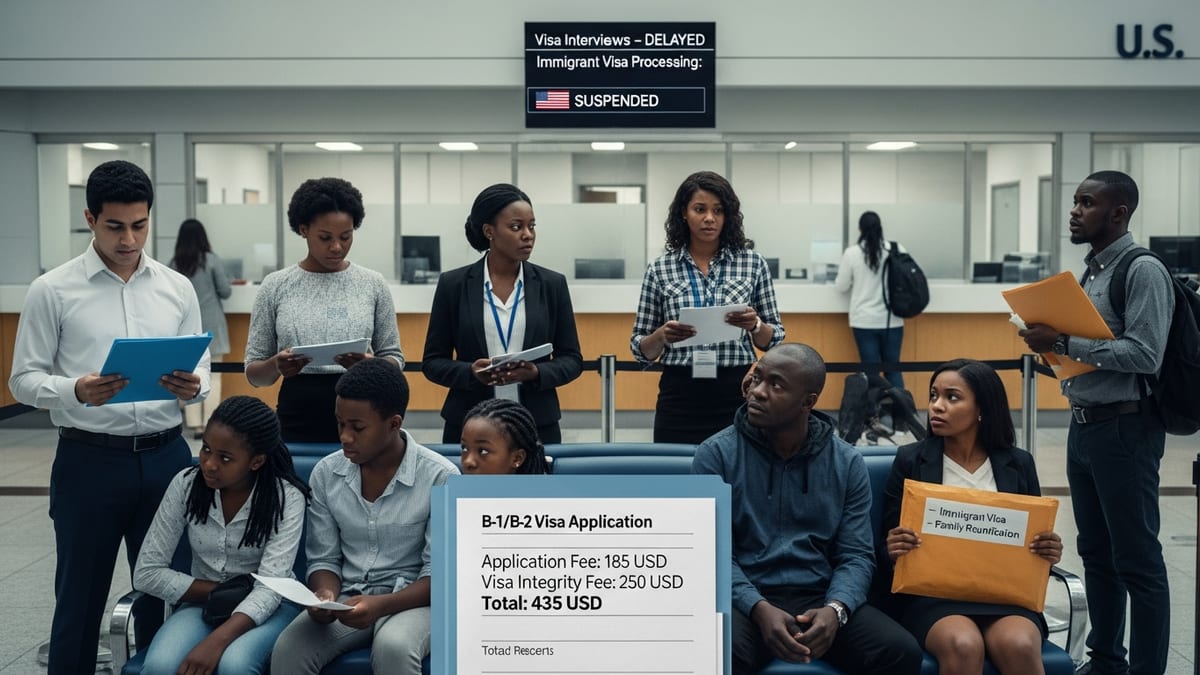
From Technical Rule Changes to Open Diplomatic Friction
The latest turbulence follows Brazil’s reinstatement of visa requirements for tourists from the United States, Canada and Australia, a policy that took effect on April 10, 2025 after multiple postponements. Publicly available information from Brazilian consular services shows that affected travelers must now secure an electronic visitor visa before boarding flights, ending several years of visa-free leisure and business travel between Brazil and these countries.
What initially appeared to be a technical migration adjustment unfolded against a backdrop of wider tension between Brasília and Washington. Earlier disputes over judicial investigations, human rights sanctions and trade penalties had already strained relations, with Washington adopting a tougher stance on Brazilian officials’ visas and entry permissions in 2025. Reports indicate that these moves have been interpreted in Brazil as politicizing mobility rules that traditionally follow stable reciprocity principles.
At the same time, US policy toward South American travelers has been evolving on multiple fronts. Washington’s decision to pause Argentina’s long-sought entry into the US Visa Waiver Program in 2025 signaled a more cautious approach to expanding visa-free access, despite lobbying from Argentina’s government and business sector for easier travel that could boost investment and tourism. For both Brazil and Argentina, the changing tone in Washington has added uncertainty to routes that once looked poised for liberalization.
The result is a new climate in which visas and entry permits have become explicit instruments within broader diplomatic disputes, rather than quiet consular procedures in the background of bilateral ties.
Argentina Squeezed Between Two Major Partners
Argentina now finds itself wedged between its largest Mercosur partner, Brazil, and the United States, which remains a critical market for tourism, study abroad and investment. While Argentina had been working with US authorities on a possible return to the Visa Waiver Program, subsequent reporting indicates that the process stalled amid domestic political debates in Washington and concerns about migration and security metrics.
Buenos Aires has meanwhile pursued its own strategy to attract high-spending visitors from beyond the region. Official tourism promotion materials highlight policies that ease entry for travelers from select markets who already hold valid US visas, effectively using existing American vetting to streamline access to Argentina. That approach underscores how US decisions can indirectly shape third countries’ tourism policies, even when no formal agreement is in place.
The emerging triangle of friction between Brazil, the US and Argentina is complicating this calculus. Brazil’s decision to restore visa requirements for US nationals, combined with Washington’s more restrictive posture, raises the prospect of tit-for-tat measures that could also affect Argentine citizens if tensions spill over inside Mercosur. Analysts in the region warn that a more fragmented approach to visas could undercut one of South America’s key competitive advantages: relatively seamless regional mobility for both residents and long-haul tourists.
For now, Mercosur’s internal travel rules still guarantee simplified movement for bloc citizens, but the growing reliance on unilateral visa tools with external partners is testing that framework’s resilience.
Tourism Industry Faces Rising Costs and Operational Confusion
Tourism operators across the Southern Cone report that the shifting visa landscape is already generating higher costs and more complex itineraries. Airlines have to update check-in systems and staff training to reflect Brazil’s e-visa requirements and evolving US entry conditions, while also monitoring any reciprocal steps that Argentina might consider. Carriers that rely heavily on connecting traffic through São Paulo, Rio de Janeiro or Buenos Aires warn that last-minute policy switches can translate into denied boarding, missed flights and rebooking expenses.
Travel agencies are dedicating more time to pre-trip counseling for clients from North America and Europe who plan multi-country itineraries in South America. Once-standard routes that paired Rio de Janeiro with Buenos Aires, Patagonia and Iguazu Falls are now marketed with prominent alerts about visa lead times, document validity and dual-nationality issues. Brazilian authorities have publicly stressed that Brazilian dual citizens who also hold US or Canadian passports must travel on a valid Brazilian passport to avoid problems at check-in, a detail that can derail trips if overlooked.
These additional layers of administration arrive as the wider global tourism industry still works to fully recover from the disruptions of the early 2020s. Business groups in both Brazil and Argentina have argued that lengthier procedures and higher visa-related costs could discourage conferences, incentive trips and major events from choosing Mercosur destinations, especially when Asian and European markets are aggressively promoting simplified electronic authorizations or visa-free schemes.
For leisure travelers, the impact is uneven. Some are willing to absorb the added paperwork for bucket-list destinations, but others may pivot to countries where entry requirements remain straightforward. In a competitive post-pandemic travel market, small frictions can translate into significant shifts in bookings.
Mercosur Mobility Norms Tested by Harder Edges
The visa showdown is especially sensitive because Mercosur has long promoted the idea of South America as a connected travel and economic space. Member states have invested years in gradually harmonizing rules on residency, cross-border work and tourism, with the goal of making internal borders less of an obstacle to mobility for citizens and foreign visitors alike.
Recent developments risk reversing part of that progress by reintroducing political volatility into what travelers had come to see as predictable rules. Intra-bloc citizens still enjoy relatively easy movement, but non-Mercosur tourists often experience the region as a single multi-stop itinerary. When one key gateway tightens requirements in response to a diplomatic dispute with a non-regional power, the ripple effects can undermine the perception of Mercosur as a unified tourism space.
Observers note that the dispute is not occurring in a vacuum. Around the world, governments are using visas as tools of leverage in broader disagreements over trade, judicial decisions and human rights. Brazil’s and Argentina’s responses to shifting US policies reflect a global trend in which mobility rights are more closely tied to political negotiations than in the past, creating new uncertainties for airlines and tour planners who must think in multi-year horizons.
Some regional policy specialists are urging Mercosur members to insulate intra-bloc travel and long-haul tourism from these swings by codifying clearer safeguards. Proposals range from fast-track dispute-resolution mechanisms for mobility issues to coordinated electronic travel authorizations that would apply across the bloc, regardless of bilateral disputes with external partners.
What Travelers Should Watch in the Months Ahead
For travelers, the immediate priority is to track official consular updates from all countries on their itinerary and avoid relying on pre-2025 assumptions about visa-free access. Brazil’s e-visa requirements for US passport holders, the US stance on Argentine travelers and any reciprocal responses by Buenos Aires could all shift again if political negotiations change course.
Industry analysts suggest that multi-country trips in South America will remain feasible but require earlier planning, with visas obtained before booking nonrefundable flights. Those with dual citizenship or residency links to the region may find that the passport they choose at check-in has become more consequential, particularly when airlines apply strict document checks informed by international aviation rules.
Against this unsettled backdrop, Mercosur’s ability to preserve its reputation as an accessible, interconnected destination may depend on how quickly its largest members can ring-fence tourism from wider diplomatic clashes. Until then, travelers and the businesses that serve them are likely to face a more fragile system, where a single diplomatic statement in Brasília, Washington or Buenos Aires can reverberate all the way to the boarding gate.