


More news on this day
When a Federal Aviation Administration system failure or ground stop cancels flights across the country, passengers often discover that what feels like a disaster does not always trigger the compensation they expect. Yet recent U.S. and international rules do spell out when airlines must provide refunds, rebooking, or other help, even when the disruption starts with government air traffic systems rather than the carrier itself.
Get the latest news straight to your inbox!
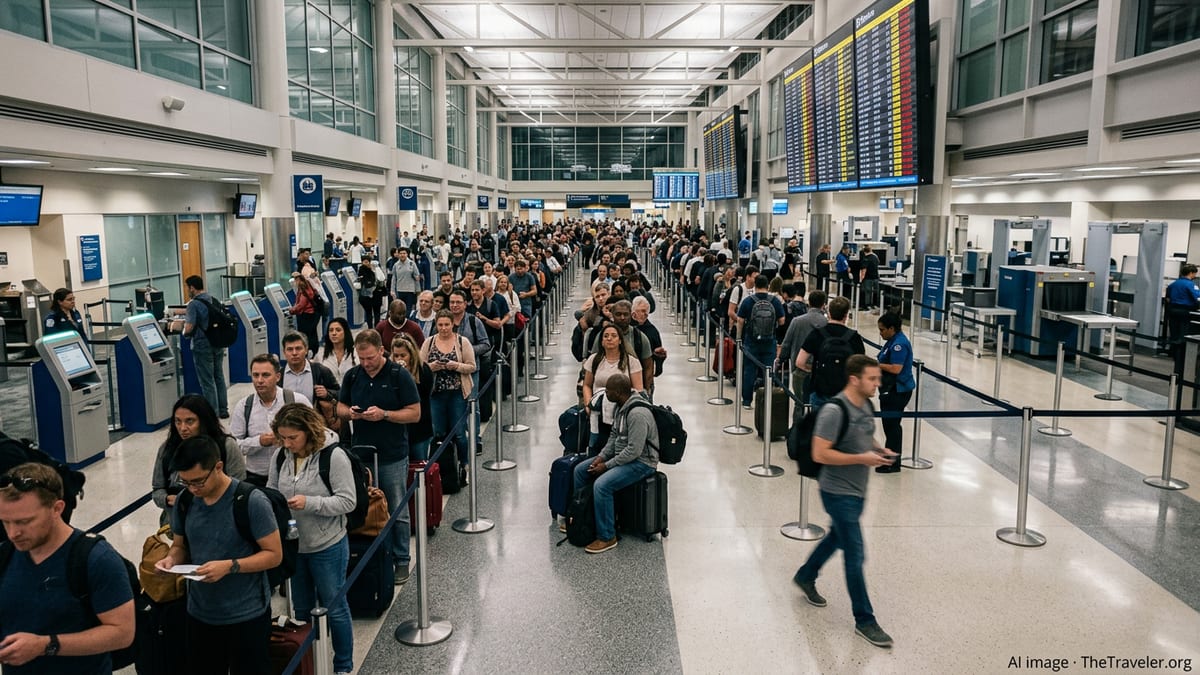
FAA Ground Stops, Extraordinary Circumstances and Who Is Responsible
Nationwide interruptions to air travel linked to Federal Aviation Administration systems have become a recurring headline, including a November 2026 communication outage that prompted a ground stop and forced thousands of passengers to rebook. Publicly available information on such events generally classifies them as safety measures taken after a shutdown or failure of government air traffic systems, rather than problems within any single airline’s control.
Regulators draw a clear distinction between cancellations caused by an airline’s own operations and those triggered by what are described in many jurisdictions as extraordinary circumstances, such as air traffic control failures, severe weather or security incidents. In the United States, consumer rules focus on whether the airline actually provided the service that was purchased, rather than on who caused the disruption, but that distinction becomes crucial for any additional compensation beyond a basic refund.
Under a final rule adopted in April 2024 on refunds and other consumer protections, the U.S. Department of Transportation defines a cancellation as the failure to operate a scheduled flight on which at least one seat was sold, and a significant change as a material alteration of the itinerary, such as moving a domestic flight by more than three hours or an international flight by more than six hours. Those definitions apply regardless of whether the initiating problem lies with an airline, the FAA or another part of the system.
In Europe and the United Kingdom, by contrast, air traffic control failures are generally treated as extraordinary circumstances that relieve airlines of paying fixed cash compensation, though carriers must still offer re-routing and care in many cases. That approach influences what many international travelers expect when similar events unfold in U.S. airspace, even though American law is more limited.
When a Government-Triggered Cancellation Still Requires a Cash Refund
For U.S.-bound, U.S.-origin and domestic flights, the central right after a cancellation linked to an FAA ground stop is the right to a refund of the unused portion of the ticket if the traveler chooses not to travel. The Transportation Department’s refund guidance states that when a flight to, from or within the United States is cancelled or significantly changed, consumers are entitled to a refund if they decide not to accept alternative transportation, travel credits or other compensation.
A final rule issued in April 2024 and updated through the 2024 FAA Reauthorization requires airlines to provide prompt automatic refunds in many of these situations. For cancellations or qualifying long delays on or after May 16, 2024, carriers must notify passengers of their refund rights and, where a consumer does not accept an alternative, return the fare and related taxes to the original form of payment without requiring a special request. That obligation applies whether the disruption is caused by airline operations or a shutdown of government systems that prevents flights from operating.
The same regulations extend refund rights to certain ancillary fees. Airlines must return checked baggage fees when bags are significantly delayed beyond specified time frames, and must refund fees for optional services such as advance seat selection when the airline fails to deliver the service purchased. A passenger stranded by an FAA cancellation who abandons the trip entirely can therefore seek refunds covering both the ticket price and any paid extras that are not provided.
These refund rules are now backed by explicit enforcement language. Department of Transportation statements in 2024 and 2025 stressed that failing to issue timely cash refunds in qualifying situations may be treated as an unfair or deceptive practice, and travelers who do not receive what they are owed can file complaints with the department’s aviation consumer protection office.
What Airlines May Offer Voluntarily: Rebooking, Meals and Hotels
Beyond refunds, passengers often look for reassurance that airlines will cover overnight stays, meals or onward travel when a government-ordered ground stop derails plans. In the United States, there is no federal requirement for carriers to provide vouchers, meal credits or hotel rooms when disruptions are caused by air traffic control outages or other events outside airline control.
The Transportation Department’s Airline Cancellation and Delay Dashboard shows that large U.S. carriers commit to provide meals, ground transportation and overnight accommodation in many cases of controllable cancellations, such as maintenance or crew issues, but not when government decisions or extreme weather force flights to be scrubbed. In FAA-related events, airlines may still choose to offer hotel discounts, travel credits or priority rebooking as a goodwill gesture, yet those measures are part of individual customer service policies and are not guaranteed by federal law.
Reports from recent system outages indicate that airlines typically rebook affected passengers on the next available flight on their own network at no extra cost. In peak periods, that can mean long waits, especially on heavily booked routes, and travelers sometimes find faster options by asking about partner airlines or nearby departure airports. However, U.S. rules do not compel one airline to endorse a ticket over to another carrier when the original flight was canceled for reasons outside the airline’s control.
Travelers connecting between separate tickets face additional complexity. If a domestic segment into a hub is canceled by the FAA and the passenger misses an onward international flight purchased on a separate reservation, the second airline is generally not required to accommodate or refund the missed leg, even though the original cause was a government ground stop.
How Passenger Rights Differ on International Itineraries
When FAA-related cancellations affect flights touching other regions, passenger rights can shift significantly depending on where the journey starts and which law applies. European Union Regulation 261/2004, along with similar UK rules, grants fixed cash compensation for many cancellations and long delays out of EU and UK airports, but explicitly treats air traffic management decisions and airspace closures as extraordinary circumstances.
Under that framework, a cancellation caused by a directive from air traffic authorities or a major communications outage is typically not eligible for compensation, provided the airline can show that it could not have avoided the disruption with reasonable measures. Travelers still retain rights to re-routing at the earliest opportunity or on a later date of their choice, subject to seat availability, and to basic care such as meals and hotel accommodation while they wait, even if no extra payment is due.
By contrast, on flights from the United States to Europe, U.S. refund rules apply to the portion governed by American regulators, while EU rules may only come into play once a journey departs from an EU airport or is operated by an EU carrier under certain conditions. This split can lead to different outcomes on outbound and inbound legs of the same trip when widespread FAA disruptions occur.
Travelers booked on itineraries involving the United Kingdom face similar distinctions. Guidance from the UK Civil Aviation Authority classifies cancellations driven by air traffic control decisions or airport closures as events outside an airline’s control, which means no statutory compensation, although duty-of-care obligations still apply to many stranded passengers until they can be transported.
Practical Steps if You Are Stranded After an FAA Cancellation
When a ground stop or other FAA directive leaves passengers stranded, immediate actions can influence both comfort and cost. Publicly available travel advice recommends first confirming whether the airline has officially canceled the flight or is holding it in a prolonged delay; refund rights under U.S. rules attach clearly once a cancellation or qualifying significant change has occurred.
Passengers who decide not to travel can request written confirmation of the cancellation and keep records of emails or app notifications. While automatic refunds are becoming standard under the 2024 rules, documentation can help if funds do not appear within the time frames regulators describe as prompt. For those who still want to travel, getting in line at the customer service desk while simultaneously contacting the airline through its app or phone channels can speed up rebooking on the next available departure.
For expenses outside the airport such as hotel rooms or meals during an extended FAA outage, travelers should keep receipts. There is no guarantee of reimbursement under U.S. law when the disruption stems from government systems, but some airlines may later consider partial credits or goodwill gestures, particularly for loyalty program members. If an airline explicitly promises coverage for certain costs in writing, that communication can be useful in any later claim.
Consumers who believe an airline has not honored refund obligations for a canceled or significantly changed flight can escalate the issue by filing a complaint with the Transportation Department. That process does not assure individual compensation beyond the required refund, but the agency uses complaint data to identify patterns and may pursue enforcement actions in cases where carriers repeatedly fail to follow federal rules.