


More news on this day
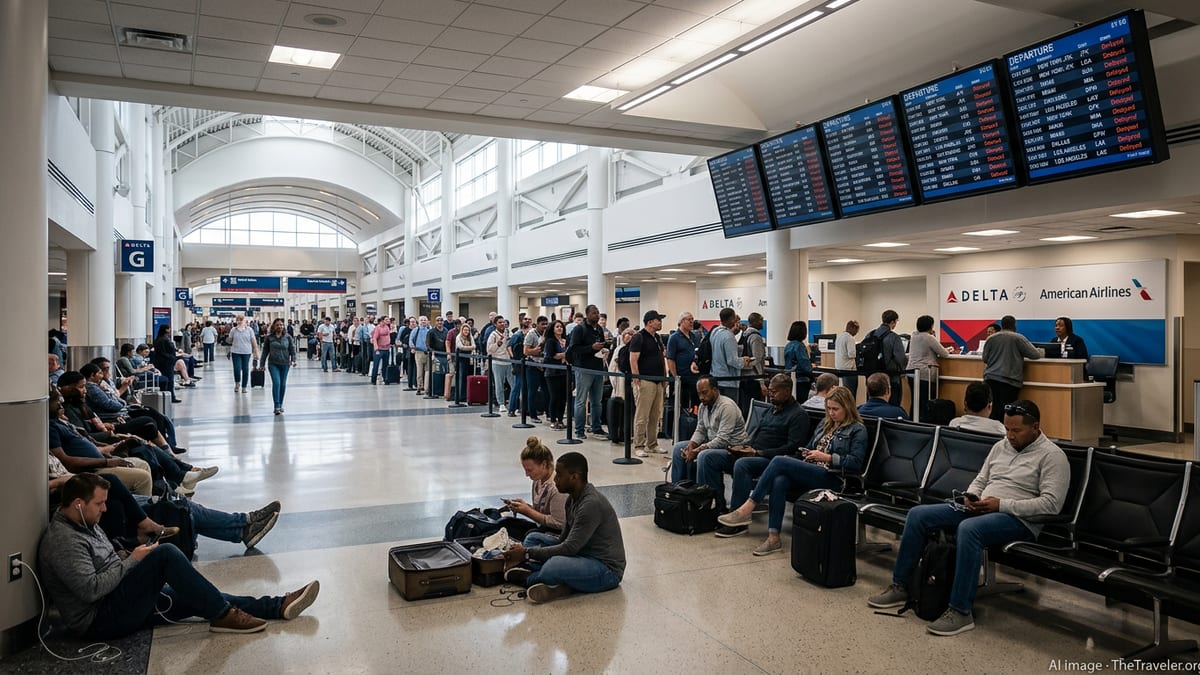
What was billed as another busy November travel Friday in the United States turned into an exhausting test of patience, as a nationwide Federal Aviation Administration ground stop halted departures for hours and left thousands of passengers stranded in airports and aboard idling aircraft.
Get the latest news straight to your inbox!
A Rare National Grounding With Global Ripples
The FAA ordered a nationwide halt to most departing flights on Friday afternoon after a communications failure disrupted critical links with air traffic facilities, according to publicly available information on the outage. It was only the third time in history that all domestic flights in the United States were effectively stopped, following the shutdowns after the September 11 attacks in 2001 and a systems failure in January 2023.
Reports compiled from flight-tracking data showed that thousands of flights were delayed or cancelled within hours of the order. One news tally indicated that more than 11,000 flights scheduled to depart after 4 p.m. Eastern time were affected in some way, from minor delays to outright cancellations, as airlines tried to reposition aircraft and crews once the pause was lifted.
The ground stop was lifted later in the evening, but aviation analysts quoted in published coverage noted that the timing, heading into a busy weekend, meant disruptions would likely extend well into Saturday and possibly Sunday. Aircraft and crews ended the night in the wrong cities, and overnight connections that normally restore schedule reliability simply did not operate.
International services were also hit. Foreign carriers operating into major U.S. hubs reported diversions, extended holds, and late departures as traffic flows were throttled. Some long-haul flights left their origins on time but arrived to congested ramp areas, where aircraft were forced to wait for gates, compounding delays for passengers already hours behind schedule.
Scenes of Disruption: Full Concourses and Sleepless Nights
At large hubs including Chicago O’Hare, Atlanta, Dallas–Fort Worth, New York’s LaGuardia and JFK, and Los Angeles International, departure boards quickly filled with yellow and red as delays stretched, then turned into cancellations. Local coverage from several airports described passengers learning about the ground stop only when departure times disappeared or flipped status, and when check-in agents began handing out meal vouchers and rebooking slips.
Gate areas and food courts grew increasingly crowded as the afternoon wore on. With hotels around some airports already busy due to events and normal business travel, travelers reported difficulty securing last-minute rooms at reasonable prices. During similar weather and technology disruptions earlier this year, hotel rates around major hubs such as Boston and Dallas surged well above usual weekday levels when thousands of flights were cancelled over short periods, and early indications suggested Friday’s pattern was comparable.
In some cases, aircraft that had already boarded were held on taxiways or remote stands for extended periods. Recent disruptions in the United States and Europe show how quickly such delays can stretch into multi-hour ordeals: in July, a global IT outage linked to a defective software update left passengers on some aircraft waiting several hours for gates as systems were restored, and in September an air traffic failure in the United Kingdom forced travelers at London’s Heathrow to sleep in terminal areas while airlines worked through a backlog that lasted for days.
Friday’s event also spilled far beyond leisure travel. Published reports indicated that professional sports teams across the NBA, NHL and college ranks scrambled to find alternative routes after their charter and commercial flights were swept up in the stop. Cargo carriers activated contingency plans as well, attempting to protect time-sensitive shipments by rerouting through less affected airports or shifting to later waves of departures.
Technology Strains and Interlocking Vulnerabilities
The communications failure that triggered the ground stop came at a moment when aviation infrastructure was already under scrutiny for its dependence on complex software. Publicly available information points to a breakdown in systems that connect air traffic control facilities, rather than a problem with individual airline technology, although the exact root cause had not been fully detailed by Friday night.
Recent incidents underline how tightly air travel is bound to a relatively small number of digital platforms and providers. In July 2024, a faulty update from cybersecurity company CrowdStrike caused a global IT outage across systems running Microsoft Windows, with industry assessments later estimating that more than 5,000 flights worldwide were cancelled in a single day. Aviation industry briefings at the time described flight information screens going blank, check-in kiosks failing, and dispatch systems suddenly dropping offline.
Similar patterns have emerged in 2026. In July, an American Airlines systems outage led to a temporary ground stop that lasted roughly an hour, pausing departures across the carrier’s network and compounding weather-related delays already affecting several hubs. In October, major U.S. airlines reported technology issues that interrupted boarding and online check-in, while just last month a Microsoft 365 outage disrupted email and collaboration services that many aviation companies rely on for day-to-day operations.
Beyond the United States, a flight data system failure at the United Kingdom’s air navigation provider in September caused what officials there described as a major incident, grounding or delaying thousands of flights and stranding hundreds of thousands of passengers across Europe. A preliminary investigation concluded that a software problem had forced controllers to fall back on manual processes, sharply cutting capacity until normal operations could resume.
Weather, Strikes and System Failures Collide With Passenger Rights
Friday’s ground stop is arriving in a year already marked by weather disruptions and labor disputes that have left travelers wary of last-minute surprises. In February, a powerful blizzard across the northeastern United States prompted airlines to cancel thousands of flights over several days, with Boston’s Logan Airport alone recording close to 1,000 cancellations on one day as strong winds and snow made operations impossible.
In Europe, passengers faced different but equally disruptive challenges. A series of strikes by pilots and cabin crew at Germany’s Lufthansa in February resulted in the cancellation of hundreds of flights, with estimates suggesting around 70,000 passengers were affected on some strike days. Around the same period, storms across France and neighboring countries forced additional cancellations and diversions, creating a tangle of rebookings for travelers already contending with labor-related disruptions.
Separate from airline and airport operations, data from the U.S. Department of Transportation’s Air Travel Consumer Report for 2026 illustrates how cancellations are categorized into carrier-related problems, extreme weather, and issues tied to the broader national aviation system, such as air traffic control limitations. Those distinctions matter to passengers because, in the United States, federal rules require airlines to provide prompt refunds when flights are cancelled or significantly changed, but compensation for hotels and meals is largely governed by each carrier’s own customer service commitments rather than law.
In Europe and the United Kingdom, passenger rights frameworks are generally more prescriptive. Under EU and UK rules, travelers on flights departing from or arriving in many European jurisdictions can be entitled to compensation for cancellations or long delays that are considered within an airline’s control, although air traffic control failures and extreme weather are often classified as extraordinary circumstances. Recent UK coverage of the September air traffic outage noted that passengers could expect rebooking and basic care such as meals and hotels, but that additional cash compensation would likely not apply because the issue originated with the navigation service provider.
What Stranded Passengers Can Realistically Expect
For travelers caught up in Friday’s U.S. ground stop, the immediate options were familiar from previous disruptions. Public guidance from airlines and the FAA encouraged passengers to check flight status before heading to the airport and to use mobile apps, websites or customer service lines to secure rebookings as quickly as possible. Experience from earlier mass cancellations shows that same-day alternative flights on popular routes can sell out within minutes once a major disruption begins.
According to published airline customer commitments, most large U.S. carriers will offer complimentary rebooking on the next available flight after a cancellation and may provide meal vouchers and hotel accommodations when the cause is within their control, such as crew or maintenance issues. When disruptions are tied to air traffic control or other national system problems, hotels and meals are often not guaranteed, and passengers are encouraged to keep receipts in case individual carriers decide to offer goodwill reimbursements later.
Travelers holding tickets on complex itineraries, including separate tickets on different airlines, can face particular challenges. Industry advisories from previous events warn that airlines are generally responsible only for the segments they issue, meaning a cancellation on one carrier may jeopardize a self-constructed connection without obligating the second airline to assist. During the 2024 IT outage and subsequent airline-specific meltdowns, this left some passengers facing long lines at transfer desks and unexpected costs for replacement flights.
Consumer advocates note that travel insurance and credit card protections can help in some scenarios, but coverage terms vary significantly and often exclude outages caused by third-party technology failures or air traffic control issues. Given the rising frequency of large-scale disruptions from weather, strikes, and software problems, many analysts argue that passengers are increasingly bearing risks that the current patchwork of regulations and voluntary commitments only partially addresses.