


More news on this day
Delta Air Lines says it has resolved a technical problem with its automated weight-and-balance system that caused hundreds of delays and cancellations centered on its Atlanta hub on Sunday, November 22, 2026, with operations described as "stable" on Monday even as travelers continued to face residual disruptions into the busy Thanksgiving travel week.
Get the latest news straight to your inbox!
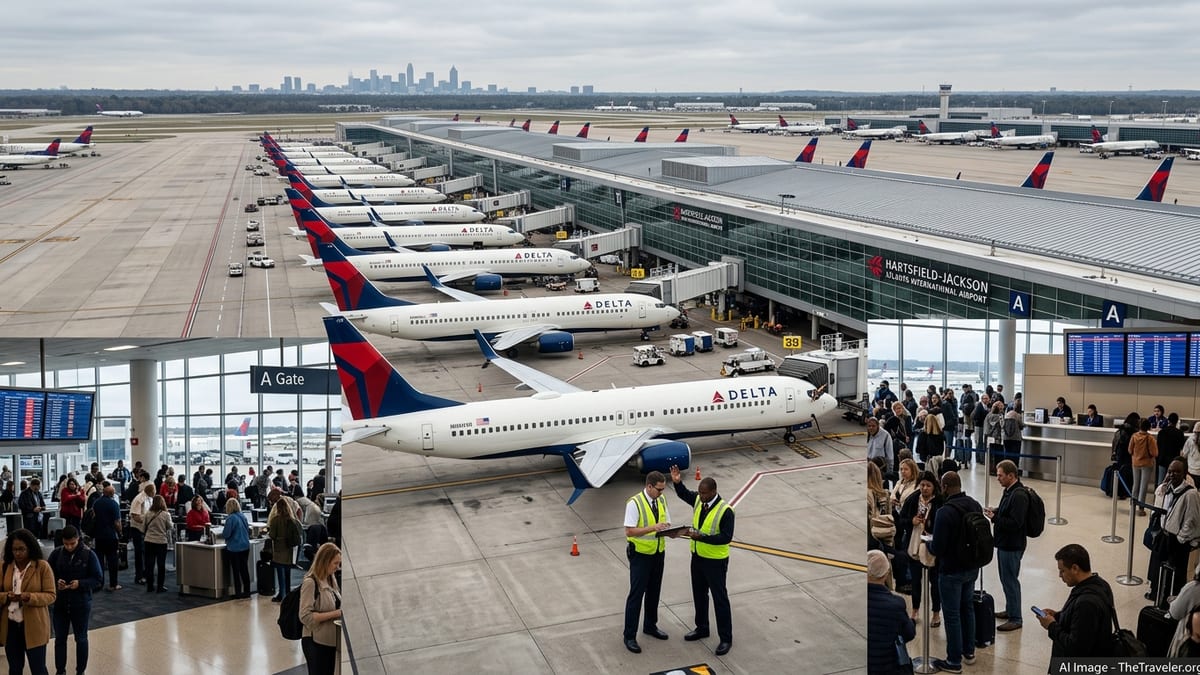
What happened to Delta’s operations in Atlanta
The disruption began on the morning of Sunday, November 22, 2026, when Delta reported problems with the automated system it uses to calculate aircraft weight and balance data for departing flights. The airline requested that the Federal Aviation Administration briefly halt Delta flights bound for Hartsfield-Jackson Atlanta International Airport, its largest hub and the world’s busiest airport by passenger volume, before the halt was downgraded to a ground delay program with average delays around an hour.
Because every commercial flight must operate within strict weight and balance limits, Delta initially shifted to manual workarounds, with flight crews and operations staff completing performance calculations by hand while technicians worked to restore the system. This kept flights moving but significantly slowed departures, particularly at Atlanta, where tight turnarounds and high traffic volumes meant that even short additional delays quickly cascaded across the schedule.
By Sunday evening, flight-tracking data showed that roughly half of all Delta departures were delayed and more than a hundred were canceled, with the greatest concentration of disruption at Hartsfield-Jackson and on flights to and from Atlanta. Delta later said that about 70% of the schedule changes it recorded over the course of the day were directly linked to the automation issue, while the remainder were attributed to weather and other operational factors.
Scope of delays in Atlanta and nationwide
The malfunction at Atlanta had impacts well beyond the airport’s perimeter, given Delta’s extensive domestic and international network from the hub. Delta and airport officials confirmed that the weight-and-balance system problem affected not only departures in Atlanta but also flights heading into the city from other airports, since performance calculations must be completed for every leg of a flight.
Throughout Sunday, passengers at Atlanta reported long waits on board aircraft that had already boarded, as crews waited for performance numbers or completed manual calculations before pushback. Some flights that had been scheduled to leave in the morning or early afternoon ultimately departed hours late, while others were canceled outright and rebooked for later in the day or the following morning. Crowded gate areas and lengthy customer service queues were reported across several Atlanta concourses as travelers sought new itineraries.
Major Delta stations across the United States, including New York, Detroit, Los Angeles and others, also reported knock-on delays linked to the Atlanta issue. On Monday morning, November 23, data from flight-tracking services still showed several hundred delayed and dozens of canceled Delta flights systemwide, although the numbers were significantly lower than at the peak of Sunday’s disruption. The airline said operations had largely stabilized, but that it expected lingering delays and uneven recovery to continue for at least another day as aircraft and crew rotations were brought back into alignment.
Nature of the system issue and safety considerations
Delta has identified the affected technology as an automated system that produces takeoff weight and balance calculations, essential data used by pilots to determine safe departure performance for each flight. Such systems incorporate factors including passenger counts, baggage, cargo, fuel load, runway length and environmental conditions to ensure that aircraft weight and center of gravity remain within certified limits.
The Federal Aviation Administration’s own guidance stresses that adherence to weight and balance limits is critical for flight safety, which helps explain why Delta chose to slow or halt departures when the automated tools malfunctioned rather than rely on estimates or incomplete data. Industry-standard backup procedures allow airlines to compute these figures manually when necessary, but doing so typically takes more time and coordination, especially across a large hub operation with dozens of simultaneous departures.
As of the latest statements from the airline, the underlying automation problem has been corrected and the system is back in service. Delta has not publicly detailed the root technical cause beyond describing it as an outage of the weight-and-balance automation. There is currently no indication from the airline or federal regulators that the event involved a cybersecurity issue, and authorities have not announced any separate safety investigation into the incident beyond routine oversight of airline operations.
Impact on travelers and how Delta is responding
Travelers at Atlanta and other affected airports experienced a range of disruptions, from modest departure delays to missed connections and overnight stays. Because the outage coincided with one of the busiest travel periods of the year, even a limited-duration system problem resulted in a large number of passengers being affected. Some customers reported spending extended periods in check-in, rebooking and customer service lines as agents worked through a backlog of schedule changes.
Delta has said it is providing hotel, meal and transportation vouchers where required under its internal policies for significant disruptions within the airline’s control, along with rebooking options on later Delta flights. The carrier has emphasized that safety remained its top priority and that flights did not depart until appropriate performance and balance calculations had been completed, whether by automated system or manual methods.
For travelers with upcoming itineraries, particularly those connecting through Atlanta, Delta and airport officials are advising that passengers regularly check their flight status through the airline’s website or mobile app before heading to the airport. While the core technology problem has been resolved, some flights are still experiencing timing changes as the network fully recovers, and aircraft may be swapped or rerouted as operations teams rebalance capacity.
What travelers should expect for the rest of the week
With the weight-and-balance system back online and Delta describing its operation as stable, the immediate technical crisis appears to be over. However, airline networks can take time to return to normal after a large-scale disruption, especially when it occurs at a central hub just days before a peak travel holiday. Aircraft and crews remain out of position on some routes, and residual delays, tighter connection windows and occasional missed connections are still likely on select flights.
Travelers flying with Delta through Tuesday, November 24, 2026, and into the remainder of Thanksgiving week should therefore plan for the possibility of additional disruption, even if their flights are currently listed as on time. Allowing extra time for security screening and connections, monitoring flight status frequently, and confirming gate assignments on arrival at the airport can help reduce the impact of any last-minute changes.
Looking ahead, both Delta and federal transportation officials have indicated that they will review the circumstances of the outage as part of broader efforts to improve the resilience of airline and aviation technology systems. For now, the key development for passengers is that the specific automation issue that triggered Sunday’s delays has been fixed and flights are once again departing with standard, automated weight-and-balance checks in place, even as some operational aftereffects continue to work through the system.