


More news on this day
U.S. air travel is still digesting the impact of a rare nationwide ground stop ordered by the Federal Aviation Administration on November 13, 2026, after a failure in its telecommunications network forced the agency to halt most departures. Over three days, airlines canceled more than 18,000 flights as they worked to recover from what officials describe as the longest nationwide disruption to air traffic operations in at least 25 years, leaving travelers facing rolling delays, missed connections and multi‑day rebookings across the country.
Get the latest news straight to your inbox!
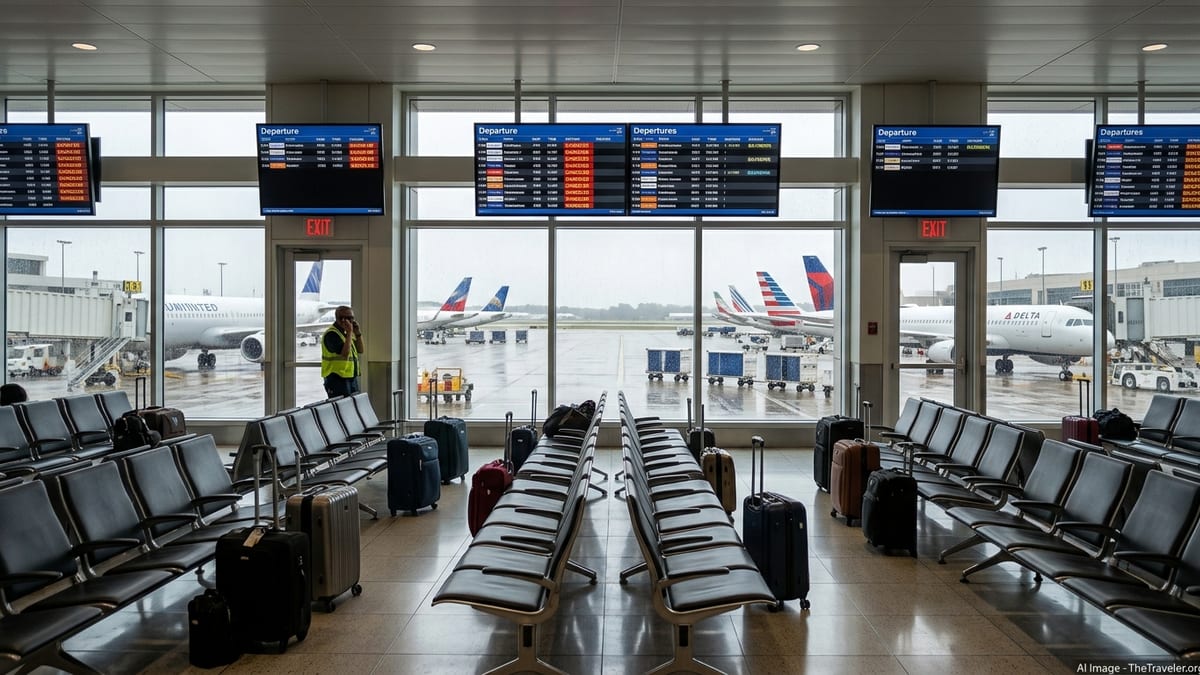
What caused the latest FAA nationwide disruption?
According to a detailed question-and-answer update the FAA issued on November 15, 2026, the November 13 ground stop was triggered by a telecommunications failure affecting the agency’s Federal Telecommunications Infrastructure (FTI) network. The FTI network carries data and voice traffic that underpins communication between controllers, radar facilities and pilots. On November 13, a surge of network traffic overwhelmed segments of this infrastructure, destabilizing legacy equipment in multiple locations and forcing the agency to halt most departures while engineers worked to isolate and contain the problem.
The FAA says data began flooding the FTI network at a rate of roughly 1,000 connection attempts every four to five seconds, which caused the older elements of the communications backbone to become unstable. To prevent controllers from losing critical voice and radar data, the agency imposed a nationwide ground stop that halted most departures for several hours. Throughout the episode, some radio frequencies and radar feeds remained available, which allowed controllers to keep aircraft already in the air moving safely, but the system was not stable enough to accept normal volumes of new departures.
In the same update, the FAA emphasized that early analysis points to a failure of aging communications infrastructure interacting with newer networking equipment, rather than evidence of a malicious cyberattack. Separately, technology industry reports have suggested that recently installed routers overwhelmed parts of the older network. While those technical findings have not yet been fully incorporated into the FAA’s public documents, the agency’s own description of legacy equipment becoming unstable under intense traffic is consistent with that explanation. A formal root-cause review is still under way, and regulators have cautioned that some technical details may change as that investigation progresses.
How big was the impact on flights and where was it felt most?
The scale of the disruption only became clear in the days after the ground stop. In its November 15 update, the FAA said operators canceled approximately 12,462 flights on November 13 alone, including around 9,082 cancellations by major U.S. airlines. Those cancellations were on top of many more flights that operated with long delays. Flight-tracking data compiled over the weekend and into Monday indicates that the three-day total of cancellations linked to the event exceeded 18,000 as airlines struggled to reposition aircraft and crews and to rebuild normal schedules.
By November 17, large hub airports such as Dallas–Fort Worth, Atlanta, Chicago O’Hare and Detroit Metro were reporting that operations were returning to normal, but local authorities and airport operators stressed that the recovery had taken much of the weekend. At Dallas–Fort Worth, for example, American Airlines led all carriers by number of cancellations and delays on November 17 as it worked through the backlog. In Detroit, the airport operator confirmed that while the national ground stop had been lifted by the evening of November 13, dozens of flights over subsequent days were still affected as aircraft and crews were put back in place.
The impact spilled into international operations as well. Long-haul flights inbound to the United States on November 13 often departed with limited certainty about gate availability and onward connections for passengers. While most of these flights were able to operate, many arrived significantly behind schedule, straining customs areas and connection banks at major gateways. Airlines also had to cancel or reschedule some transatlantic and transpacific departures on November 14 and 15 as they tried to bring widebody aircraft back into their planned rotations.
How does this compare to previous FAA and airline failures?
The November 13 ground stop is the most disruptive FAA-led nationwide halt to departures since at least the late 1990s, according to transportation officials and technology analysts tracking major outages. For perspective, the FAA’s Notice to Air Missions (NOTAM) system failure on January 11, 2023, prompted a nationwide departure pause of about two hours and led to thousands of delays and cancellations that day. Subsequent federal data show that more than 11,000 flights were delayed and over 1,300 were canceled on January 11, 2023, directly tied to that outage, with knock-on effects continuing into January 12.
In that earlier NOTAM event, a damaged database file led the FAA to suspend domestic departures while it restored the safety-critical system that distributes hazard and procedural notices to pilots. A later FAA statement attributed the failure to unintentionally deleted files during maintenance by a contractor. Independent reviews by the U.S. Department of Transportation’s inspector general and technical papers presented to international aviation forums have since described the NOTAM incident as the product of aging infrastructure and insufficient redundancy, and the agency has been working on modernization measures in response.
Beyond FAA-controlled systems, travelers have seen other large-scale disruptions in recent years caused by individual airlines. Southwest Airlines’ scheduling failure in late December 2022, which was not triggered by an FAA outage, resulted in roughly 16,700 canceled flights over about 10 days as the airline struggled with crew and software issues. While that meltdown affected a similar order of magnitude of flights as the November 13 ground stop, the causes and responsibilities were different. In the Southwest case, the cancellations were concentrated at one carrier, and the airline later agreed to reimburse passengers and was fined by regulators. In the November 2026 event, the cancellations were spread across multiple airlines whose operations depended on the same impaired federal communications network.
What does this mean for travelers caught in the disruption?
For passengers, the distinction between airline-caused and FAA-caused problems matters mainly when it comes to compensation and rebooking options. Under current U.S. rules, when cancellations and long delays are caused by air traffic control or other government system failures, there is no automatic federal requirement for airlines to provide hotel rooms, meal vouchers or cash compensation. Many carriers will allow travelers to rebook without change fees or fare differences in these scenarios, particularly during widely publicized nationwide events, but policies vary by airline and by ticket type and are typically described in travel waivers posted on airline websites.
During the November 13 ground stop and its aftermath, most major U.S. airlines issued waivers covering travel on November 13 through at least November 15, allowing affected passengers to change flights within a specified window without additional charges. However, reports from major hubs indicated that hotel availability quickly tightened in some cities as stranded passengers sought overnight accommodation. Since federal rules do not obligate airlines to pay for hotels in air traffic control disruptions, any such assistance was provided as a matter of airline policy or goodwill rather than legal requirement. Travelers with comprehensive travel insurance, or those who paid for tickets with credit cards that include trip-interruption benefits, may be able to recover some out-of-pocket costs depending on their coverage terms.
The timing of the outage, two weekends before the busy U.S. Thanksgiving travel period, compounded the impact on some itineraries. Airlines were operating with relatively high load factors, so empty seats to accommodate rebooked passengers were limited. Some travelers reported rebookings several days after their original departure dates, particularly on longer routes and from smaller airports with limited service. Because the disruption originated in the national air traffic system rather than in any one airline’s software or crew network, options such as being rebooked on another carrier were still constrained by overall system capacity.
How is the FAA responding and what should future travelers watch for?
In its November 15 question-and-answer document, the FAA outlined several immediate and longer-term responses. In the near term, the agency says it has implemented additional network monitoring to detect abnormal traffic surges more quickly and has adjusted configurations on certain legacy components in the FTI network to prevent similar instability. It is also reviewing failover procedures to ensure that, where possible, traffic can be rerouted to backup circuits before widespread ground stops become necessary. The agency stressed that throughout the November 13 event, key safety systems such as radar and radio remained available in at least one form at all times, and that the decision to halt departures was taken out of caution rather than in response to an in-flight emergency.
Longer term, the disruption is feeding into a broader modernization effort for U.S. air traffic control systems. A recent report from the Government Accountability Office highlighted repeated failures in certain air traffic control IT systems between 2023 and 2025, including the NOTAM system, and urged the FAA to develop clearer cost and schedule plans for replacing aging infrastructure. Lawmakers have seized on the November 13 event as further evidence that the communications backbone supporting the national airspace is overdue for renewal. The Department of Transportation has proposed additional funding for air traffic control modernization, but as of late November 2026, new appropriations and specific project timelines are still being debated in Congress.
For travelers planning flights in the coming months, particularly around peak holidays, the November 13 outage is a reminder of how interconnected the aviation system has become. While the probability of another nationwide FAA ground stop in the near future remains low, isolated IT failures at airlines and localized air traffic control facilities are more common. Practical steps for travelers include building longer connection times into complex itineraries, especially when traveling through busy hubs, monitoring flight status through both airline apps and the FAA’s national airspace status portal, and considering flexible tickets or travel insurance on high-stakes trips. In the wake of this disruption, airlines and regulators are likely to provide more detailed public updates when major outages occur, so keeping an eye on official channels in the days before departure can help travelers react more quickly if schedules start to shift.