


More news on this day
As U.S. travelers head into one of the busiest Thanksgiving travel periods of the decade, consumer agencies and insurers are urging flyers to review whether travel insurance or existing protections could cushion the cost of severe delays, lost luggage and unexpected medical emergencies, while warning that policies differ sharply in what they cover and when they will pay out.
Get the latest news straight to your inbox!
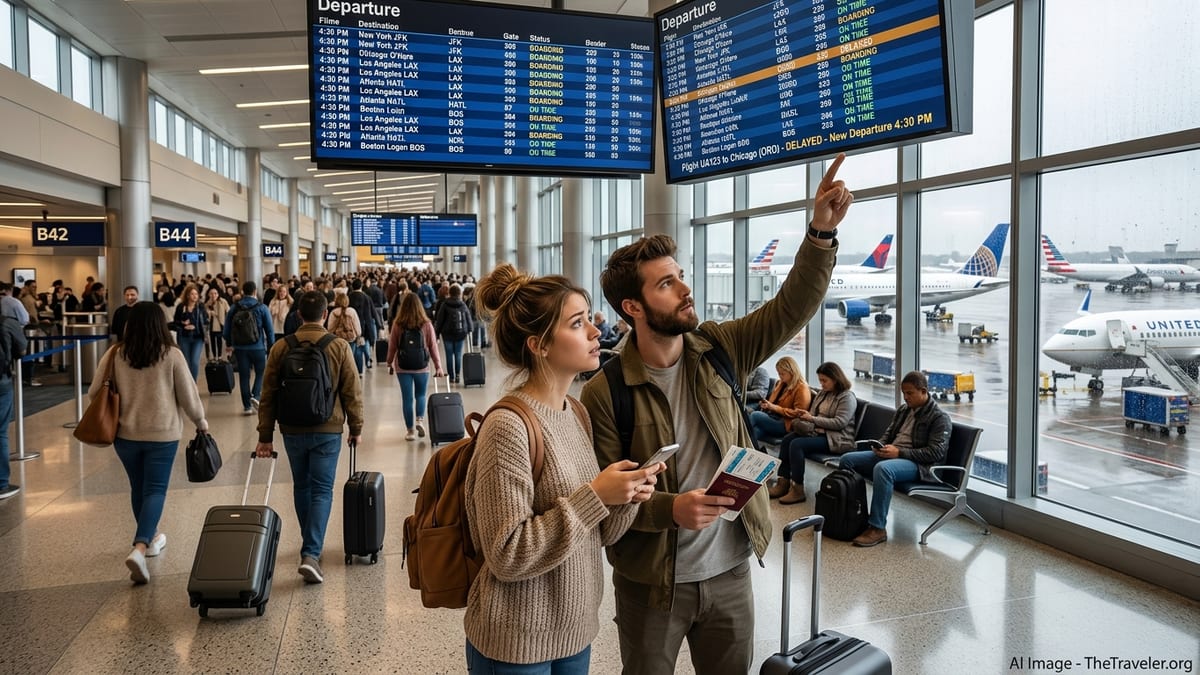
Holiday disruption risks are high, but coverage is fragmented
Federal data and recent airline disruptions suggest that many Thanksgiving trips now carry a significant risk of delay or cancellation, which can leave travelers paying out of pocket for meals, hotels and rebooked transport if they are not protected by insurance or other benefits. An analysis of more than one million flights in November and December 2025 found that roughly one in four U.S. flights arrived at least 15 minutes late, with holiday peaks among the worst affected periods. At the same time, a rare nationwide ground stop on 13 November 2026 and separate carrier outages have highlighted how quickly system failures can cascade through the network, particularly during peak weeks when spare seats are scarce.
For Thanksgiving week 2026, several forecasting services expect passenger numbers to be close to or above pre‑pandemic records, while winter weather systems are beginning to affect both coasts. Industry guides note that domestic round‑trip airfares for the holiday are sharply higher than a year ago, meaning that even a relatively straightforward family visit can involve several thousand dollars of nonrefundable bookings. That combination of crowded skies, fragile infrastructure and higher stakes is driving renewed attention to travel insurance, which can reimburse certain losses, and to existing protections built into credit cards and new U.S. Department of Transportation refund rules.
The key message from regulators and consumer advocates this season is that protections are not automatic and that travelers need to distinguish between airline refund rights, card benefits and standalone insurance. While airlines must now provide automatic cash refunds for qualifying cancellations and significant delays, those rules do not cover every kind of disruption or secondary cost. Separate travel insurance policies can address some of those gaps, but they only respond to specific, named causes in the contract, and many common holiday frustrations still fall outside those definitions.
What typical Thanksgiving travel insurance policies actually cover
Most comprehensive U.S. travel insurance plans aimed at holiday travelers bundle together several core benefits that are activated at different stages of a trip. Before departure, trip cancellation coverage can reimburse prepaid, nonrefundable costs such as flights, hotel stays, vacation rentals, tours and theme‑park tickets if a traveler has to cancel for a covered reason. Common triggers listed by state insurance departments and major insurers include serious illness or injury to the traveler or a companion, hospitalization or death of a close family member, severe weather that makes the destination unreachable, significant mechanical or schedule problems affecting a common carrier, a home made uninhabitable by fire or natural disaster, or being called for jury duty or required court testimony.
Once a Thanksgiving trip is underway, trip interruption and trip delay coverage typically become more important. Interruption benefits may reimburse unused prepaid arrangements if a traveler must cut the visit short for a covered reason, and may cover additional transportation costs to return home. Travel delay benefits, by contrast, are designed to pay for incidental costs during a disruption, such as hotel stays, meals and local transport when a common carrier delay exceeds a specified threshold, often six to twelve hours or an overnight stay. During peak Thanksgiving periods, when rebooking options on later flights or alternative routes can be extremely limited, even a relatively modest per‑day benefit can offset some of the strain of an unplanned layover or missed connection.
Most comprehensive policies also include some level of baggage protection. Baggage loss coverage can reimburse the value of checked items that are lost, stolen or damaged, up to per‑item and per‑trip limits. Baggage delay coverage is narrower: it usually pays a smaller amount for essential purchases such as clothing and toiletries if a bag is delayed beyond a set number of hours, often 12 to 24. With airlines encouraging travelers to check more bags during crowded departures from major hubs, those benefits can be relevant even on short domestic Thanksgiving trips, although they do not typically cover all replacement costs and are secondary to any compensation the airline itself provides.
Medical treatment and evacuation: crucial for international and complex trips
For travelers spending Thanksgiving overseas or adding an international leg to a domestic visit, emergency medical and evacuation coverage can be the most financially significant part of a travel insurance plan. The U.S. Department of State continues to recommend that Americans planning foreign travel purchase medical insurance that is valid in their destination and that includes coverage for emergency medical evacuation back to the United States, since most domestic health plans have limited or no benefits abroad and Medicare is generally not accepted outside the country. In the event of a serious illness or injury on a trip, particularly in regions with limited medical facilities, evacuation to a suitable hospital or repatriation home can cost tens of thousands of dollars.
Standard travel medical benefits are usually designed to cover acute, unforeseen conditions that arise during the covered trip, rather than routine care or pre‑scheduled treatment. Policies often specify per‑person maximums for medical expenses and separate caps for evacuation and repatriation of remains, and many require travelers to use the insurer’s 24‑hour assistance line to coordinate transport. Some plans allow travelers with stable pre‑existing conditions to be covered if they purchase the policy within a defined period after their first trip payment and are medically able to travel when they buy it, while others exclude pre‑existing conditions entirely.
Even for primarily domestic Thanksgiving travel, medical coverage can matter for multi‑state road trips, cruises departing from U.S. ports or side trips to neighboring countries. Experts at federal and state agencies advise travelers to confirm whether their regular health insurance covers emergency treatment in other states or countries, to check any deductibles that would apply out of network and to consider supplemental travel medical coverage if gaps exist. For older travelers and those with chronic health issues, pre‑trip consultation with a health provider and careful review of exclusions is particularly important, since a claim may be denied if the insurer determines that a condition was pre‑existing and not covered.
Costs, card benefits and new airline refund rules
Pricing for travel insurance on Thanksgiving‑period trips varies widely, but industry comparisons and consumer guidance generally place comprehensive policies in a band of around 5 to 10 percent of the insured trip cost. That means a family insuring a 5,000 dollar holiday trip that includes air tickets, lodging and prepaid activities might expect to pay a few hundred dollars for coverage, depending on factors such as traveler ages, destination, trip length, selected benefits and any optional upgrades such as cancel for any reason clauses. Lower‑priced plans may cap benefits at modest levels for trip delay, baggage and medical care, while more expensive options raise those caps and broaden covered scenarios.
Consumer protection agencies and insurance regulators consistently recommend that travelers inventory existing protections before buying a stand‑alone policy. Many mid‑range and premium credit cards already include some combination of trip cancellation, trip interruption, delay and baggage benefits, provided that the traveler used the card to purchase the relevant travel services. Those embedded benefits often activate after a delay of six, twelve or more hours or after an overnight stay, and they may only cover certain common carriers or classes of ticket. For travelers who book air, hotel and rental car on a card with generous built‑in coverage and have robust health insurance that responds out of state, the incremental value of a comprehensive travel insurance policy may be limited to edge cases.
The regulatory backdrop has also shifted ahead of Thanksgiving 2026. New U.S. Department of Transportation rules require airlines to automatically provide cash refunds when a flight is cancelled or significantly changed and the passenger chooses not to travel, rather than offering only flight credits or vouchers. Those refund obligations apply regardless of whether a traveler bought travel insurance, and they can substantially reduce the financial impact of certain disruptions. However, airline refunds do not extend to secondary costs such as prepaid vacation rentals that are still available, nonrefundable event tickets at the destination or the added expense of staying in an airport hotel when a connection is missed. For those categories, travel insurance or card benefits may still be the only potential recourse.
Limitations, exclusions and timing that matter over Thanksgiving
While the marketing language around travel insurance often highlights peace of mind, the fine print is critical, especially for trips scheduled during a week when storms and system outages are more predictable. Insurance departments emphasize that most policies operate on a named‑peril basis for trip cancellation and interruption, meaning that the cause of a disruption must fall within a list written into the contract. A forecast of heavy snow or rain on a key travel day, by itself, is usually not sufficient to trigger coverage if the policy was purchased after the forecast became public and the traveler simply decides not to go. Similarly, generalized fear of disruption after a widely reported ground stop or strike threat is not typically covered unless the traveler bought an upgrade that explicitly allows cancellation for any reason, which compensates only a percentage of losses and is subject to strict purchase windows.
Policies also typically exclude losses that result from a traveler’s own decisions or controllable circumstances. Oversleeping and missing a flight, choosing to take a later departure for convenience, or failing to obtain required documentation such as passports, visas or necessary health certificates are commonly listed as reasons insurers will not pay claims. Alcohol‑ and drug‑related incidents, participation in certain hazardous activities and injuries linked to pre‑existing medical conditions that were not disclosed or covered may also bar reimbursement. For Thanksgiving trips that combine family visits with winter sports, adventure activities or driving in challenging conditions, travelers should specifically check whether those elements are covered.
Timing is another recurring pitfall. Many benefits are only available if a policy is purchased within a specified number of days after the first trip payment, particularly protections tied to pre‑existing medical conditions and cancel for any reason options. Buying insurance at the airport on the morning of a Thanksgiving departure will not retroactively cover an illness that began earlier in the week or a storm that has already caused airlines to post widespread waivers. State and federal consumer materials stress that travelers should read the full policy, not just the summary, and confirm that it is valid in every jurisdiction they plan to visit for the entire duration of the trip.
How Thanksgiving travelers can decide what to buy and what to document
With no single answer to whether travel insurance is worthwhile for a Thanksgiving trip, official guidance focuses on matching coverage to the specific journey and risk tolerance. Travelers with expensive, largely nonrefundable itineraries, tight work schedules or international segments are more likely to benefit from comprehensive coverage that includes trip cancellation, interruption, delay, baggage, medical and evacuation benefits. Those booking inexpensive, flexible domestic tickets, staying with family and holding strong health insurance may conclude that built‑in card protections and airline refunds are adequate, particularly if they are comfortable absorbing the cost of a missed dinner or an overnight delay.
Regardless of the decision to buy a separate policy, agencies such as the U.S. State Department and state insurance departments recommend several practical steps before leaving for the airport. These include confirming what one’s health plan covers away from home, checking airline and card benefit terms for delay and baggage protections, and saving all receipts and records if a disruption occurs. Documentation such as boarding passes, written notices of cancellation or delay from the airline, hotel folios, meal receipts and medical records is often required to substantiate any claim, whether it is filed with an insurer, a credit card provider or the airline itself.
As Thanksgiving week begins in earnest, travelers who have not yet reviewed their coverage are being urged to do so before storms or system problems materialize. That means checking whether any travel insurance plan under consideration lists the current date as the effective date of coverage, verifying that all travelers’ names and trip costs are correctly recorded, and clarifying claim procedures and deadlines. With holiday flights heavily booked and same‑day alternatives limited, knowing in advance who will pay for a hotel if a connection is missed, how to seek medical help in an unfamiliar city and when a refund is owed can make the difference between an expensive disruption and an inconvenience that is at least partially reimbursed.