


More news on this day
Air travelers across the United States faced another day of severe disruption on Saturday as airlines struggled to recover from a nationwide Federal Aviation Administration ground stop that halted most departures for more than four hours on Friday, triggering thousands of cancellations, rolling delays and crowded terminals heading into a busy November travel weekend.
Get the latest news straight to your inbox!
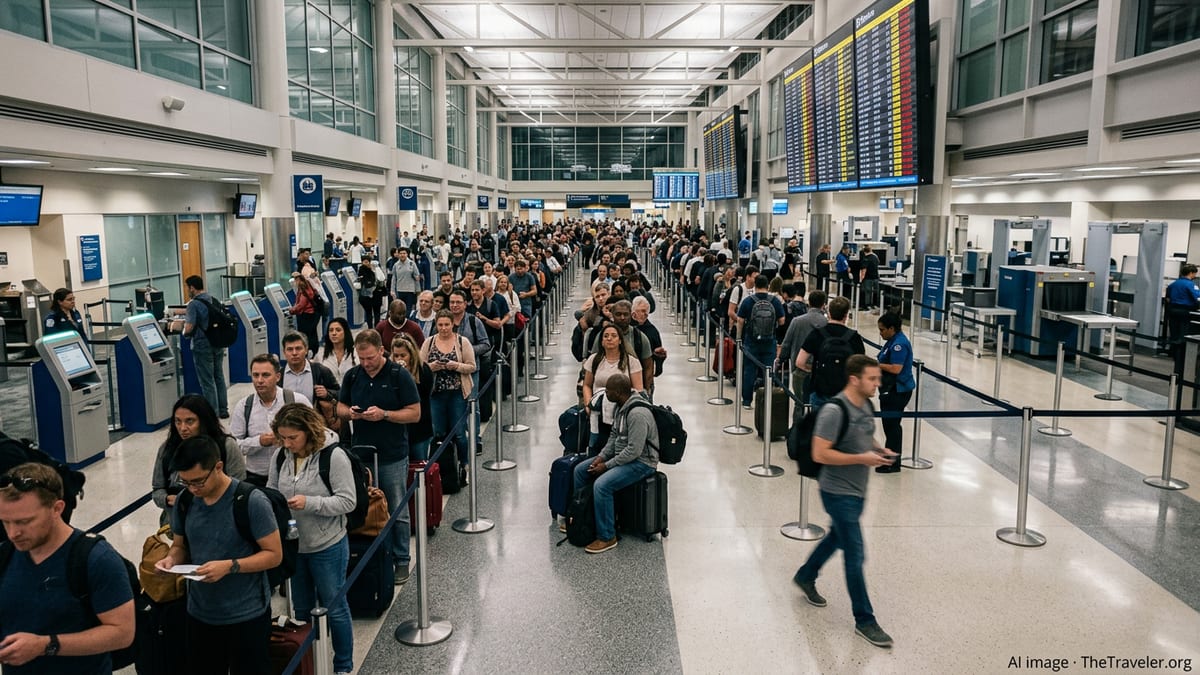
Systemwide outage leaves aircraft and crews out of position
Publicly available flight tracking data and airline advisories show that the chain reaction from Friday’s shutdown continues to ripple through the system, with more than 12,500 flights canceled on Friday and Saturday combined and many others operating hours behind schedule. Major hubs including New York’s LaGuardia and John F. Kennedy, Newark Liberty, Chicago O’Hare, Dallas Fort Worth and Atlanta have reported some of the highest disruption levels as airlines attempt to rethread complex networks built on tight aircraft and crew rotations.
Reports from aviation outlets indicate that the nationwide stop, which began on Friday afternoon and was lifted later that evening, was tied to a telecommunications failure affecting radio links between air traffic control centers and aircraft. Federal briefings cited a problem in the private communications network that carries critical controller-to-cockpit traffic, prompting what the FAA described in advisories as an extraordinary safety measure to halt most departures until communications could be stabilized.
Once the ground stop ended, flights already in the air were allowed to continue to their destinations, but aircraft and crews were left badly out of position for Saturday’s schedules. Airlines have been forced to cancel additional services, consolidate lightly booked routes and prioritize long-haul and small-city connections to rebuild their networks. Several carriers have advised customers that they expect operations to normalize gradually through Sunday, but warned that lingering disruptions may extend into Monday for some routes.
Travel insurance providers and airport authorities have issued advisories urging passengers not to head to the airport without a confirmed rebooking, noting that many flights are departing full and that standby lists remain lengthy. In some cities, hotels near major hubs have reached capacity, leaving passengers to overnight in terminals or arrange accommodation far from the airport.
New York, New Jersey and Boston see heavy knock-on delays
Regional news coverage from New York and New Jersey shows particularly acute impacts at LaGuardia, JFK and Newark Liberty, where large numbers of short-haul domestic flights feed connections to transatlantic and cross-country services. Airport operators in the region have advised travelers that, although the national ground stop was lifted Friday evening, they should still expect lengthy lines at check in and security, crowded gate areas and irregular operations throughout Saturday.
Some airlines have focused recovery efforts on restoring key international departures from the Northeast. According to published airline statements, carriers serving Boston Logan and JFK have placed priority on Europe-bound flights to avoid stranding passengers overseas and to reposition widebody aircraft. That strategy has come at the cost of additional cancellations on shorter domestic segments, especially late-evening trips that are harder to staff within crew duty limits after a day of rolling delays.
At Newark Liberty, images and accounts shared with local media show passengers clustered around departure boards, watching as departure times repeatedly slide or flip to canceled. Travelers there have described missed weddings, postponed business meetings and disrupted holiday plans as they wait for rebooking options, sometimes more than 24 hours after their original departure time.
Smaller airports in the New York metropolitan area, including Westchester County Airport north of the city, have also felt the strain. Reporters on site describe long queues at customer service desks as travelers attempt to switch to alternate routes or nearby airports, only to find that many remaining seats have already been snapped up by those displaced from major hubs.
Cause tied to overloaded routers, not cyberattack, officials say
According to national broadcast coverage and detailed timelines compiled by aviation analysts, the disruption began when a key telecommunications network connecting multiple air route traffic control centers experienced a failure that affected radio communications and some radar feeds. Briefings from the Department of Homeland Security have stated that early reviews show no evidence of a cyberattack, characterizing the event instead as a technical outage in critical routing equipment.
Subsequent reporting by major news organizations, citing technical summaries and industry sources, points to a software or configuration update that forced portions of the network to reboot, overloading routers and triggering a cascading communications outage. With controllers unable to rely on stable voice connections to pilots across several regions, the FAA’s command center ordered an unprecedented nationwide pause on most departures for safety reasons while backup systems were brought online and traffic levels reduced.
Transportation officials speaking in public briefings have linked the episode to what they describe as an aging air traffic control infrastructure in need of modernization, noting that core systems still depend on older telecommunications hardware and legacy software. The outage has already renewed debate in Washington over funding for the NextGen portfolio of upgrades and whether recent investments in automation and artificial intelligence tools were sufficient or properly integrated with existing networks.
Industry commentators note that Friday’s event marked the most extensive nationwide interruption to U.S. air travel since the September 11, 2001 attacks and only the second broad ground stop caused by system failures, following an outage of a key safety database in January 2023. While investigators continue to review logs and hardware performance, airlines and travelers are left to grapple with the practical consequences of a gridlocked system.
Thousands of passengers stranded as rebooking stretches into Sunday
From Dallas to Seattle and Miami to Chicago, terminal concourses on Saturday have resembled makeshift waiting rooms, as stranded passengers search for scarce seats on remaining flights. Flight statistics aggregated by data providers and cited in national coverage indicate that U.S. airlines canceled more than 3,700 flights and delayed around 2,000 more by late Saturday morning, on top of thousands of disruptions on Friday.
With aircraft and crews scattered and some airports running short on available gates and parking stands, airlines have warned that they cannot simply add extra flights to clear the backlog. Instead, carriers are encouraging travelers whose trips are not time sensitive to voluntarily move journeys later into the week, sometimes offering fee waivers and flexible rebooking policies. Several airlines have also extended change-fee waivers to customers traveling to, from or through heavily affected hubs.
Travelers holding connecting itineraries are facing particular challenges. Even when an outbound leg operates, the onward connection may be canceled or significantly delayed, leaving passengers stuck at intermediate hubs. Advisories from airlines and travel insurers recommend that affected customers use mobile apps, websites and text alerts rather than queuing at crowded counters, and that they keep all receipts for meals and lodging in case of partial reimbursement under the carrier’s policies or their travel insurance coverage.
Airports and local tourism agencies in some cities have reported a surge in last minute hotel bookings and rental car requests, as travelers opt to complete journeys by road where possible. In regions where major destinations are within a few hundred miles of each other, some passengers have chosen to drive rather than wait for new flight options, especially for trips that would otherwise require an overnight stay in an airport hotel.
What travelers should know as operations slowly stabilize
Industry forecasts and FAA guidance suggest that while the worst of the immediate crisis has passed, the U.S. air travel system will need at least through Sunday to fully stabilize. Airlines are using overnight hours to reposition aircraft back to core hubs, while crew schedulers work within federal duty-time rules to build legal rosters for Sunday’s operations. Travelers with flights over the next 24 to 48 hours are being urged by carriers and airport authorities to check their flight status frequently and to arrive earlier than usual for departures, especially from major hubs.
For those still stranded, consumer advocates advise focusing first on securing a confirmed seat, even if it involves an inconvenient connection or nearby airport, since overall capacity is constrained. Once rebooked, travelers can then explore possibilities for meal vouchers, hotel discounts or partial refunds, depending on the airline’s policies for major irregular operations. Because this disruption stems from an air traffic control system failure rather than airline staffing problems or weather, compensation rules and goodwill policies may vary by carrier.
Passengers planning near-term international travel through U.S. hubs are encouraged to monitor not only their initial departure but also connecting segments, as long haul services may depart close to schedule while feeder flights remain disrupted. Travel advisors recommend allowing extra time for passport control and security re-screening at large connecting airports, where longer lines are expected as airlines consolidate passengers onto fewer flights.
Analysts say that, as the investigation into the telecommunications failure proceeds, travelers can expect renewed scrutiny of backup systems and contingency planning for rare but high impact outages. For now, those caught in the middle of the disruption are focused on more immediate concerns: securing a seat, finding a place to sleep and recalibrating plans around one of the most significant system failures to hit U.S. aviation in decades.