


More news on this day
As a rare nationwide ground stop rippled through the U.S. air system on Friday, passengers from New York to Los Angeles found themselves stranded in terminals and on taxiways, watching departure boards fill with delays and cancellations while information trickled in by degrees.
Get the latest news straight to your inbox!
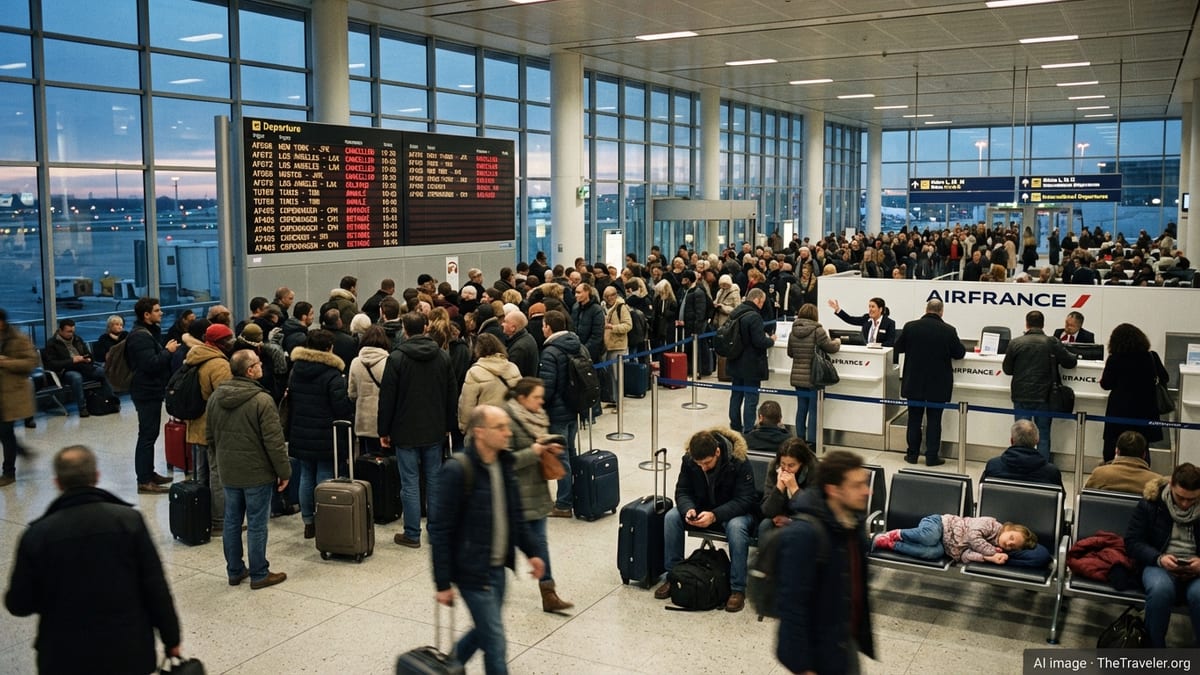
A traveler’s long night at LaGuardia
Among those caught in the disruption was a leisure traveler at New York’s LaGuardia Airport, whose experience has circulated widely in broadcast clips and online replays. According to coverage from national television news, the passenger had flown to New York City with a close friend and was attempting to return home on Friday evening when boarding suddenly stalled and terminal crowds began to swell.
Publicly available video segments show the traveler describing how what started as an ordinary departure quickly shifted into uncertainty. Gate displays continued to push back departure times in small increments, while overhead announcements referenced a national ground stop that few in the terminal appeared to fully understand. Nearby concessions stayed busy as travelers lined up for food, power outlets and any fragment of information from airline staff.
Reports indicate that the LaGuardia passenger ultimately faced hours of waiting while crews, aircraft and routes were re-sequenced nationwide. With rolling delays and limited spare seats on alternative departures, the traveler weighed options that many passengers confronted at the same time: whether to keep waiting at the gate, search for any open seat to a nearby city, or give up and return to the city for another night of unplanned hotel costs.
Coverage of the LaGuardia scene described a mix of exhaustion and camaraderie. Some passengers passed the time trading tips on rebooking apps and airline chat functions, while others looked for overland alternatives such as intercity buses or trains still operating up and down the Northeast Corridor.
Stuck in the system at Denver and Los Angeles
At Denver International Airport, travelers recounted being held onboard aircraft for extended periods as the halt in departures cascaded into gate shortages. One passenger interviewed in financial and broadcast news reports described sitting on a parked jet for hours, watching a backlog grow across the ramp as flight crews waited for clearance that did not immediately arrive.
In these accounts, cabin crews relayed what information they had about the ground stop, noting that flights already airborne would continue to their destinations while departures from U.S. airports were paused. For the passengers, the practical effect was a long, uncertain wait without clarity on whether the flight would ultimately depart or return to the gate, complicating any attempt to change plans or reach connecting flights.
Farther west, reports from Los Angeles International Airport detailed crowded concourses and passengers who joked darkly that they might be living at LAX for the foreseeable future. Local coverage outlined how a four-hour halt to departures left aircraft out of position up and down the West Coast, with travelers sleeping on terminal floors or queuing at customer service desks that remained backed up late into the evening.
Those conditions were echoed in first-person accounts shared on social platforms from major hubs such as Atlanta and Denver. Travelers described difficulty finding rental cars or nearby hotel rooms as the scale of the disruption became clear, while some opted to drive eight to ten hours rather than risk further cancellations once the ground stop lifted.
Inside the nationwide shutdown of departures
According to widely cited federal and industry updates, the Federal Aviation Administration ordered the ground stop on Friday afternoon after critical communications and surveillance systems experienced a data overload that required an immediate reset. National outlets reported that at the peak of the disruption, thousands of flights were either delayed or canceled across the country, making it one of the most far-reaching interruptions to U.S. air travel in decades.
Public briefings noted that aircraft already in the air were allowed to continue to their destinations under positive air traffic control, while new departures from U.S. airports were held at gates and on taxiways. That distinction explains why some passengers, like those in Denver and at other hubs, spent hours onboard stationary aircraft instead of in the terminal.
By late Friday night, the formal ground stop was lifted and operations slowly resumed, but the knock-on effects continued into Saturday. Published airline data and flight-tracking services showed thousands of cancellations and additional delays as carriers worked to reposition planes and rotate flight crews who had reached duty limits during the disruption.
Transportation and homeland security updates emphasized that early reviews found no indication of a cyberattack. Instead, publicly available statements pointed to aging air traffic control infrastructure and a stressed communications backbone overwhelmed by data, raising fresh questions about long-discussed modernization projects for the national airspace system.
Scenes from terminals across the country
From Boston to Las Vegas, airport concourses filled with similar stories. Regional coverage from Boston’s Logan International Airport described families stranded in front of departure boards, including travelers who had timed trips around rare visits with adult children or elderly parents. In Las Vegas, a passenger told television crews that “nobody has answers,” summing up the sense of confusion that echoed across broadcast and online reports.
At Seattle-Tacoma International Airport, video shared by national outlets showed one traveler turning a violin case into an impromptu stage, playing classical pieces to a circle of fellow passengers camped out near a gate. In Lexington, Kentucky, local reports described stranded strangers organizing a makeshift cornhole tournament in the terminal, a moment of levity amid missed weddings, job interviews and long-planned vacations.
In Atlanta, one of the nation’s busiest hubs, regional news organizations documented long security lines that barely moved, with travelers posting images of crowded checkpoints and full gate areas. At some airports, announcements encouraged passengers who did not have same-day departures to leave the terminal and rebook remotely in order to ease congestion.
These vignettes highlight the uneven nature of the disruption. While some travelers were able to rebook within hours or shift to nearby airports with available seats, others faced multi-day delays, particularly those traveling on regional routes with limited daily service or heading to international connections already missed.
What stranded passengers can do when flights freeze
Consumer advocates and travel industry analysts note that the rights of passengers during a ground stop depend heavily on the cause of the disruption and the policies of individual airlines. Because this interruption stemmed from a federal airspace decision related to safety and system reliability, public guidance suggests that airlines are generally not required under U.S. regulations to provide compensation in the way they might for cancellations caused by crew shortages or mechanical issues.
However, publicly available airline customer service plans often commit to providing rebooking assistance on the next available flight, fee waivers for same-day changes, or meal and hotel vouchers in certain circumstances. In the wake of Friday’s events, several large U.S. carriers published travel alerts outlining flexible change policies for customers ticketed on affected days, allowing many stranded travelers to move their trips without additional charges.
Analysts observing the response recommend that passengers caught in similar nationwide disruptions act on several fronts at once: use airline mobile apps to rebook while simultaneously standing in physical service lines, monitor social media feeds where carriers post broad policy changes, and, when feasible, consider nearby airports or ground transport if time-sensitive commitments are at risk.
As operations normalize, attention is likely to focus on how the episode fits into a broader pattern of strain on the U.S. air travel system. For the passengers who spent Friday night on airport floors or in the cabins of idling aircraft, the experience has become part of a growing catalog of modern travel stories in which a single technological failure can reverberate across an entire continent within hours.