


Istanbul Airport has become one of the world’s busiest hubs, linking North America and Europe with the Middle East, Africa, and Asia. Its sheer size, 24-hour schedule, and complex connections can make journeys smooth or stressful depending on how well you prepare. Before you fly through Istanbul, there are a few critical checks that can save you money, time, and a lot of anxiety on the day.
Get the latest updates straight to your inbox!
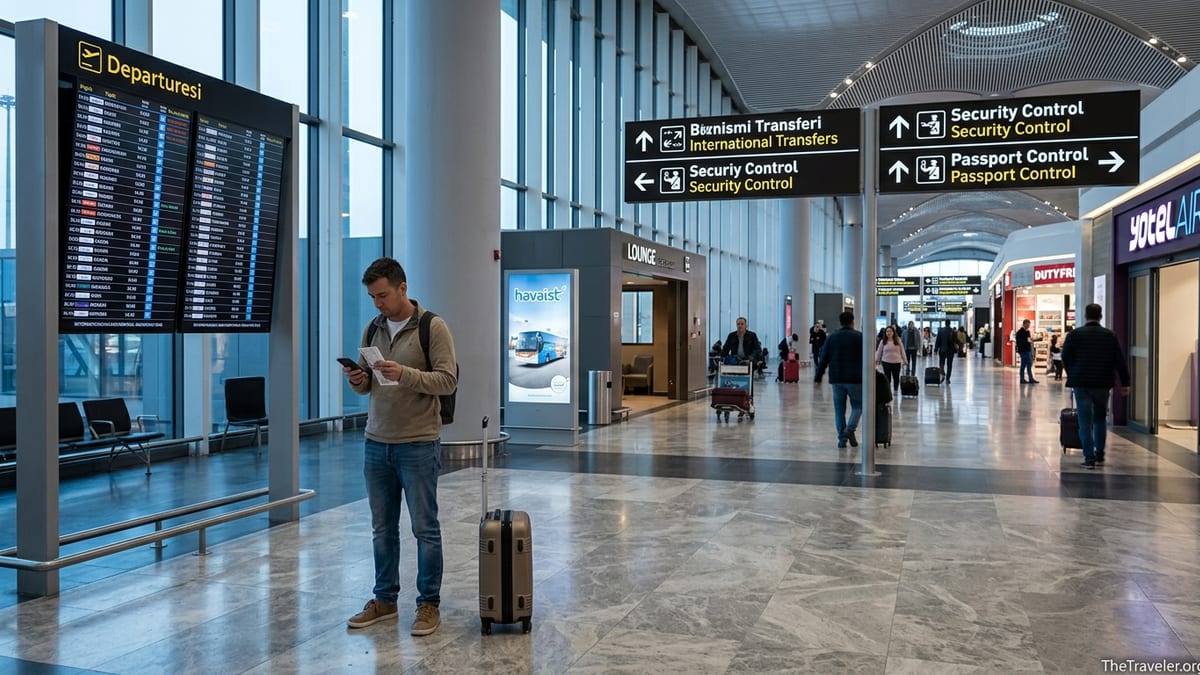
Check Whether You Need a Visa or Can Transit Airside
Before booking a connection through Istanbul, confirm whether you can stay airside during your layover or must clear passport control. Many passengers transiting between international flights never need to enter Türkiye, but this depends on your ticket, airline, and nationality. If both flights are on one ticket with the same or partner airlines and your bags are checked through, you typically remain airside and follow “International Transfers” signs. In practice, that often means simply rescreening your hand luggage and walking directly to your next gate.
If you are traveling on separate tickets or mixing low-cost and full-service airlines, you may need to collect your checked bag and recheck it, which requires entering Türkiye. That in turn can mean needing a visa. For example, a Canadian traveler flying New York to Istanbul on Turkish Airlines and then onward to Dubai on a separate Emirates ticket would usually have to clear immigration, retrieve luggage, and check in again. In this situation, checking the official visa rules and arranging an e-visa or confirming visa-free entry before you travel is essential.
Istanbul Airport’s passport queues can be very quiet at 02:00 and very crowded in the morning bank of arrivals. If you do need to enter the country, build at least an extra hour into your plans for immigration and customs, especially in summer or during major holidays like Eid or New Year when long-haul arrivals bunch together and lines can easily reach 30 to 60 minutes.
Even if you plan to stay airside, double-check your itinerary the week before departure. Airlines occasionally retime flights or change operating carriers. A codeshare that moves to a different airline or terminal setup can alter whether your bag is tagged through and whether you will be required to enter Türkiye in transit.
Understand Baggage Rules and Onward Screening
Istanbul is a major connection point for travelers carrying a lot of luggage, from families emigrating long-distance to shoppers routing home via Türkiye. Make sure you know your baggage allowance for every flight, not just the first leg. A typical scenario is a passenger flying the United States to Istanbul on a ticket with two checked bags included, then connecting to a low-cost regional flight from Istanbul to a smaller city where only one checked bag or even hand luggage is included. Sorting this out at the airport can mean paying steep excess fees at check-in.
If you are transiting airside, your checked baggage is normally transferred automatically, but your hand luggage must meet both security and airline rules. Istanbul Airport applies standard aviation security regulations for liquids and gels in carry-on bags: small containers in a single transparent plastic bag, generally around 1 liter total, with each container about 100 ml. This matters for passengers who purchased duty free liquids at their origin. If security at your first airport did not seal your duty free purchases in a tamper-evident bag with the receipt, expect them to be questioned or even refused at transit screening in Istanbul.
Electronics are another point to consider. Laptops and large devices are typically removed from bags at security, and officers may ask you to power them on. If you are carrying multiple cameras, drones, or power banks for a long trip, spread them between bags so that screening is quick and your belongings are easy to repack. Travelers connecting through Istanbul with camera gear often report that having batteries stored in dedicated cases and keeping one small pouch for laptops and tablets makes the security line far less stressful.
For bulky items such as skis, musical instruments, or bicycles routed through Istanbul, confirm in writing with your airline how they will be handled. Istanbul Airport is used to handling special baggage, but connections involving a mix of carriers can create confusion over who is responsible if something is delayed. When in doubt, arrive early at your departure airport and insist that your bag tags show your final destination, not only Istanbul, before you leave the check-in desk.
Check Your Connection Time, Terminal Layout, and Walking Distances
Istanbul Airport’s terminal is a single massive building rather than multiple satellites, but distances can still be long. Walking from one end of the international concourse to the other can take 20 to 30 minutes at a normal pace. Before you accept a tight itinerary, check your minimum connection time and think about your own walking speed, mobility, and whether you are traveling with children or heavy bags.
Airlines sell connections in Istanbul that are well under two hours, and many experienced travelers comfortably make 1 hour 15 minute or even 1 hour transfers when everything is on time and on one ticket. However, real-world stories show that unexpected gate changes, secondary screening at some departure gates, or extra checks at passport control for certain destinations can eat into that cushion quickly. If you are arriving from North America and connecting onward to Asia or Africa, aim for at least 2 to 3 hours between flights, especially in winter when delays are more common.
The airport’s signage is clear, with large overhead signs directing you to International Transfers, Passport Control, and each pier of gates. Nonetheless, it is worth checking a simple terminal map before you travel so you understand that gates labeled A, B, D, F, and so on extend from a central hall. Knowing that your arrival gate is likely on one side of that hall and your departure gate on another will help you judge whether you have time for a shower or lounge visit or whether you should head directly toward your next flight.
If you have mobility difficulties or are traveling with elderly relatives, request assistance from your airline before your trip so that wheelchairs or buggies are booked in advance. Istanbul can be physically demanding for those who walk slowly. A traveler connecting from Toronto to Nairobi with a 1 hour 40 minute layover may feel comfortable with that window if they can move quickly, but an older couple would be better off on an itinerary with an additional hour.
Plan How You Will Spend a Long Layover: Lounges, Sleep Pods, and Hotels
Many itineraries through Istanbul involve layovers of six to twelve hours, often overnight. Planning in advance where you will rest, eat, and shower can make the difference between a miserable and a surprisingly pleasant stop. Istanbul Airport has multiple lounges, including the flagship Turkish Airlines business and Miles&Smiles lounges and the independent iGA Lounge, which usually accepts Priority Pass and similar memberships or sells paid access. Travelers frequently describe the iGA Lounge as one of the most comfortable at the airport, with hot and cold buffet food, Turkish dishes such as pide and simit, and shower suites that are worth the fee on long-haul connections.
If you do not have lounge access through your ticket or status, day passes are often available, though prices vary and can feel high on a short connection. Some travelers with 6 to 8 hour layovers choose instead to book a few hours in a sleep pod or small cabin. Istanbul Airport offers several options of cocoon-style pods and compact rooms rented by the hour in both airside and landside areas. Daytime hourly rates are typically in the tens of euros per hour, with higher night-time rates. For example, recent travelers have reported paying around the equivalent of 20 euros per hour for a basic pod for a few hours’ rest.
For those who prefer a proper bed and private bathroom, the YOTELAIR hotel located inside the terminal and other branded hotels just outside the airport perimeter provide short-stay rooms. These can be cost-effective for families or couples who would otherwise pay for multiple lounge entries. As an example, a couple facing an 8 hour overnight layover might compare a combined lounge fee of several dozen euros each with a compact airside hotel room at a similar total price but far better sleep quality.
Finally, consider whether leaving the airport is realistic. In daytime, some passengers with layovers of at least 8 to 10 hours opt to visit central Istanbul for a few hours. However, the airport is around 40 kilometers from the historic center, and traffic can be unpredictable. By the time you clear immigration, travel into the city by bus, metro, or taxi, and return early enough for security and boarding, your margin can shrink quickly. For overnight connections, many travelers decide that staying at or near the airport offers the best balance of rest and reliability.
Check Ground Transport and Costs If You Exit the Airport
If your plan involves leaving the airport during a layover or after arrival, check your ground transport options and approximate costs before you fly. Istanbul Airport is served by a metro line, city buses, Havaist airport coaches, taxis, and private transfers. In 2026, Havaist buses from the airport to popular central districts such as Taksim typically cost the equivalent of a few hundred Turkish lira per person, with travel times of about 60 to 90 minutes depending on traffic and the exact route.
The metro offers the cheapest way into town and is a good option for solo travelers with light luggage, connecting via transfer stations to reach areas like Şişli or Taksim. The journey can take an hour or more but is usually more predictable than road traffic during rush hour. For example, a visitor landing mid-afternoon who takes the metro and a connecting line can often reach central neighborhoods for a fraction of the cost of a taxi, though they will need to handle stairs, escalators, and potentially crowded carriages.
Taxis operate with metered fares that reflect distance and traffic. From Istanbul Airport to Taksim, typical 2026 estimates put standard yellow taxi fares in the range of several hundred to a couple of thousand Turkish lira, depending on congestion, night surcharges, and which bridge or route is taken. For families or groups of three or four, a taxi or prebooked transfer can work out cheaper than multiple Havaist tickets, while also providing door-to-door convenience. At the taxi rank outside arrivals, official boards show estimated fares by district, which can help you gauge whether a quoted figure is reasonable.
If you know you will arrive very late at night or in the early hours, it is worth checking in advance whether your preferred mode of transport runs around the clock. Havaist airport buses and taxis generally operate 24 hours, but frequencies are reduced overnight. Confirming the first and last bus times for your route or arranging a private transfer if you land around 03:00 can prevent an unexpected wait with tired children and luggage.
Monitor Weather, Delays, and Seasonal Crowds
Like any major hub, Istanbul Airport can experience disruptions due to weather and seasonal traffic peaks. Winter storms occasionally bring snow and low visibility to the city, and while the new airport is designed to handle adverse conditions better than its predecessor, there are still days when flights are delayed or diverted. In January and February, especially on early morning departures, it is wise to keep an eye on airline notifications and track your flight status before leaving for the airport.
Summer brings a different challenge: crowds. Istanbul is a popular destination in its own right and a major transfer point for holiday traffic to the Mediterranean, the Balkans, the Middle East, and East Africa. School holidays in Europe, North America, and the Gulf often coincide, making July and August particularly busy. During these months, security and passport control queues can grow quickly in the late morning and evening banks of departures. Arriving at the airport at the very last possible moment because you see a short official minimum check-in time on your ticket is risky. Many travelers build in an extra 30 to 60 minutes beyond the airline’s minimum guidance during the peak summer period.
Religious holidays such as Ramadan and the subsequent Eid celebrations can also affect traffic patterns. Domestic flights around these dates tend to sell out, and connecting passengers on popular long-haul routes may find rebooking options limited if something goes wrong. If you know your trip passes through Istanbul at a busy time of year, consider choosing an itinerary with a slightly longer layover to give yourself more flexibility if your incoming flight is delayed.
Finally, recognize that Istanbul Airport operates 24 hours. Arriving at 01:30 does not guarantee an empty terminal, especially when several long-haul flights from North America, East Asia, and the Gulf land close together. Checking real-world traveler reports in the weeks before you fly can give you a sense of how crowded the airport has felt recently and whether certain times of day have been particularly congested.
Prepare for Prices, Payments, and Practicalities Inside the Terminal
Many travelers are surprised by how expensive food and drink can be inside Istanbul Airport compared with the city. A simple coffee and pastry in the terminal can cost as much as a decent café breakfast downtown, and full meals in sit-down restaurants are often priced at international airport levels. Knowing this in advance lets you budget realistically: a family of four grabbing sandwiches, soft drinks, and snacks before a long flight might easily spend the equivalent of what would buy a full restaurant meal in central Istanbul.
On the positive side, Istanbul Airport is well equipped with ATMs, currency exchange booths, and card payment options. Most international credit and debit cards are widely accepted in duty free shops, cafés, and restaurants. However, if you plan to take a bus or metro into the city, you may need some Turkish lira loaded onto an Istanbulkart or similar payment card used on public transport. Sorting this out on arrival is simpler if you know in advance where to find a kiosk or machine on the arrivals level instead of wandering the terminal with luggage after a long flight.
Wi-Fi is available in the terminal, and many travelers manage to use the free periods by registering with a mobile number or scanning a passport at dedicated kiosks. To avoid surprises, check how the system currently works before your trip and decide whether to rely on airport Wi-Fi, your roaming plan, or a local eSIM. Having a stable connection can be very helpful if you need to receive airline app notifications about gate changes or delays during a tight connection.
Other practicalities to check in advance include smoking areas, prayer rooms, baby-care facilities, and quiet zones. For example, parents on a long layover often plan their route between a children’s play area, a family restroom, and a restaurant with suitable food. Smokers might want to know whether there are designated smoking terraces after security so they are not caught out before a long non-stop flight. A quick look at the airport’s official map the day before you travel can answer most of these small but important questions.
The Takeaway
Flying through Istanbul Airport can be a smooth, even enjoyable experience if you do a handful of checks before you go. Understanding whether you can transit airside or need a visa, confirming baggage and liquids rules for every leg, and choosing a realistic connection time lay the foundation for a stress-free journey. For longer layovers, advance decisions about whether to book a lounge, sleep pod, or hotel room will shape how rested you feel when you reach your final destination.
Equally important are the on-the-ground details: knowing your ground transport options and approximate costs if you plan to leave the airport, keeping an eye on seasonal crowds and weather risks, and preparing for prices and payment methods inside the terminal. Together, these small pieces of information turn Istanbul from an intimidating mega-hub into a well-organized stopover that works in your favor rather than against you.
With a little planning, your time at Istanbul Airport can be more than just a blur of security checks and gate changes. It can be a chance to stretch, shower, sample Turkish food, and reset before the next leg of your journey.
FAQ
Q1. Do I need a visa to transit through Istanbul Airport?
If your connecting flights are on one ticket and you remain airside, you usually do not need a visa, but check your nationality’s rules and your airline’s policy before travel.
Q2. How much connection time should I allow at Istanbul Airport?
For same-ticket connections with checked bags through, 2 to 3 hours is generally comfortable; add more if you must clear immigration, change terminals, or travel in peak season.
Q3. Are there places to sleep inside Istanbul Airport?
Yes, there are several lounges, paid sleep pods, and an airside hotel offering hourly rooms, plus free reclining chairs in designated rest zones for shorter naps.
Q4. Is food at Istanbul Airport expensive?
Food and drinks are typically priced higher than in the city, so budget for international airport prices, especially if you are feeding a family or have a long wait.
Q5. Can I leave the airport during a long layover?
Often yes, provided you meet visa requirements and allow enough time for immigration, transport into the city, sightseeing, and the return journey with a safe buffer for security.
Q6. What are the cheapest ways to get from Istanbul Airport to the city?
The metro and local buses are usually the cheapest, while Havaist airport coaches balance cost and comfort; taxis and private transfers cost more but offer door-to-door service.
Q7. Does Istanbul Airport have free Wi-Fi?
Yes, there is free Wi-Fi with a time limit, typically accessed by registering a mobile number or scanning a passport at designated kiosks, with paid upgrades available for longer use.
Q8. What should I know about liquids and duty free in transit?
Carry-on liquids must follow standard security limits, and duty free liquids should be in sealed, tamper-evident bags with receipts to avoid problems at transit screening.
Q9. Are there showers available for transit passengers?
Yes, several lounges include showers, and some paid sleep pod and cabin facilities also offer shower access, which can be particularly useful on overnight or long-haul connections.
Q10. Is Istanbul Airport open 24 hours a day?
Yes, Istanbul Airport operates around the clock, with flights, basic services, and at least some food and drink options available throughout the night.