


Anaga Rural Park is one of Tenerife’s most dramatic corners, but it is not a resort area. Inside the park you will find only small villages and scattered farmsteads, with a short list of rural houses and guesthouses. For most visitors, the practical choice is between staying in nearby cities such as Santa Cruz de Tenerife or San Cristóbal de La Laguna, which offer far more accommodation and excellent transport connections, or committing to a simple rural base inside the park itself.
Get the latest updates straight to your inbox!
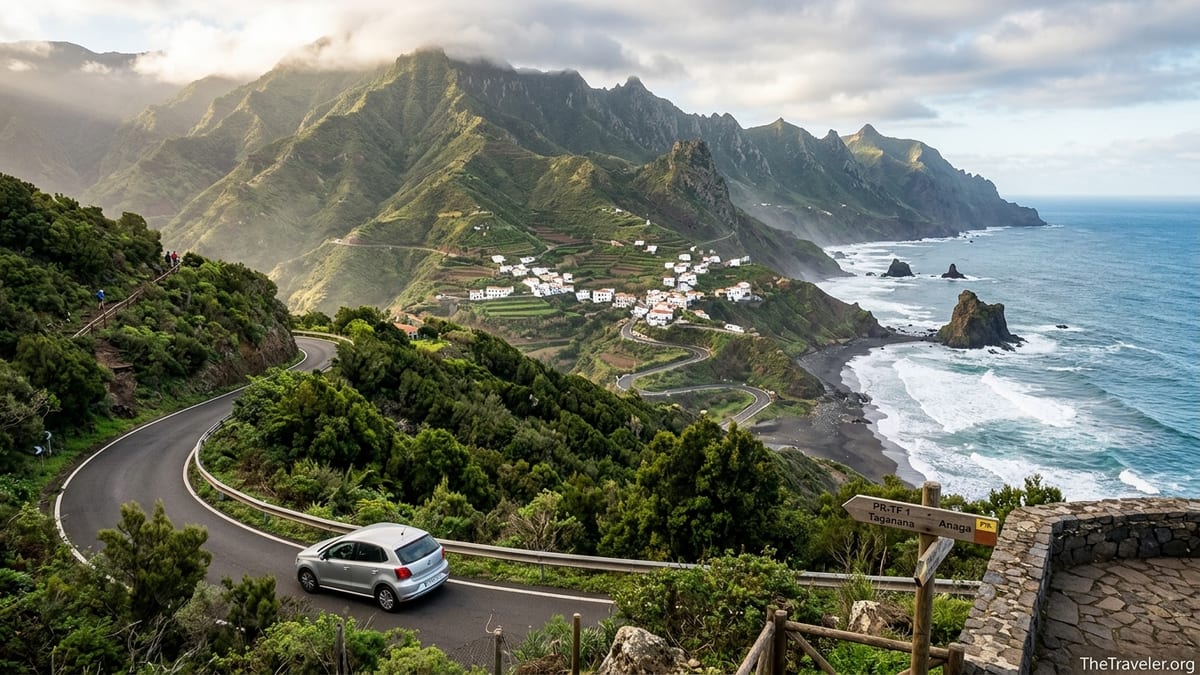
Understanding Anaga’s Geography and Access
Anaga Rural Park occupies the rugged north east tip of Tenerife, a mountainous massif that rises behind the cities of Santa Cruz de Tenerife and San Cristóbal de La Laguna and then drops to a wild north coast. Main road access follows the TF-12 ridge road through humid laurel forest, with side roads such as the TF-134 winding down to settlements like Taganana and nearby beaches. Classic entry points for hikers include the Cruz del Carmen visitor area on the ridge and the villages of Taganana, Afur, Chamorga and Igueste de San Andrés on the slopes and coastline.
From central Santa Cruz, driving to Cruz del Carmen typically takes about 30 minutes in normal traffic, while reaching Taganana or the Benijo coast is closer to one hour because of the narrow, twisting descent. From La Laguna the timing to Cruz del Carmen is similar, around 25 to 30 minutes, and slightly under an hour to Taganana via the TF-12. These are scenic but slow roads, with sharp bends and frequent viewpoints, so travelers should plan journeys by distance and curves rather than pure kilometres and allow extra time in rain or fog.
Public transport is focused on hub connections. Buses depart the Santa Cruz transport interchange towards the Anaga coast on lines that serve San Andrés, Taganana, Almáciga and Chamorga, while La Laguna has routes up through Las Mercedes to Cruz del Carmen and Afur. Services are reasonably frequent for day trips but far from urban metro levels, especially early morning and evening. If you plan to stay in a rural hamlet without a car, it is vital to check current timetables for your exact dates and understand where the last bus of the day stops.
The entire Anaga area is a protected rural park and a UNESCO Biosphere Reserve, which means new construction is tightly controlled and many traditional houses are now licensed as rural tourism properties. There is an important distinction between staying inside the protected park boundaries, where you are embedded in this landscape and must adapt to its limitations, and staying in Santa Cruz, La Laguna or other towns just outside, where daily life and services are much more conventional.
Santa Cruz de Tenerife: Urban Comfort with Fast Road and Bus Links
Santa Cruz de Tenerife, the island’s capital, sits directly south of the Anaga massif and is the closest substantial city to many trailheads. By car, the drive from central Santa Cruz to Cruz del Carmen usually takes around half an hour, while the journey to Taganana or Benijo via San Andrés and the TF-12 ridge is around 50 to 60 minutes. The roads are fully paved and suitable for standard rental cars, but the final section towards the north coast is narrow and winding, so cautious, unhurried driving is advisable.
For non-drivers, Santa Cruz is the best-connected base for Anaga. The main bus station has multiple daily departures towards the park, including services via San Andrés to Taganana and Almáciga and another line continuing to Chamorga at the remote eastern tip. Additional buses run to Igueste de San Andrés and other coastal settlements. These lines give direct access to trailheads or short village walks, but they work on fixed timetables and can be reduced on weekends or public holidays, so building your hikes around bus times is important.
The city itself has a distinctly local Canarian feel, with a working port, broad avenues and cultural venues such as theatres and museums. Dining ranges from inexpensive cafes and tapas bars to modern Canarian restaurants, and there are plenty of supermarkets for self-catering. Nightlife is liveliest at weekends around the centre and waterfront, though the city is generally more laid-back than Tenerife’s southern resort areas. As an urban base you trade immediate nature access for a fuller choice of food, culture and everyday services.
Santa Cruz offers everything from simple hostels and budget city hotels to mid-range chains and a handful of four and five star properties. Checking current booking data in November 2026, a typical double room in a central three star hotel often falls roughly in the 90 to 150 euros per night range, while more upscale four star options commonly start around 140 to 200 euros and above, depending on season and demand. Basic hostels or guesthouses can undercut these figures, while peak periods such as Carnival, Easter and school holidays can push prices considerably higher. For hikers, Santa Cruz works well if you want comfortable evenings, varied restaurants and reliable bus connections, accepting that every visit to Anaga involves a 30 to 60 minute commute each way.
San Cristóbal de La Laguna: Historic Atmosphere on the Doorstep of Cruz del Carmen
La Laguna lies on the inland side of the Anaga massif at a slightly higher elevation than Santa Cruz and is physically closer to the main laurel forest access at Cruz del Carmen. By car, the drive from the historic centre up through Las Mercedes to Cruz del Carmen is usually about 25 to 30 minutes. Continuing towards the north coast villages via the TF-12 adds another half hour or so, so reaching Taganana or Benijo typically takes 55 to 65 minutes in total under normal conditions.
Bus connections from La Laguna make it an excellent base for non-drivers whose priority is the laurel forest. A key line runs from the La Laguna area through Las Mercedes to Cruz del Carmen and on towards Afur on both weekdays and weekends, while a second route reinforces service to Cruz del Carmen on weekends and public holidays. These buses give you direct access to classic trails around the visitor area and the Afur valleys, though you still need to plan around the fixed timetable. To reach the north coast villages such as Taganana, many travelers connect via Santa Cruz and then change to the coastal bus there.
The city itself is a UNESCO World Heritage site, with a compact historic centre of pastel townhouses, churches and pedestrian streets. The student population from the nearby university contributes to a relaxed but lively atmosphere, with many cafes, wine bars and small restaurants. You will find supermarkets, local markets and cultural sights, but nightlife is more about tapas and conversation than loud clubs, which suits many hikers who plan early starts.
Accommodation in La Laguna leans towards small city hotels, boutique guesthouses and apartments in converted townhouses. Based on booking data checked in November 2026, mid-range doubles in central hotels often cluster broadly around 100 to 160 euros per night, with some simpler pensions and apartments available for less, while higher-end boutique properties can rise above 180 euros. As elsewhere on Tenerife, prices fluctuate with weekends, university schedules, local festivals and school holidays. La Laguna is particularly appealing if you want a strong sense of place, easy access to Cruz del Carmen and the flexibility to combine hiking days with cultural wandering in town.
Rural Villages Inside or Next to the Park: Immersed in Anaga
Staying within Anaga’s own villages, such as Taganana on the north coast, Chamorga towards the eastern tip or hamlets like Afur and Almáciga, offers a radically different experience. Here you are embedded in the Biosphere Reserve itself, often waking to rooster calls, mist over the ridges and the sound of the sea. Many houses sit directly on or very close to classic trails, with paths running from front doors into ravines, laurel forest or down to black sand beaches.
Driving times from these villages to the main access points and cities illustrate the remoteness. Taganana lies about an hour’s drive from central Santa Cruz or La Laguna in typical conditions, using sinuous, sometimes narrow roads that climb and descend sharply. Chamorga, near the eastern end of the peninsula, is accessed by a similar winding road and can take around 75 minutes from Santa Cruz. Afur sits off a side road near the TF-12 and is somewhat faster to reach, though still reached via steep, twisting slopes. All of these roads are paved and generally manageable in a standard rental car, but inexperienced drivers may find the tight bends and drop-offs stressful, especially in rain or low cloud.
Public transport reaches several of these settlements, but service is limited. Buses from Santa Cruz run via San Andrés and along the TF-12 ridge to Taganana, Almáciga and onwards to Chamorga, usually only a few times per day. Other lines serve Igueste de San Andrés and some interior areas. While it is possible to stay in a village like Taganana or Chamorga without a car, you must be comfortable aligning hikes and meals with the bus timetable and being patient if weather or road incidents cause delays. In bad weather, fog or landslide risk can occasionally lead to temporary disruptions.
Accommodation inside or on the edge of the park is mostly in the form of rural houses, small guesthouses and a few modest hostels. Properties are typically converted traditional homes, often with simple but comfortable rooms, shared or private kitchens, and terraces or balconies with sea or mountain views. Checking booking platforms in November 2026, it is common to see small rural houses in villages like Taganana or Almáciga priced roughly between 80 and 140 euros per night for two people outside peak periods, with some basic rooms or hostels below that, and larger houses for families or groups above 150 euros. Stock is limited, so holidays and summer weekends can sell out well in advance and drive prices higher.
These villages suit hikers who want maximum trail time, quiet evenings and immersion in rural life. Shops, bars and restaurants are often few and family-run, with short opening hours, so self-catering and advance planning are important. Parking for guests is usually on narrow village streets or in small public lots, which can fill at peak beach or hiking hours. Before booking, check whether your accommodation has reserved parking, whether access is via any particularly tight lanes, and whether arrival at night is practical. Also pay close attention to cancellation policies in case adverse weather or road issues force you to adjust plans.
Using Other Tenerife Bases for Occasional Day Trips to Anaga
For many travelers, Anaga is part of a broader Tenerife holiday rather than the sole focus. In that case, it can make sense to base yourself in a different region and visit the park once or twice as a day trip. Popular alternatives include Puerto de la Cruz on the north coast, as well as the major southern resort areas such as Costa Adeje, Playa de las Américas and Los Cristianos.
From Puerto de la Cruz, driving to La Laguna and then up to Cruz del Carmen usually takes about 45 to 60 minutes to La Laguna plus another 25 to 30 minutes to the visitor area, so roughly 1 hour 15 minutes in normal traffic. Reaching Taganana from Puerto de la Cruz via the north motorway and TF-12 is closer to 1 hour 30 minutes or a little more. From the main southern resorts, expect longer journeys. Driving from Costa Adeje or Playa de las Américas to Santa Cruz is commonly around 1 hour via the TF-1 motorway, then you still need approximately 30 minutes to Cruz del Carmen or about an hour to Taganana. As a result, a day trip from the south to hike in Anaga can easily involve 3 to 4 hours of total driving.
Public transport from these other bases is perfectly feasible but requires changes. Buses run from the south resort towns and Puerto de la Cruz to Santa Cruz or La Laguna. From there, you connect to the Anaga-bound routes that reach Cruz del Carmen, Afur, Taganana or Chamorga. For non-drivers staying outside the Santa Cruz and La Laguna area, this can mean an early start and late return, sometimes with multiple changes in each direction. Timetables also change by season and weekday, so travelers should confirm times near their travel date.
The trade-off is that these bases offer a very different holiday environment. Puerto de la Cruz has a traditional resort feel with promenades, coastal walks, plenty of restaurants and easy access to other northern attractions. The southern coast delivers sun-oriented beach resorts with large hotels, extensive amenities, water parks and nightlife. Accommodation types range from large all-inclusive hotels and aparthotels to self-catering apartments and some boutique options. Typical November 2026 prices for mid-range doubles in these areas often sit roughly between 100 and 180 euros per night, with budget apartments and hostels cheaper and premium beachfront properties higher, especially in winter high season.
Choosing one of these areas as your base makes most sense if Anaga is only a secondary objective and you are comfortable dedicating at least one long day, and more realistically two, for in-depth hiking. For keen hikers who want to be on the trail early and often, the daily journey times from other parts of Tenerife can feel tiring and may reduce flexibility during changeable mountain weather.
Regulations, Parking, Campervans and Practicalities in the Biosphere Reserve
Anaga’s status as a rural park and Biosphere Reserve comes with specific rules aimed at protecting fragile habitats and traditional land use. While policies can change and may vary by municipality, authorities generally control new rural tourism development, and many licensed accommodations are conversions of existing village houses. Some of the most sensitive hiking routes in the forest interior operate permit systems or daily visitor limits, so staying nearby does not remove the need to secure required trail permissions in advance.
Parking is a recurring concern for visitors who choose to drive. The main access points, such as Cruz del Carmen and the small coastal villages, have limited formal parking, and spaces can fill quickly at weekends and during holiday periods. Some rural lodgings provide private parking spaces or garages, but many rely on public street parking. Before committing to a rental house or guesthouse, verify whether parking is on-site, reserved nearby or simply first-come, first-served on village streets, and factor in your comfort level with parking on steep, narrow lanes.
Standard rental cars are suitable for reaching most legal lodgings and trailheads in and around Anaga, provided drivers are comfortable with mountain roads and respectful of local traffic and weather conditions. Very large vehicles, long vans or motorhomes may find hairpin bends and small village squares challenging. Authorities on Tenerife, including in Anaga, generally discourage or restrict overnight camping and sleeping in vehicles outside designated areas. Free overnight parking of campervans on roadside pullouts or beach car parks is often prohibited or actively controlled, and fines are possible. Travelers considering campervan stays should check current local regulations and recognized camping or motorhome sites outside the park.
Given Anaga’s microclimate, with frequent cloud, mist and occasional heavy rain on the ridges, there is always some weather-related risk. Landslides or roadworks can temporarily affect key routes, and certain trails may close for safety or conservation reasons. When booking accommodation that depends on mountain access, it is sensible to favour flexible cancellation policies or date-change options, especially in the wetter months from roughly November to March. Checking conditions shortly before each hiking day and having alternative lowland or city activities in mind will make your trip more resilient.
Comparing Pros and Cons of the Main Bases
Santa Cruz and La Laguna share several advantages as bases for Anaga. Both provide straightforward road access to the TF-12 ridge and relatively short driving times to Cruz del Carmen and the coastal villages compared with other island regions. They are the key public transport hubs for buses into the park, so non-drivers gain more frequent and varied options. On rest days you have urban amenities, cultural sites, markets and a wide choice of dining, all within walking or tram distance of your accommodation.
The trade-off is a distinctly urban feel. You will not wake up among terraced hillsides or hear the surf from your window, and every hiking day starts with a commute of at least half an hour to reach the forests or villages. Those seeking complete immersion in quiet rural surroundings might find evening traffic and city lights at odds with their image of a mountain retreat. Additionally, during major events such as Carnival in Santa Cruz or university term peaks in La Laguna, city crowds and higher hotel prices can be a drawback.
Rural villages inside or immediately next to the park offer the inverse experience. You gain instant access to trails, coastal paths and viewpoints, often within minutes on foot. The night sky can be dark, the sounds primarily natural and the pace of life slow. This is ideal for hikers who want maximum time on the trail, photographers chasing dawn and dusk light, or visitors looking for digital detox. However, services are sparse: a handful of bars and small shops, limited restaurant opening hours and perhaps only one or two cash machines, if any. Poor weather or temporary road issues can feel more isolating when you are far from the island’s main centres.
Using bases elsewhere on Tenerife spreads your experience across contrasting landscapes and microclimates. You can enjoy beach days, resort pools and other attractions while planning one or two long excursions to Anaga. For families or groups with diverse interests, this can be the most harmonious option. The cost is time: long drives, early starts and less flexibility to adapt plans if clouds roll in over the park. For travelers whose main reason for visiting Tenerife is Anaga’s hiking, these distances usually make a city or rural base in the north east more sensible.
Recommendations for Different Traveler Profiles
Non-driving hikers are generally best served by basing themselves in either Santa Cruz de Tenerife or San Cristóbal de La Laguna. Santa Cruz gives the most direct bus routes to the Anaga coast and villages like Taganana and Chamorga, while La Laguna offers straight access by bus to Cruz del Carmen and Afur. Choosing between them comes down to whether you prefer a maritime capital with a working port atmosphere or a compact, historic university town. In both cases, look for accommodation within easy walking distance of the main bus or tram stops.
Couples who want a balanced mix of city comfort and nature access often thrive in La Laguna or Santa Cruz with a possible short rural extension. One practical approach is to spend several nights in La Laguna, focusing on laurel forest hikes from Cruz del Carmen and nearby ridges, then add a night or two in a rural house in Taganana, Almáciga or another coastal hamlet for sunrise and sunset by the sea. This split allows you to experience both the cultural life of town and the quiet of the park without committing your entire stay to limited rural services.
Families with a rental car may find the flexibility of Santa Cruz or La Laguna especially useful. A city base offers larger supermarkets, playgrounds, medical facilities and a greater choice of family-friendly restaurants, plus relatively short drives into Anaga on selected days. For families comfortable with mountain driving and simpler amenities, a rural house in a village such as Taganana, Afur or Igueste de San Andrés can be rewarding, but careful attention to parking, access and emergency plans is important when travelling with children.
Long-stay digital nomads and remote workers usually benefit from robust infrastructure, so the cities again stand out. La Laguna in particular combines a pleasant climate, walkable historic centre, cafes with Wi-Fi and convenient bus routes up to the forest. Santa Cruz adds co-working spaces and more varied urban services. Rural villages can work for short creative retreats, but mobile coverage and fixed-line connections may be inconsistent, and limited shops or evening options can feel restrictive over many weeks. Whichever base you choose, aligning your accommodation choice with how often you plan to visit Anaga, how you will travel to the trailheads and how much you value quiet immersion versus city convenience will help you make the most of this remarkable corner of Tenerife.