


If you are basing yourself in Zadar and have time for only one big nature day trip, the choice usually comes down to two Croatian heavyweights: Plitvice Lakes National Park and Krka National Park. Both are famous for turquoise water, waterfalls and wooden boardwalks, but they offer very different experiences once you factor in travel time, ticket prices, summer crowds and how easy they are to reach from Zadar by bus, tour or rental car.
Get the latest updates straight to your inbox!
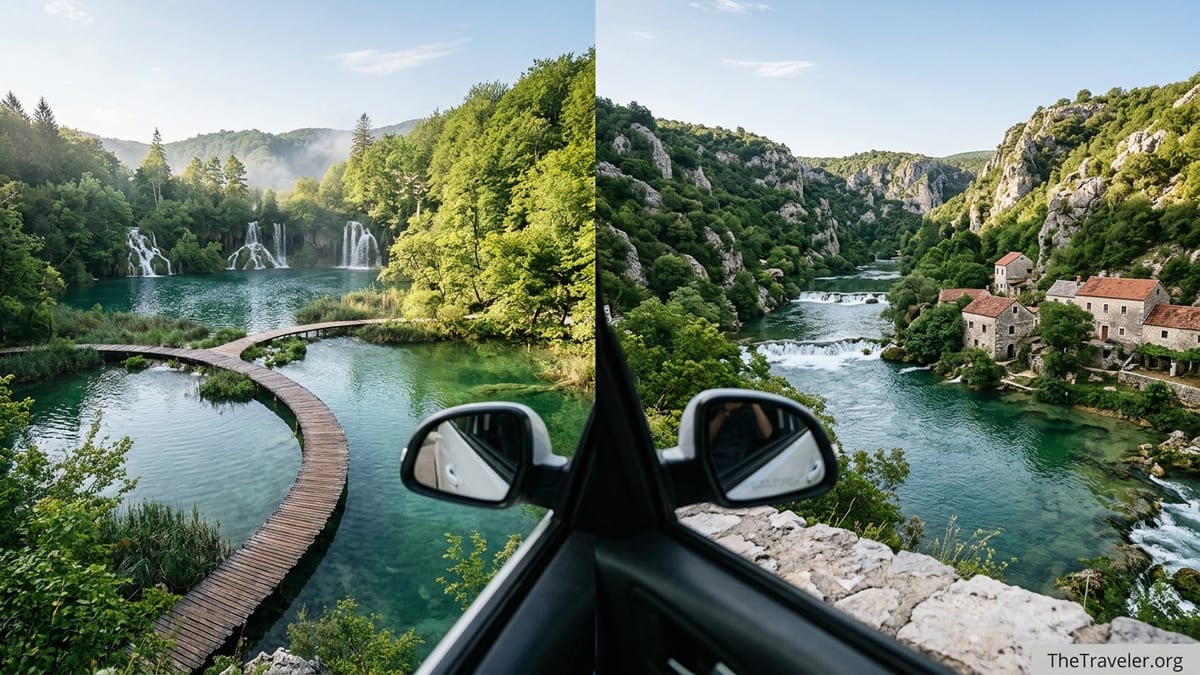
Plitvice vs Krka from Zadar: The Big Picture
From Zadar, both Plitvice Lakes and Krka are realistic day trips, yet they suit different types of travelers. Plitvice is Croatia’s oldest and most famous national park, a UNESCO World Heritage site with dramatic canyon scenery, deep turquoise lakes and long boardwalk routes that feel like a full hiking day. Krka is smaller and more relaxed, with shorter walking loops, boat trips on the river and several entrances spread along the Krka gorge.
For most travelers, Plitvice will feel like the once in a lifetime showstopper. The trade off is a longer journey from Zadar, higher summer ticket prices and heavier crowds in peak season. Krka is closer, generally cheaper at the top end, and logistically easier for a half day or relaxed family outing, especially if you do not want to spend hours on a bus or in the car.
If you have two full days in Zadar and a strong interest in nature, many visitors do both parks on separate days. But if you must choose, it makes sense to weigh how much walking you want, whether you are traveling in July or outside peak season, and if you are comfortable renting a car or prefer to rely on public buses or guided tours.
Travel Time and Ease of Getting There
From central Zadar to Plitvice Lakes, you are looking at roughly 120 to 140 kilometers inland, depending on the route. In practice, that usually means about 1 hour 45 minutes to just over 2 hours by car, following the main road through Gospić or the highway portion plus local roads. Several bus companies run this route, with typical journey times around 2 to 2.5 hours each way, depending on intermediate stops and traffic. Morning departures often leave Zadar main bus station between about 8:00 and 9:30, getting you to Entrance 1 or Entrance 2 before late morning, with returns in the late afternoon.
Krka is significantly closer. The most popular entrance for day trippers, Lozovac, is roughly 85 kilometers from Zadar, with a usual driving time of about 1 hour to 1 hour 15 minutes in light traffic. Buses from Zadar typically run to Skradin, a small riverside town that serves as a scenic gateway to the park. That bus ride is usually a little over an hour. From Skradin, park boats shuttle ticket holders up the river to the Skradinski buk area in a journey that feels like a mini river cruise rather than simple transport.
If you are relying on buses only, Krka is usually easier for nervous planners because the journey is shorter and there is less pressure to catch the very first departure of the day. Independent travelers who rent a car from one of the agencies around Zadar’s old town or airport find both parks straightforward to reach, with well signposted roads and large car parks at the main entrances. In summer, however, you will want to factor in extra time for highway congestion and possible queues approaching the entrances, especially at Plitvice’s Entrance 1.
Tickets, Prices and What Is Included
Ticket prices at both parks vary by season, with the peak summer window from roughly June through September significantly more expensive than winter or shoulder months. At Plitvice, adult one day tickets in the height of summer commonly reach around the high 30 to 40 euro range per person, while off season prices can drop to a fraction of that. Every standard Plitvice ticket includes access to all marked walking routes, the electric boat across Lake Kozjak and the panoramic shuttle buses that connect the main viewpoints and entrances, which helps justify the higher cost for many visitors.
Krka’s pricing is also seasonal, but its peak adult ticket for the full park is often slightly below Plitvice’s top rate, with approximate mid to high 30 euro figures in July and August. Cheaper shoulder season and winter prices can dip to under 10 euros for selected areas when parts of the park are quiet. At Krka you pay one entrance fee that covers access to the waterfalls and walking trails at Skradinski buk and other land localities, and it typically includes the park’s own shuttle buses from Lozovac and, in the main season, the official boat ride between Skradin and Skradinski buk.
Families weighing up costs will notice that both parks offer discounted child tickets and reduced rates in the late afternoon. For example, if you leave Zadar after lunch and enter Plitvice mid to late afternoon, you may catch a lower priced time band while still having a few hours of daylight in summer. Travelers who book through tour operators often pay a separate amount for the excursion itself, then buy national park tickets on the day, either in advance online or at the entrance, so it is worth clarifying with the tour company exactly what is included.
Buses, Tours and Rental Cars from Zadar
Buses to Plitvice from Zadar usually run several times per day in the main season, operated by companies such as Arriva or local carriers. Tickets often start from the mid teens in euros each way if booked in advance, with slight variations depending on departure time and carrier. For example, a mid morning bus in August may cost around 15 to 20 euros one way per adult. Seats on the most popular morning departures can sell out in high summer, so it is wise to buy tickets a few days ahead, especially if you are traveling at weekends.
Buses from Zadar to Skradin for Krka are usually more frequent in summer and generally slightly cheaper due to the shorter distance. Independent travelers report one way fares from around 8 to 15 euros, again varying by operator and date. Once in Skradin, you simply walk a few minutes from the bus stop down to the waterfront, buy or show your Krka ticket and board the official boat upriver to the waterfalls. Compared with Plitvice, there is less risk of arriving late in the day because of the shorter journey, which makes Krka a comfortable option if you dislike very early mornings.
Guided day tours are abundant from Zadar for both parks. Typical Plitvice day tours cost in the range of 60 to 90 euros per person for transport and guiding, plus the separate national park ticket you pay yourself. They usually leave Zadar around 7:30 to 8:00 and return around 18:00 to 19:00, giving you about 4 to 5 hours inside the park. Krka tours tend to be a little cheaper, often starting from the 40 to 70 euro range for the tour portion, and they sometimes include extra stops such as wine tasting in a village near Skradin or free time in Šibenik’s old town.
Renting a car in Zadar can be cost effective for couples or small groups, particularly in shoulder season. In late spring, compact car rentals from local agencies sometimes start in the 35 to 50 euro per day range, plus fuel, while in late July and early August prices are typically higher. With your own car, you can adjust your departure time to beat the tours, choose between Plitvice’s Entrance 1 and Entrance 2, or pick whichever Krka entrance makes sense for your planned route, such as Lozovac for Skradinski buk or the parking at Roški slap for a quieter visit.
Walking, Swimming and What You Actually Do There
At Plitvice, the experience is primarily about walking through a dramatic lake and waterfall system on wooden boardwalks. Routes are coded with letters, and popular circuits like Route C or H take roughly 4 to 6 hours, combining upper and lower lakes, short boat segments and the shuttle. Expect uneven wooden planks, gentle up and downhill sections and a lot of stopping for photos. Swimming is not allowed anywhere in the park, and you must stay on marked paths. For many visitors, that creates a feeling of being inside a preserved natural museum where you look but do not touch.
Krka feels more like a river park where you mix light walking with viewpoints and time near the water. The main Skradinski buk loop is relatively short compared with Plitvice’s full routes, often taking 60 to 90 minutes at a relaxed pace. Other sections such as Roški slap or the island monastery of Visovac can be visited by car or by organized boat trips from Skradinski buk or Lozovac. Swimming directly at the main Skradinski buk waterfall has been prohibited for several years to protect the ecosystem, but there are still designated swimming spots in the wider Krka river area outside the most sensitive cascades, so some visitors manage to combine their visit with a quick dip downstream.
If your idea of a good day is covering 15 to 20 kilometers on foot and spending almost the whole day among lakes, Plitvice will feel more satisfying. If you prefer a gentler half day walk with plenty of chances to rest in cafes, hop on a boat or drive between viewpoints, Krka might be more your speed. Older travelers or families with small children often appreciate Krka’s mix of short loops and boat rides, while active hikers consistently rank Plitvice as one of the most rewarding walks in the region.
Summer Crowds, Heat and Timing Your Visit
From late June through August, both parks are very busy, but Plitvice usually feels more crowded because most visitors funnel along the same core routes between the entrances and the biggest waterfalls. On a typical July day, boardwalks near the Great Waterfall and along the lower lakes can turn into slow moving lines for long stretches. Timed entry helps, but popular mid morning slots often sell out ahead of time, so you may find that only early or late entry times remain by the time you book.
Krka also draws coach tours and cruise day trippers in peak summer, particularly around Skradinski buk, yet the pressure is somewhat eased by multiple entrances and the ability to spread visitors across spots like Roški slap, Visovac and the upper gorge. Even so, by late morning in July the Skradinski buk area can feel very busy, and queues for the boats up from Skradin or the shuttle from Lozovac build in the hottest part of the day. Heat is a bigger factor at both parks than many visitors expect, with exposed sections of boardwalk reflecting the sun and only intermittent shade.
For both parks, an early start is the simplest way to improve your experience. From Zadar, that usually means aiming for the earliest bus or leaving in your rental car before 7:00, so you can enter Plitvice not long after opening or catch the first wave of boats into Krka. Another strategy that suits Zadar based travelers is to visit either park in May, early June, late September or October rather than in the exact peak of July and August. Travel times are similar, but ticket prices drop, crowds ease, and daytime temperatures are more conducive to hiking.
Which Park Is Easier and Better as a Day Trip from Zadar?
If you define easier strictly in terms of logistics, Krka wins for most visitors staying in Zadar. The drive is shorter, the bus ride to Skradin is quicker, and the park infrastructure is oriented around shorter loops and flexible boat tours. You can leave Zadar mid morning, spend several relaxed hours around Skradinski buk and nearby viewpoints, enjoy a late lunch in Skradin’s old town and still be back in Zadar in time to wander the old town’s stone streets before dark.
Plitvice, however, is widely regarded as the more spectacular of the two, with its layered turquoise terraces and deep forest backdrop. If you are comfortable with a longer day, do not mind a 2 hour bus ride each way and are prepared to walk several hours, Plitvice is the better choice for a single big nature outing. Many travelers who visit both parks say that Krka is lovely but that if they had to pick only one, they would still choose Plitvice for its grander scenery and sense of scale.
A simple rule of thumb from Zadar is this: choose Krka if you want an easy going, shorter day with more flexibility, especially with kids, older relatives or in very hot weather. Choose Plitvice if you are reasonably fit, happy to walk, and want the Croatian waterfall experience that most closely matches the iconic photos you see in guidebooks. If you have your own car and two days to spare, seeing Plitvice first, then using Krka as a lighter follow up the next day, can make for a very balanced Zadar stay.
The Takeaway
For travelers using Zadar as a base, there is no wrong choice between Plitvice Lakes and Krka, only a question of priorities. Plitvice is more spectacular, a genuine full day hiking destination with long lake circuits, timed entry and a higher price tag, reached in roughly two hours each way. Krka is closer, more flexible, better suited to a half day or mixed itinerary, with river boats, shorter walks and a gentler overall pace that works well for families and casual walkers.
If you can commit to an early start, prebook your ticket and accept a long but memorable day, Plitvice is usually the stronger single day trip from Zadar. If you prefer a slower start, like the idea of a riverside lunch in Skradin and do not want your whole day dominated by transport, Krka will probably fit better. Whichever you choose, building your plan around the first buses or an early car departure, allowing for heat and crowds, and checking current seasonal ticket bands before you go will help you get the most from Croatia’s two most famous waterfall parks.
FAQ
Q1. Is Plitvice or Krka easier to visit as a day trip from Zadar without a car?
For most travelers without a car, Krka is easier. The bus ride from Zadar to Skradin is shorter than to Plitvice, and from Skradin the official park boat takes you directly into the main Skradinski buk area. Plitvice is still doable by bus, but the journey is longer and you must plan around fewer daily departures, especially in shoulder season.
Q2. How long does a typical Plitvice day trip from Zadar take?
A standard Plitvice day trip from Zadar usually runs around 11 to 12 hours door to door. Expect about 2 to 2.5 hours each way by bus or car, around 5 hours inside the park walking one of the main circuits, plus time for buying tickets, short breaks and possible traffic delays when returning to the coast in the late afternoon.
Q3. Can I swim at Plitvice or Krka on a day trip from Zadar?
Swimming is not allowed anywhere inside Plitvice Lakes National Park. At Krka, swimming directly at the main Skradinski buk waterfall has been banned for environmental reasons, but there are designated swimming spots in sections of the Krka river outside the core waterfall zones. If swimming is important to you, Krka offers better options in the wider river area than Plitvice.
Q4. Do I need to book tickets in advance for Plitvice and Krka?
In July and August, advance booking for Plitvice is strongly recommended because entry is timed and popular slots often sell out. For Krka, advance purchase is also sensible in peak season, especially if you are visiting on a weekend or public holiday, but same day tickets are more commonly available due to the park’s multiple entrances and slightly lower pressure on capacity.
Q5. Which park is better for families with young children?
Krka is generally better for families with younger children. The main Skradinski buk loop is relatively short, there are opportunities to rest by the river and use boats or shuttles, and the overall day from Zadar is shorter. Plitvice’s longer walking routes, stricter stay on the boardwalk rules and busier chokepoints can be more demanding for small kids or parents pushing strollers.
Q6. Are guided tours from Zadar worth it, or should I go independently?
Guided tours are worth considering if you dislike trip logistics or are traveling in peak season. They handle bus schedules, parking, and often provide commentary and a structured route through the park. Independent travel by bus or rental car is better if you want full flexibility on timings, photo stops and pace, and can be cheaper if you are a small group willing to share a rented vehicle.
Q7. What is the best time of year to visit these parks from Zadar?
From Zadar, May, early June, late September and October are excellent periods for both parks. Water levels are often good, temperatures are more comfortable for walking, ticket prices are lower than in high summer, and crowds are easier to handle. July and August offer long daylight hours but come with higher costs, heavier traffic and significantly more visitors.
Q8. If I only have one full day in Zadar, which park should I choose?
If you only have a single full day and want the most impressive scenery, choose Plitvice, assuming you can handle the early start and longer day. If you prefer a less tiring outing that still showcases Croatian river and waterfall landscapes, Krka is the better fit. Also consider the weather forecast; on very hot days, the shorter Krka trip may be more comfortable.
Q9. How much walking should I expect at each park?
At Plitvice, expect to walk several hours, often 10 to 15 kilometers or more if you do one of the longer routes that include both upper and lower lakes. The terrain is mostly easy but there are some climbs and many wooden boardwalks. At Krka, the main waterfall loop is much shorter, typically 2 to 4 kilometers, and you can add or skip additional viewpoints and boat excursions according to your energy level.
Q10. Is renting a car in Zadar worthwhile just for these day trips?
Renting a car can be worthwhile if you are traveling as a couple or group and plan to visit at least one national park plus other inland sights. A car gives you flexibility on departure times, lets you avoid the busiest bus departures, and allows you to combine, for example, Krka with a stop in Šibenik or Plitvice with small villages en route. If your budget is tight and you only plan one park visit, buses or a group tour may be more economical.