


More news on this day
American Airlines is planning one of its most extensive cabin refreshes in years, outlining a program that will bring larger seatback entertainment screens, expanded premium seating and updated interiors to much of its future narrowbody fleet.
Get the latest news straight to your inbox!
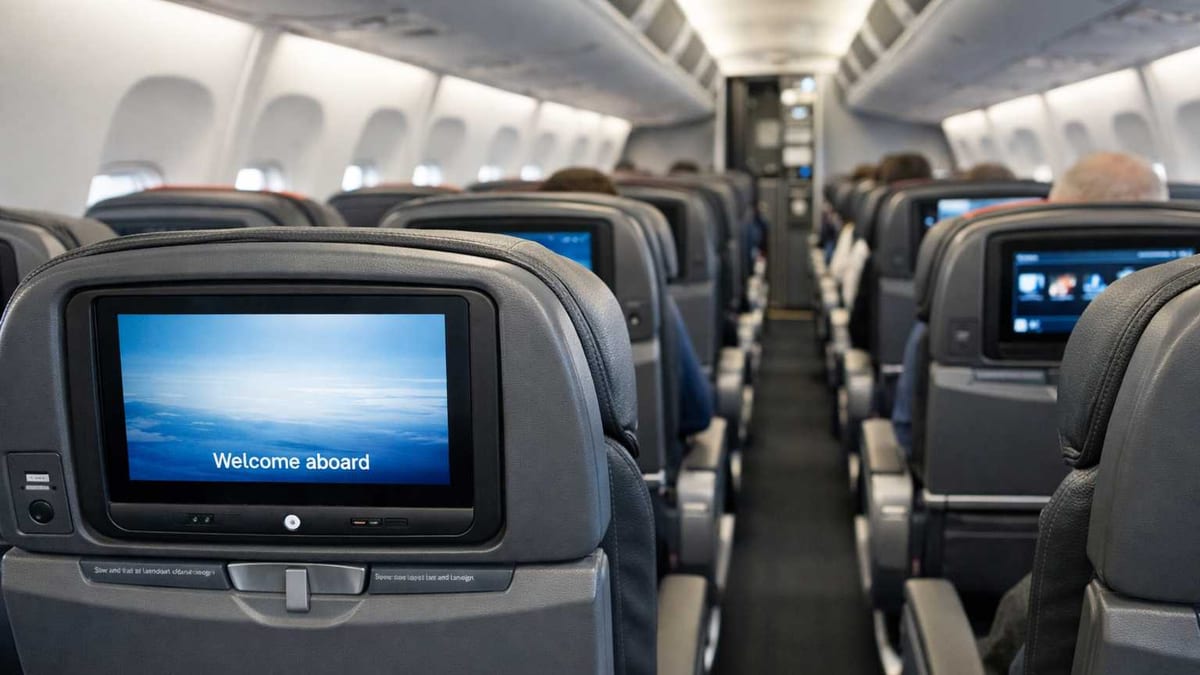
Larger Seatback Screens Return as a Central Feature
Published information from the airline and aviation industry coverage indicates that American intends to make upgraded seatback entertainment a signature element of its next generation of cabins, after several years in which many domestic aircraft flew without built-in screens. New and retrofitted narrowbody jets are expected to receive individual displays at every seat, reversing an earlier strategy that relied heavily on passengers using their own devices.
The screens are described in public materials as high-resolution 4K units, positioned among the largest offered on single-aisle aircraft in North America. Larger physical dimensions are expected to be paired with improved brightness and contrast, aiming to make content easier to view even in bright cabins. The systems are designed to host a broad catalog of films, television and other media, bringing the level of onboard entertainment closer to that already found on many of American’s newest widebody aircraft.
The move aligns American more closely with competitors that have continued to invest in built-in entertainment, particularly on longer domestic routes. Industry observers note that seatback systems remain popular with many travelers who prefer not to rely on personal phones or tablets for several hours at a time, especially when flying with families or managing battery life.
Alongside the larger screens, the new cabins will incorporate updated user interfaces intended to feel more familiar to travelers accustomed to modern streaming platforms. Reports suggest that the airline is prioritizing responsive touch controls and more intuitive navigation, reflecting a broader trend toward consumer electronics style design in the cabin.
Broader Cabin Overhaul Across Narrowbody Fleet
The entertainment upgrades are part of a wider interior refresh that will touch nearly all of American’s narrowbody aircraft over the coming years, including Airbus A321neo and Boeing 737 MAX variants. Publicly available information shows that the airline plans to increase the number of premium and extra-legroom seats while also updating lighting, sidewalls and storage.
Cabins are expected to feature redesigned seats with integrated power at every position, including both AC outlets and USB-A or USB-C ports. This focus on charging reflects how dependent passengers have become on personal devices even as seatback entertainment returns. The combination of more power options and larger built-in displays is intended to position the refreshed cabins as more suitable for work as well as entertainment.
Reports indicate that American is also emphasizing new overhead storage solutions and modern cabin lighting schemes to give a more spacious feel, even as seat counts remain tightly managed. Cooler color temperatures during boarding and warmer tones during cruise are expected to be used to influence the perception of space and comfort.
While the overall seating density on many aircraft will remain comparable to current layouts, the visual impact of the new materials, screens and lighting is intended to signal an upgrade in quality to travelers who have criticized earlier interior designs as feeling sparse or utilitarian.
More First Class and Extra-Legroom Seating
Another major element of the program is a meaningful increase in the number of premium seats on key narrowbody types. Industry reporting on the fleet plan shows that American intends to add more domestic First Class seats and additional rows of extra-legroom economy, particularly on aircraft that serve longer transcontinental and high-demand business routes.
New Airbus A321neo cabins, for example, are set to be reconfigured with an expanded First Class section compared with earlier layouts. Boeing 737 MAX aircraft slated for delivery later in the decade are expected to debut with similarly enlarged premium cabins, reflecting the importance American is placing on higher-yield customers and loyalty program members who value complimentary or paid upgrades.
The extra-legroom section, marketed as a more spacious option within the Main Cabin, is also expected to grow in size on many aircraft. More rows with increased pitch may help address long-standing feedback from frequent flyers who have sought additional comfort without moving all the way up to First Class pricing. In concert with the new seatback screens and power, these seats are positioned as a middle ground between standard economy and the fully premium experience.
Analysts note that investing in a larger premium footprint could help American capture additional revenue from business travelers while also offering more opportunities for elite-status upgrades, a key lever in retaining loyalty in a competitive U.S. market.
Timeline Extends Into the Next Decade
Although the scope of the cabin upgrades is substantial, travelers should not expect to see the new interiors across the fleet immediately. Public planning documents and aviation industry commentary indicate that the rollout will not begin in earnest until the late 2020s, with work continuing into the early 2030s.
New deliveries from Airbus and Boeing equipped with the refreshed cabins are expected to arrive first, followed by a multi-year program of retrofits for existing aircraft. This staged approach is typical for large fleets, allowing airlines to minimize schedule disruption while also learning from early passenger feedback before standardizing details across hundreds of jets.
For now, many of American’s narrowbody aircraft will continue to operate with a bring-your-own-device approach to entertainment, supported by onboard Wi-Fi and mobile streaming. As the new interiors gradually enter service, the mix of cabins in the market will become more varied, meaning passengers may experience notably different products depending on the specific aircraft assigned to their route.
Travelers who prioritize larger screens, increased power availability and more premium seating options may pay closer attention to equipment types and seat maps as the transition progresses, particularly on high-mileage business routes where the differences will be most apparent.
Competitive and Passenger Experience Implications
American’s decision to reinvest in seatback entertainment and premium seating comes at a time when U.S. carriers are pursuing divergent strategies for onboard experience. Some competitors have leaned heavily into personal-device-only models, while others have highlighted large displays as a differentiator on both domestic and international flights.
Industry analysis suggests that the move could help American narrow perceived gaps with rivals that have been viewed as more passenger-focused, particularly among travelers who fly frequently on transcontinental and longer domestic services. Larger screens and more comfortable seats are tangible changes that can be seen and felt, which may carry more weight with customers than back-end operational improvements.
At the same time, expectations will be high by the time the new cabins arrive, given the lengthy rollout horizon and intense competition in the North American market. Observers point out that success will depend not only on the physical hardware but also on factors such as content selection, Wi-Fi reliability, and how effectively American integrates the new experience with its broader loyalty and pricing strategies.
For passengers, the plans point toward a future in which flying on American’s domestic network is more likely to include large-format seatback screens, expanded premium options and a cabin environment that more closely resembles the airline’s latest long-haul products, even if those changes will phase in gradually over the next several years.