


More news on this day
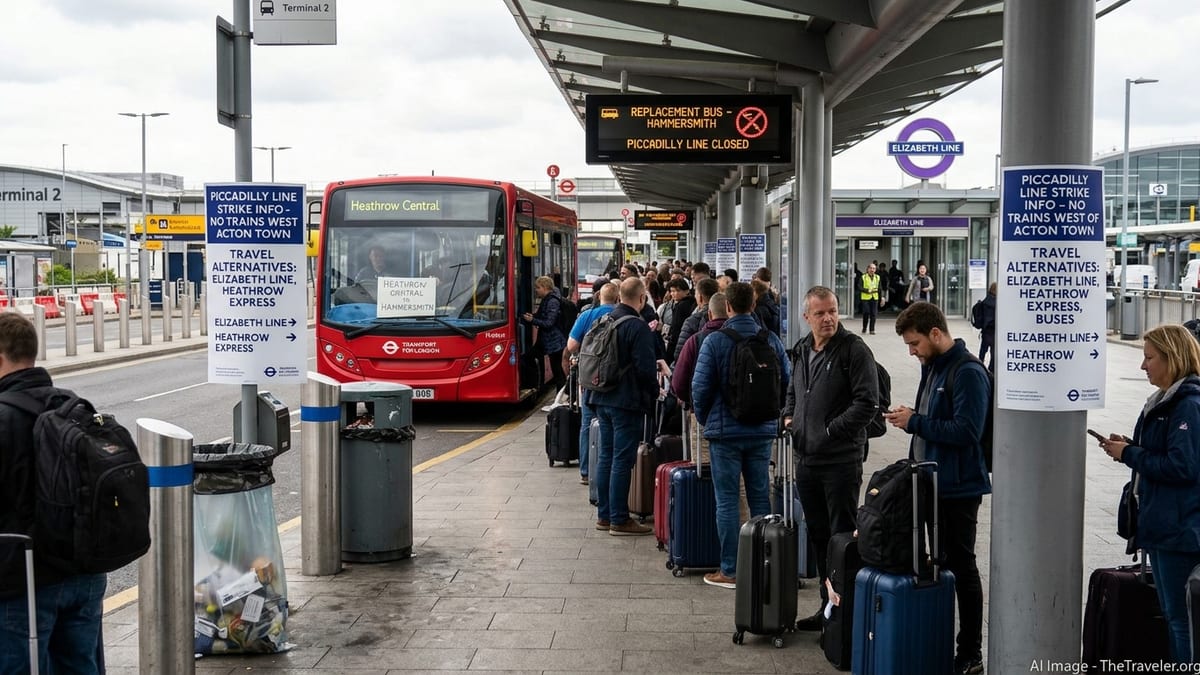
Heathrow Airport lost its main London Underground link for much of Friday 20 and Saturday 21 November 2026, after a strike by Piccadilly line service control staff severely reduced Tube services between central London and the UK’s busiest hub.
Get the latest news straight to your inbox!
What happened to Piccadilly line services?
The walkout by members of the Transport Salaried Staffs’ Association (TSSA) working in Piccadilly line service control began at 11:59 on Friday 20 November and was scheduled to run until 11:59 on Saturday 21 November 2026. Transport for London (TfL) warned that the action would significantly disrupt both the Piccadilly and parts of the District line on those dates, with very limited ability to move trains on the affected sections.
In practice, Piccadilly line services were heavily thinned out from late morning on Friday, with TfL advising customers to complete Piccadilly line journeys by around 10:30 on 20 November. During the peak of the strike there was effectively no service west of Acton Town towards Heathrow and Uxbridge, and only a skeleton service on other sections of the line as trains and staff became displaced.
Alongside the industrial action, preplanned engineering work removed Piccadilly line trains between Hammersmith and Heathrow/Uxbridge from 01:30 on Saturday 21 November and throughout Sunday 22 November. This meant that even as strike action was due to wind down on Saturday evening, separate works continued to keep the line closed on the western branches for the rest of the weekend.
Impact on Heathrow-bound travellers
The combined effect of the strike and engineering closures meant that from late morning on Friday 20 November until service resumptions on Saturday evening, Heathrow had no regular Piccadilly line service from central London. Overnight into Sunday and throughout 22 November, engineering work then maintained a full closure between Hammersmith and Heathrow, extending the loss of the Tube link beyond the formal end of the TSSA action.
Despite this, Heathrow was not cut off. Trains on other routes and road links operated normally, though they were expected to be busier than usual. Passengers who would typically rely on the direct Piccadilly line from central London instead needed to route via Paddington for the Heathrow Express, use the Elizabeth line, or switch to buses and coaches serving the airport from west London and beyond.
For travellers already in London on 20 November, the most acute disruption occurred on Friday afternoon and evening, when many arriving and departing passengers found the familiar direct Tube option either unavailable or running so infrequently that TfL advised against relying on it. Those landing at Heathrow during this period generally needed at least one extra interchange compared with a normal Piccadilly line journey.
Alternative rail and bus options during the walkout
TfL’s strike guidance directed Heathrow passengers towards the Elizabeth line as the primary rail alternative from central London. At the time of writing, typical off-peak Elizabeth line through-fares with pay-as-you-go from Zone 1 to Heathrow are higher than the Piccadilly line but remain substantially cheaper than dedicated airport expresses, while offering journey times broadly similar to or slightly faster than the Tube on the same corridor.
Heathrow Express services between London Paddington and Heathrow terminals continued to run during the strike. These typically provide the fastest rail connection, with a premium fare that is significantly above both the Piccadilly line and the Elizabeth line. For travellers prioritising speed or carrying heavy luggage, this route remained the most straightforward option despite the extra cost and the need to reach Paddington first.
On the roads, local buses and long-distance coaches absorbed some of the displaced demand. Replacement bus routes associated with the planned engineering closures operated between west London stations, Heathrow Central bus station and Uxbridge, offering links from the District, Central and Metropolitan lines into the airport area. Journey times by bus varied with traffic, especially around peak hours on Friday evening.
How long the disruption lasts and what to check next
Piccadilly line services were expected to progressively return to normal on Saturday evening 21 November as the TSSA strike period ended. However, travellers heading to or from Heathrow on Sunday 22 November still faced a full closure of the Piccadilly line between Hammersmith and Heathrow/Uxbridge because of preplanned engineering work, independent of the industrial dispute.
Separate industrial actions by other unions have also been announced for later in November, December and early 2027, but these are distinct from the Piccadilly line service control strike that affected Heathrow on 20 and 21 November. Those future dates remain subject to change or resolution and should not be confused with the completed action described here.
Anyone travelling via Heathrow or using the Piccadilly line in the coming days should recheck TfL’s live status pages and strike updates close to departure. Details such as first and last trains, replacement bus routes, and any additional strike days or engineering works may be updated at short notice, and will determine whether the Piccadilly line, Elizabeth line, Heathrow Express or bus network offers the most reliable option for a given journey.