


More news on this day
U.S. air travelers are seeing continued disruptions on November 23, 2026, as Delta Air Lines recovers from a Sunday automation outage centered on Atlanta and a new round of storm-related delays hits major Northeast airports, including New York and Boston, at the start of the Thanksgiving rush.
Get the latest news straight to your inbox!
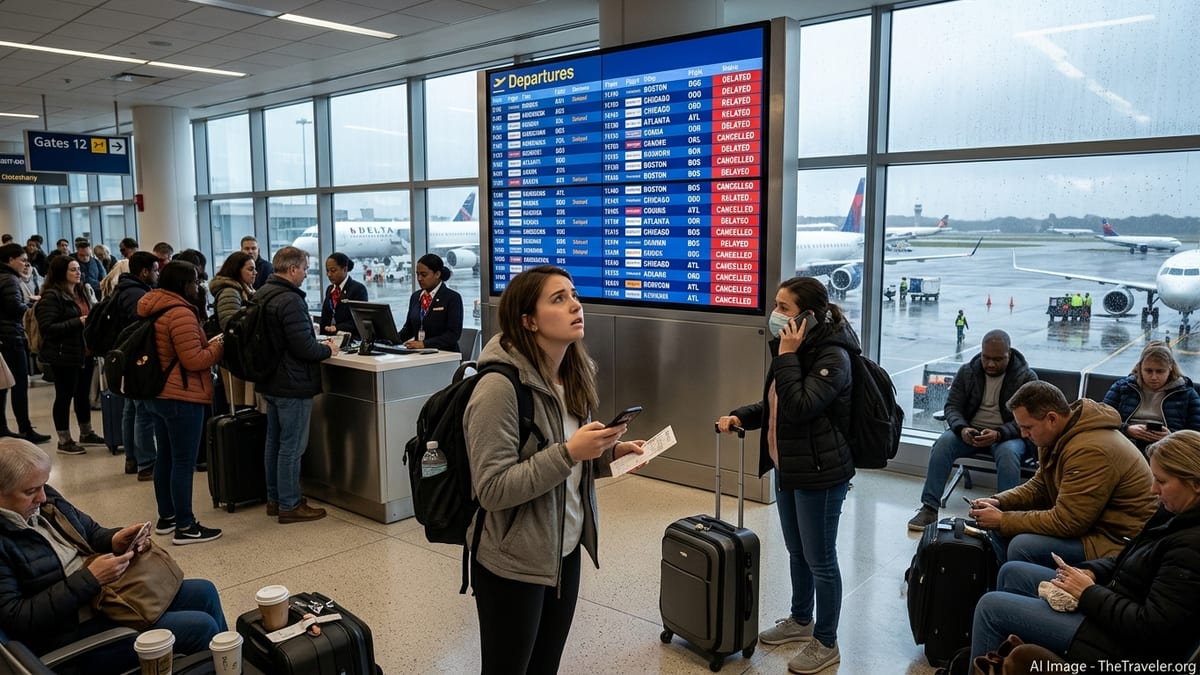
Real-time delays ripple across key US hubs
By early afternoon on Monday, November 23, flight-tracking data showed that U.S. airports were contending with a fresh wave of operational strain, including cancellations and substantial delays at New York–area hubs and Boston Logan International Airport. A Travel And Tour World analysis, citing real-time tracking around 1:10 p.m. Eastern, put the situation at 198 cancellations and 2,392 delays across all U.S. carriers at that moment, with John F. Kennedy International Airport, LaGuardia Airport and Boston Logan among the most affected. These figures are a snapshot rather than a full-day total and can shift quickly as flights are rescheduled, re-routed or recovered.
Separate data and reports reviewed later in the afternoon indicate that nationwide totals for delays and cancellations continued to evolve as weather systems moved through the Northeast and as airlines worked through aircraft and crew imbalances left over from the weekend. Travelers checking conditions even an hour apart may therefore see meaningfully different counts from the same sources.
Importantly, there is no indication from current Federal Aviation Administration advisories of a new nationwide ground stop on November 23. Instead, the pattern reflects a combination of airline-specific recovery from Sunday’s disruption and localized traffic management programs and weather impacts at individual airports.
Delta’s November 22 automation outage and its aftermath
The current round of knock-on delays originated with a Delta Air Lines technology outage on Sunday, November 22, involving an automated system used to calculate aircraft weight and balance and related load instructions before takeoff. Delta and multiple news outlets report that the malfunction forced crews to shift to manual workarounds while the airline requested a ground stop and then a ground delay program for its operations at Hartsfield-Jackson Atlanta International Airport, its primary hub. The issue resulted in more than 1,000 delayed Delta flights nationwide on Sunday, with the carrier later indicating that a majority of its Sunday disruptions were linked to the automation failure, with the remainder attributed to weather and air-traffic programs in the Northeast.
By Sunday afternoon, Delta said the underlying system had been restored, and flight operations began moving again from Atlanta and other hubs. However, the hours-long interruption meant that aircraft and crews were out of position for subsequent departures, creating what the airline and airport officials described as residual delays across the network heading into Monday. While Monday’s Delta schedule was closer to normal by late morning, isolated flights were still experiencing extended waits as crews finished manual weight-and-balance checks or awaited updated dispatch clearances.
Travelers flying on other U.S. airlines are also feeling effects that can be traced indirectly to Sunday’s outage. When a major carrier such as Delta experiences large-scale delays at a hub like Atlanta, gate availability, runway queues and connecting-passenger flows can affect unrelated airlines sharing the same facilities, especially on a busy holiday-travel weekend.
Boston and New York feel both tech aftershocks and weather
Boston Logan International Airport has been one of the clearest examples of lingering disruption. Local Boston media, citing data from FlightAware and airport officials, report that around 100 Delta flights at Logan were delayed on Sunday, November 22, as the carrier coped with the outage’s immediate impact and then its recovery. On Monday morning, reporters on site described conditions as improving but not fully normal, with some passengers still facing changed departure times or rebookings linked to earlier missed connections.
At the same time, a separate weather system is affecting operations in the broader Northeast corridor. Forecasts and real-time reports for November 23 point to heavy rain and strong winds across parts of the Mid-Atlantic and New England, including the New York metropolitan area. These conditions have contributed to additional delays and a portion of cancellations at New York’s JFK and LaGuardia, as well as at Boston, on top of any lingering schedule disruptions from Sunday’s technical problems.
For travelers passing through these airports, it is therefore important to recognize that Monday’s delays are not due to a single cause. Delta’s Sunday automation outage, ongoing aircraft and crew repositioning, and the day’s adverse weather and associated FAA traffic management measures have all played a role, to varying degrees, in the timetable changes now visible on departure boards.
What airlines are offering affected travelers
In response to the November 22 outage and its timing just before the Thanksgiving holiday, Delta has introduced temporary flexibility for certain customers. According to the airline’s public advisories and statements carried by multiple outlets, affected travelers have been able to change their flights around November 22 and 23 without paying standard change fees, subject to fare rules and seat availability. In many cases on Sunday, the airline also provided meal vouchers, hotel accommodations and ground transportation to eligible passengers who were significantly delayed or who misconnected overnight, consistent with its existing customer service commitments.
However, specific waiver terms, eligible travel dates and covered routes can change as operations stabilize. Some early waivers tied explicitly to November 22 disruptions may not automatically apply to newly delayed flights on November 23 that are primarily affected by weather or local air-traffic programs. Travelers should check Delta’s travel advisory page or app for the latest waiver details, and passengers on other airlines should review their carriers’ current policies, which may differ on compensation, reaccommodation and same-day change options.
Airlines across the board are encouraging customers to use mobile apps and websites to monitor changing departure times, accept automatic rebookings where offered and confirm that contact details are up to date so that schedule changes are communicated quickly. Airport agents remain available to assist, but lines at customer service counters have been lengthy at several major airports since Sunday.
How travelers can navigate the Thanksgiving window
With Thanksgiving still several days away, airlines and airports are cautioning that ripple effects from Sunday’s outage and Monday’s weather may continue to influence some flight operations and aircraft rotations through the midweek period, especially on heavily traveled routes. Travelers with flexibility may wish to consider earlier departures on Tuesday or Wednesday morning rather than peak afternoon and evening time slots, when accumulated delays can be more pronounced if storms slow traffic or if crews reach duty-time limits.
Passengers scheduled to fly through Atlanta, Boston or New York in particular should verify the status of every segment directly with their airline before heading to the airport, even if there is no active FAA ground stop. Because Monday’s 198 cancellations and 2,392 delays captured at approximately 1:10 p.m. Eastern were a system-wide snapshot across all carriers and not an end-of-day total, conditions at the time of travel may differ substantially from earlier reports.
Before publication or trip departure, travelers and readers should recheck live delay and cancellation statistics from trusted flight-tracking tools, current airline travel waivers and the FAA’s real-time traffic management advisories. As weather and airline recovery progress, these figures and policies can change hour by hour, affecting both the likelihood of disruption and the options available if plans need to be adjusted.