


More news on this day
PortMiami has confirmed a new all-time cruise passenger record, handling 8,564,225 cruise passengers in Fiscal Year 2025 and extending a three-year run of successive highs that has strengthened Miami’s position as a leading global cruise hub.
Get the latest news straight to your inbox!
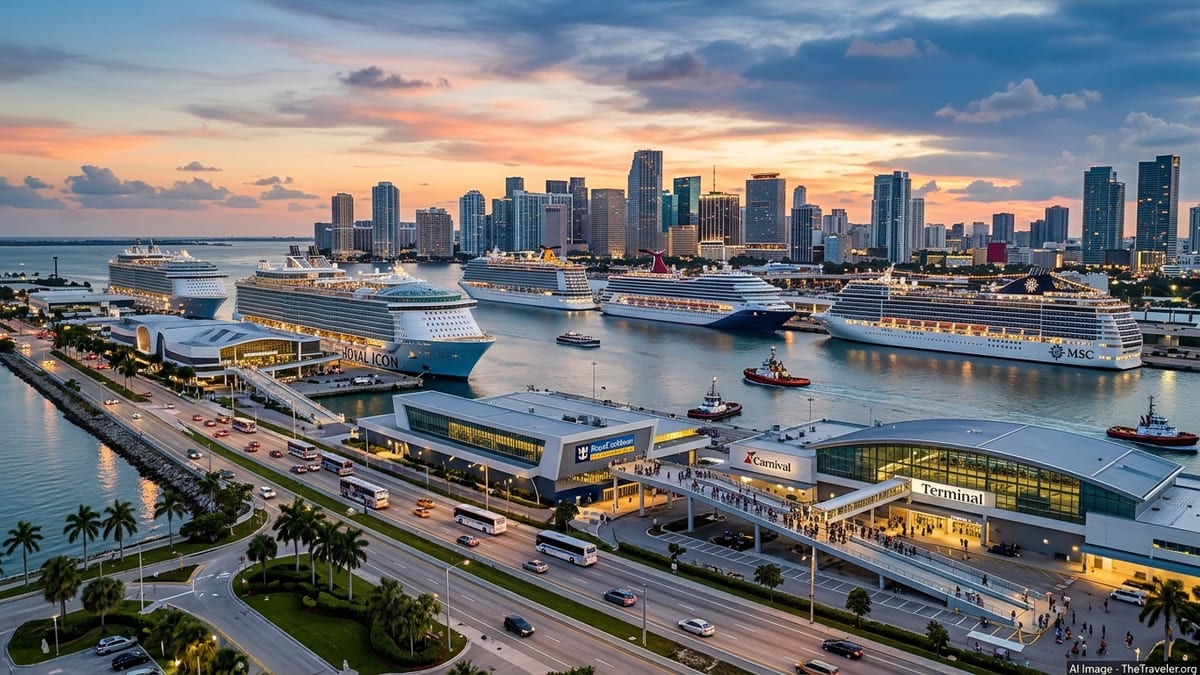
Three consecutive record years at the “Cruise Capital”
According to Miami-Dade County seaport figures, PortMiami’s cruise traffic has climbed from 7,299,294 passengers in FY 2023 to 8,233,056 in FY 2024 and 8,564,225 in FY 2025. Fiscal years at the port run from 1 October to 30 September, so the latest total covers the period from 1 October 2024 through 30 September 2025.
The increase from FY 2023 to FY 2024 represents a year-on-year gain of about 12.8 percent, followed by a further 4.0 percent rise in FY 2025. County documents and PortMiami’s own summary materials describe the FY 2025 count as the highest annual cruise passenger volume in the seaport’s history, surpassing the port’s pre-pandemic high from FY 2019.
Recent budget and impact reports from Miami-Dade also continue to describe PortMiami as one of the county’s largest economic engines, with port activity, including cruise operations, contributing tens of billions of dollars annually to the wider economy and supporting well over 300,000 direct, indirect and induced jobs across South Florida.
Big ships, new terminals and a growing short-cruise market
The run of record years has been supported by the arrival and expansion of some of the cruise industry’s largest vessels. Miami now regularly hosts high-capacity megaships, including Icon-class and other new-generation vessels from major brands such as Royal Caribbean, Carnival and MSC, which are designed to carry thousands of passengers per sailing.
Several dedicated terminals built or expanded in partnership with the cruise lines have increased throughput and allowed the port to handle multiple large ships on peak days. County budget documents point to recent terminal investments and shore power projects as key enablers for handling higher passenger volumes while aiming to manage emissions when ships are alongside.
For travelers, the capacity growth translates into more short itineraries to the Bahamas and nearby private islands, alongside longer Caribbean cruises. The busiest days typically see large numbers of 3- and 4-night sailings turning around at the same time, giving passengers more choice of departure date and ship style compared with a decade ago.
Port Canaveral’s rival claim as “busiest cruise port”
PortMiami’s FY 2025 total confirms a new record for the Miami seaport itself, but it arrives alongside a parallel milestone on Florida’s Space Coast. Port Canaveral reports just over 8.6 million multi-day revenue passenger movements in its own FY 2025, a figure slightly higher than Miami’s 8.56 million cruise passengers.
Port Canaveral’s use of “revenue passenger movements” and Miami’s focus on total cruise passengers reflect subtly different counting approaches, which has fueled a separate debate about which facility can claim to be the world’s busiest cruise port. Miami-Dade’s official materials continue to describe PortMiami as the largest multi-day cruise port, while Port Canaveral highlights its passenger-movement tally in asserting the “busiest” title.
For travelers, the distinction has little practical impact, but it underscores how concentrated the global cruise market has become in Florida. Between Miami, Port Canaveral and nearby Port Everglades, South Florida and Central Florida together account for well over 20 million annual cruise passenger movements, giving travelers a dense cluster of embarkation options within a few hours’ drive.
What the boom means for cruise passengers using Miami
Higher passenger volumes at PortMiami generally mean fuller ships and busier terminals, particularly on weekends when many of the large vessels begin and end their itineraries. Travelers can expect heavier traffic on the MacArthur and PortMiami causeways on peak turnaround mornings, as well as longer waits at security and check-in during the busiest time windows.
At the same time, the scale of operations supports a wider variety of products. Major lines now offer everything from short budget-friendly getaways to the Bahamas to week-long premium sailings and longer Caribbean itineraries from the same port, often with multiple competing ships sailing similar routes on the same day. This makes it easier for travelers to match sailing dates, ship style and price point without having to change embarkation ports.
Miami’s role as a major air hub also benefits cruise passengers, since the growth in cruise demand reinforces year-round flight schedules from a broad range of U.S. and international cities. However, the combination of busy cruise days and high air traffic can lead to crowded terminals and higher accommodation prices in downtown Miami and nearby beach areas around popular sail dates.
What travelers should watch next
Miami-Dade’s latest seaport budget materials indicate that planners expect cruise volumes to continue growing, with internal projections suggesting that annual passenger totals could exceed 10 million within the next several years. These figures are presented as forecasts rather than confirmed outcomes, and the county has not yet published an official final total for FY 2026.
Additional terminal projects and expanded shore power capability are scheduled over the next budget cycles, which, if completed on time, should help the port handle more peak-day traffic while aiming to mitigate some local environmental impacts. Travelers planning Miami cruises in coming seasons may see more ships able to plug into shore power while alongside and new or upgraded facilities at certain terminals.
For now, anyone booking a sailing from Miami should pay close attention to ship schedules and terminal assignments, build extra time into transfers between the airport and port on busy weekends, and monitor official port or cruise line updates closer to departure, especially as the port works through another period of rapid growth in passenger numbers.