


More news on this day
An Emirates Airbus A380 operating a late-night flight from Dubai to Shanghai was diverted to Hangzhou on July 22, leaving 373 passengers confined in a stifling cabin for more than ten hours without effective air conditioning, according to multiple Chinese media reports and social media accounts.
Get the latest news straight to your inbox!
Late-Night Diversion Turns Into Overnight Ordeal
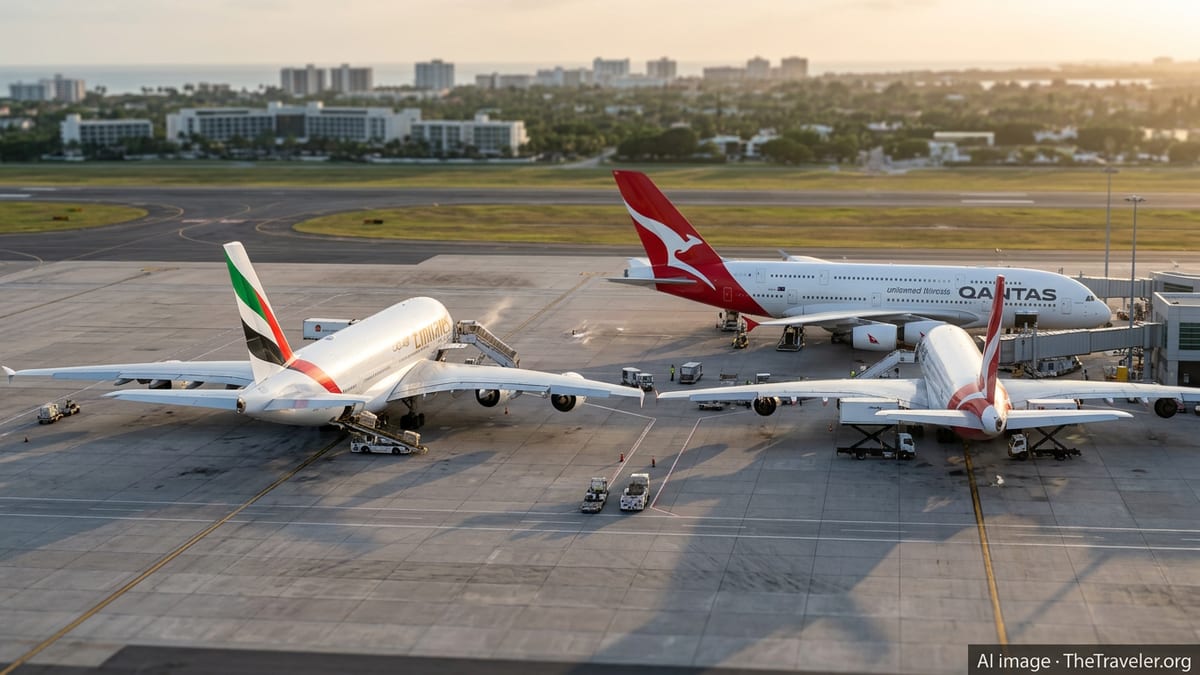
Publicly available flight data and Chinese news coverage indicate that Emirates flight EK302 departed Dubai for Shanghai Pudong on the evening of July 22 and diverted to Hangzhou Xiaoshan International Airport shortly after 9 p.m. local time due to severe thunderstorms affecting Shanghai. The aircraft, an Airbus A380 configured for several hundred passengers, landed safely but remained parked on a remote cargo stand away from the main terminal.
Reports from Chinese outlets describe how passengers were instructed to remain on board while the airline and airport authorities assessed options for either continuing to Shanghai or offloading travelers in Hangzhou. What began as a routine weather diversion gradually turned into an all-night disruption as the aircraft did not receive clearance to continue and procedures for disembarkation of international passengers proved complex.
By the early hours of July 23, passengers were still on the aircraft, with videos circulating on Chinese social platforms showing crowded aisles, dim cabin lighting, and individuals fanning themselves. Coverage in Chinese business and local media states that some passengers began to feel unwell as the temperature rose inside the cabin.
According to those reports, the ordeal lasted more than ten hours from the time of landing in Hangzhou until passengers were finally able to leave the aircraft, far exceeding on-board delay thresholds used in several other major aviation markets.
Air Conditioning Failure and Reports of Fainting
Accounts compiled by Chinese news organizations and social media posts suggest that the most distressing aspect of the incident was an apparent failure or severe reduction of the aircraft’s air conditioning while it sat on the ground. With the A380 parked away from a passenger gate and not connected to a jet bridge, ground-based cooling support appears to have been limited or absent for extended periods.
Passengers described an increasingly hot and humid cabin environment, with children crying and adults repeatedly requesting relief. Chinese-language coverage reports that multiple travelers allegedly fainted or showed signs of heat-related discomfort, prompting at least two ambulance visits to the aircraft while it remained on the remote stand.
Video clips and still images shared online show passengers lying in aisles or slumped in seats while others attempt to fan them. Although independent verification of each individual claim is difficult, the consistency of descriptions across several outlets has widened attention to the conditions experienced on board.
Commentary from aviation analysts quoted in regional media notes that while technical issues or power configuration on the ground can interfere with an aircraft’s environmental systems, extended cabin heat in a fully occupied widebody raises concerns about both passenger health and basic comfort standards.
Complex Ground Handling and Immigration Hurdles
Chinese media reports emphasize that the length of time passengers remained on board was not solely due to the original weather disruption. Once the aircraft had diverted to Hangzhou, any decision to disembark passengers created immigration, customs, and baggage-handling challenges, particularly for a large international flight that was never scheduled to enter China through that airport.
Industry commentators cited in Chinese coverage point out that offloading hundreds of passengers into an airport that may not be fully prepared to process them as international arrivals can require rapid coordination with border control, security, and health authorities. There can also be questions over who bears the cost of accommodation, ground transport, and onward travel if travelers are processed in an alternate city.
Some experts quoted in those reports argue that, under such circumstances, airlines and airports may view keeping passengers on board as the most straightforward short-term option, especially if there is an expectation that weather will improve and the flight can resume. However, the EK302 case is now being highlighted as an example of how such calculations can clash with passenger well-being when delays stretch into many hours and cabin conditions deteriorate.
The episode has also drawn renewed attention to the preparedness of diversion airports to receive very large aircraft such as the A380. While Hangzhou Xiaoshan regularly handles widebody jets, handling an unscheduled superjumbo packed with international passengers late at night appears to have strained available resources.
Emirates Issues Apology and Arranges Lodging
According to Chinese business media, Emirates subsequently issued an apology statement acknowledging the extended delay after the diversion and the difficult conditions passengers experienced on board. The airline’s statement, as summarized in local coverage, indicates that all passengers were eventually allowed to disembark in Hangzhou and that arrangements were made for hotel accommodation and meals.
Reports indicate that the follow-up flight from Hangzhou to Shanghai did not depart as initially planned, prolonging travel disruption for many customers. Instead, Emirates is described as having rebooked passengers onto later services and providing ground support as they awaited onward transport.
The carrier has not, according to publicly available coverage, released detailed technical information about the air conditioning issues that turned the grounded A380 into a sweltering environment. Aviation commentators note that the incident comes at a time when Emirates is strongly promoting its A380 product as a hallmark of comfort, making images of passengers enduring an overheated overnight delay particularly damaging for the airline’s brand.
Consumer advocates quoted in regional media suggest that the incident may prompt closer scrutiny of how airlines serving China manage diversions and on-board delays, particularly during peak storm seasons around major coastal hubs like Shanghai.
Questions Raised Over Passenger Protections
The Hangzhou incident is also sparking debate about passenger rights during extended tarmac delays, especially on international routes and in jurisdictions where explicit limits are less clearly defined than in the United States or European Union. Commenters in Chinese and international aviation forums have compared the more than ten hours reported on board EK302 to rules elsewhere that generally restrict on-board delays before passengers must be given the option to disembark.
Legal specialists and industry observers cited in regional coverage note that applying domestic-style tarmac delay rules to diverted international flights can be complicated, especially when immigration clearance and visa requirements come into play. Nonetheless, the images and accounts emerging from the Emirates A380 have fueled public expectations that carriers and airports should prioritize removing passengers from confined, overheated cabins even when that requires emergency processes on the ground.
Some analysts argue that the EK302 diversion underscores the need for clearer international standards around maximum on-board delay times in extreme conditions, as well as contingency planning for superjumbo jets that may divert to secondary airports without the infrastructure or staffing normally required for such large volumes of travelers.
For Emirates, which operates the world’s largest A380 fleet and markets its flagship aircraft as a symbol of spaciousness and luxury, the late-night diversion to Hangzhou has quickly become a case study in how operational disruptions and ground-handling constraints can turn even the largest jetliner into an uncomfortable and controversial space for the passengers inside.